
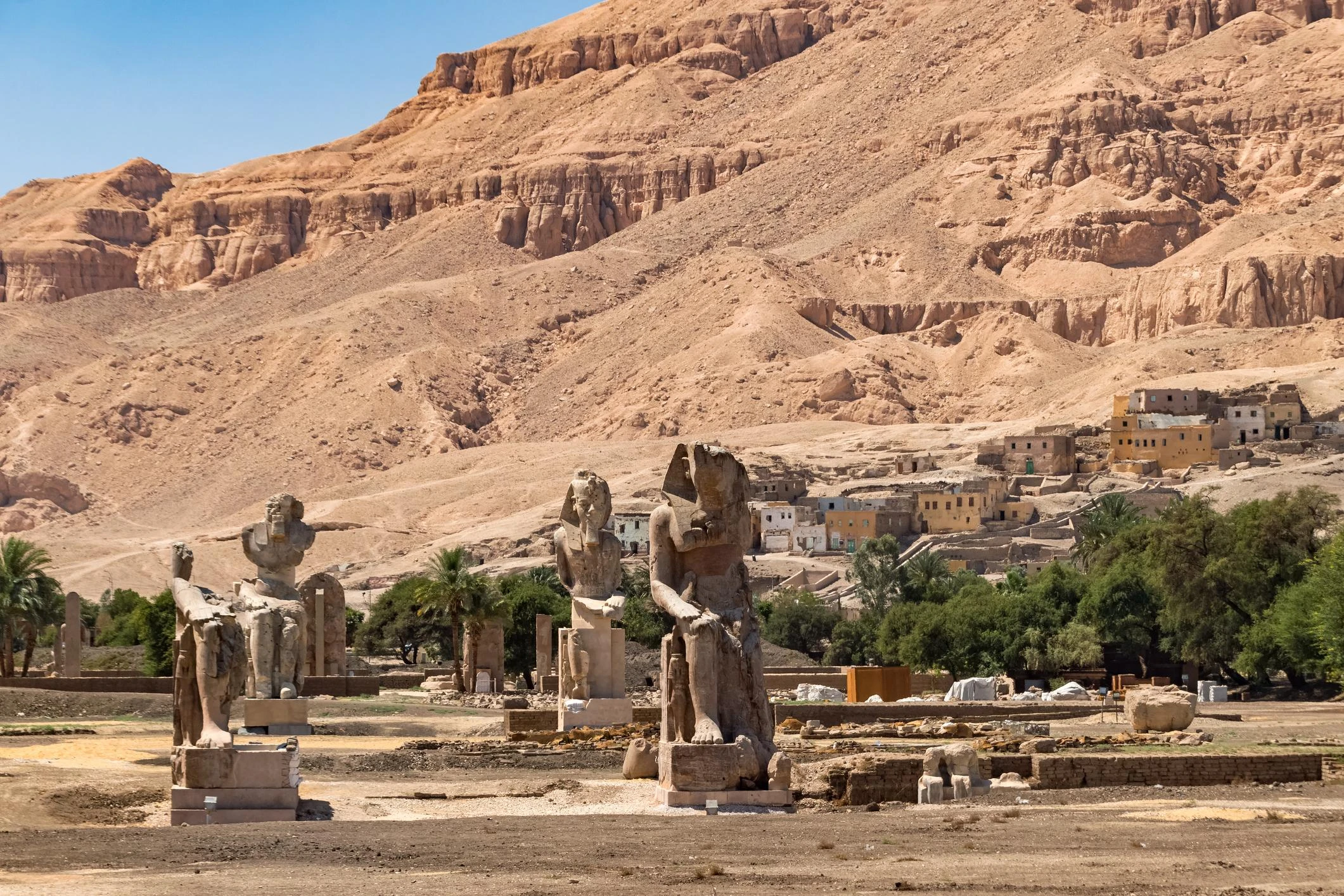
Medinet Habu is one of the best-preserved and least-crowded temples on Luxor’s West Bank. Built by Ramesses III in the 12th century BC, it is the second-largest mortuary temple complex in Thebes after the Ramesseum, and a perfect stop after the Colossi of Memnon.
A Temple Built for Eternity
Ramesses III, the last great pharaoh of the 20th Dynasty, modelled his temple on that of Ramesses II but built it as a fortified complex. A massive gateway known as the Migdol, inspired by Syrian fortress design, stands at the entrance, and a high mud-brick wall once surrounded the whole precinct.
What to See
- Reliefs of the Sea Peoples: huge scenes on the outer walls show Ramesses III defeating invaders by land and sea, one of the most important historical records of the late Bronze Age.
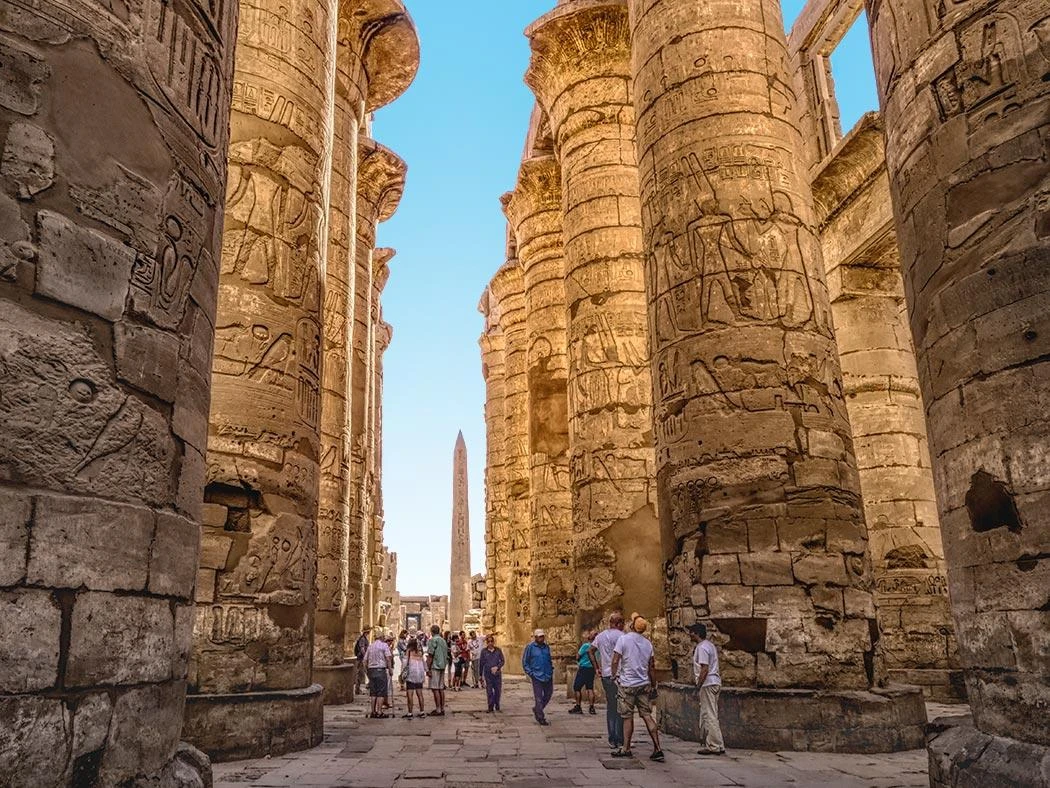
- The courts and pylons: two large courtyards lead to a hypostyle hall with columns that still keep much of their original colour.
- Earlier temple: a smaller temple begun under Hatshepsut and Thutmose III stands within the enclosure, linked to the cult of Amun.
- Later life of the site: the temple later became part of a Christian village, and traces of Coptic occupation can still be seen.
Visitor Tips
Medinet Habu is normally visited together with the Valley of the Queens and Deir El-Medina. Look closely at the deeply carved reliefs, which catch the light best in the morning, and bring water and a hat as shade is limited.
It also makes an excellent comparison with the Temple of Queen Hatshepsut to see how royal funerary temples changed over the New Kingdom.