

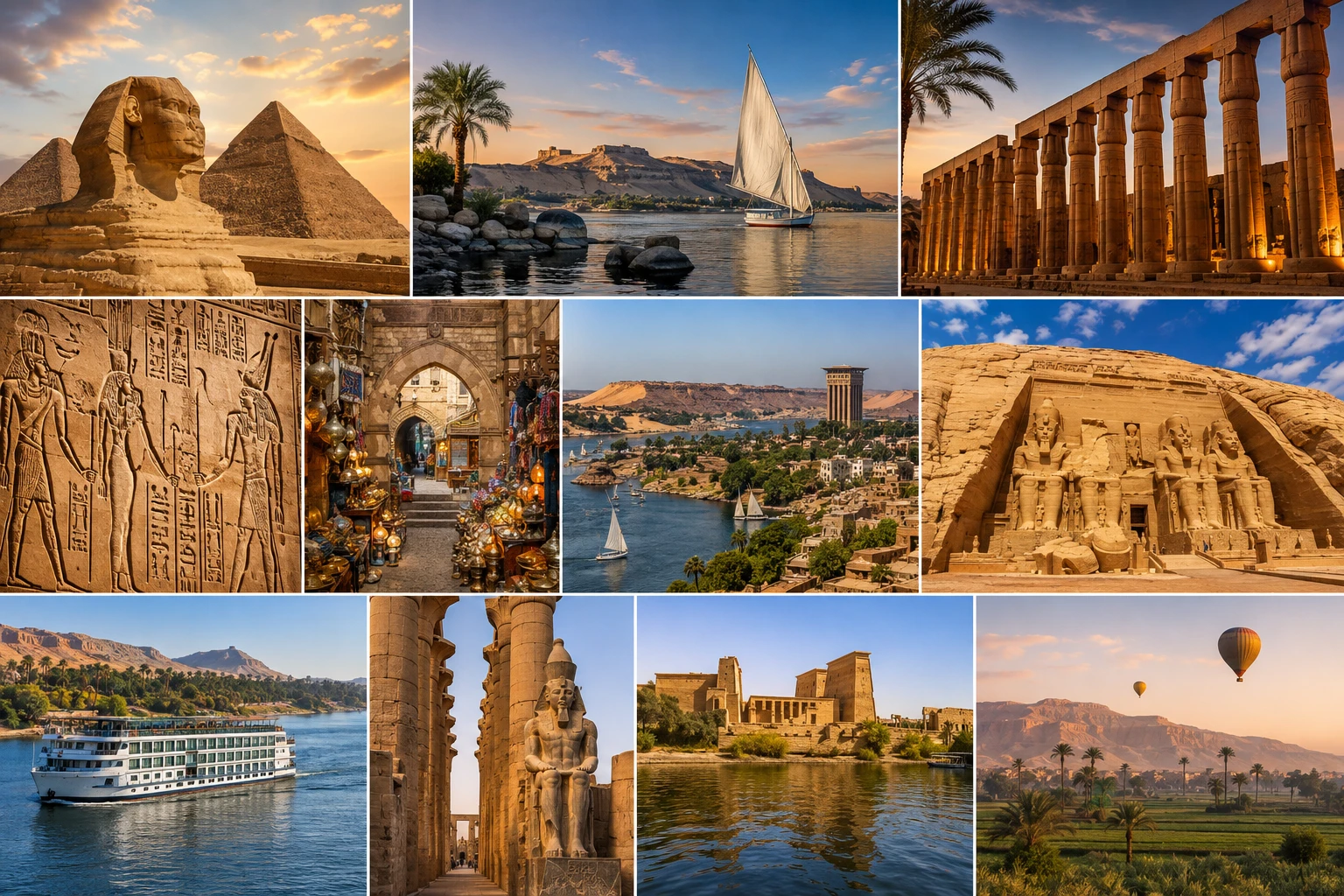
Quick Answer: Is 7 Days Enough for Egypt?
Yes — seven days is enough to see Cairo's major sites and complete a Luxor-to-Aswan Nile cruise, which is the classic "golden triangle" route most first-time visitors aim for. It's a tighter trip than 10 days, so it works best for travelers who want the essentials done well rather than every possible add-on (Abu Simbel, Alexandria, or the Red Sea usually need extra days). If your schedule allows for 9–10 days instead, you'll have breathing room to add Abu Simbel or a Red Sea extension without cutting anything from the core route.
Why This Route Makes Sense
Egypt's major sites sit in two distinct clusters connected by domestic flights: Cairo in the north, and Luxor and Aswan in the south. A one-way flight between Cairo and Luxor takes roughly an hour, and Cairo to Aswan is about 90 minutes, which is why most well-built itineraries fly one direction and use a Nile cruise to cover the return leg by water — you see Edfu and Kom Ombo along the way instead of flying past them.
A private itinerary lets you adjust this rhythm. If you're not a morning person, your Giza visit can start slightly later. If a hot-air balloon ride at sunrise in Luxor interests you, it can be slotted in without renegotiating a whole group's schedule.
Day-by-Day Itinerary
Day 1: Arrival in Cairo
Arrive in Cairo, transfer privately to your hotel, and use the rest of the day to rest and adjust. If your flight lands early enough, a relaxed evening walk near the Nile or a first look at Cairo's skyline is a gentle way to begin without overloading day one with sightseeing.
Day 2: Giza Pyramids and the Sphinx
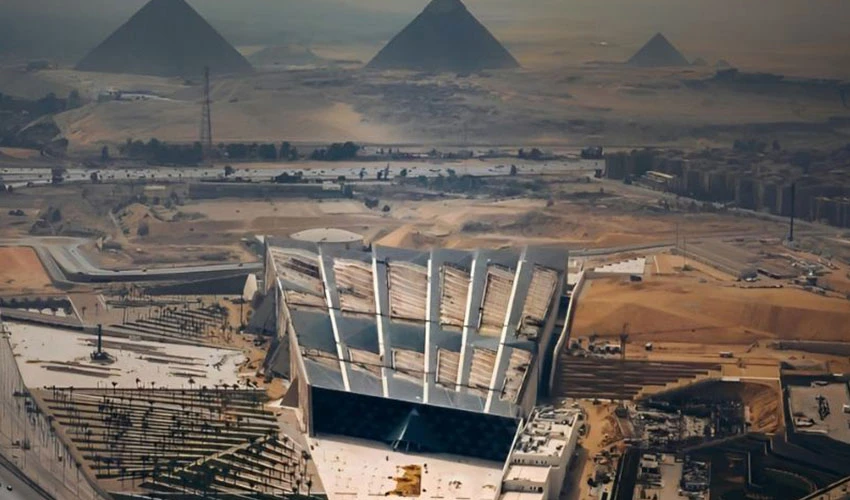
Start early. The Giza Plateau is far more comfortable — and far better for photography — before mid-morning crowds and heat build up. Spend the morning at the Great Pyramid, the Sphinx, and the surrounding complex, then use the afternoon for the Grand Egyptian Museum or the Egyptian Museum in downtown Cairo, depending on which is open and better suited to your interests at the time of your visit. One thing many first-time travelers underestimate: Giza alone easily fills half a day when you include time at the panoramic viewpoint and a stop at a papyrus or perfume workshop, so avoid over-scheduling this day.
Day 3: Saqqara, Khan El Khalili, and Flight to Luxor
A private itinerary can add Saqqara, home of the Step Pyramid of Djoser, Egypt's earliest large-scale stone monument, before heading toward the airport. If time allows, a stop at Khan El Khalili bazaar in the morning adds cultural texture before the transition south. Fly to Luxor in the afternoon or evening and check into your Nile cruise ship or hotel.
Day 4: East Bank of Luxor — Karnak and Luxor Temple
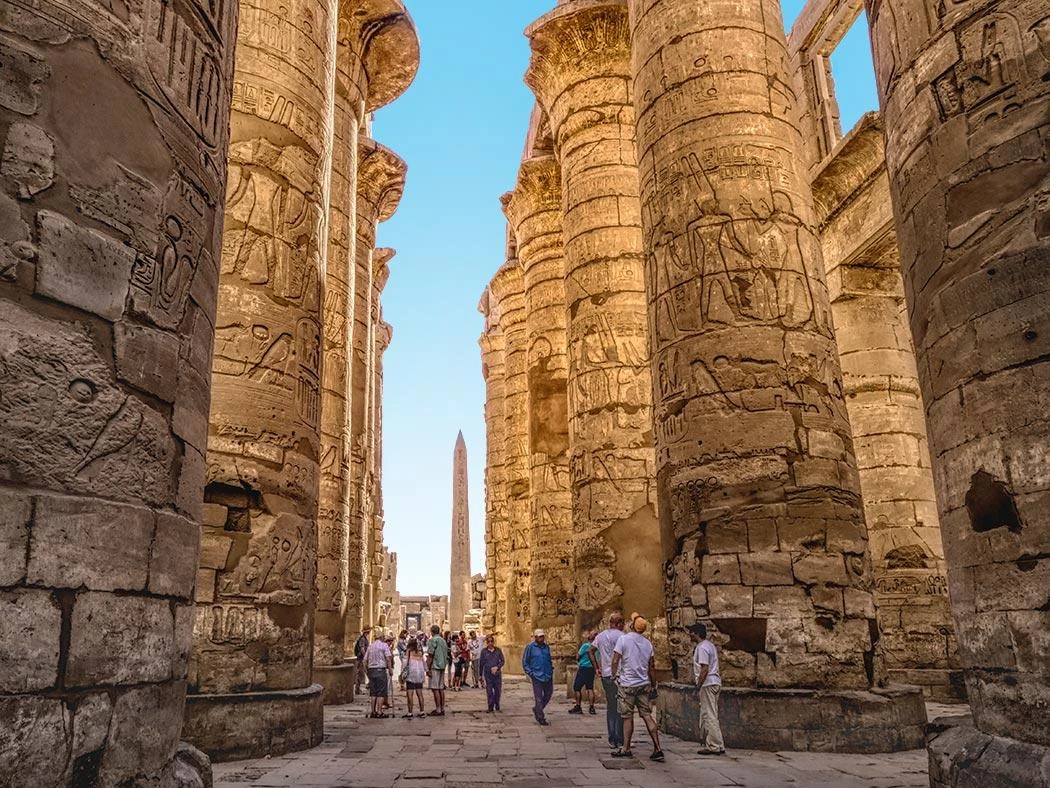
Spend the morning at Karnak Temple, the largest ancient religious complex in Egypt, and Luxor Temple in the afternoon or evening, when its columns are lit and considerably less crowded. If your cruise itinerary departs today, this typically happens in the afternoon after sightseeing.
Day 5: West Bank of Luxor — Valley of the Kings
Cross to the West Bank for the Valley of the Kings, where royal tombs including that of Tutankhamun are cut into the desert hillside, plus the Mortuary Temple of Hatshepsut. Start early — the West Bank has little shade, and tomb interiors get uncomfortably warm by midday in most of the year. Your cruise ship sails toward Edfu in the afternoon.
Day 6: Edfu, Kom Ombo, and Arrival in Aswan
Visit the Temple of Horus at Edfu in the morning, one of the best-preserved temples in Egypt, then continue to Kom Ombo Temple, dedicated to the crocodile god Sobek, before sailing into Aswan. This day covers meaningful ground with comparatively little walking, since much of it happens on the water.
Day 7: Aswan and Departure
Visit the Philae Temple, reached by boat across Lake Nasser, and the Aswan High Dam before your onward flight. If your schedule allows a later flight, a short felucca sail on the Nile is a quiet, memorable way to close the trip. Fly back to Cairo for your international departure, or connect onward depending on your flight routing.
How a Private Itinerary Differs From a Group Tour
Factor Group Tour Private Itinerary
Schedule Fixed departure times for the whole group Adjusted to your pace and preferences Pace Same for every traveler regardless of interest Can slow down at sites you love, skip what you don't Guide Shared among many travelers Dedicated to your group only Flexibility for add-ons Limited or unavailable mid-trip Abu Simbel, balloon rides, or extra days can often be added Transport Shared coach on fixed timing Private vehicle, flexible departure times
Who This Itinerary Suits
Couples benefit from a slower pace on the West Bank and the option to add a private sunset felucca ride on the final evening. Families can adjust site order to build in rest breaks, since young children often struggle with tomb interiors and midday heat. History enthusiasts may want to extend Day 4 or 5 by an extra half-day, since Karnak and the Valley of the Kings both reward unhurried visits. First-time travelers generally find this exact 7-day structure ideal, since it captures the essential circuit without unnecessary detours.
What Could Extend This Trip
If you can stretch beyond 7 days, the most common additions are:
-
Abu Simbel (typically a half-day round trip from Aswan) for the temples of Ramesses II
-
A Red Sea extension (Hurghada or Sharm El Sheikh) for 2–3 days of diving or relaxation after the cultural itinerary
-
Alexandria as a day trip from Cairo for Mediterranean coastal scenery and the Catacombs of Kom El Shoqafa
None of these are essential to a first trip, but they're worth knowing about if your dates have any flexibility.
FAQ
Is 7 days enough to see Egypt?
Yes, for the essential Cairo–Luxor–Aswan circuit. It won't include everything (Abu Simbel and the Red Sea typically need extra days), but it covers the country's must-see sites without feeling rushed.
Should I fly or cruise between Luxor and Aswan?
A Nile cruise is generally the better choice if you have the time, since it includes Edfu and Kom Ombo as part of the journey rather than requiring separate excursions. Flying is faster if your schedule is tighter.
Do I need a guide for Egypt's ancient sites?
A knowledgeable private guide adds significant context at sites like Karnak and the Valley of the Kings, where inscriptions and layout carry meaning that isn't obvious without explanation.
What's the best way to structure a 7-day trip if I'm traveling with children?
Keep early mornings for outdoor sites like Giza and the West Bank, and plan indoor or lower-activity time (museums, cruise deck time) for the hottest part of the day.
Plan Your Own 7-Day Egypt Trip
A private itinerary means this schedule is a starting point, not a fixed script. If you'd rather sail an extra day in Aswan, sleep in one morning, or add a hot-air balloon ride over Luxor, a private trip can absorb that without disrupting anyone else's plans.
Ready to build a private Egypt itinerary around your own schedule and interests? Magic Egypt Tours can put together a custom 7-day trip tailored to your pace.
Want to compare options first? Explore our Egypt tour packages to see how different trip lengths and routes work.

Post a comment