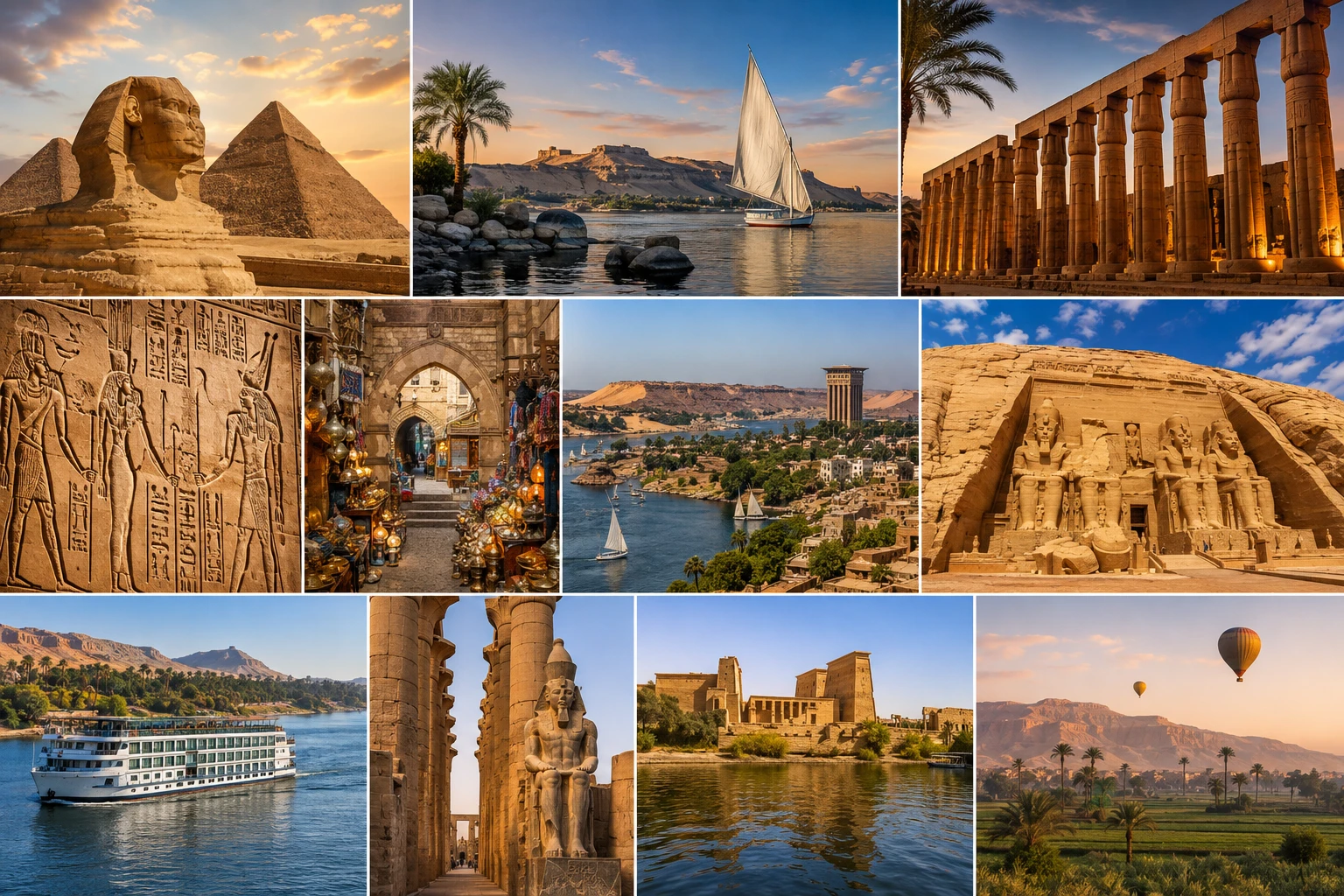

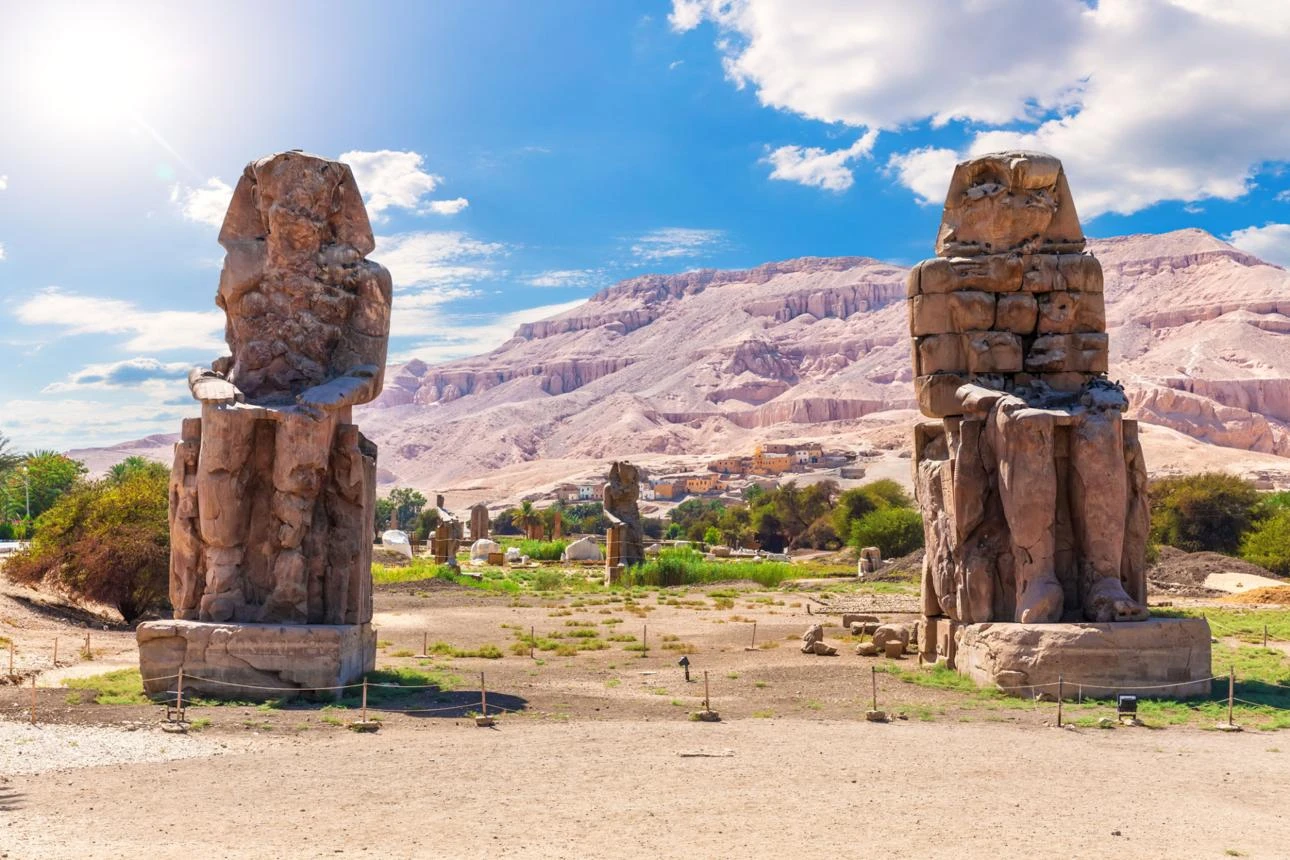
Hidden in a quiet wadi on Luxor’s West Bank, the Valley of the Queens was the burial ground for the wives, sons and daughters of New Kingdom pharaohs. It is smaller and calmer than the neighbouring Valley of the Kings, but its tombs hold some of the most beautiful painting in Egypt.
The Place of Beauty
The ancient Egyptians called this site Ta-Set-Neferu, often translated as “the place of the royal children” or “the place of beauty”. It was used mainly during the 19th and 20th Dynasties, roughly between 1295 and 1070 BC, and contains around 90 tombs, many of them unfinished or left undecorated.
Highlights
- Tomb of Nefertari (QV66): built for the favourite wife of Ramesses II and often described as one of the finest tombs in Egypt, with vivid colours showing the queen guided through the afterlife. Access is limited and usually requires a separate ticket.
- Tomb of Prince Amun-her-khepeshef: a son of Ramesses III, shown being presented to the gods by his father.
- Tomb of Khaemwaset: another prince of Ramesses III, with well-preserved scenes of royal protection.
- Tomb of Queen Titi: a colourful tomb of a 20th Dynasty queen with graceful offering scenes.
Planning Your Visit
The valley is usually combined with Medinet Habu and Deir El-Medina on a half-day West Bank tour. Visit in the morning before the heat builds, carry water, and ask your guide which tombs are open on the day, since the selection rotates for conservation.
On our Egypt tours, an Egyptologist guide explains the symbols and funerary texts so each tomb becomes a story rather than just a painted wall.