Temple of Queen Hatshepsut: A Masterpiece of Ancient Egyptian Architecture
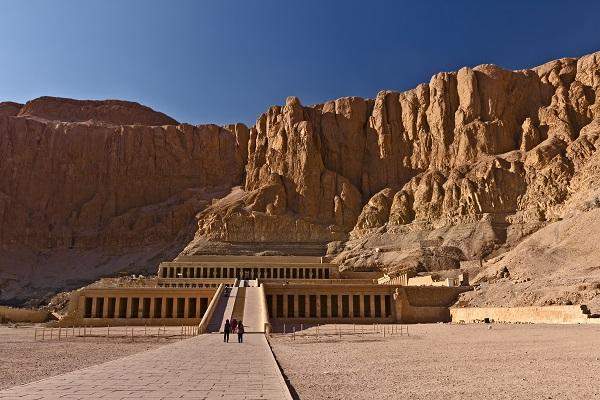
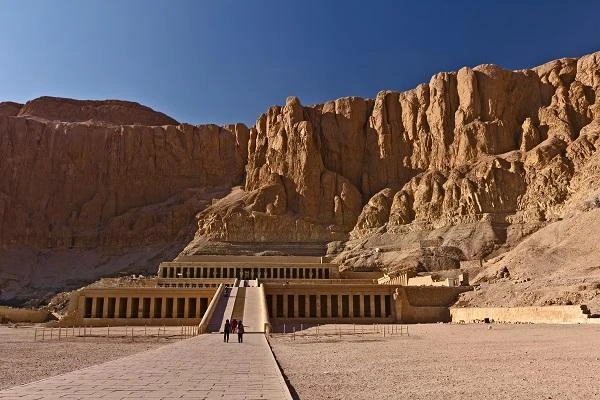
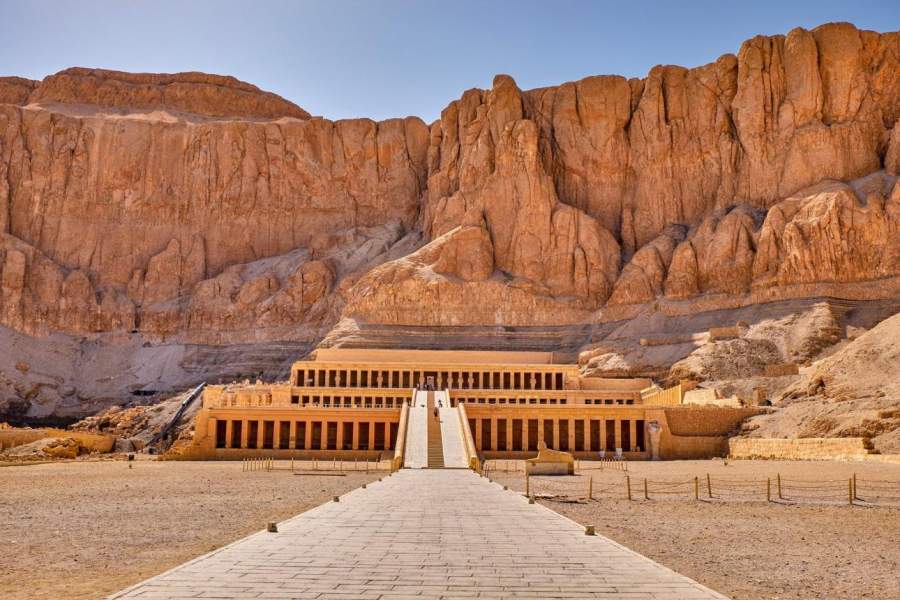
The Temple of Queen Hatshepsut, located at Deir el-Bahari on the west bank of the Nile in Luxor, is one of the most remarkable monuments of ancient Egypt. Built during the 18th Dynasty for Hatshepsut, the woman who became pharaoh, the temple combines monumental architecture, dramatic natural scenery, religious symbolism, and scenes documenting one of Egypt’s most famous trading expeditions.
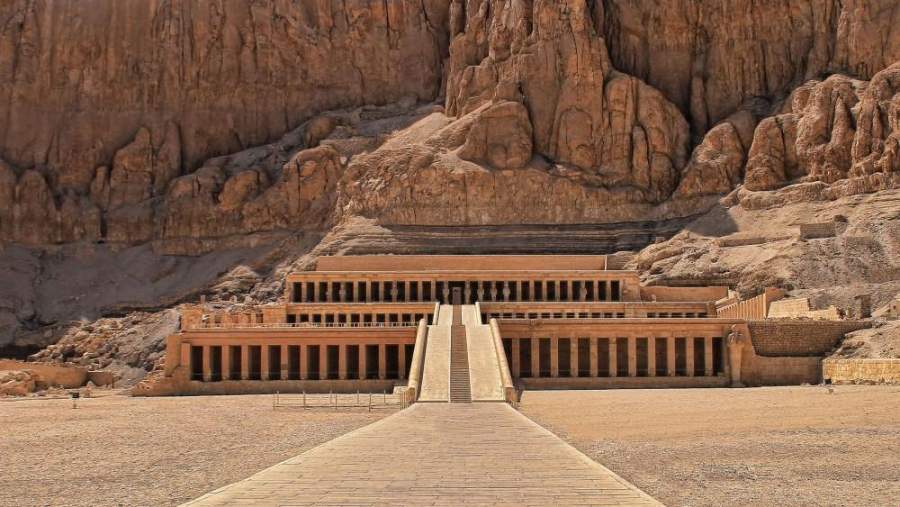
Known in ancient Egyptian as Djeser-Djeseru, meaning “Holy of Holies,” the temple was designed by Senenmut, an influential official during Hatshepsut’s reign. Its three massive terraces rise toward the cliffs of Deir el-Bahari, creating one of the most recognizable archaeological landscapes in Egypt.
Where Is the Temple of Hatshepsut?
The temple stands at Deir el-Bahari, on the western bank of the Nile in modern Luxor.
The location was not chosen randomly. In ancient Egyptian religious traditions, the western bank was strongly associated with the setting sun and the realm of the dead. Royal mortuary temples were therefore commonly constructed on the west bank.
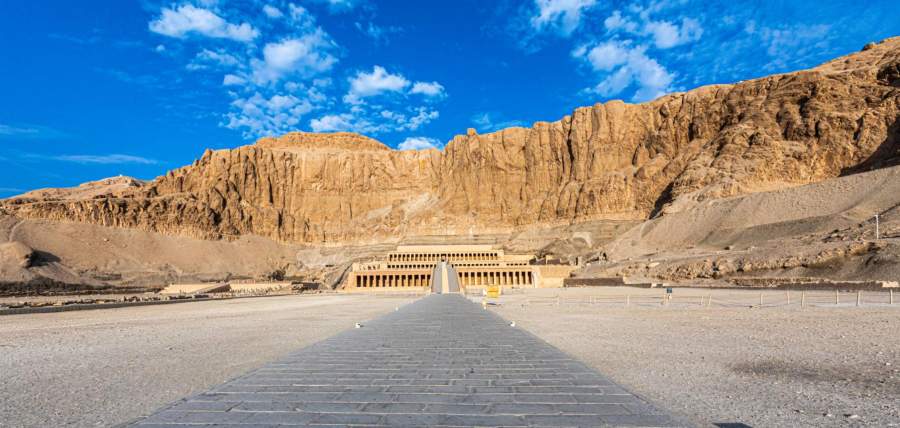
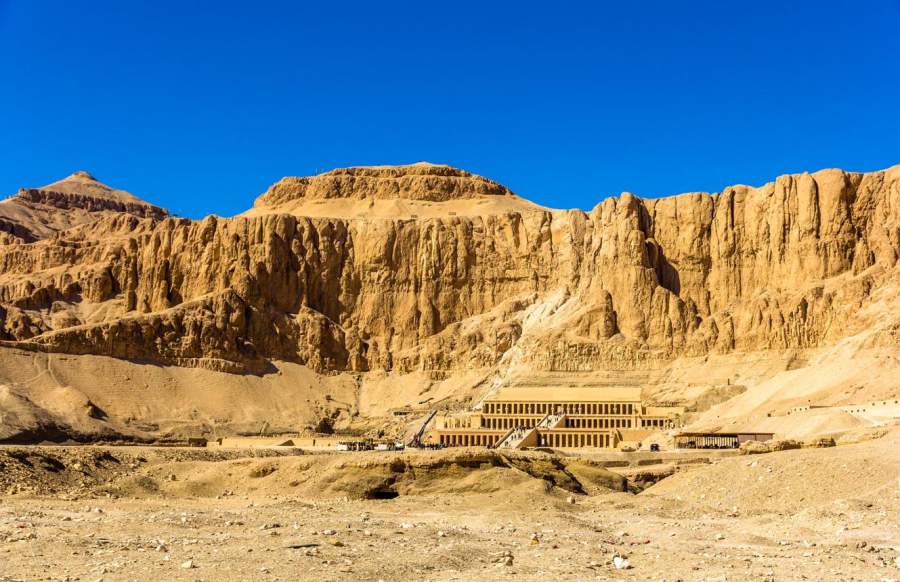
Deir el-Bahari was also a sacred landscape associated with Hathor, the goddess connected with motherhood, kingship, and protection. Behind the temple rises a dramatic natural mountain whose summit has a distinctive pyramid-like shape.
The temple is also part of the larger archaeological landscape of Ancient Thebes and its Necropolis, which includes the Valley of the Kings, Valley of the Queens, Karnak, Luxor Temple, and other major monuments. Ancient Thebes was added to the UNESCO World Heritage List in 1979.
Queen Hatshepsut: The Woman Who Became Pharaoh
Hatshepsut was one of the most prominent rulers of Egypt's 18th Dynasty.
After the death of her husband, Thutmose II, Hatshepsut initially served as regent for the young Thutmose III. She eventually assumed the full royal role of pharaoh.
Her reign is associated with major building projects and extensive religious and commercial activity. The temple at Deir el-Bahari became one of the most important monuments through which she presented her royal identity.
The temple's inscriptions portray Hatshepsut not simply as a queen, but as the legitimate ruler of Egypt. Some scenes emphasize her connection with her father, Thutmose I, while others present her divine relationship with the god Amun.
The Architecture of Hatshepsut Temple
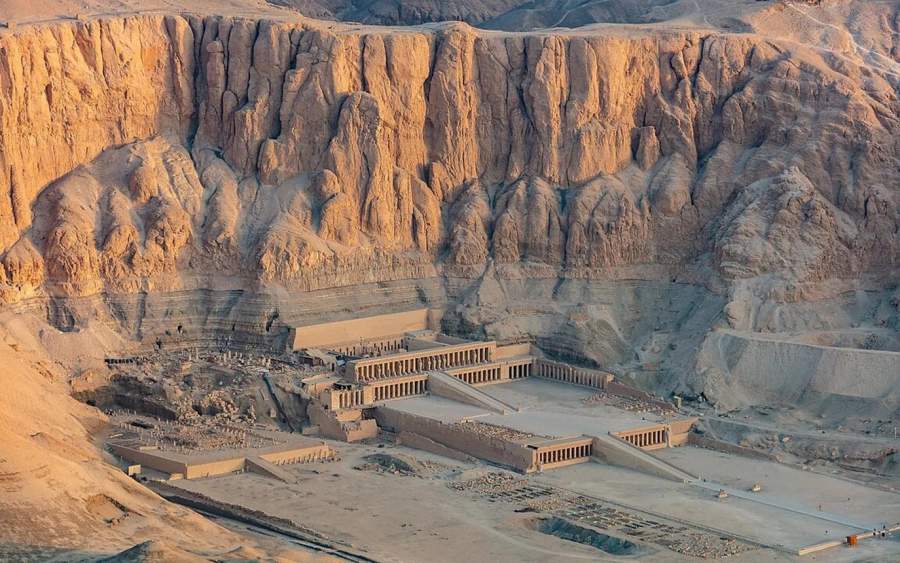
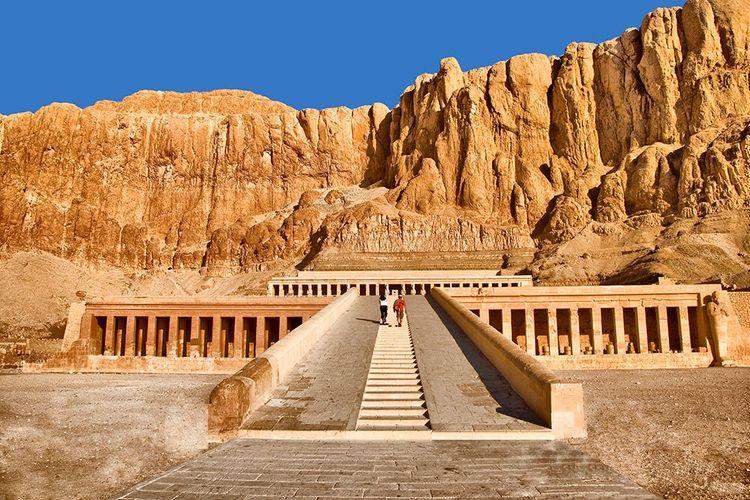
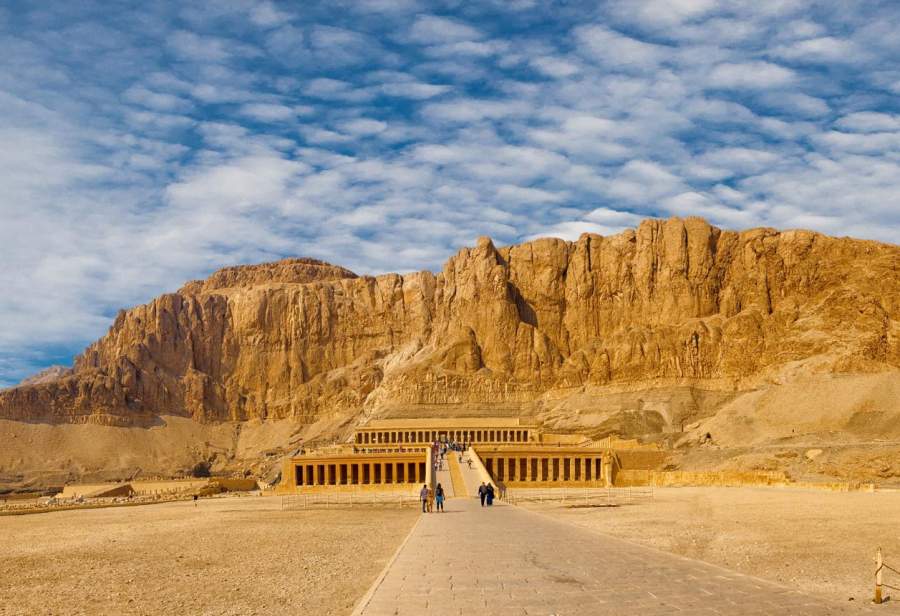
One of the most impressive features of the temple is its architectural relationship with the surrounding cliffs.
Rather than standing as an isolated structure, the temple appears to emerge from the mountain itself.
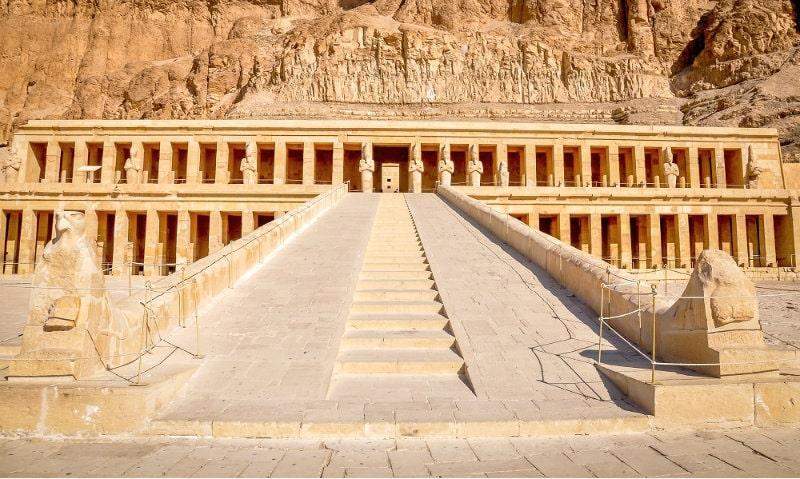
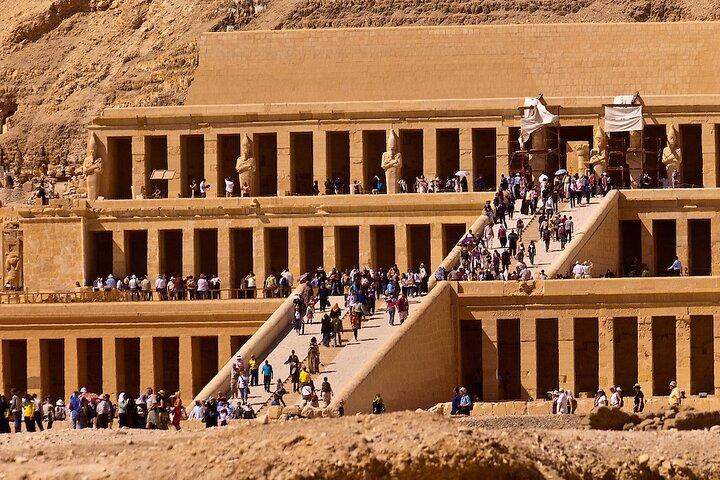
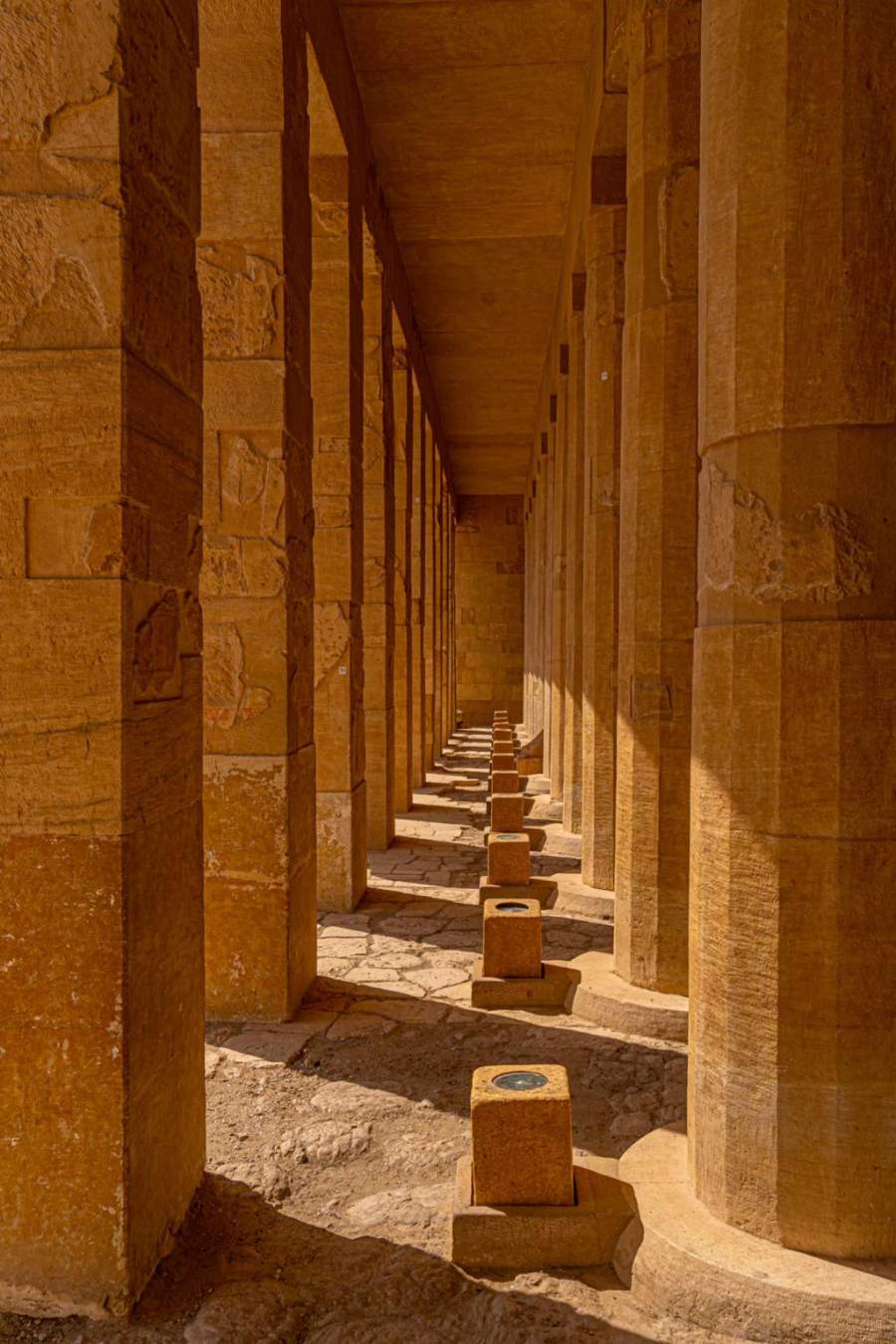
The complex is organized into three major terraces, connected by broad approaches and monumental architectural elements. Each level contains colonnades, while the upper level leads toward the sanctuary carved into the rock.
This design creates a powerful visual progression:
Valley → Lower Terrace → Middle Terrace → Upper Terrace → Mountain Sanctuary
As visitors move upward, the scale and symbolism of the monument become increasingly dramatic.
The design also reflects an earlier tradition at Deir el-Bahari. About six centuries before Hatshepsut, King Mentuhotep II built his mortuary complex at the same location. Hatshepsut's temple adopted the site's distinctive terraced concept while creating a much different architectural expression.
The Three Terraces
The Lower Terrace
The lower section formed the entrance area of the monumental complex.
Visitors approaching the temple in antiquity would have experienced a carefully planned progression toward the higher terraces. The architecture was designed to create a sense of movement toward the sacred mountain.
The Middle Terrace
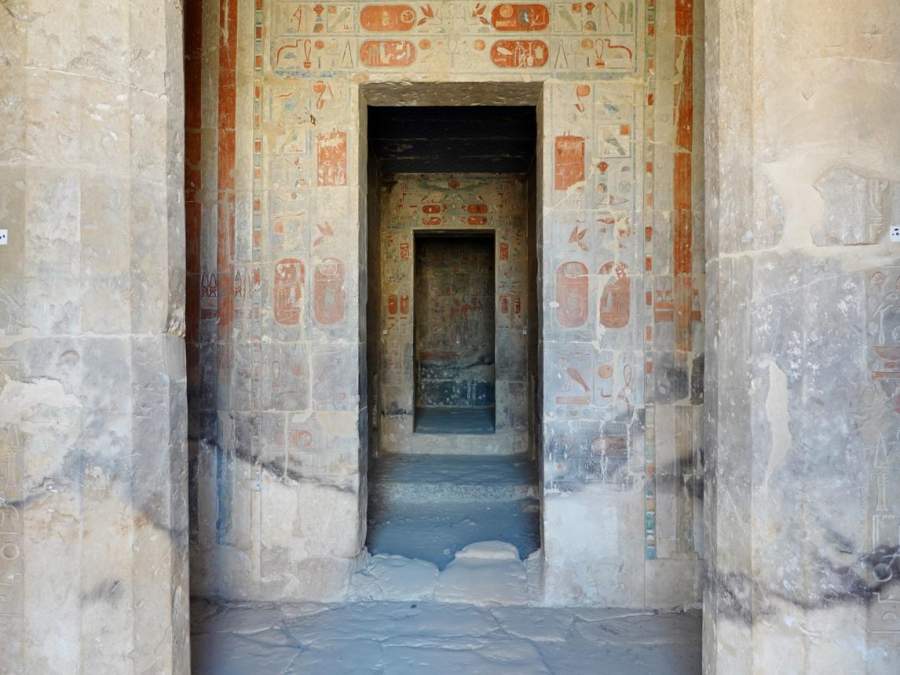
The middle terrace contains some of the temple's most famous reliefs.
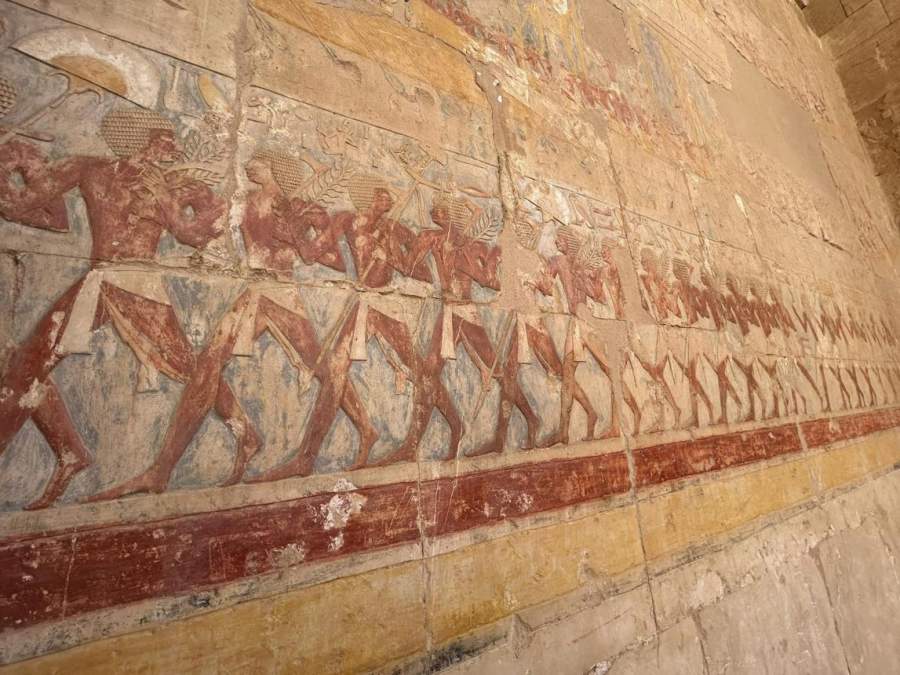
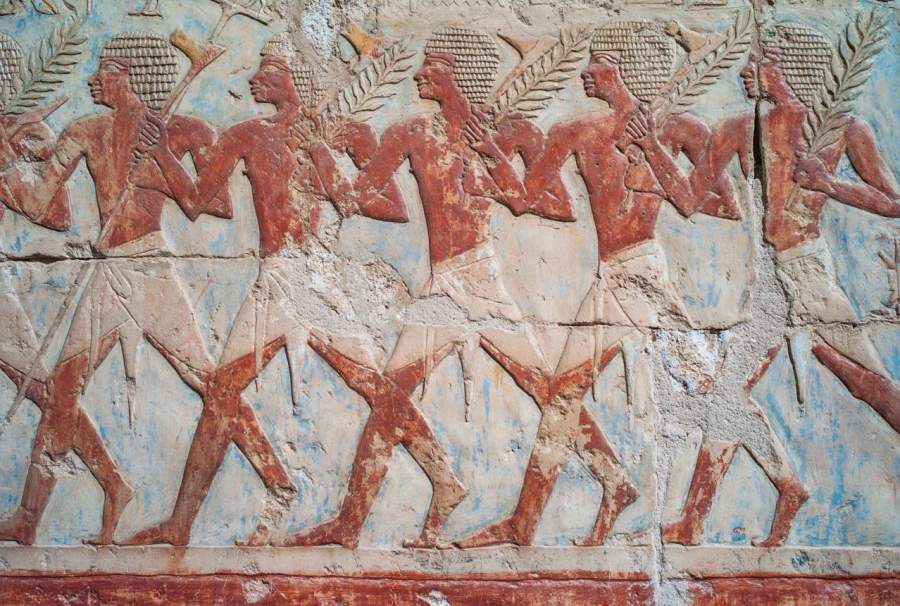
One of the most important decorative programs depicts Hatshepsut's expedition to Punt.
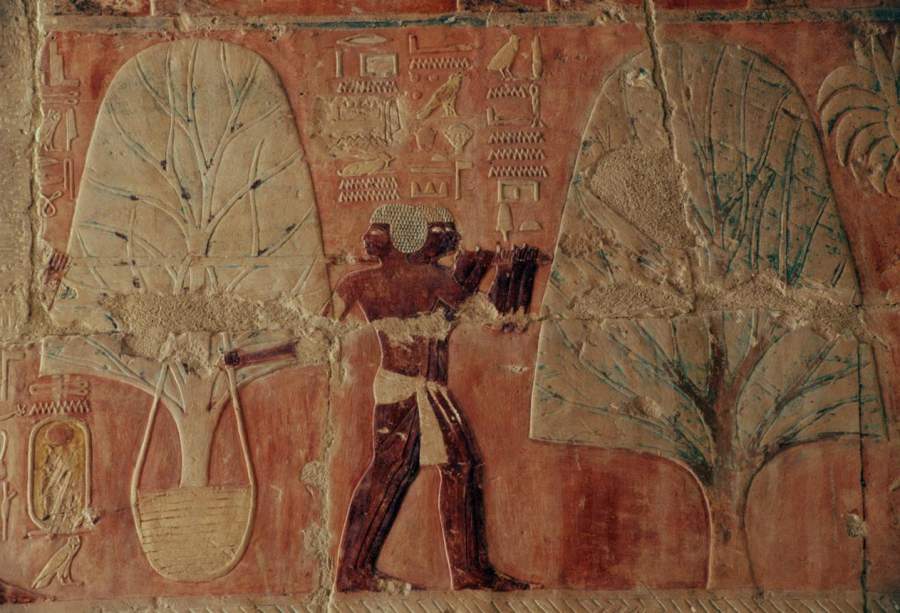
The scenes show people, landscapes, animals, plants, ships, and valuable goods associated with the expedition. The reliefs provide an extraordinary visual record of how the Egyptians represented foreign lands and their inhabitants.
The Upper Terrace
The upper terrace is dominated by a large open courtyard and impressive columns.
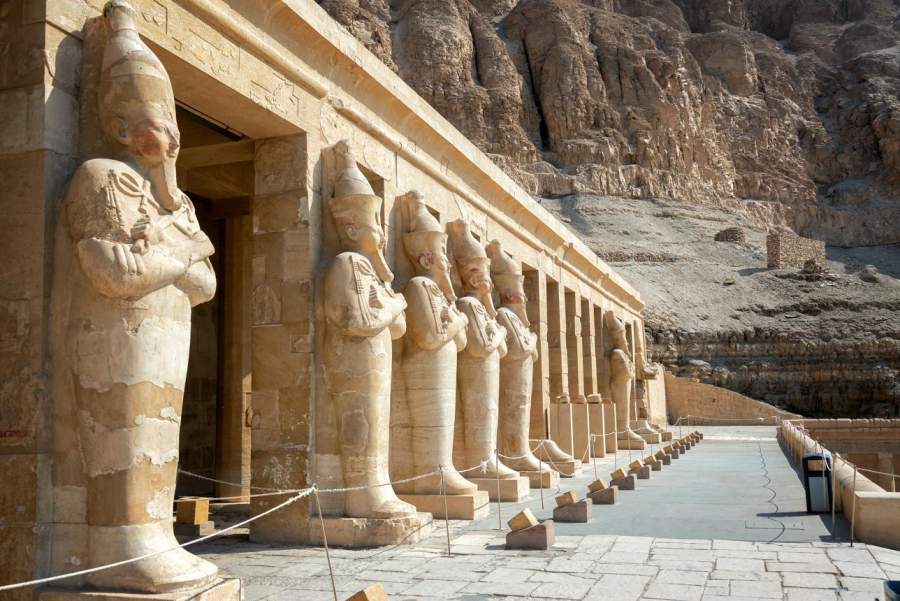
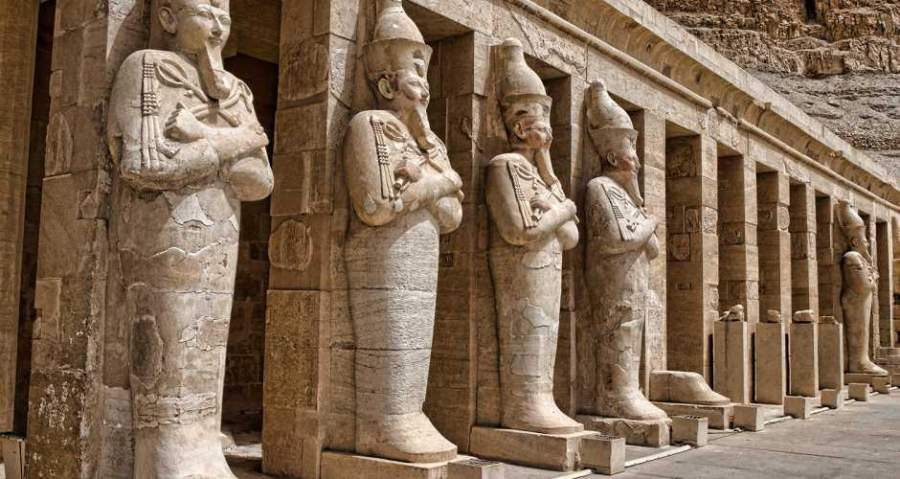
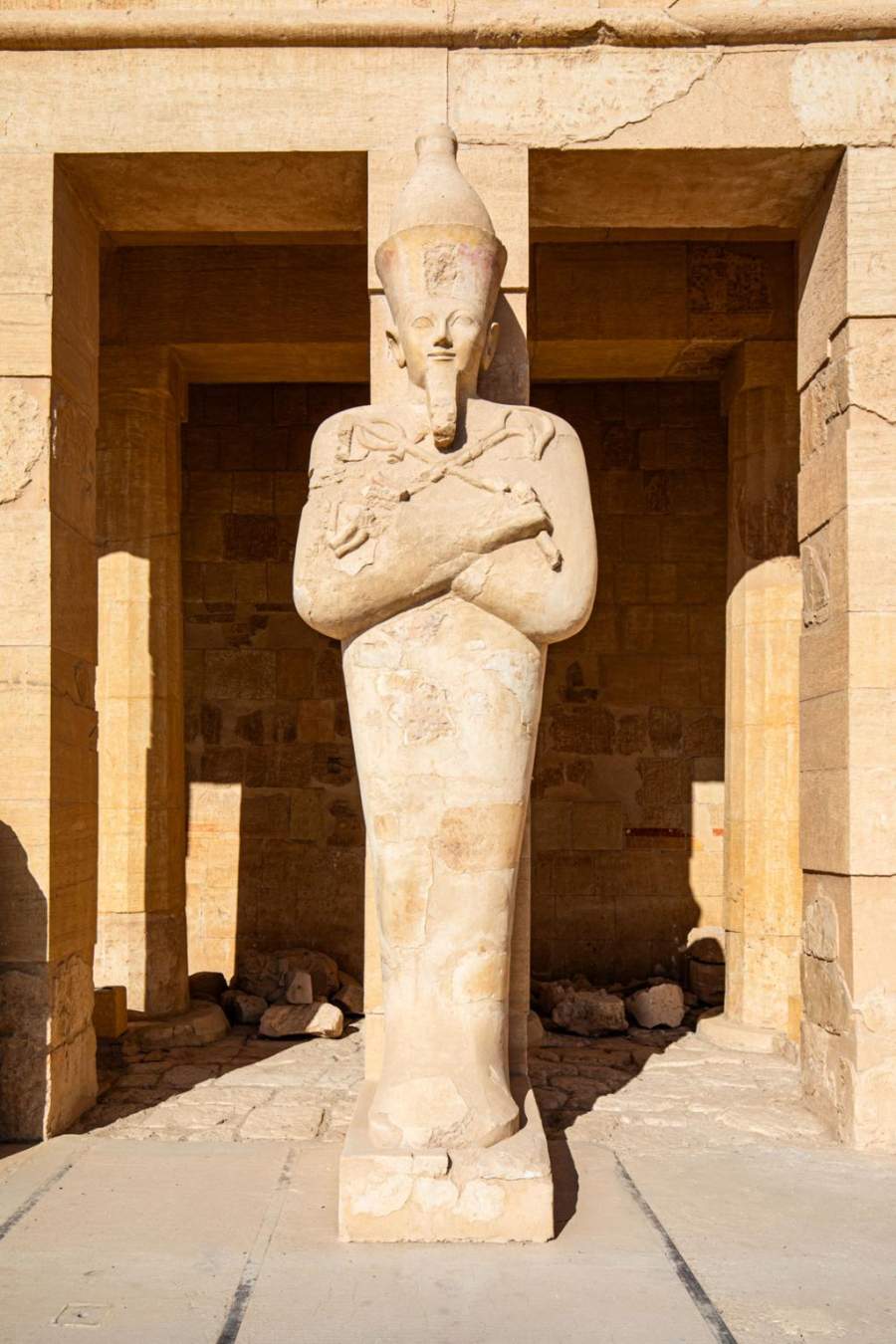
Here, visitors encounter representations of Hatshepsut in the form of Osiris, the ancient Egyptian god associated with the dead and the afterlife.
At the rear of the upper courtyard lies the sacred area of the temple, with a passage cut into the living rock leading toward the sanctuary of Amun.
The Famous Expedition to Punt
Perhaps the most fascinating scenes at the Temple of Hatshepsut are the reliefs depicting the expedition to the mysterious land of Punt.
The location of ancient Punt is still discussed by scholars, although the Egyptian Ministry of Tourism and Antiquities notes that it is believed to have been somewhere near modern Eritrea.
The reliefs depict the people of Punt, their homes, local vegetation, animals, and the valuable products brought back to Egypt.
Among the goods represented are exotic products and animals that were considered valuable for Egyptian religious and royal life.
The scenes are particularly important because they provide visual information about how Egyptians understood and represented a distant trading partner.
UNESCO specifically identifies the frescoes at Deir el-Bahari that depict Hatshepsut's journey to Punt as an important part of the cultural significance of Ancient Thebes.
The Temple Was More Than a Monument to Hatshepsut
Although it is commonly called the Temple of Hatshepsut, the complex was not dedicated exclusively to the female pharaoh.
The temple included areas connected with several important deities and royal figures.
These included:
- Amun, one of ancient Egypt's most important gods
- Hathor, whose sacred associations were especially important at Deir el-Bahari
- Anubis, the funerary deity
- Ra-Horakhty, a solar deity
- Thutmose I, Hatshepsut's father
- Hatshepsut herself, whose mortuary cult was maintained at the temple
The central sanctuary was dedicated to Amun, emphasizing the temple's connection with the religious traditions of Thebes.
The Sanctuary of Amun
At the far end of the upper courtyard, the temple's central axis leads toward a sanctuary dedicated to Amun.
Part of this sacred space was carved directly into the mountain.
This relationship between architecture and natural rock is one of the defining characteristics of Deir el-Bahari.
The temple therefore creates a remarkable transition from the built environment into the natural mountain itself.
It was not simply a place where religious ceremonies occurred; the landscape formed an essential part of the temple's symbolism.
Hathor and the Sacred Landscape
The location of Hatshepsut's temple had religious importance long before her reign.
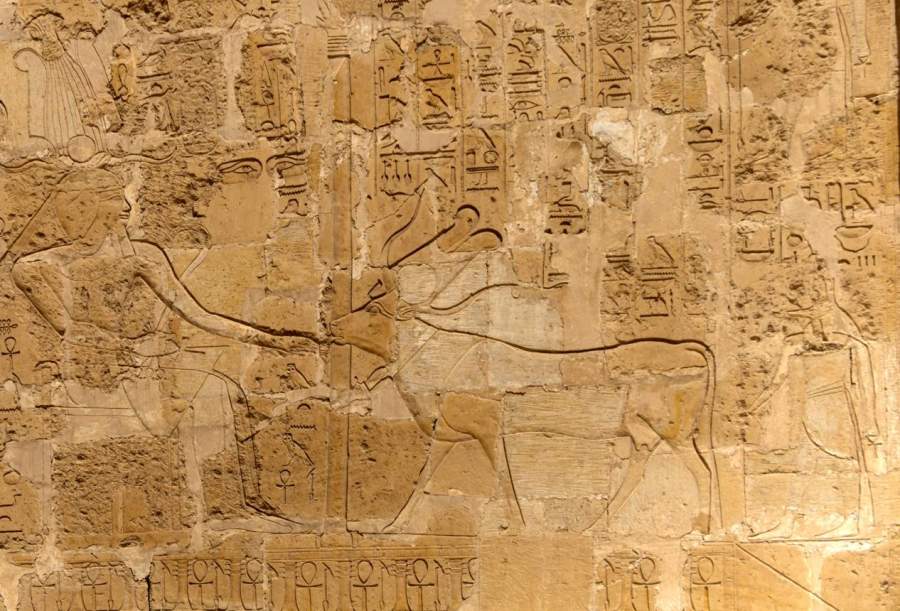
Deir el-Bahari was associated with Hathor, and the surrounding mountain landscape was regarded as a manifestation of the goddess's presence.
Representations of Hathor as a cow appear in connection with the site, reinforcing the relationship between the goddess, the mountain, and royal protection.
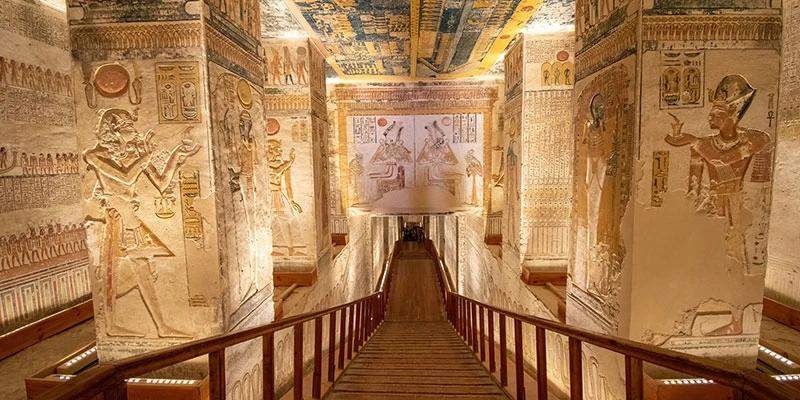
The sacred geography also connected the temple with the nearby Valley of the Kings, located beyond the mountain.
The Temple as a Mortuary Complex
The Temple of Hatshepsut was a mortuary temple.
Its purpose was connected with the religious rituals and cult of the deceased ruler. After death, Hatshepsut was understood within the framework of Egyptian beliefs concerning transformation and the afterlife.
The temple also had a connection with her father, Thutmose I.
Royal mortuary temples were important because they provided places where offerings and rituals could continue after the king or queen's death.
In this sense, the Temple of Hatshepsut was both a monumental statement of royal power and an active religious institution.
Reliefs That Tell Stories
One of the greatest attractions of the temple is its decorated walls.
Rather than relying only on inscriptions, the ancient Egyptians used reliefs to communicate religious beliefs, royal achievements, ceremonies, and historical narratives.
At Hatshepsut's temple, visitors can find scenes depicting:
- Religious rituals
- Religious festivals
- The expedition to Punt
- The transportation of obelisks
- Royal ceremonies
- Hatshepsut's divine legitimacy
- Worship of Egyptian gods
These scenes transform the temple into a visual historical record of Hatshepsut's reign.
Hatshepsut's Divine Legitimacy
One of the most politically significant themes in the temple is Hatshepsut's presentation of her right to rule.
The inscriptions emphasize her relationship with her father, Thutmose I, and also connect her birth and kingship with Amun.
In the temple's official narrative, her position as ruler was therefore supported by both royal inheritance and divine legitimacy.
This was particularly significant because Hatshepsut ruled as a female pharaoh in a political and religious system in which kingship was traditionally represented through male royal imagery.
The temple became one of the most important places where that royal identity was expressed visually and textually.
Hatshepsut's Osirid Statues
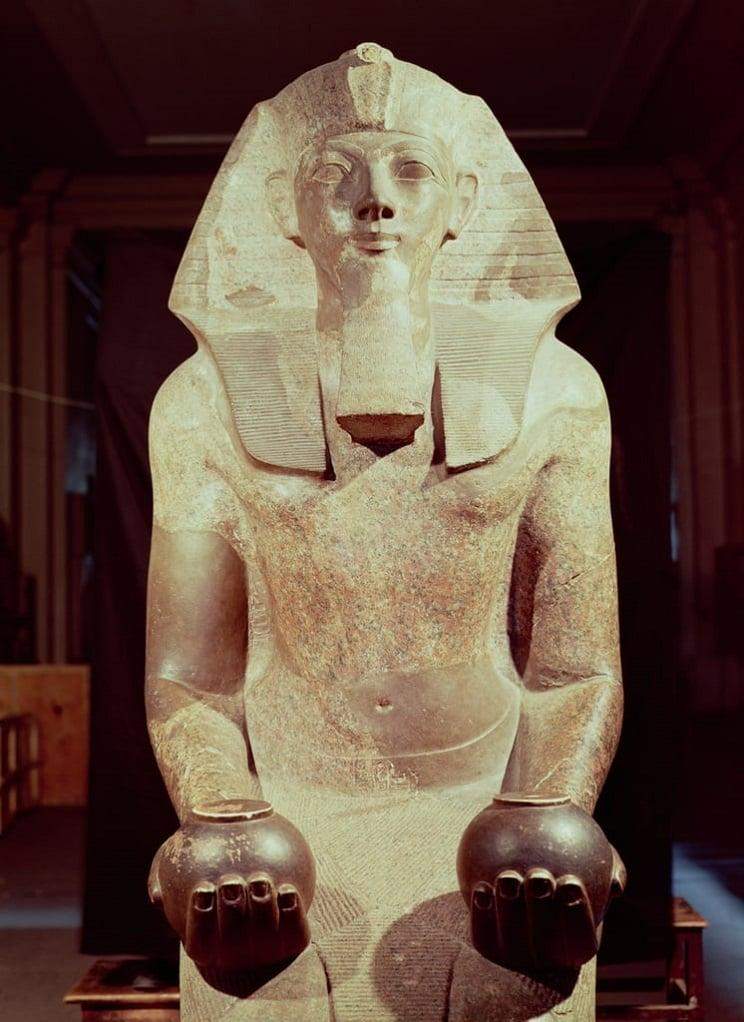
The upper terrace originally featured statues of Hatshepsut represented in the form of Osiris.
These mummiform figures stood against the pillars of the upper colonnade.
The imagery connected the deceased ruler with Osiris and therefore with the Egyptian concept of death, resurrection, and eternal existence.
A surviving head from one of these statues is preserved in the collections of the Egyptian Ministry of Tourism and Antiquities.
Hatshepsut Temple and Ancient Thebes
The temple should not be viewed in isolation.
It forms part of the enormous archaeological landscape of ancient Thebes, one of the most important cities in ancient Egyptian history.
The east bank contains major religious centers such as Karnak Temple and Luxor Temple, while the west bank contains royal mortuary temples and cemeteries, including the Valley of the Kings and Valley of the Queens.
UNESCO describes the entire area as an outstanding testimony to ancient Egyptian civilization.
This makes visiting Hatshepsut's temple especially rewarding when combined with other West Bank attractions.
Visiting the Temple of Hatshepsut
According to the current Egyptian Ministry of Tourism and Antiquities listing, the Temple of Hatshepsut is open daily from 6:00 AM to 5:00 PM. The ministry's current online listing gives ticket prices of EGP 440 for foreign adults and EGP 220 for foreign students, while Egyptian visitors are listed at EGP 40 for adults and EGP 20 for students.
Because ticket prices and visitor regulations can change, it is sensible to check the official Ministry of Tourism and Antiquities information before visiting.
Official Hatshepsut Temple information – Egyptian Ministry of Tourism and Antiquities
Best Time to Visit
Luxor can become extremely hot, especially during the middle of the day.
For a more comfortable experience, consider visiting early in the morning, particularly if you plan to explore several monuments on Luxor's West Bank.
Early morning also offers softer light for photography and can make the massive terraces and cliffs easier to appreciate.
If photography is important to you, allow enough time to explore the different levels rather than viewing the monument only from the entrance.
Nearby Attractions
The Temple of Hatshepsut is ideally positioned for exploring several major archaeological sites on Luxor's West Bank.
Nearby attractions include:
Valley of the Kings
The famous royal necropolis where many New Kingdom rulers were buried.
Valley of the Queens
Another important Theban cemetery containing royal and elite tombs.
Colossi of Memnon
Two enormous seated statues associated with the mortuary temple of Amenhotep III.
Medinet Habu
The impressive mortuary temple of Ramesses III, known for its monumental architecture and extensive reliefs.
Deir el-Medina
The settlement and cemetery associated with the artisans who worked on royal tombs.
These monuments form part of the wider UNESCO World Heritage property of Ancient Thebes and its Necropolis.
Why Visit the Temple of Hatshepsut?
The Temple of Hatshepsut offers a different experience from Egypt's pyramids and traditional temple complexes.
Its greatest attraction is the way several elements come together:
Architecture + Mountain + Religion + Royal History + Art
The three terraces create a dramatic architectural composition, while the surrounding cliffs make the temple feel integrated into the landscape.
Its reliefs tell stories about religion, kingship, international trade, and Hatshepsut's reign.
And its location within the Theban Necropolis places it at the heart of one of the world's greatest concentrations of ancient monuments.
Final Thoughts
The Temple of Queen Hatshepsut at Deir el-Bahari is much more than a spectacular ancient building.
It is a monument to one of Egypt's most distinctive rulers and a remarkable example of how ancient Egyptian architecture could transform an entire landscape into a sacred environment.
From its three enormous terraces and mountain backdrop to its scenes of the expedition to Punt and its sanctuaries dedicated to major gods, almost every part of the temple communicates something about ancient Egyptian religion, kingship, and culture.
For anyone exploring Luxor, the Temple of Hatshepsut is one of the essential monuments to experience—especially when combined with the Valley of the Kings and the other archaeological treasures of the West Bank.
Post a comment