
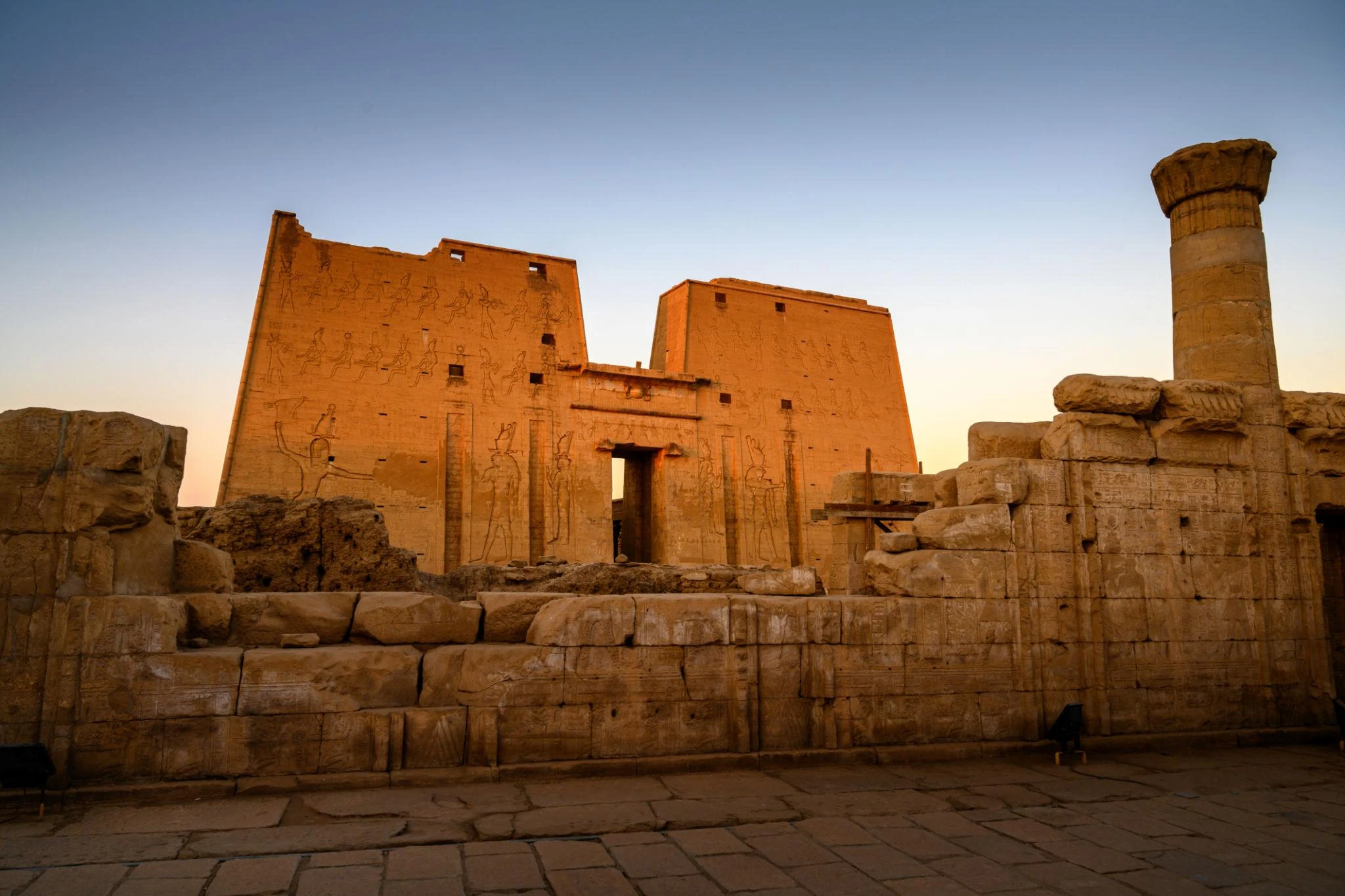
About 60 kilometres north of Luxor, near the town of Qena, Dendera is home to one of the best-preserved temple complexes in Egypt. It was dedicated to Hathor, goddess of love, music, joy and motherhood, and its colourful ceilings are among the most memorable sights in Upper Egypt.
History
Dendera was a sacred place long before the present temple was built, but the surviving structure dates mainly to the Ptolemaic and Roman periods. Construction of the main temple took place in the late Ptolemaic era, and decoration continued under Roman emperors, which is why Roman rulers appear in traditional pharaonic dress on its walls.
Highlights
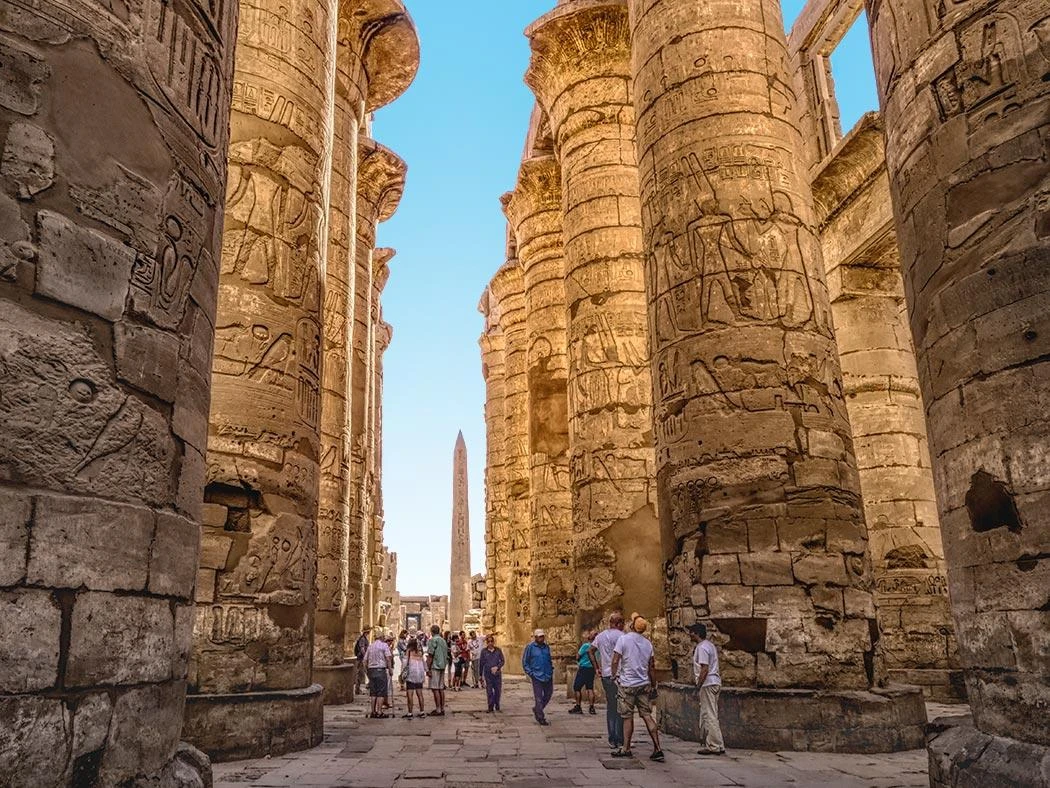
- Hypostyle hall: 24 massive columns topped with the face of Hathor support a ceiling painted with astronomical scenes.
- Astronomical ceilings and the Dendera Zodiac: the original circular zodiac relief was removed in the 19th century and is now in the Louvre, while a copy can be seen on the roof chapel.
- Crypts: narrow chambers inside the temple walls were used to store sacred objects and are decorated with fine reliefs.
- Roof chapels: stairways lead to the rooftop, where rituals linked to Osiris were performed and the views stretch over the Nile Valley.
- Rear wall: a large relief depicts Cleopatra VII with her son Caesarion.
How to Visit
Dendera is often paired with Abydos Temple as a full-day excursion from Luxor, and it fits naturally into a route toward Hurghada and the Red Sea. Bring a small torch for the crypts and allow time to look upwards: the ceiling is the real masterpiece.
Compare it with Edfu Temple, another outstanding Ptolemaic temple, to see how late-period builders preserved ancient traditions.