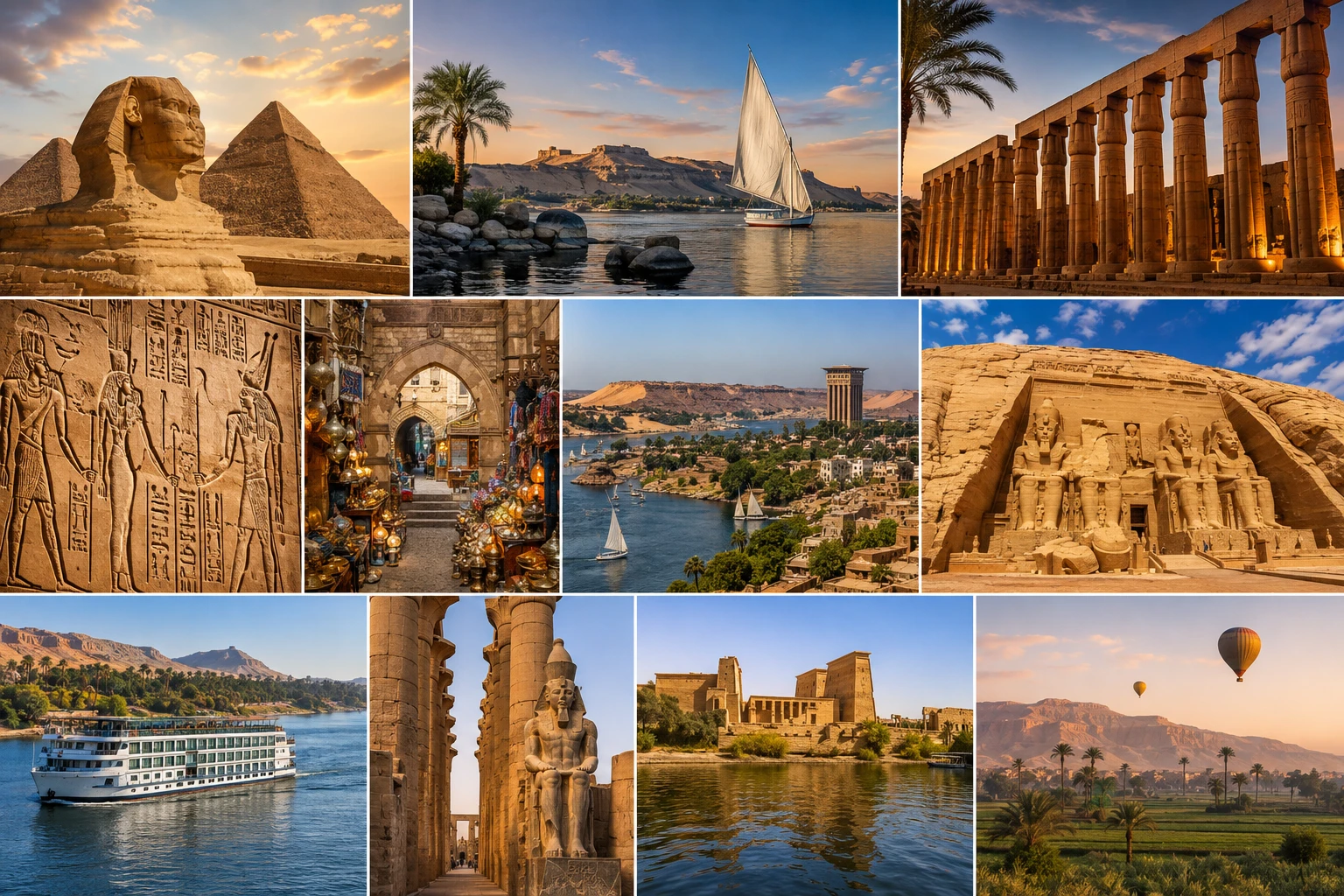

Carved into a sandstone cliff on the banks of Lake Nasser, Abu Simbel is one of the most spectacular monuments in Egypt. Built by Ramesses II in the 13th century BC, the two rock-cut temples were designed to impress travellers arriving from Nubia in the south and to proclaim the power of Egypt’s greatest warrior king.
The Great Temple of Ramesses II
The facade is guarded by four enormous seated statues of Ramesses II, each about 20 metres high. Inside, a series of halls leads deep into the mountain to a sanctuary with statues of Ra-Horakhty, Amun-Ra, Ptah and the deified king. The walls show scenes of Ramesses II’s campaigns, including the Battle of Kadesh.
The Small Temple of Nefertari
Next to the great temple stands a smaller temple dedicated to the goddess Hathor and to Queen Nefertari, the king’s favourite wife. Its facade features statues of the king and queen standing at equal height, which was an unusual honour for a royal wife.
The Sun Alignment
The temple was built so that twice a year, around 22 February and 22 October, the rising Sun’s rays travel the full length of the temple and light up the statues in the inner sanctuary. It is a striking example of the ancient Egyptians’ knowledge of astronomy and a perfect link to a trip planned around the Sun.
A Modern Rescue
When the Aswan High Dam threatened to flood the site, an international UNESCO campaign cut both temples into huge blocks and rebuilt them on higher ground between 1964 and 1968. Read more in our guide to the Aswan High Dam.
Visiting Abu Simbel
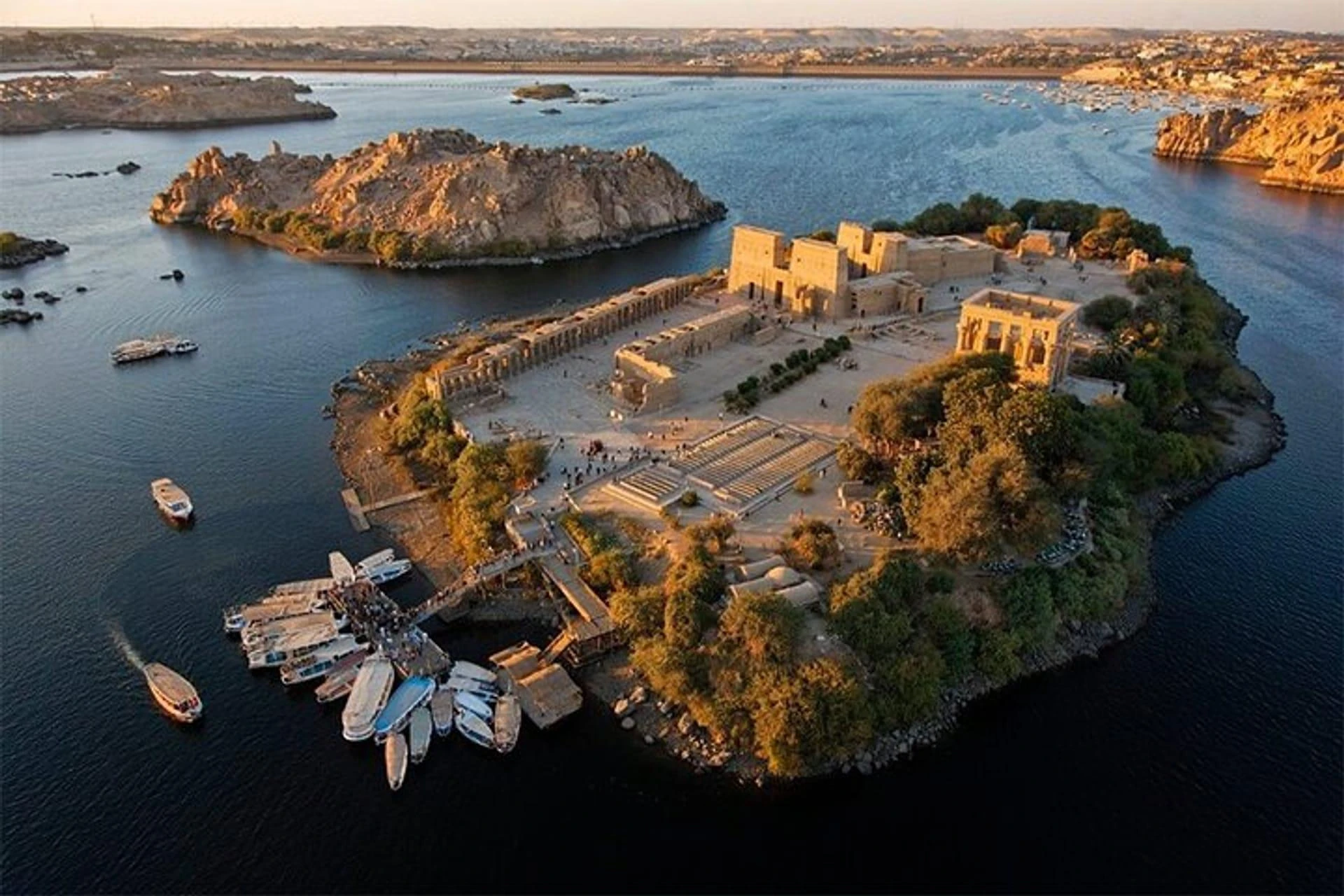
Abu Simbel lies about 280 kilometres south of Aswan, a drive of roughly three to three and a half hours each way, so most visitors leave very early in the morning to arrive before the heat. Wear a hat, bring water and allow around one to two hours at the temples. Many travellers combine it with Philae Temple in Aswan.