

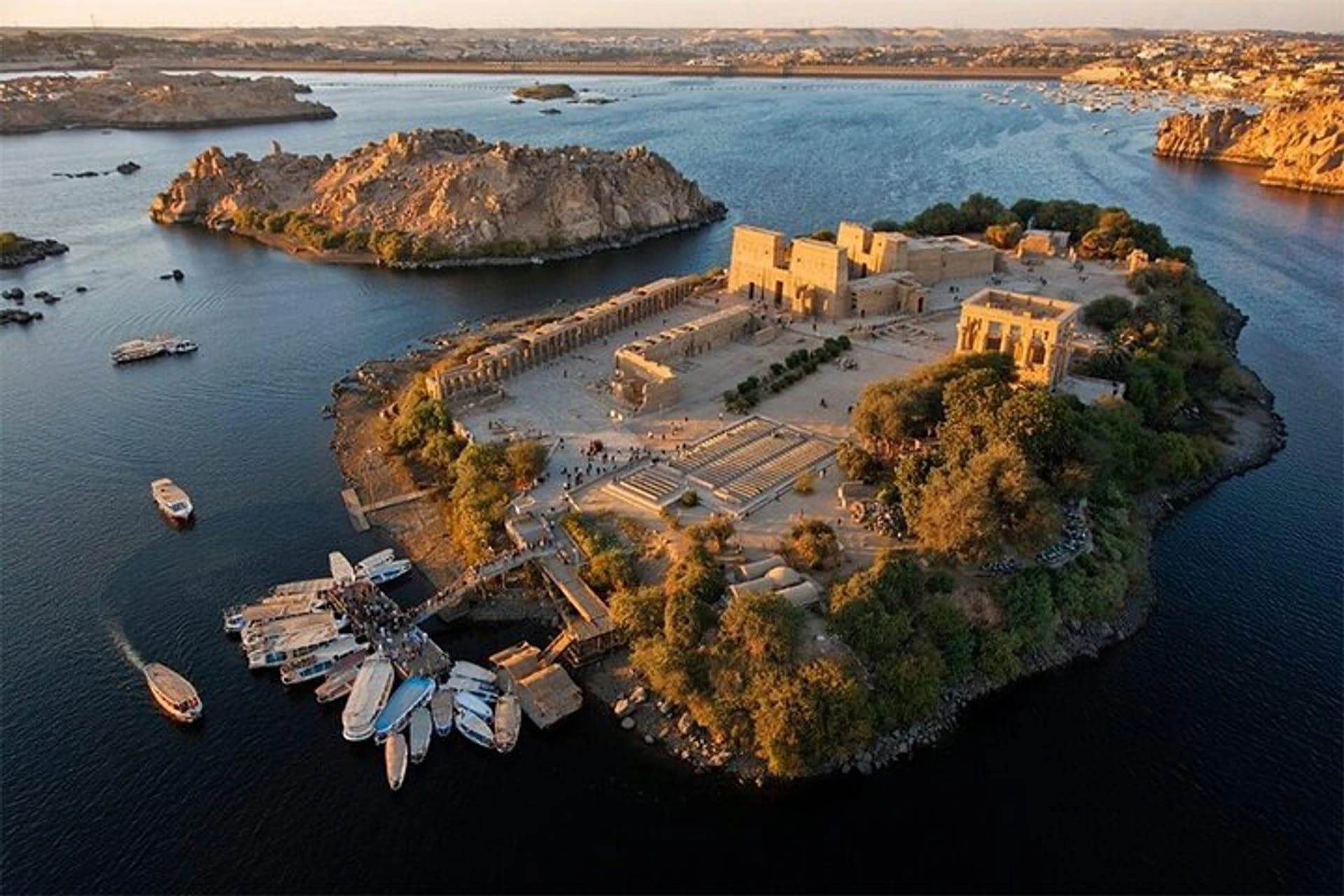
Few ancient Egyptian monuments have a setting as beautiful as Philae Temple. Located on an island in the Nile near Aswan, this remarkable temple complex combines ancient Egyptian history, mythology, architecture, and breathtaking river scenery.
Dedicated primarily to the goddess Isis, Philae was one of the most important religious centers of ancient Egypt. What makes the site even more fascinating is that the temple complex was moved from its original location to Agilkia Island to protect it from the rising waters created by the construction of the Aswan High Dam.
Today, visiting Philae Temple is one of the most memorable experiences in southern Egypt.


Where Is Philae Temple?
Philae Temple is located on Agilkia Island, near the city of Aswan in southern Egypt.
The temple complex was originally built on Philae Island, but the island was partially submerged after the construction of the old Aswan Dam and was later threatened even more by the Aswan High Dam.
An international campaign led to the relocation of the monuments to nearby Agilkia Island, where they were carefully reconstructed.
The new island was also landscaped to resemble the original setting as closely as possible.
Who Built Philae Temple?
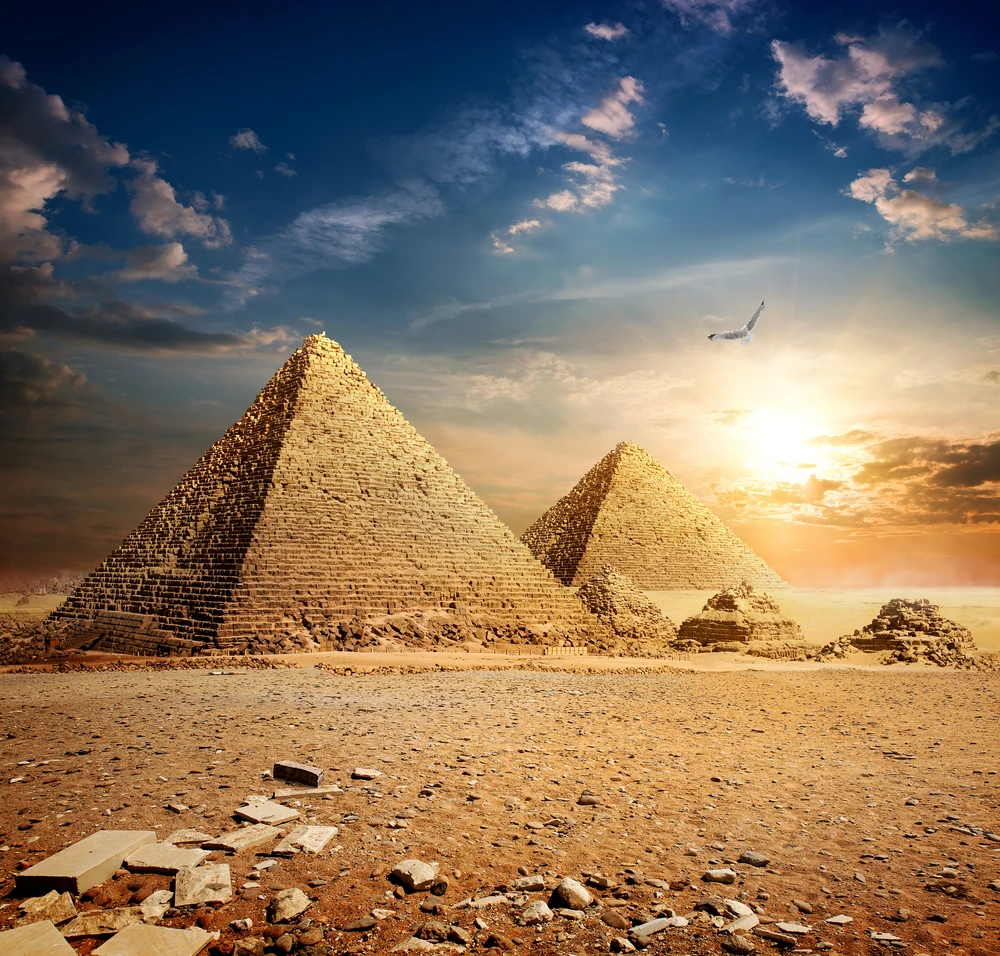
Unlike the Great Pyramid of Giza, which was constructed during the Old Kingdom, Philae's main monuments were built much later.
Much of the temple complex dates to the Ptolemaic and Roman periods, although the site had religious importance before these structures were built.
Several rulers contributed to the complex, including Ptolemy II Philadelphus, Ptolemy IV, Ptolemy VI, Ptolemy VIII, and Roman emperors.
This mixture of Egyptian, Ptolemaic, and Roman influences makes Philae particularly interesting for visitors interested in the later history of ancient Egypt.


The Temple of Isis
The most important monument at Philae is the Temple of Isis.
Isis was one of the most important goddesses in ancient Egyptian religion. She was associated with motherhood, magic, protection, and the resurrection of her husband Osiris.
According to Egyptian mythology, Isis played a central role in restoring Osiris after his death and protecting their son Horus.
Because of these beliefs, Philae became an important center for the worship of Isis.
The temple's walls contain beautiful reliefs showing gods, kings, religious ceremonies, and scenes connected to ancient Egyptian mythology.
The Story of Isis and Osiris
To understand why Philae was so important, it helps to understand the myth of Isis and Osiris.
Osiris was murdered by his brother Seth, who wanted to take his position as ruler. Isis searched for the pieces of Osiris's body and used her magical powers to restore him.
Their son, Horus, eventually challenged Seth and fought to reclaim his father's rightful place.
This story was central to ancient Egyptian religious beliefs and was particularly important at Philae.


The temple's reliefs provide visitors with a visual connection to these ancient stories.
The First Pylon
One of the first things visitors notice at Philae is the enormous first pylon.
The monumental gateway is decorated with reliefs of Egyptian gods and royal figures.
Like pylons at other Egyptian temples, it marks the entrance into the sacred part of the complex.


The scale of the gateway creates an impressive first impression and gives visitors an idea of how monumental ancient Egyptian temples were designed to feel.
The Kiosk of Trajan
Another famous structure at Philae is the Kiosk of Trajan.
This elegant Roman-period monument consists of large columns surrounding an open structure overlooking the Nile.
It is one of the most recognizable buildings on the island and has become one of the iconic images associated with Philae.


The combination of ancient Egyptian temples, Roman architecture, and the surrounding Nile makes this one of the most photogenic places in Aswan.
The Temple of Hathor
The Philae complex also contains a temple dedicated to Hathor, one of the most important goddesses in ancient Egyptian religion.
Hathor was associated with love, motherhood, music, beauty, and joy.
The reliefs and columns of the temple complex demonstrate the continued importance of traditional Egyptian religious imagery even during the Ptolemaic and Roman periods.
The Temple's Connection to Nubia
Philae is also important because of its location in the historic region of Nubia.
For centuries, the area around Aswan served as an important meeting point between Egypt and Nubia.
The Nile connected communities, trade routes, and cultures across southern Egypt and further into Africa.
A visit to Philae can therefore be combined with other Aswan experiences, including Nubian villages, Lake Nasser, the Aswan High Dam, and trips to Abu Simbel.
How Was Philae Temple Saved?
Perhaps the most remarkable chapter in Philae's modern history is the story of its rescue.
After the construction of the Aswan High Dam, the waters of Lake Nasser threatened to permanently submerge the ancient monuments on Philae Island.


An international archaeological campaign was organized to save the site.
The monuments were carefully dismantled into thousands of pieces and moved to Agilkia Island, where they were reconstructed.
The project was part of the wider international effort to preserve Nubian monuments threatened by the construction of the High Dam.
The successful relocation is considered an important achievement in the history of archaeological conservation.
Visiting Philae Temple Today
Today, visitors normally reach Philae by boat, which makes the journey itself part of the experience.
As the boat approaches the island, the temple's pylons and columns gradually appear above the Nile.


Once on the island, you can explore the different temples, gateways, courtyards, columns, and reliefs.
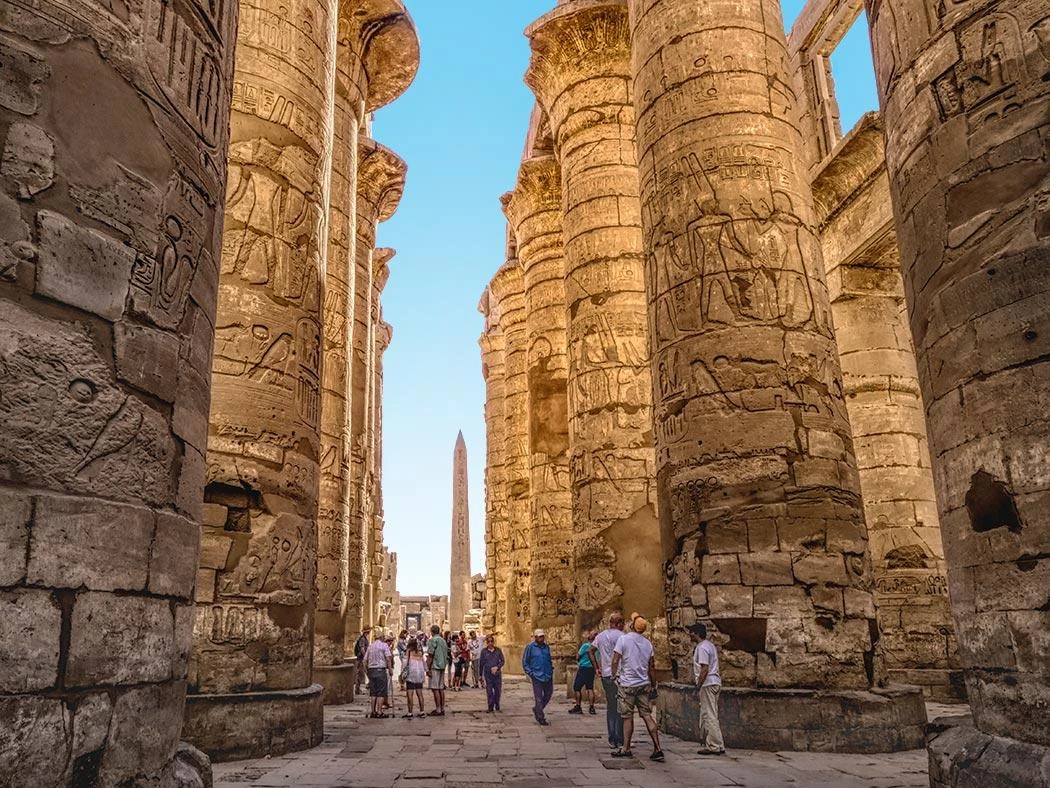
The combination of the archaeological monuments and the surrounding water gives Philae a completely different atmosphere from temples such as Karnak or Luxor.
Best Time to Visit Philae Temple
Aswan can become extremely hot during the summer months.
For a more comfortable experience, many travelers prefer visiting between October and April, when temperatures are generally more suitable for sightseeing.
Early morning and late afternoon can also provide beautiful natural light for photography.


If you are planning a trip to Aswan during winter, Philae works especially well as part of a wider itinerary that includes the High Dam, Nubian villages, and a Nile cruise.
What Can You See at Philae?
A visit to the complex can include several remarkable monuments and features:
- Temple of Isis
- First and second pylons
- Temple of Hathor
- Kiosk of Trajan
- Ancient columns and courtyards
- Hieroglyphic inscriptions
- Reliefs depicting Egyptian gods and kings
- Beautiful views of the Nile
Each structure contributes to the story of Philae and its importance as a religious center.
Why Should You Visit Philae Temple?
Philae is special for several reasons.
First, it is one of the most important surviving centers associated with the worship of Isis.
Second, the temple complex contains monuments from different periods, allowing visitors to see how Egyptian religious traditions continued under Ptolemaic and Roman rulers.
And finally, its island setting makes the experience visually spectacular.
You are not simply walking through an ancient temple—you are arriving by boat at a historic sanctuary surrounded by the Nile.
Post a comment