
Wadi El-Hitan (Valley of the Whales): A Journey Through 40 Million Years of History
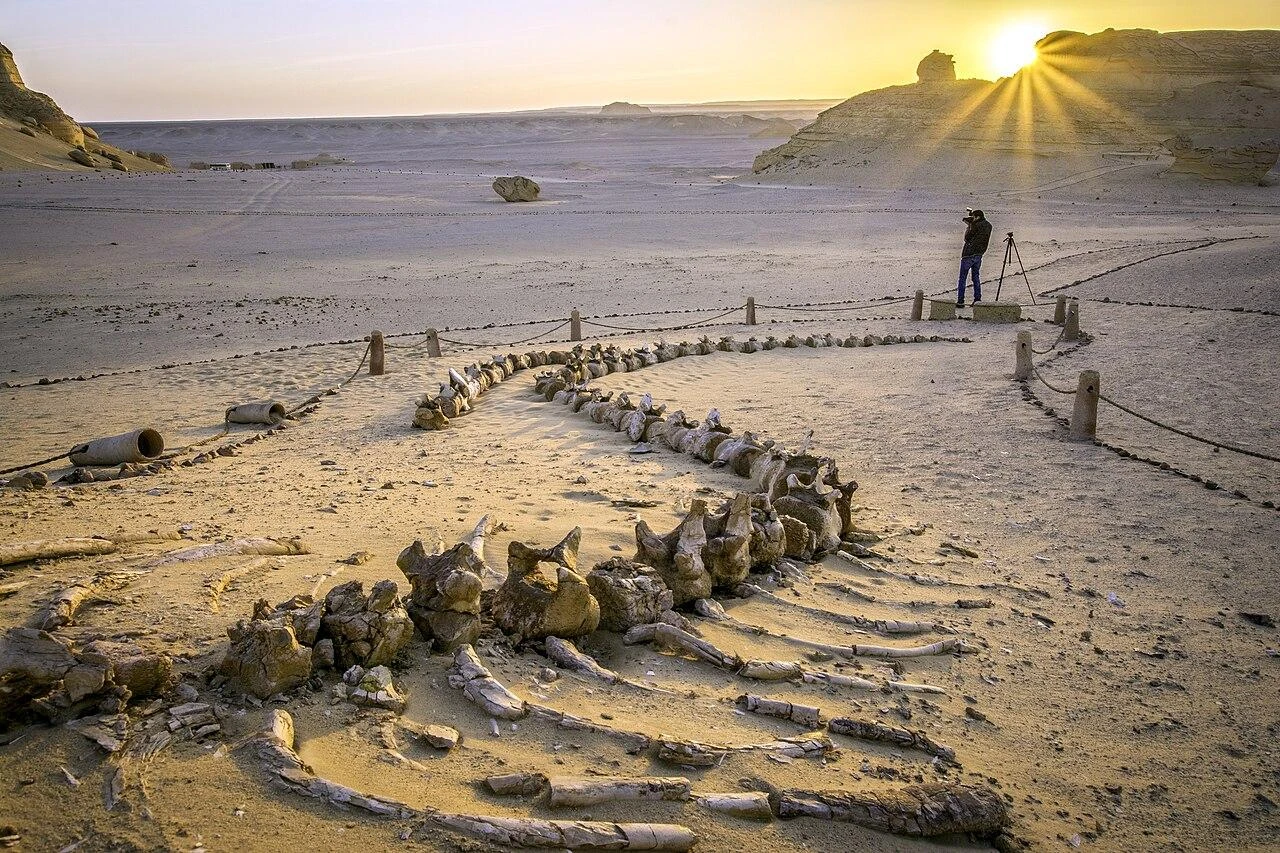
Deep in Egypt’s Western Desert, far from the coastline, lies a place where the remains of ancient whales tell an extraordinary story. Wadi El-Hitan, known as the Valley of the Whales, is one of the most remarkable natural heritage sites in the world.
Here, visitors can walk among enormous fossilized whale skeletons, explore dramatic desert formations, and discover how creatures that once lived on land gradually evolved into the ocean-dwelling whales we know today.
Located within the Wadi El-Rayan Protected Area in Fayoum, this extraordinary destination offers a rare combination of science, natural beauty, and adventure.
1. Where Is Wadi El-Hitan Located?
Wadi El-Hitan is located in the Western Desert of Egypt, within the Wadi El-Rayan Protected Area in Fayoum Governorate. It lies southwest of Cairo and west of the Fayoum Oasis.
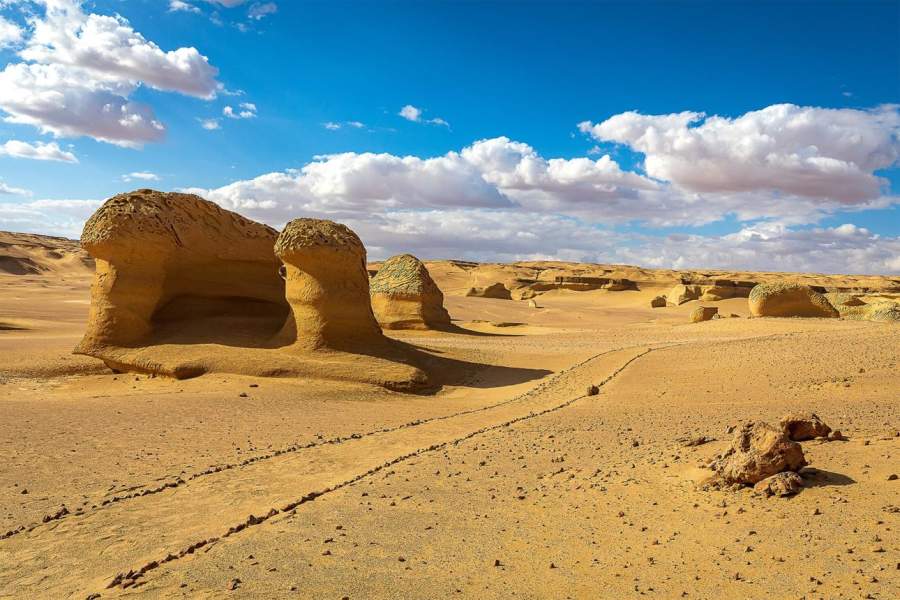
The valley is surrounded by an impressive desert landscape of sand, limestone formations, and ancient geological layers. Despite being far from the sea today, this area was once covered by a shallow ocean millions of years ago.
Its remote location makes the journey part of the experience, especially for travelers interested in desert landscapes and Egypt’s natural wonders.
2. The Fascinating History of the Valley

The story of Wadi El-Hitan goes back approximately 40 million years, to the Eocene geological period.
At that time, a warm, shallow sea covered much of the region. It was home to numerous marine creatures, including early whales, sharks, sea cows, and other aquatic animals.
As geological changes transformed the landscape and the sea gradually retreated, the remains of these creatures became buried beneath layers of sediment. Over millions of years, they were preserved as fossils.
Today, these fossils provide scientists with an exceptional record of ancient marine life and the evolution of whales.
In 2005, UNESCO added Wadi Al-Hitan to the World Heritage List because of its outstanding importance in understanding the evolution of life on Earth.
UNESCO World Heritage Centre+1
3. The Ancient Whales: Evidence of Evolution
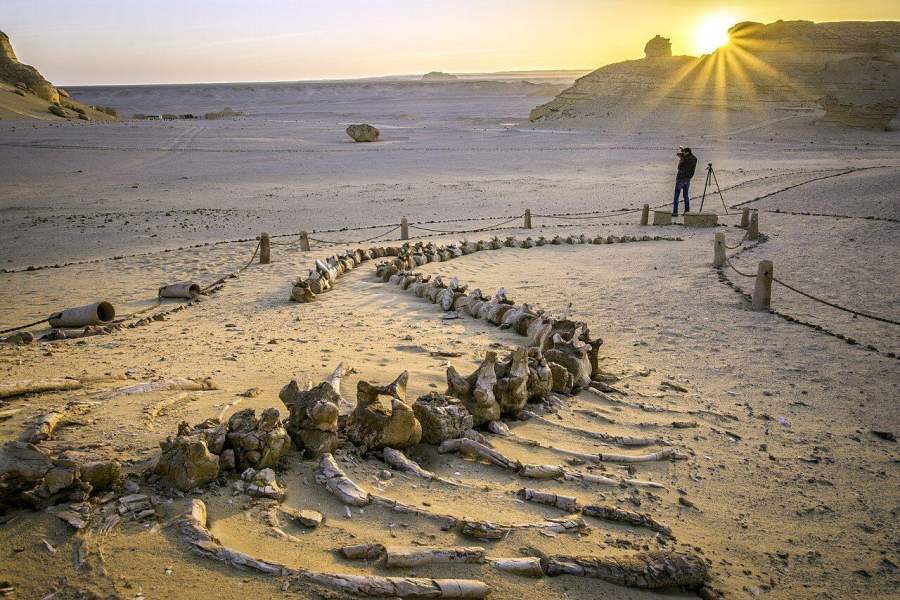
The most extraordinary feature of Wadi El-Hitan is its collection of ancient whale fossils, particularly those belonging to the extinct group known as Archaeoceti.
These early whales reveal an important stage in the evolution of whales from land-dwelling mammals into fully aquatic animals.
Some fossils preserve small hind limbs, feet, and toes—features that provide remarkable evidence of their evolutionary transition.
Among the most notable ancient whales found in the valley are:
-
Basilosaurus: A large prehistoric whale with an elongated body and reduced hind limbs.
-
Dorudon: An ancient whale that helps scientists understand the development of early fully aquatic whales.
The fossils are especially valuable because many remain in their original geological setting, allowing visitors to see the evidence where it was preserved.
4. The Open-Air Fossil Museum
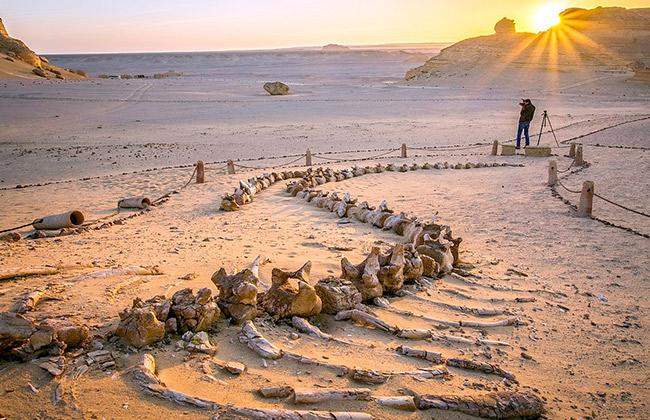
Wadi El-Hitan is often described as a natural open-air museum. Instead of displaying every fossil inside a traditional building, the valley allows visitors to encounter many remains within the desert landscape where they were discovered.
Walking along the designated visitor routes, you may see:
-
Ancient whale skeletons and vertebrae.
-
Fossilized remains of marine animals.
-
Geological layers that reveal different stages of the area's history.
-
Interpretive displays explaining the evolution of whales and the ancient environment.
The experience makes the scientific importance of the site easier to understand, even for visitors who are not experts in geology or paleontology.
5. The Desert Landscape and Natural Beauty
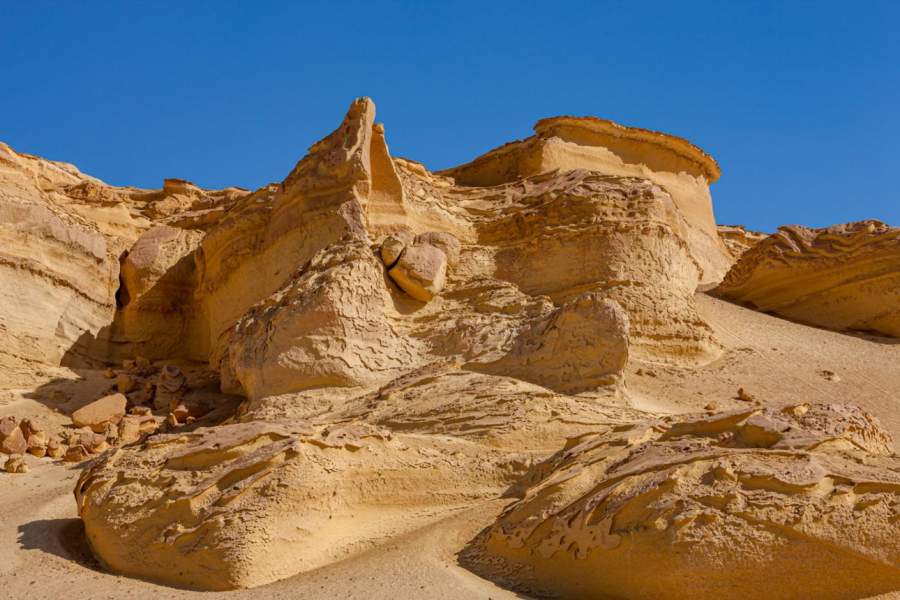
Beyond its fossils, Wadi El-Hitan is an unforgettable destination for nature lovers and photographers.
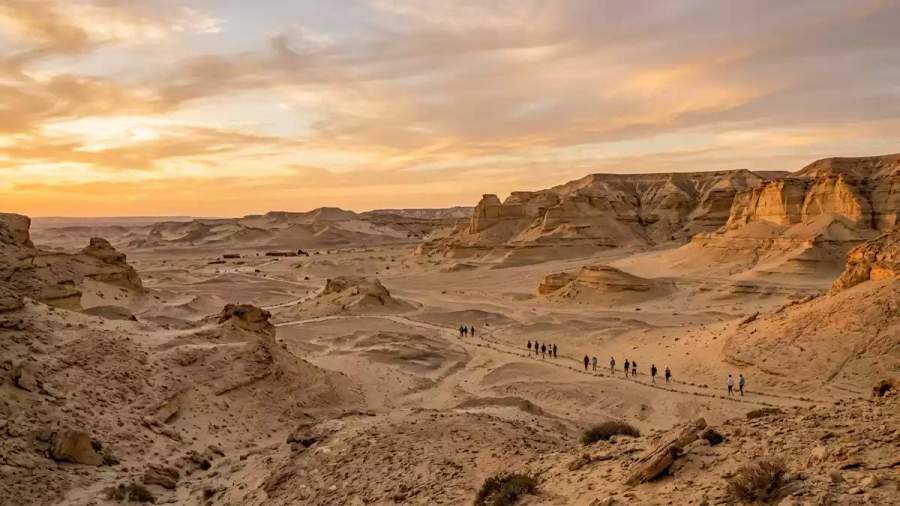
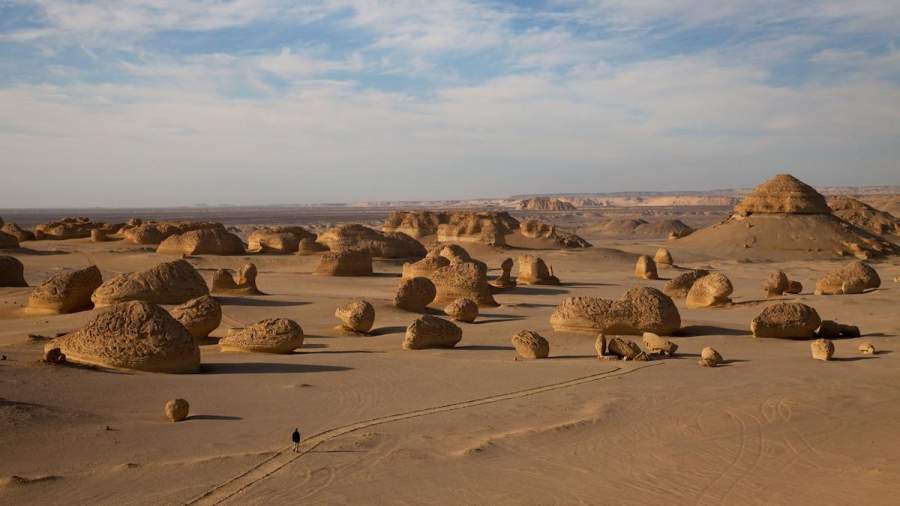
The landscape features unusual rock formations, open sandy spaces, weathered limestone, and beautiful desert colors. Wind and erosion have gradually shaped the rocks, creating a distinctive scenery that feels almost otherworldly.
The contrast between the ancient fossils and the peaceful desert surroundings gives the valley a special atmosphere.
It is also an excellent place to appreciate the geological history of Egypt and the powerful natural processes that have shaped its landscapes over millions of years.
6. The Wadi El-Hitan Fossils and Their Scientific Importance
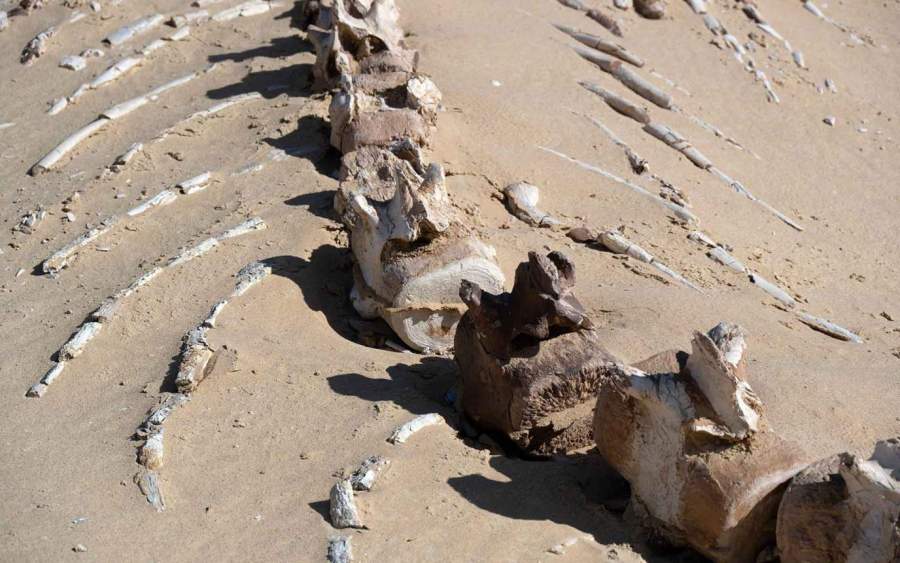
Wadi El-Hitan is important not simply because it contains ancient fossils, but because of the quality, concentration, and scientific value of those remains.
The fossils help researchers investigate several important questions:
-
How did early whales develop from land mammals?
-
How did their bodies change to adapt to life in water?
-
What did the ancient marine environment look like?
-
Which other animals shared this prehistoric ecosystem?
The valley preserves evidence of an important chapter in the history of mammals and provides an exceptional opportunity to study evolution through fossils in their natural geological context.
UNESCO World Heritage Centre+1
7. Nearby Attractions to Explore in Fayoum
Wadi El-Hitan can be part of a wider journey through Fayoum, a region famous for its lakes, desert scenery, and natural attractions.

Wadi El-Rayan
A protected natural area known for its lakes, desert surroundings, and waterfalls. It is one of the best-known natural destinations in Fayoum.
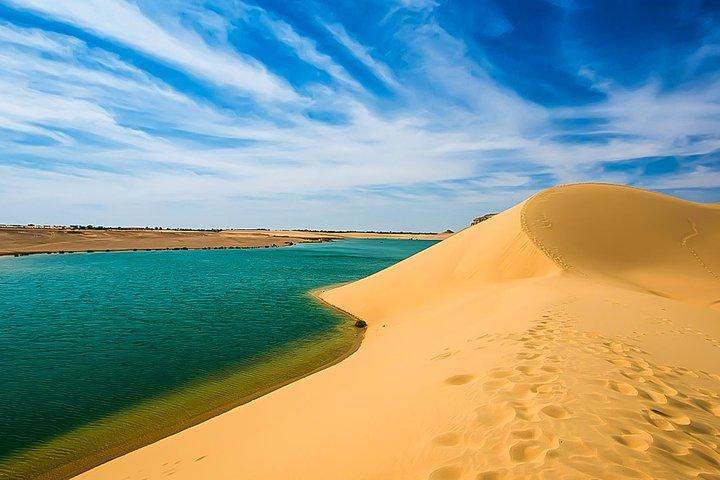
Magic Lake
A beautiful desert lake surrounded by sand dunes and hills. Its changing colors and peaceful scenery make it a popular stop for visitors exploring the Fayoum desert.

Lake Qarun
One of Egypt’s most famous natural lakes, offering scenic views and an opportunity to discover another side of Fayoum’s natural heritage.
8. Best Time to Visit Wadi El-Hitan
The cooler months, particularly from autumn through spring, are generally the most comfortable time to explore Wadi El-Hitan.
During these months, temperatures are usually more suitable for walking and outdoor activities.
For the best experience:
-
Start your visit early in the morning.
-
Avoid the strongest midday sun, especially during summer.
-
Bring enough drinking water.
-
Wear comfortable walking shoes and sun protection.
-
Check access arrangements and road conditions before your trip.
A guided visit can also help you understand the scientific importance of the fossils and the history of the area.
9. Essential Tips Before Visiting
To enjoy your visit while helping protect this unique heritage site, keep these recommendations in mind:
-
Choose suitable transportation: Arrange appropriate desert transportation and confirm current access requirements before departure.
-
Wear comfortable clothing: Lightweight clothes, walking shoes, sunglasses, and a hat are useful.
-
Carry water and snacks: Facilities can be limited in remote desert areas.
-
Respect the fossils: Never touch, move, or collect fossil remains.
-
Follow marked paths: Stay within designated visitor areas to protect the landscape.
-
Bring your camera: The fossil skeletons and desert scenery offer excellent photography opportunities.
Remember that Wadi El-Hitan is a protected natural heritage site. Responsible tourism helps preserve it for future generations.
10. Why Wadi El-Hitan Deserves a Place on Your Egypt Itinerary
Wadi El-Hitan is much more than a desert destination. It is a place where the history of life on Earth becomes visible.
Standing beside the fossilized skeleton of an ancient whale, surrounded by a landscape that was once beneath the sea, offers a powerful connection to a world that existed millions of years before humans.
Whether you are passionate about nature, science, photography, or adventure, the Valley of the Whales offers an experience unlike any other in Egypt.
Discover Wadi El-Hitan with Magic Egypt Tours and explore one of Egypt’s most extraordinary natural treasures.