

Valley Temple of Khafre: The Ancient Gateway to the Pyramid Complex
Standing beside the Great Sphinx on the Giza Plateau, the Valley Temple of Khafre is one of the best-preserved monuments from Egypt's Old Kingdom. Although it is often overshadowed by the enormous pyramids nearby, this ancient temple provides a fascinating look at the religious architecture and royal funerary traditions of ancient Egypt.
Built during the reign of King Khafre (c. 2558–2532 BC), the temple formed an important part of his pyramid complex and was connected to the pyramid's upper, or mortuary, temple by a long causeway. Today, its enormous stone blocks, granite pillars, alabaster floors, and remarkable location beside the Sphinx make it one of the most impressive stops at Giza.


What Is the Valley Temple of Khafre?
The Valley Temple was part of the pyramid complex of King Khafre, the builder of the second-largest pyramid at Giza.
Ancient Egyptian pyramid complexes were not simply enormous tombs. They included a series of interconnected structures used for the religious rituals associated with the deceased king. The Valley Temple stood at the lower end of the complex, while the mortuary temple was positioned closer to the pyramid. A causeway connected the two.
The location of Khafre's Valley Temple is particularly spectacular because it stands directly beside the Great Sphinx and the Sphinx Temple.
The Egyptian Ministry of Tourism and Antiquities notes that the Valley Temple was completed before construction of the Great Sphinx and its temple began.
Who Built the Valley Temple?
The temple was constructed during the reign of King Khafre, who ruled during Egypt's Fourth Dynasty.
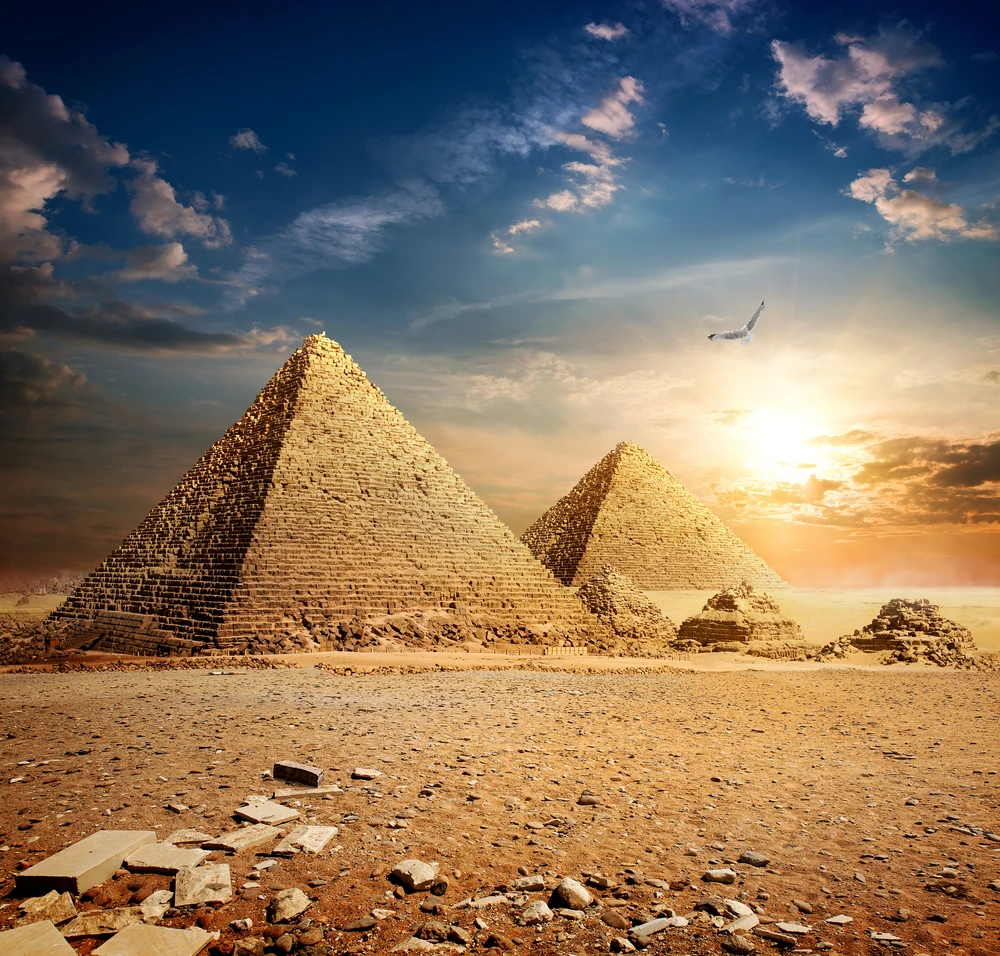
Khafre was the son of King Khufu, the ruler who built the Great Pyramid. Khafre created his own pyramid complex on the Giza Plateau, positioning the pyramid on higher ground. Although Khafre's pyramid is actually slightly shorter than Khufu's, its elevated position makes it appear extremely impressive when viewed from the Giza Plateau.
Khafre's pyramid originally stood about 143.5 meters high, and part of its original polished limestone casing remains near the summit today.


The Architecture of the Valley Temple
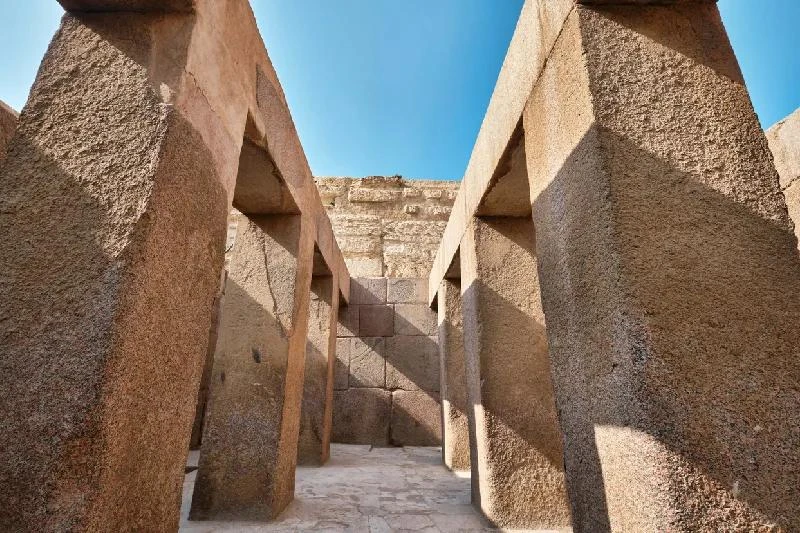
One of the most remarkable things about the Valley Temple is its massive and relatively simple architectural design.
The temple was constructed using huge limestone blocks, many of which were covered with granite. Its floors were made of alabaster, while the wide interior hall contained enormous monolithic granite pillars.
Inside, the architecture creates a dramatic combination of enormous stone surfaces, pillars, corridors, and carefully arranged spaces.


The lack of elaborate decoration compared with some later Egyptian temples makes the building particularly striking. Its power comes from the scale and precision of the stonework.
The massive blocks fit together with remarkable precision, demonstrating the extraordinary engineering skills of Old Kingdom builders.
The Granite Pillars
One of the most recognizable features of the Valley Temple is its collection of huge granite pillars.
These monolithic columns were carefully positioned inside the temple's broad hall. Their enormous size gives the interior a sense of strength and permanence.

The contrast between the darker granite and the lighter stone surfaces creates beautiful patterns of light and shadow, especially when sunlight enters the temple.
For photographers, the interior pillars and corridors are among the most visually interesting parts of the monument.
The Temple and the Great Sphinx
Perhaps the most extraordinary aspect of the Valley Temple is its relationship with the Great Sphinx.
The Sphinx stands immediately beside the temple complex, creating a unique concentration of ancient monuments in one location.
The Ministry of Tourism and Antiquities says archaeological analysis indicates that the Valley Temple was completed before construction began on the Great Sphinx and its associated temple. The Sphinx itself is generally associated with Khafre's reign.

Walking between these monuments gives visitors a remarkable sense of how the different parts of Khafre's pyramid complex were organized.
The Famous Statue of King Khafre
The Valley Temple is also important because archaeologists discovered several statues of King Khafre there.
One of the most famous is the diorite statue of Khafre seated on his throne, now displayed in the Egyptian Museum in Cairo.
In the statue, the falcon god Horus appears behind the king's head with his wings spread protectively around him. The throne also features the sema-tawy, a symbol associated with the unity of Upper and Lower Egypt.


The statue is considered one of the masterpieces of ancient Egyptian art and provides an extraordinary connection between the Valley Temple and the royal imagery of the Fourth Dynasty.
Why Was the Valley Temple Important?
The Valley Temple was not an isolated building. It was part of a carefully designed royal funerary complex.
Ancient Egyptian priests maintained the religious cult of deceased kings in pyramid temples, where offerings were presented and the king's divine aspect was worshipped. The Valley Temple formed the lower end of this larger complex and was connected to the upper structures by the causeway.
This means that when you visit the temple today, you are looking at one part of a much larger religious landscape created to support the king's transition into the afterlife.
Why Is the Valley Temple So Well Preserved?
The Valley Temple is remarkable not only because of its age but also because so much of its massive structure survives.
Its construction with enormous stone blocks and its location on the Giza Plateau helped preserve the building over thousands of years.
The Egyptian Ministry of Tourism and Antiquities describes both Khafre's mortuary temple and Valley Temple as among the best-preserved temples of the Old Kingdom.

Visiting the Valley Temple of Khafre
The Valley Temple is located on the Giza Plateau, next to the Great Sphinx and near the Pyramid of Khafre.
Because the temple is part of the wider Giza archaeological area, visitors can combine it with several major attractions in the same trip.
A typical visit can include:
- The Great Pyramid of Khufu
- Pyramid of Khafre
- Pyramid of Menkaure
- Great Sphinx
- Valley Temple of Khafre
- The Giza Plateau
- Nearby archaeological sites
The Ministry of Tourism and Antiquities currently lists the Giza Plateau opening hours as 8:00 AM to 4:00 PM, although visitors should check the official site before traveling because schedules and ticket arrangements can change.
Best Time to Visit
The Giza Plateau is an outdoor archaeological site, so the weather can make a major difference to your experience.
The cooler months, particularly October through April, are generally more comfortable for exploring the pyramids and surrounding monuments.
If you visit during the warmer months, an early-morning visit can help you avoid the strongest midday heat.
The early morning also offers beautiful light for photography, especially around the Sphinx and the Valley Temple.
Why You Should Visit the Valley Temple of Khafre
Many visitors come to Giza focused entirely on the pyramids.
But the Valley Temple tells a different story.
Here, you can see the engineering, religious beliefs, architectural planning, and royal symbolism behind the pyramid complex.
Standing inside the massive granite-pillared hall, it is easy to understand why the monument has survived for more than four millennia.
And its location beside the Great Sphinx makes the experience even more extraordinary.
Final Thoughts
The Valley Temple of Khafre may not be as famous as the Great Pyramid or the Sphinx, but it is one of the most important monuments on the Giza Plateau.
Built during the reign of King Khafre, the temple was an essential part of his pyramid complex and remains one of the best-preserved examples of Old Kingdom temple architecture. Its massive limestone construction, granite pillars, alabaster floors, symmetrical design, and connection to the Sphinx make it a remarkable destination for anyone interested in ancient Egyptian history.
If you're visiting the Giza Pyramids, don't simply stop at the pyramids and take a photo with the Sphinx. Walk into the Valley Temple and experience the monument that helped complete Khafre's extraordinary royal complex.
Post a comment