
The White Desert, Egypt: Explore the Magical Chalk Sculptures of the Sahara
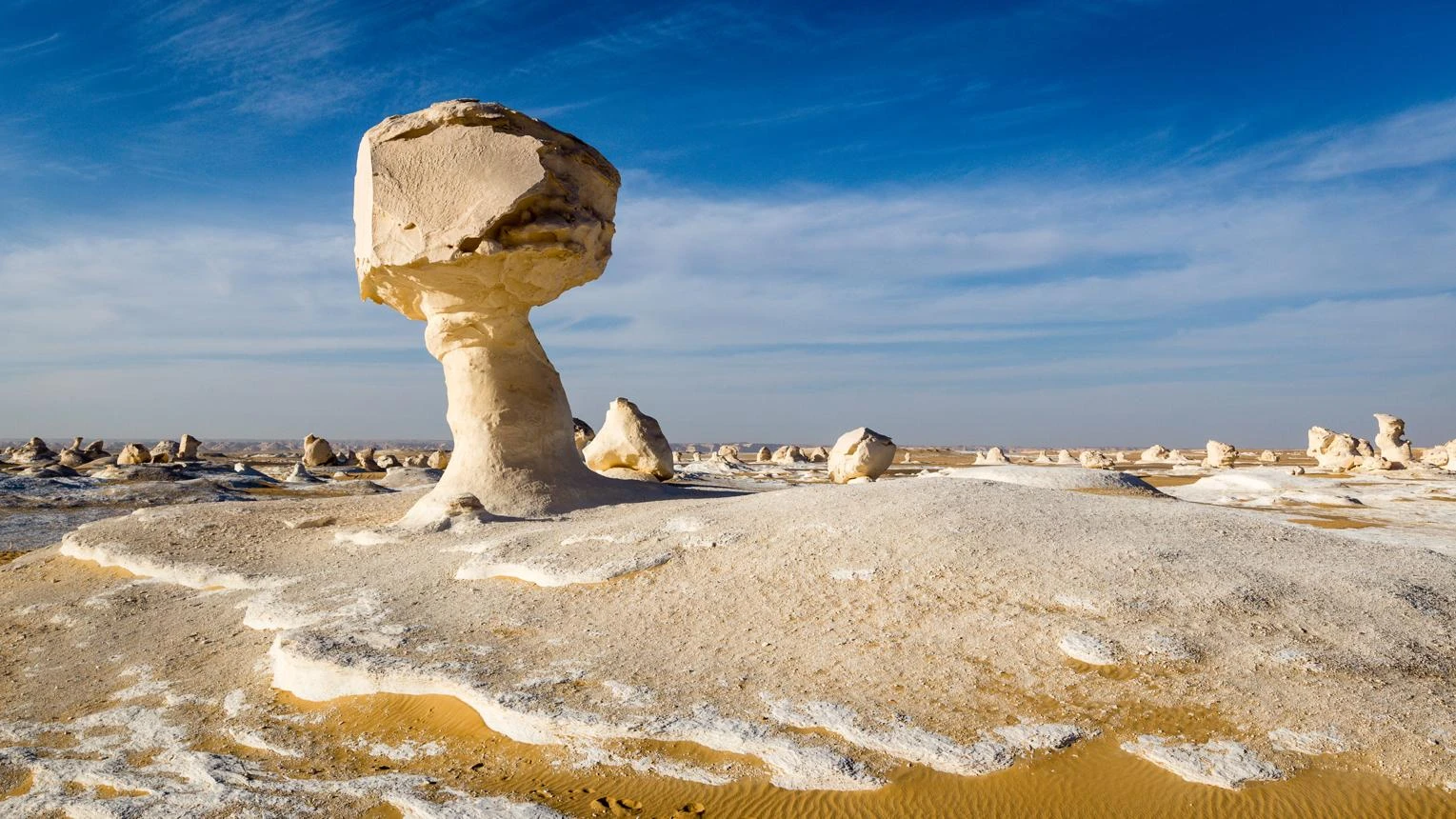
Imagine entering a desert where the sand is golden, but the rocks are as white as snow. Enormous formations rise from the ground like giant mushrooms, mysterious animals, castles, and sculptures created by nature.
As the sun moves across the sky, these extraordinary shapes change colour, glowing white during the day and turning shades of gold and orange at sunset.
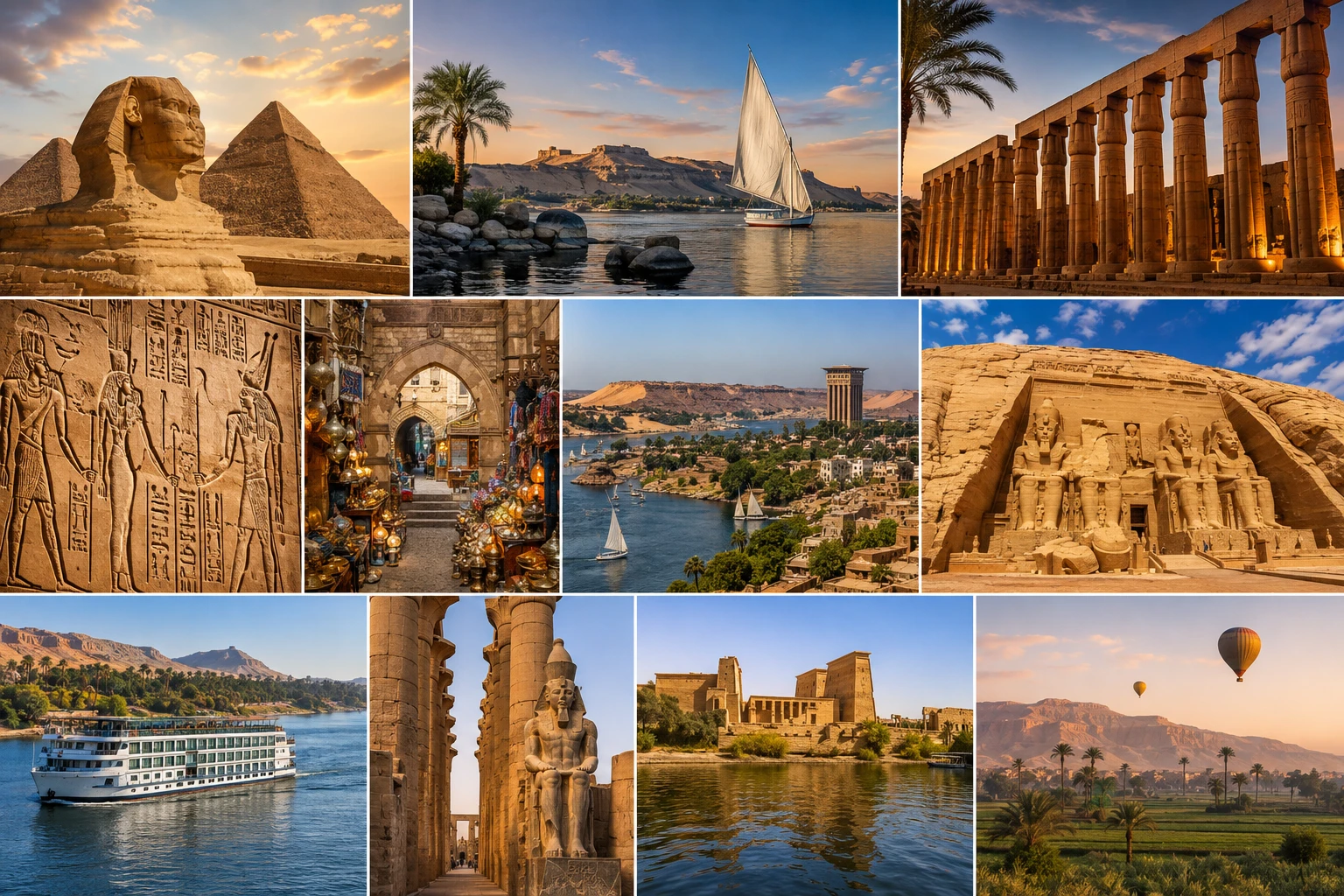
Welcome to the White Desert (Sahara El Beyda), one of Egypt’s most extraordinary natural wonders. Located in the Western Desert near Farafra Oasis, this protected landscape offers a completely different experience from Egypt’s famous temples, pyramids, and coastal resorts.
1. Where Is the White Desert?

The White Desert is located in Egypt’s Western Desert, approximately 38 kilometres northwest of Farafra town, in New Valley Governorate.
It forms part of a remarkable desert region that includes the Farafra Depression and several other geological attractions.
The area was declared a natural protectorate in 2002 under Prime Ministerial Decree No. 1220. Official Egyptian information describes its area as approximately 3,000 square kilometres.
Its landscape is famous for its snow-white chalk ground and unusual rock formations sculpted by wind erosion.
2. Why Is It Called the White Desert?

The name comes from the extensive deposits of pale chalk that cover parts of the desert floor.
Unlike the typical image of the Sahara as an endless sea of golden sand, the White Desert is filled with striking white rock formations and chalk-covered ground.
The contrast between the white formations, beige sand, and deep-blue sky creates an almost unreal landscape.
Visitors often describe the experience as walking through a natural outdoor sculpture gallery.
3. The Amazing Mushroom Rocks
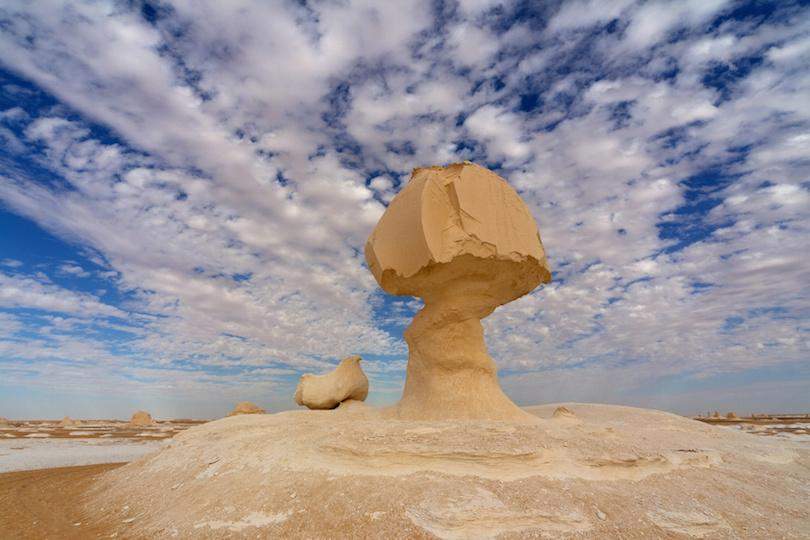
The most recognizable feature of the White Desert is its mushroom-shaped rocks.
These formations developed through natural weathering and wind erosion. Wind-driven sand gradually wears away exposed rock, sometimes shaping narrow bases beneath broader upper sections.
Over long periods, this process creates shapes that resemble:
-
Giant mushrooms.
-
Birds and animals.
-
Towers and pillars.
-
Sculptured arches.
-
Strange abstract figures.
No two formations look exactly alike, and their appearance changes with the direction of the sunlight.
Photography tip: Sunrise and sunset are particularly beautiful times to photograph the formations because the low-angle sunlight creates dramatic shadows and warm colours.
4. The Geological Story Behind the White Rocks

The White Desert is a fascinating destination for anyone interested in geology.
Its chalk formations are connected to ancient marine deposits. The rocks preserve evidence of geological environments that existed long before the modern Sahara took shape.
Over millions of years, natural processes including erosion and weathering transformed the exposed chalk into the unusual forms visible today.
The region also contains fossils, reflecting its geological history. These natural remains are scientifically valuable, which is why visitors should never collect fossils, break rocks, or damage the formations.
5. Explore the White Desert by 4x4 Safari
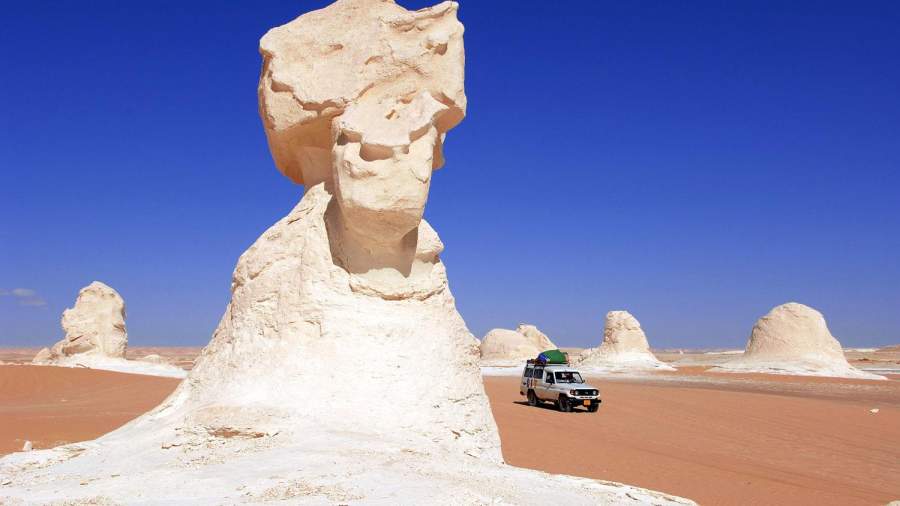
One of the best ways to discover the White Desert is through a guided 4x4 safari.
The desert tracks take visitors through open landscapes and clusters of chalk formations that cannot be fully appreciated from the main road.
A typical excursion may include:
-
Driving between the spectacular white rock formations.
-
Stopping at famous photographic locations.
-
Exploring the surrounding desert landscape.
-
Enjoying sunset views.
-
Having a traditional desert dinner.
-
Spending the night camping, where permitted.
Excursion routes and durations vary. Egypt’s official tourism guidance recommends arranging desert excursions with a specialized, licensed operator and checking permits and regulations before travelling.
6. The Old White Desert and New White Desert
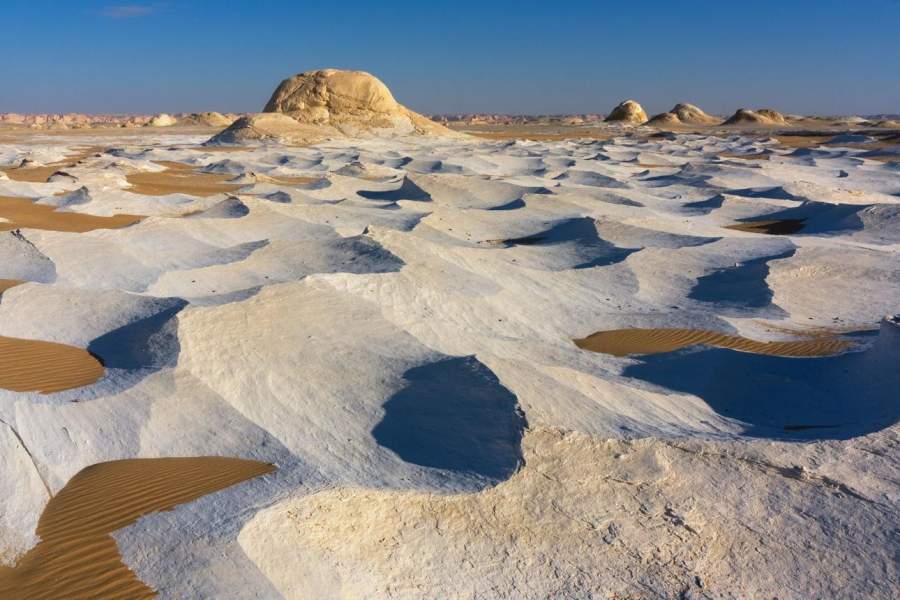
Some local safari itineraries use the expressions Old White Desert and New White Desert to distinguish different areas and styles of landscape.
The areas commonly called the Old White Desert are known for recognizable chalk sculptures and popular photographic stops.
The New White Desert is often described by tour operators as having broader open spaces and more isolated formations.
These are tourism and route descriptions rather than separate protected areas. The exact locations visited depend on the safari route, access arrangements, and current conservation rules.
7. Camping Under the Stars

For many travellers, spending a night in the White Desert is the highlight of the entire trip.
Imagine sitting beside your camp, surrounded by enormous white formations, while the last sunlight disappears behind the horizon.
As night arrives, the desert becomes quiet and the stars appear above the open landscape.
A guided overnight trip may include:
-
A traditional Bedouin-style dinner.
-
Tea prepared at the camp.
-
Time to enjoy the night sky.
-
Sleeping arrangements and camping equipment.
-
An early morning view of the sunrise.
Camping is subject to current protected-area regulations and approved locations. Always confirm arrangements with your licensed operator before booking.
8. Sunset and Sunrise: Two Unforgettable Moments

The White Desert is especially beautiful during the hours around sunrise and sunset.
At sunset, the white chalk gradually takes on warm golden and orange tones. The changing shadows make the formations look even more dramatic.
At sunrise, the landscape slowly brightens, revealing details in the rocks and the patterns left by the wind.
For photographers, these are some of the most rewarding moments of a White Desert adventure.
9. Nearby Attractions: Discover More of the Western Desert
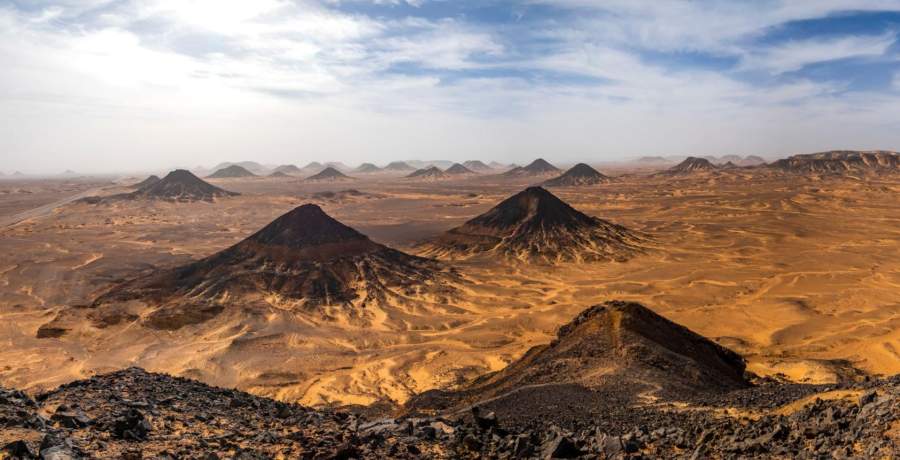
The White Desert is part of a wider region filled with fascinating geological and natural attractions.
Consider combining your trip with these destinations:
-
Black Desert: Famous for its dark volcanic hills and black stones scattered across the landscape.
-
Crystal Mountain: A remarkable geological formation known for its visible crystal-rich rock.
-
Agabat Valley: A spectacular landscape of pale rock formations and golden sand dunes.
-
Farafra Oasis: A peaceful oasis and an important gateway to the surrounding desert.
These attractions offer a wonderful combination of geological scenery, desert exploration, and oasis culture.
10. Best Time to Visit the White Desert
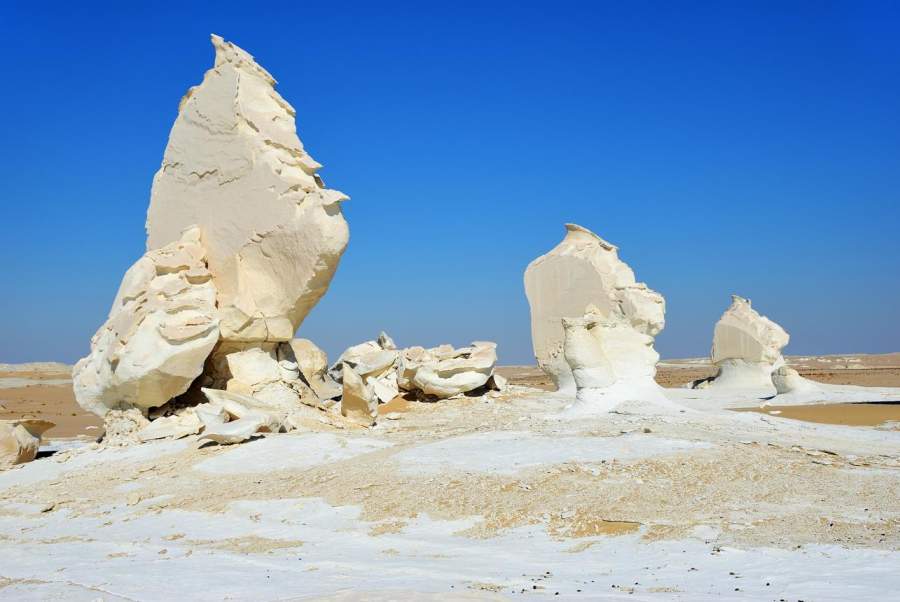
The cooler months are generally the most comfortable for exploring the Western Desert.
October to April is a popular period for desert excursions, particularly when daytime temperatures are more suitable for outdoor activities.
Winter nights can be surprisingly cold, so warm clothing is essential if you plan to camp.
Summer visits require extra care because daytime temperatures can become extremely high. Always follow your operator's advice about timing, hydration, and weather conditions.
11. Important Travel and Safety Tips

The White Desert is a protected and remote environment. A successful trip depends on respecting both the landscape and the local regulations.
Before travelling:
-
Book with an experienced, authorized desert operator.
-
Confirm permits, entry arrangements, and approved camping locations.
-
Travel in an appropriate 4x4 vehicle with an experienced driver.
-
Carry enough drinking water and sun protection.
-
Bring warm clothing for cold desert nights.
-
Follow designated routes and your guide's instructions.
-
Never remove fossils, chalk, crystals, or other natural materials.
-
Take all rubbish back with you.
-
Avoid climbing on or damaging fragile rock formations.
The Egyptian Environmental Affairs Agency's White Desert management plan identifies protected zones with different access and camping restrictions. Rules can vary by zone, so never assume that camping or driving is permitted everywhere.
WDNPMP_1_.doc+1
12. Why the White Desert Should Be on Your Egypt Travel List

Egypt has an extraordinary variety of landscapes, but the White Desert is unlike almost anywhere else in the country.
Its unusual chalk sculptures, open horizons, peaceful atmosphere, and spectacular desert skies create an experience that stays with visitors long after they leave.
Whether you are interested in photography, geology, adventure, camping, or simply discovering a different side of Egypt, this destination offers something truly special.
The White Desert is nature's own art gallery, where wind is the artist, chalk is the canvas, and time creates masterpieces that no human hand could reproduce.
Make it part of your Western Desert adventure and discover one of Egypt's most extraordinary natural treasures.