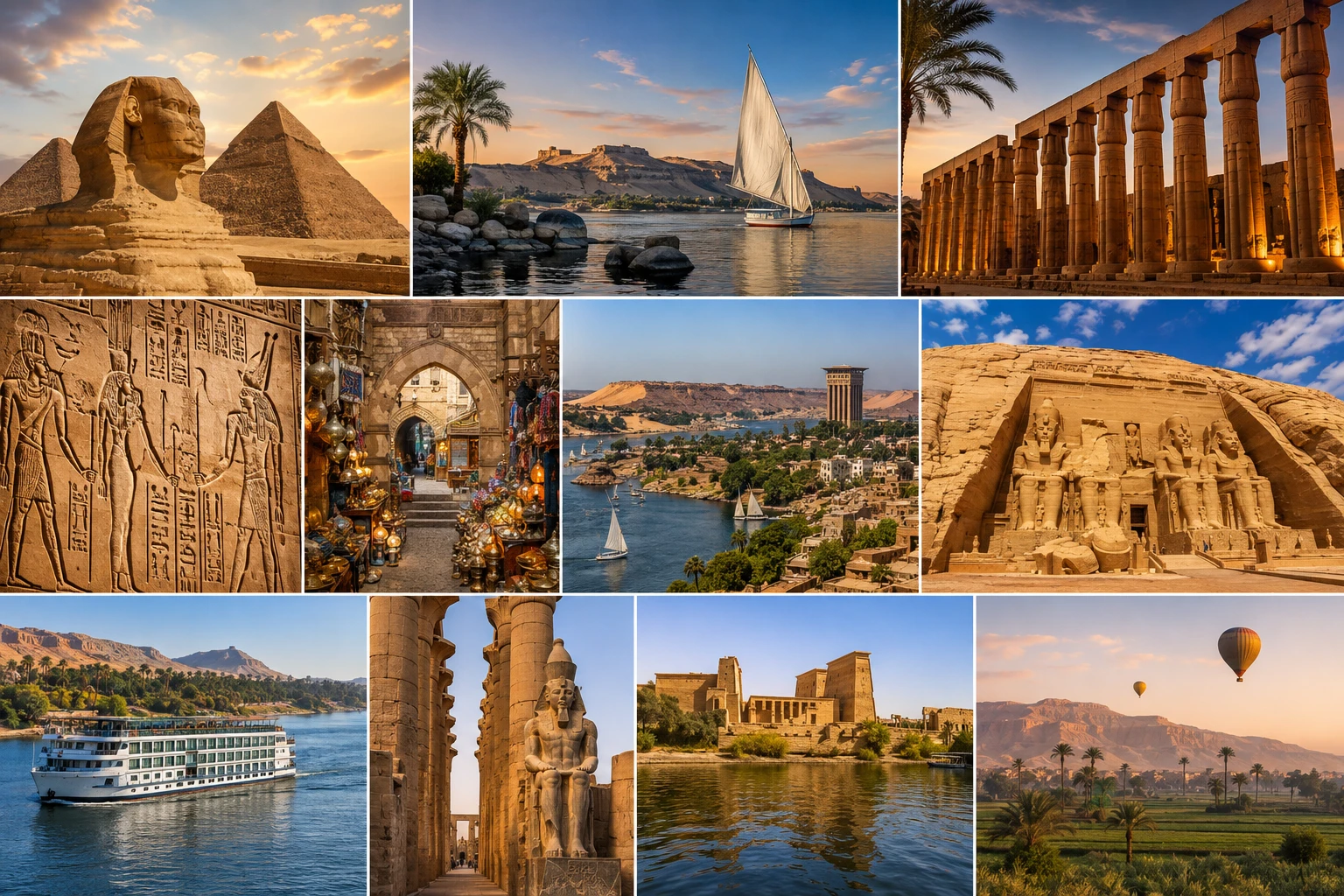


The Roman Amphitheatre of Alexandria: Discover the Ancient Roman Theatre of Kom El-Dikka
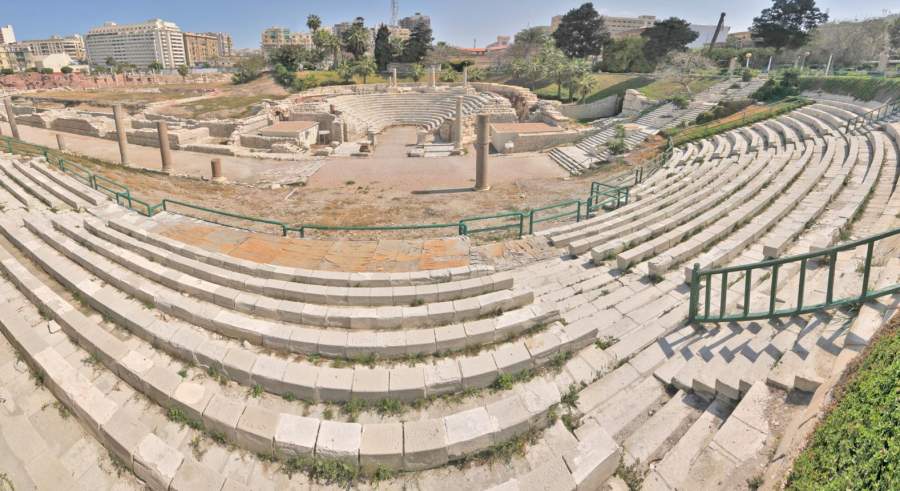
In the heart of Alexandria, surrounded by the busy streets of the modern city, lies a remarkable monument that takes visitors back to the Roman period.
The Roman Amphitheatre of Alexandria, located in the archaeological area of Kom El-Dikka, is one of Egypt’s most fascinating Greco-Roman landmarks. Its semicircular marble seating, ancient architectural details, and surrounding archaeological remains reveal the cultural and intellectual life of ancient Alexandria.
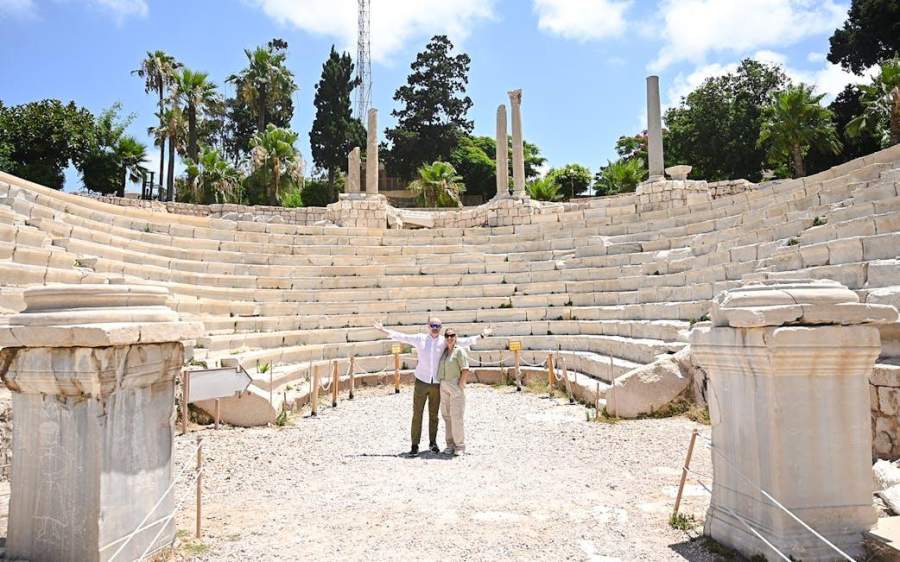
Imagine sitting among the original marble terraces, looking toward the central performance area, and picturing the audiences who once gathered here for music, discussions, and public events.
This is more than an archaeological attraction. It is a window into Alexandria’s extraordinary multicultural past.
1. Where Is the Roman Amphitheatre Located?
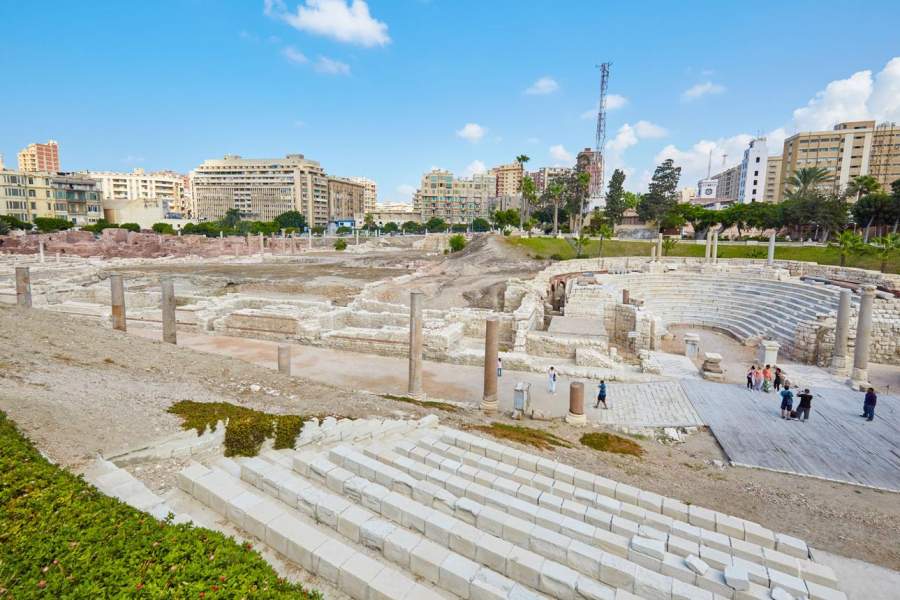
The Roman Amphitheatre is located in Kom El-Dikka, in central Alexandria, Egypt.
The site is situated within an important archaeological area containing several remains from the Roman and Byzantine periods.
Its central location makes it relatively easy to include in a city sightseeing tour, especially for visitors exploring Alexandria's historical attractions.
Nearby landmarks include:
-
The Villa of the Birds.
-
The remains of Roman baths.
-
Ancient lecture halls.
-
Pompey's Pillar.
-
The Catacombs of Kom El-Shoqafa.
-
The Graeco-Roman Museum.
The archaeological site is managed as part of Egypt's cultural heritage and offers visitors a unique opportunity to explore the remains of ancient Alexandria.
2. The History of the Roman Amphitheatre
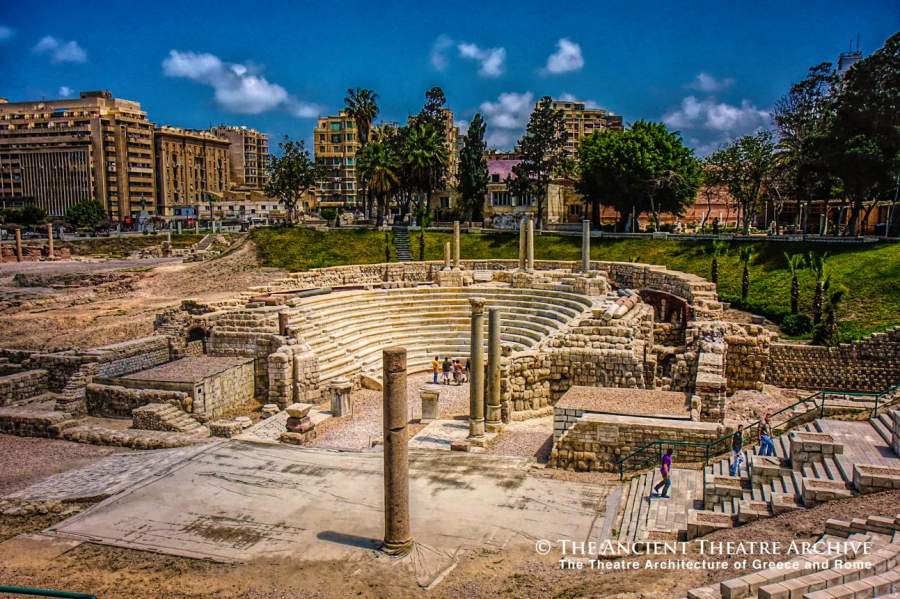
The Roman Amphitheatre is generally dated to the early fourth century AD, although the wider Kom El-Dikka archaeological area contains remains from several historical periods.
The monument was discovered during archaeological excavations in the twentieth century. A Polish archaeological mission working in the area uncovered the theatre in 1960 while investigating the ancient remains of Alexandria.
The discovery revealed an impressive semicircular structure with marble seating and architectural elements that had remained hidden beneath the modern city.
Researchers have also identified evidence of different phases of use. During the Byzantine period, for example, the building's seating arrangement was modified, and it may have served as a meeting place or political assembly hall.
Its changing functions reflect the transformation of Alexandria through the Roman, Byzantine, and early Islamic periods.
المسرح الروماني+2
3. The Unique Roman Architecture
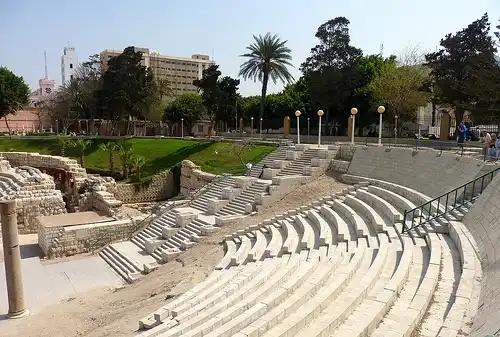
One of the most remarkable features of the amphitheatre is its semicircular design.
The audience area consists of curved rows of marble seating arranged around a central performance space. The surviving structure has 13 rows of white marble seats, creating an elegant arrangement that reflects the architectural traditions of the ancient Mediterranean world.
Other architectural features include:
-
Semicircular marble terraces.
-
A central orchestra or performance area.
-
Stone and limestone supporting walls.
-
Remains of columns and architectural decorations.
-
Sections of mosaic flooring in the surrounding complex.
The seating rows were marked with Roman numerals and letters, helping organize the audience during different events.
The monument is relatively compact compared with the enormous amphitheatres found in other parts of the Roman Empire, but its excellent preservation makes it particularly interesting to explore.
4. What Was the Amphitheatre Used For?
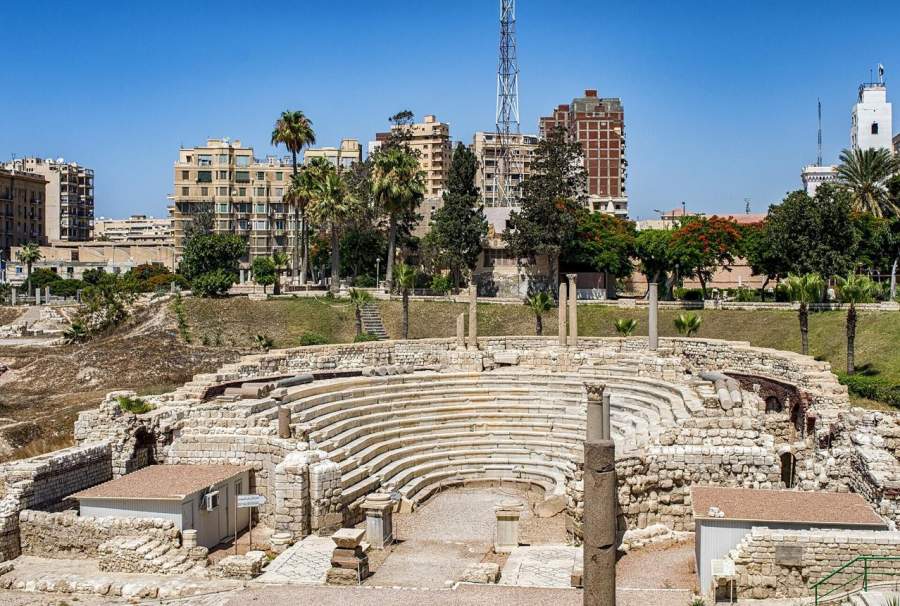
Although it is commonly called the Roman Amphitheatre, archaeologists have discussed its original function and the activities that took place inside it.
The building is associated with performances, musical activities, public gatherings, and intellectual events.
Its design and acoustics suggest that it could have served as a venue for listening to music, poetry, lectures, and other presentations.
During the Byzantine period, changes to the structure suggest that it may also have been used as a political meeting place, known as a bouleuterion.
This makes the monument especially interesting because it reflects more than entertainment. It provides clues about the social, cultural, and political life of ancient Alexandria.
المسرح الروماني+2
5. The Surrounding Archaeological Site of Kom El-Dikka
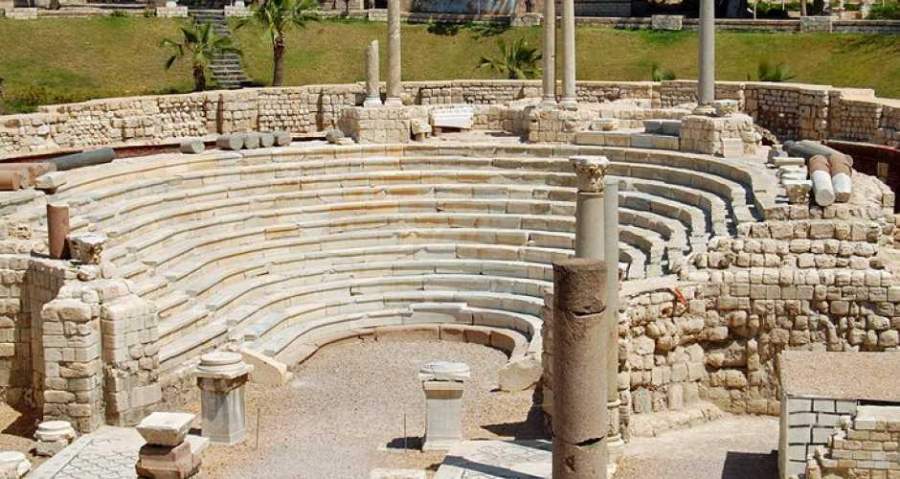
The Roman Amphitheatre is only one part of the much larger archaeological complex of Kom El-Dikka.
The surrounding area preserves remains of an important residential and civic district that developed during the Roman and Byzantine periods.
As you explore the site, you can discover:
-
Remains of Roman residential buildings.
-
Ancient public baths.
-
Lecture halls and educational spaces.
-
Architectural fragments and columns.
-
Mosaic floors and decorative elements.
These discoveries reveal that Kom El-Dikka was not simply an entertainment area. It was part of a vibrant urban district where people lived, studied, gathered, and participated in public life.
The Ministry of Tourism and Antiquities describes the area as an important archaeological site preserving the remains of Alexandria's Roman and Byzantine urban culture.
Ministry of Tourism and Antiquities+1
6. The Villa of the Birds: A Beautiful Roman Mosaic

One of the most attractive discoveries near the amphitheatre is the Villa of the Birds.
This Roman-era residential building is famous for its beautifully preserved mosaic floor, decorated with images of birds and geometric patterns.
The mosaics demonstrate the artistic skills of ancient craftsmen and offer a glimpse into the decorative style of wealthy Alexandrian homes.
Visitors interested in ancient art and architecture should not miss this part of the archaeological complex.
The Villa of the Birds adds another dimension to the visit, showing how people in ancient Alexandria decorated their private spaces and expressed their artistic tastes.
7. The Roman Baths and Ancient Lecture Halls
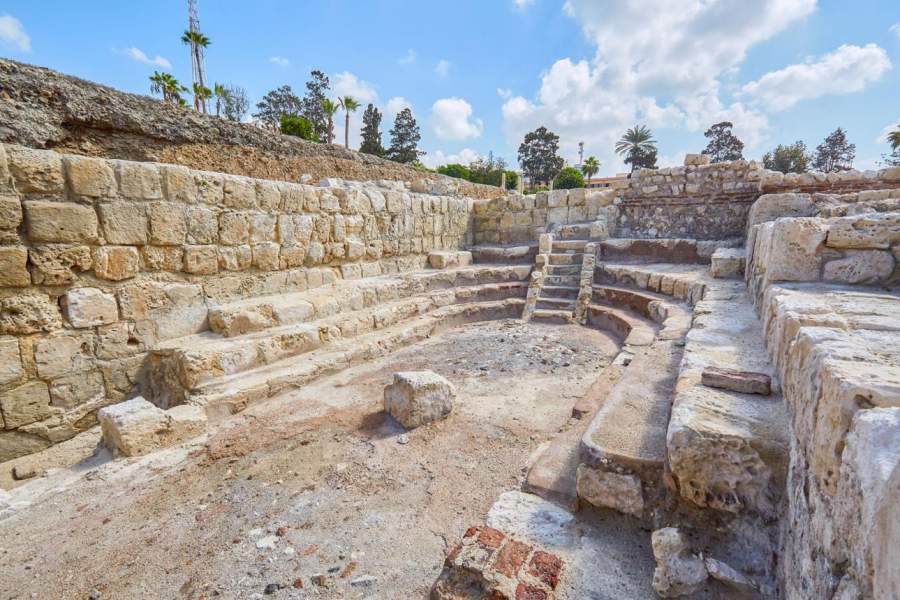
Another fascinating feature of Kom El-Dikka is the remains of its Roman bath complex.
These structures reveal the advanced engineering knowledge of the Roman world, including heating systems designed to warm rooms through spaces beneath the floors.
Archaeologists have also uncovered a series of lecture halls in the same area.
These rooms are believed to have been connected with philosophical and educational activities, offering valuable evidence of Alexandria's intellectual life during Late Antiquity.
Together, the baths, lecture halls, residential remains, and amphitheatre create an extraordinary archaeological landscape that tells the story of a sophisticated ancient city.
8. Photography and Exploring the Amphitheatre
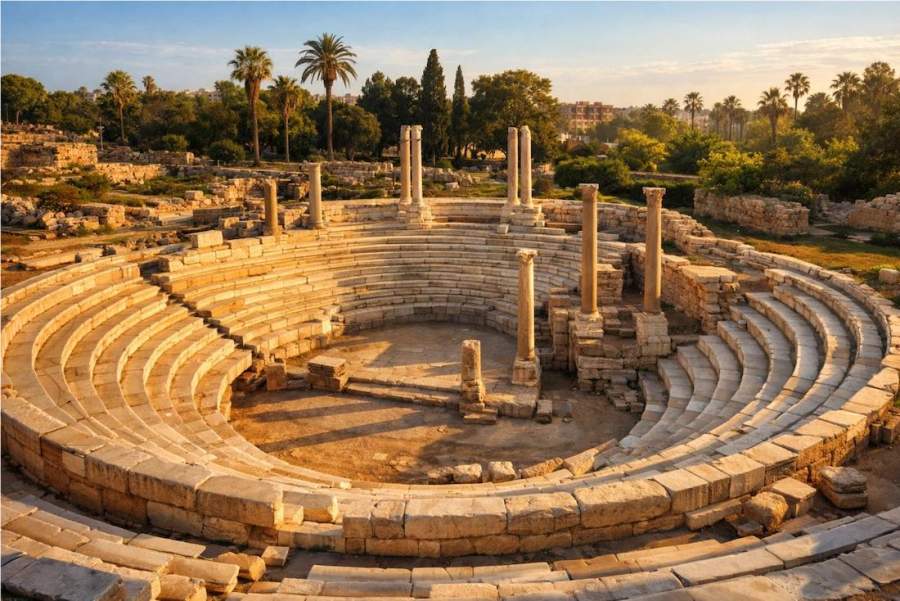
The Roman Amphitheatre is an excellent destination for history lovers and photography enthusiasts.
Its curved marble seating, ancient stonework, and surrounding archaeological remains provide beautiful opportunities for capturing the atmosphere of Roman Alexandria.
Some photography ideas include:
-
A wide-angle photograph showing the entire semicircular seating area.
-
Close-up shots of the marble terraces.
-
Architectural details and ancient inscriptions.
-
Photographs of the surrounding ruins.
-
Views of the amphitheatre from its upper seating levels.
Morning and late-afternoon visits can provide attractive natural lighting, depending on the weather and access arrangements.
Remember to respect visitor regulations and avoid climbing on restricted archaeological structures.
9. Nearby Attractions in Alexandria
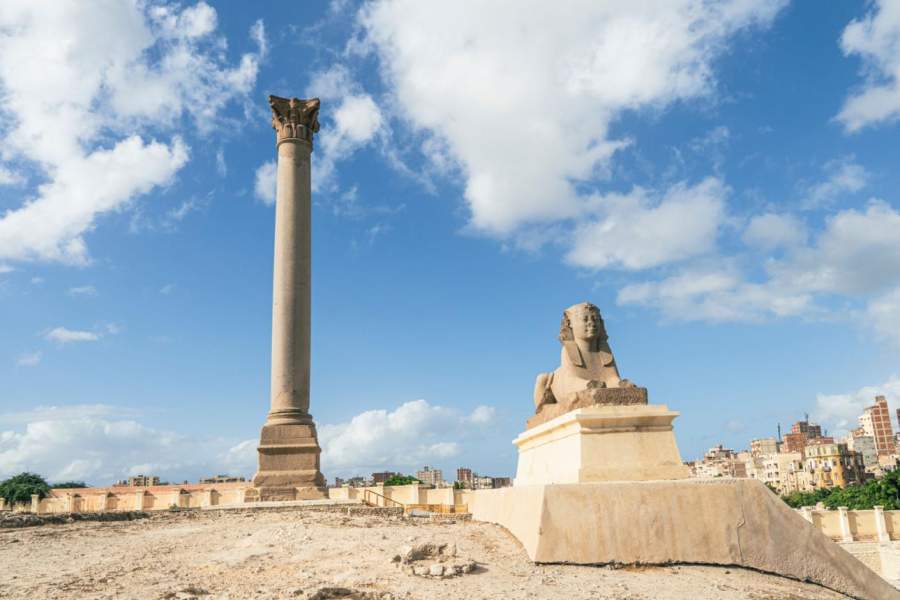
Pompey's Pillar
One of Alexandria's most famous ancient monuments, this impressive granite column stands among the remains of the ancient Serapeum.
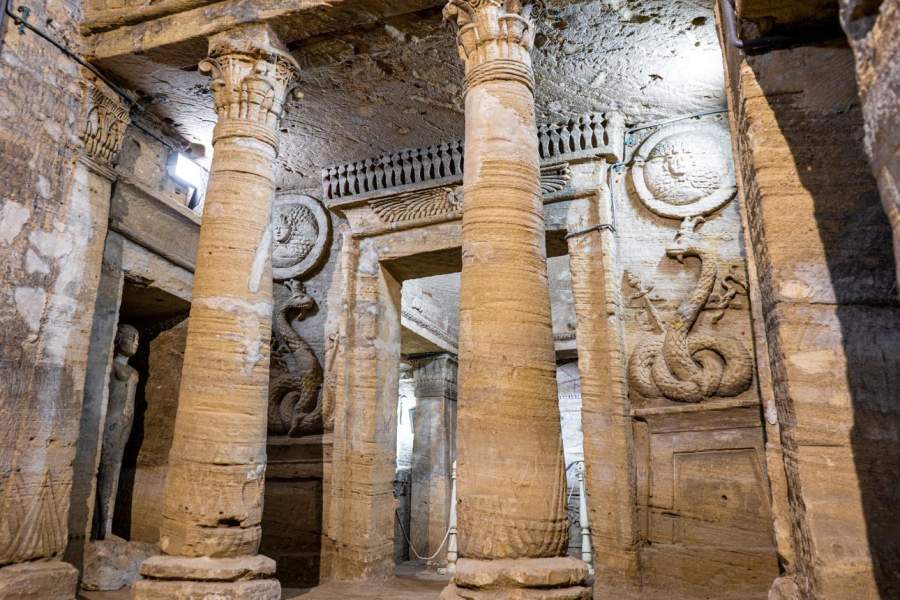
Catacombs of Kom El-Shoqafa
An extraordinary underground burial complex combining Egyptian, Greek, and Roman artistic influences.
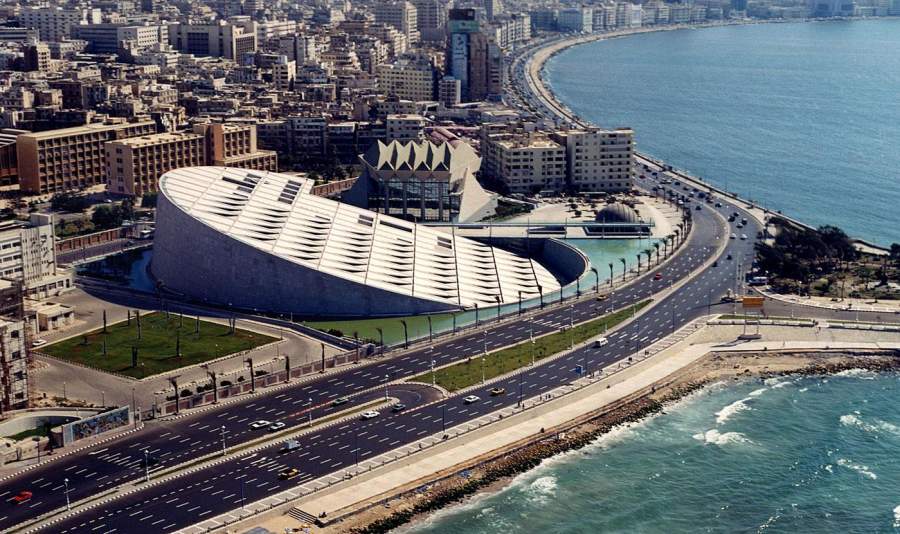
Bibliotheca Alexandrina
A modern cultural landmark inspired by Alexandria's legendary ancient library, featuring exhibitions, museums, and cultural spaces.

Citadel of Qaitbay
A historic fortress overlooking the Mediterranean Sea, built in the fifteenth century near the location traditionally associated with the ancient Lighthouse of Alexandria.
These attractions can help you create a full-day historical tour through Alexandria's remarkable heritage.
10. Best Time to Visit the Roman Amphitheatre

Alexandria enjoys a Mediterranean climate, making it a destination that can be explored throughout much of the year.
Spring and autumn are particularly pleasant for walking around archaeological sites and enjoying outdoor sightseeing.
For a comfortable visit:
-
Arrive early to enjoy the site before the busiest hours.
-
Wear comfortable walking shoes.
-
Bring water, especially during warmer months.
-
Allow enough time to explore the surrounding archaeological remains.
-
Check the official opening hours before travelling.
The official Ministry of Tourism and Antiquities listing currently gives visiting hours as 9:00 AM to 5:00 PM, with the last entry one hour before closing. Hours may change during Ramadan or on special occasions.
11. Visitor Information and Travel Tips
Before visiting the Roman Amphitheatre, keep these practical recommendations in mind:
-
Plan your transportation: The site is in central Alexandria, making it convenient to combine with other city attractions.
-
Allow time for the whole complex: Do not limit your visit to the theatre alone.
-
Consider a local guide: A knowledgeable guide can explain the history and architectural details.
-
Check ticket arrangements: Admission prices and ticket conditions can change.
-
Respect the monuments: Avoid touching fragile remains or entering restricted areas.
-
Bring your camera: The marble seating and surrounding ruins offer excellent photography opportunities.
-
Check special access arrangements: Some sections or nearby attractions may have separate entry conditions.
For the latest official information, consult the Egyptian Ministry of Tourism and Antiquities.
12. Why the Roman Amphitheatre Should Be on Your Alexandria Itinerary
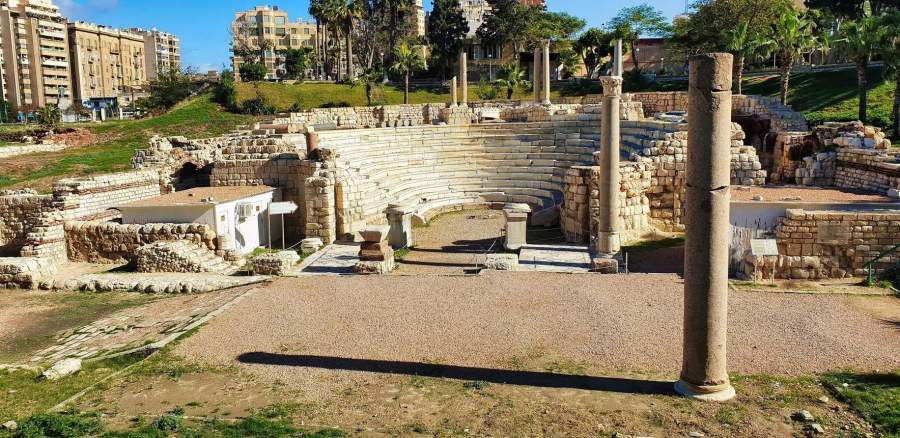
The Roman Amphitheatre is one of Alexandria's most fascinating historical attractions because it offers a direct connection to the city's Roman and Byzantine past.
Its marble seating, central performance space, surrounding baths, lecture halls, and remarkable mosaics reveal a city that was not only an important Mediterranean port but also a center of culture, education, and public life.
A visit to Kom El-Dikka allows you to discover several chapters of ancient Alexandria in one place.
Whether you are passionate about history, archaeology, architecture, or photography, this remarkable monument deserves a place on your Alexandria travel itinerary.
Explore the Roman Amphitheatre with Magic Egypt Tours and discover the fascinating heritage of ancient Alexandria.