
Step Pyramid Complex: Discover the World’s First Pyramid in Saqqara, Egypt
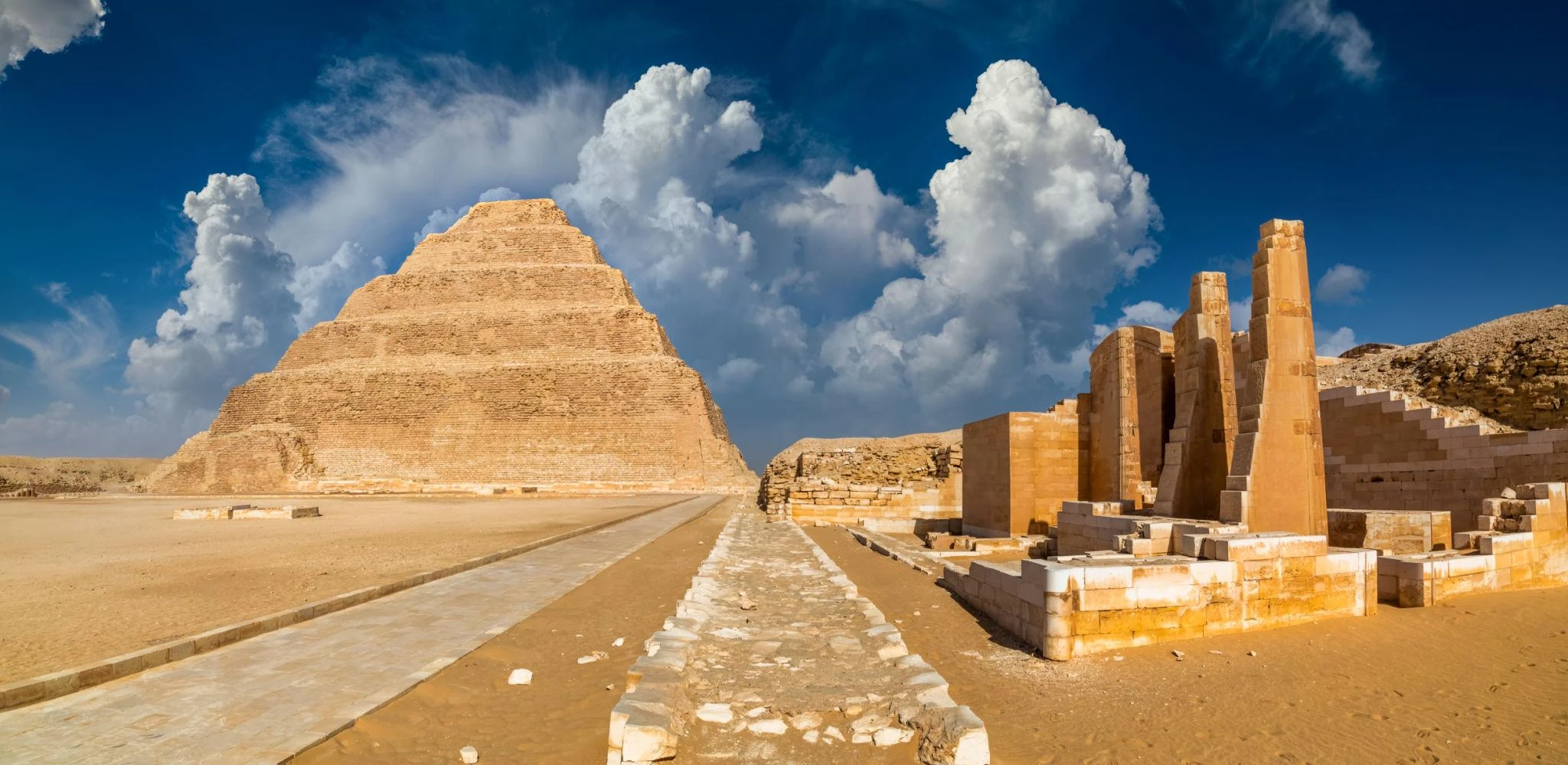
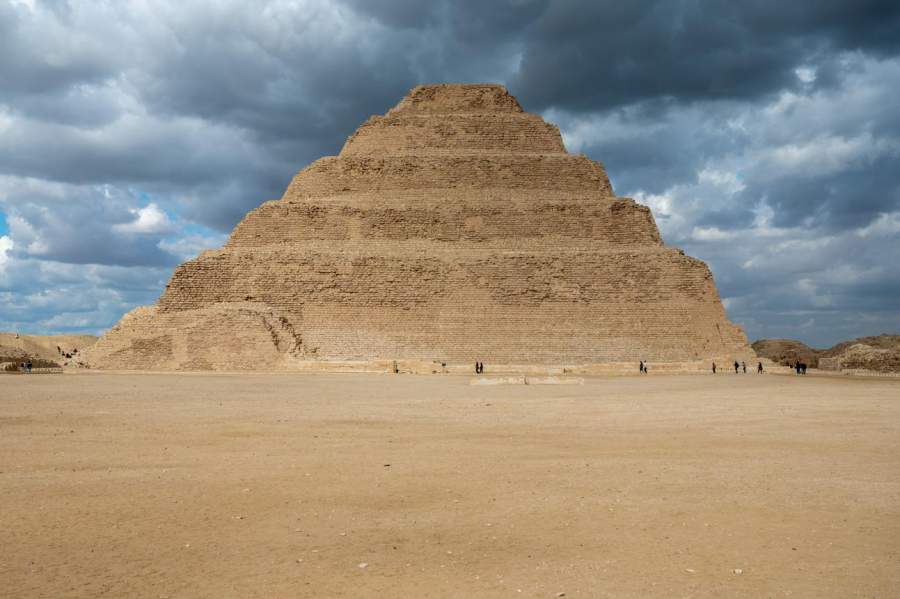
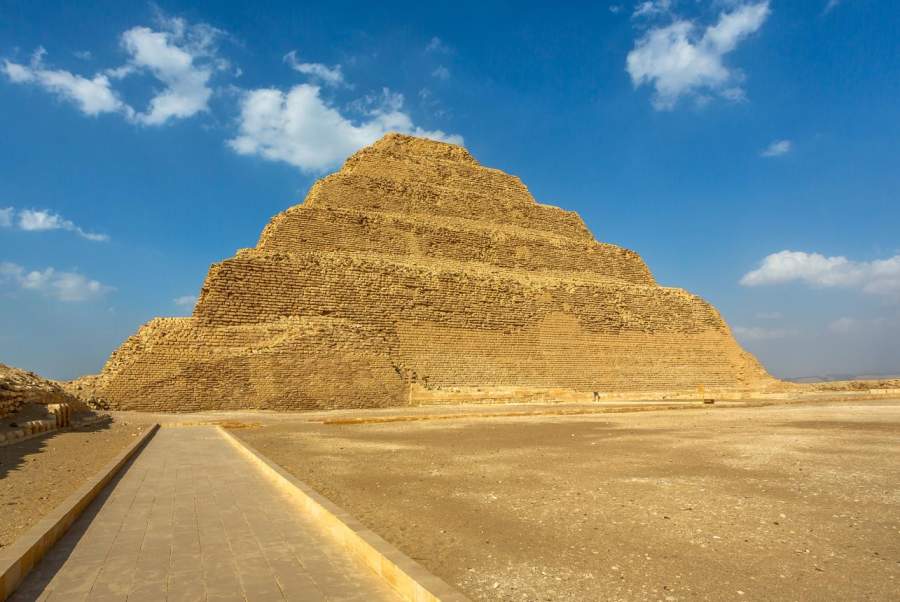
Imagine standing before a monument built more than 4,600 years ago, rising above the desert landscape of Saqqara. Its six monumental levels represent one of the most important turning points in the history of architecture.
This is the Step Pyramid Complex of King Djoser, one of ancient Egypt’s most extraordinary archaeological sites and a landmark in the development of monumental stone construction.
Located in the ancient necropolis of Saqqara, southwest of Cairo, the complex offers much more than a pyramid. It contains ceremonial courtyards, monumental gateways, stone shrines, underground chambers, and structures connected with royal rituals and beliefs about the afterlife.
For travelers interested in ancient Egyptian history, architecture, and archaeology, the Step Pyramid Complex offers a fascinating opportunity to explore the origins of pyramid building.
Where Is the Step Pyramid Complex?
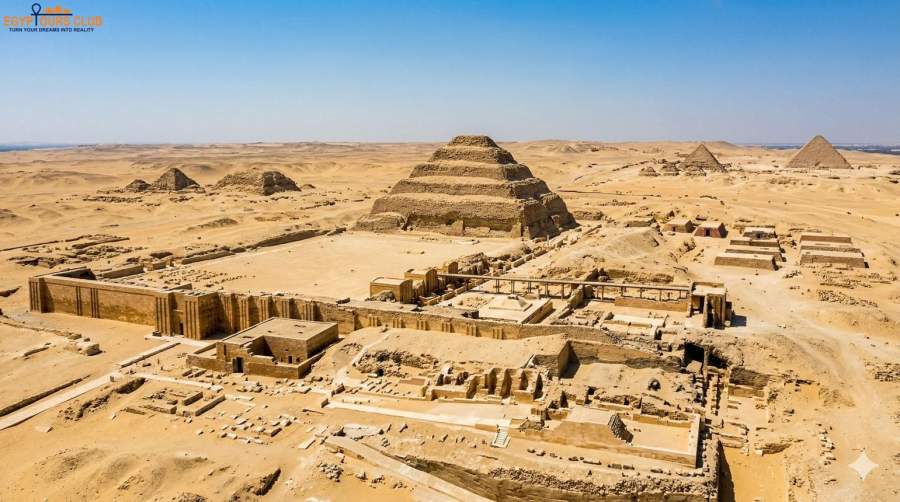
The Step Pyramid Complex is located at Saqqara, approximately 40 kilometers southwest of central Cairo. Saqqara served as one of the principal cemeteries of Memphis, an important capital of ancient Egypt.
The archaeological landscape extends across a broad desert plateau containing royal pyramids, private tombs, ancient burial chambers, and monuments from several periods of Egyptian history.
The Step Pyramid stands at the heart of Djoser’s funerary complex, surrounded by a large enclosure wall that once separated the sacred royal landscape from the surrounding necropolis.
A visit to Saqqara can also include other archaeological attractions, depending on the sites open to visitors and the itinerary selected.
King Djoser and the Beginning of Pyramid Building
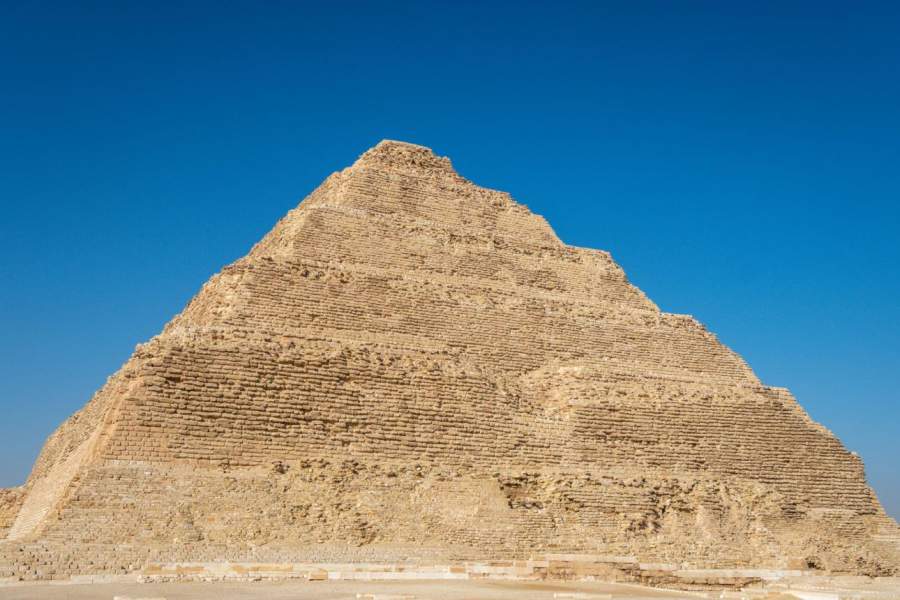
The Step Pyramid was built during Egypt’s Third Dynasty for King Djoser, also known as Netjerykhet. His reign is generally dated to the 27th century BC, although chronological estimates vary among sources.
Before the construction of the Step Pyramid, royal tombs commonly took the form of mastabas: rectangular structures built above underground burial chambers.
Djoser’s monument introduced a new architectural approach. Instead of remaining a single rectangular structure, the tomb developed into a monumental form with six levels of diminishing size.
This innovation transformed the royal burial monument into a vast architectural statement and established an important precedent for later pyramid construction.
The Step Pyramid is therefore more than an impressive ancient structure. It represents a major stage in the evolution of Egyptian architecture.
Imhotep: The Architect Behind the Monument
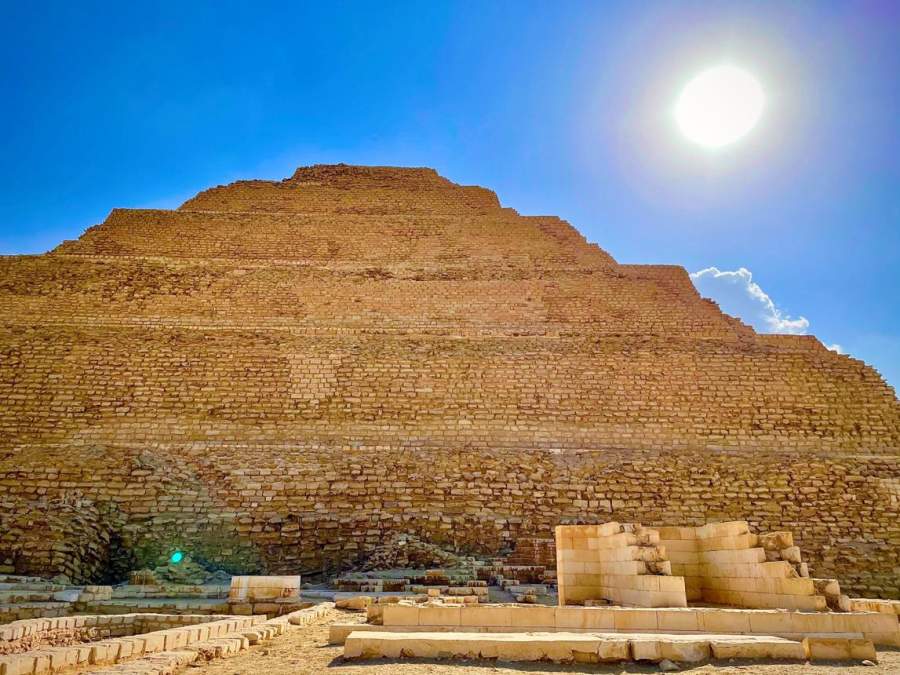
The Step Pyramid is traditionally attributed to Imhotep, the high-ranking official and architect associated with King Djoser’s reign.
Imhotep is widely recognized for his role in the development of monumental stone architecture in ancient Egypt. The Step Pyramid Complex remains the monument most closely associated with his architectural legacy.
The complex demonstrates an ambitious use of stone on a scale that transformed the appearance of royal funerary architecture.
Its buildings also reproduce forms inspired by earlier structures made from materials such as wood, reeds, and mudbrick. By translating these architectural traditions into stone, the builders created a monumental environment designed to endure.
Imhotep’s historical reputation grew over later centuries, and he eventually became associated with wisdom, learning, and healing.
The Six Levels of the Step Pyramid
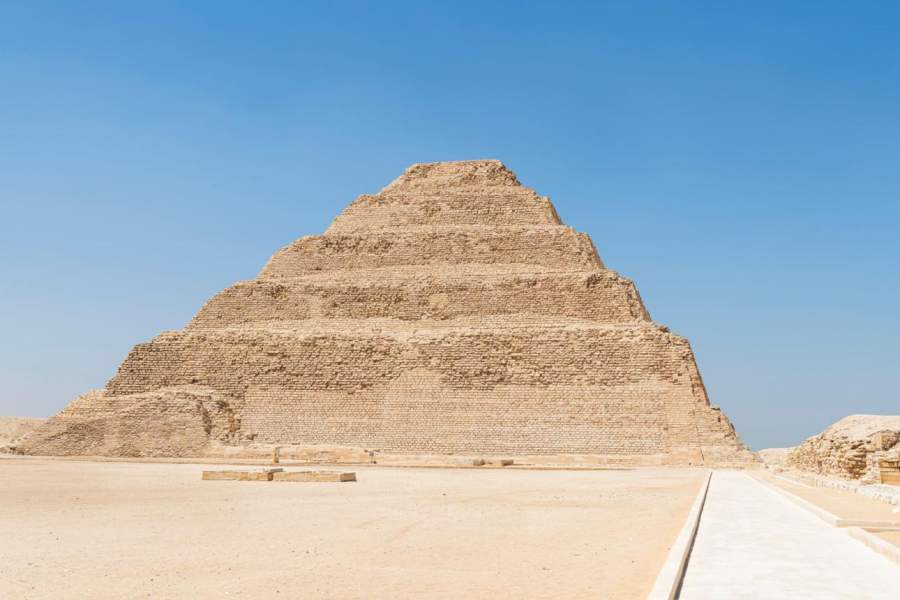
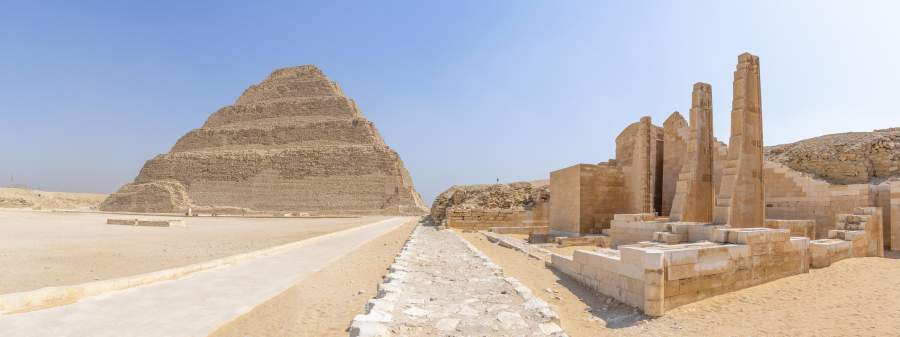
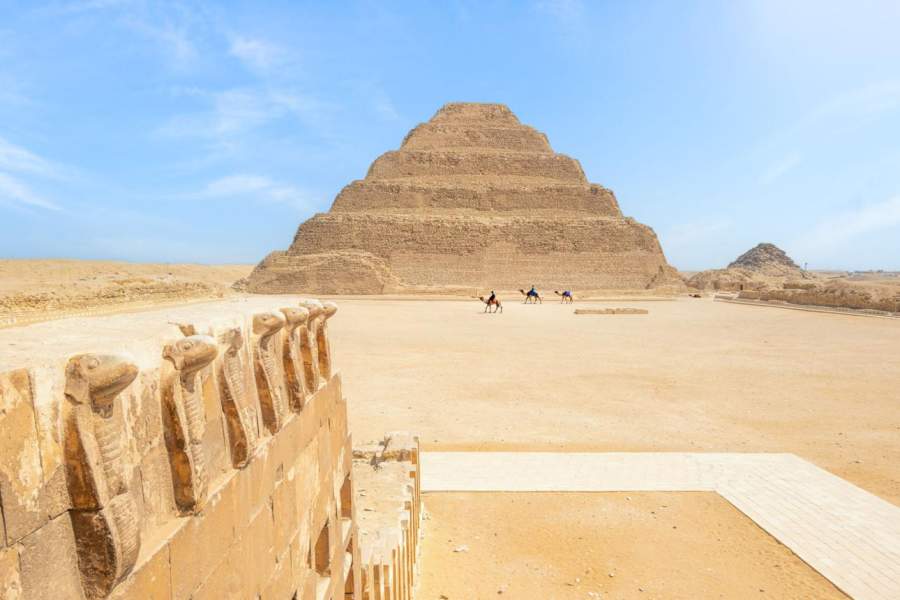
One of the monument’s most distinctive features is its stepped profile.
The pyramid rises approximately 60–62 meters above the surrounding ground, depending on the reference and measurement used, and consists of six superimposed levels.
The structure developed from earlier mastaba designs through successive building stages. Rather than creating the smooth triangular faces seen on later pyramids, the builders produced a series of receding stone levels.
This design gave the monument its familiar stepped silhouette.
The result was a structure that looked dramatically different from earlier royal tombs and marked a new direction in the development of Egyptian pyramid architecture.
Visitors can appreciate how the monument’s proportions change as the levels rise toward the top, creating a distinctive profile against the Saqqara desert sky.
The Great Enclosure Wall
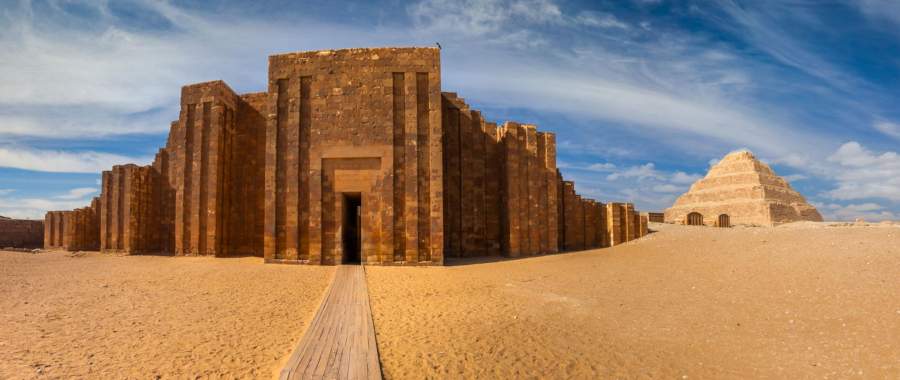
The Step Pyramid stands inside an extensive rectangular enclosure that once defined the boundaries of the royal funerary complex.
The enclosure wall is notable for its monumental scale and architectural details. Its design includes projecting sections, recessed panels, and a sequence of entrances that helped establish a formal boundary around the sacred area.
The original complex measured approximately 544 meters in length and 277 meters in width, making it a substantial architectural undertaking for its time.
The enclosure also included numerous false doors. These decorative features contributed to the symbolic character of the complex and reflected the importance of entrances and thresholds in ancient Egyptian religious architecture.
Walking around the complex helps visitors understand that the pyramid was only one part of a much larger planned environment.
The Entrance Colonnade
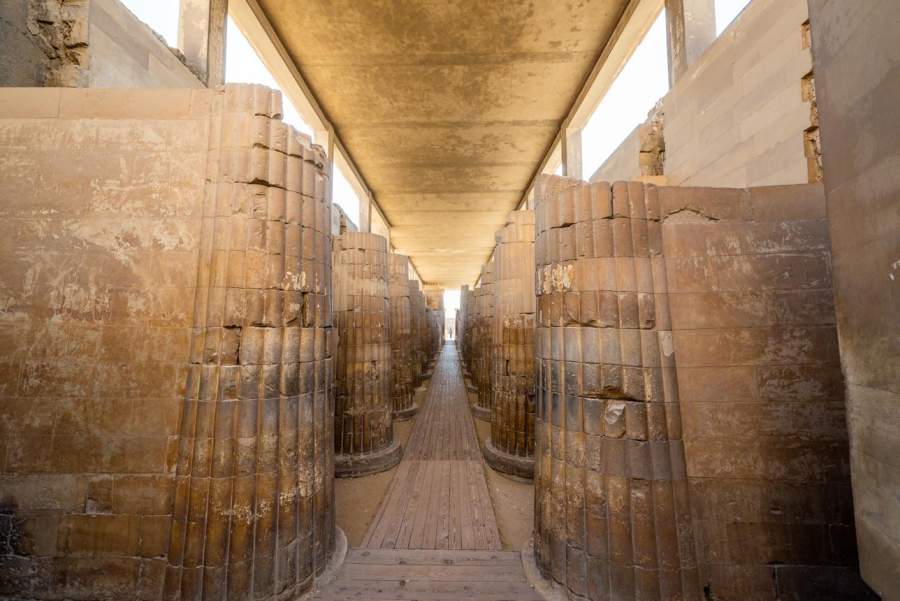
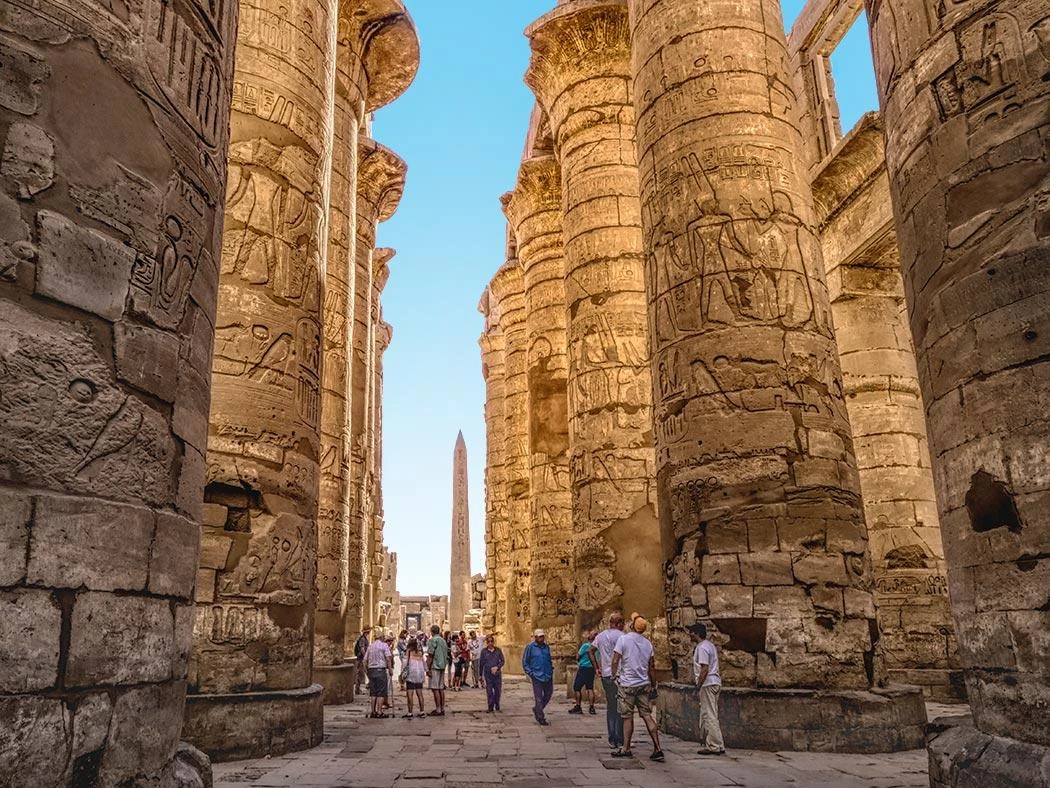
One of the most remarkable architectural features of the complex is its entrance colonnade.
The passage is lined with stone columns whose forms resemble bundled plant stems. The design reflects the influence of earlier building traditions, when organic materials were commonly used in construction.
Here, those familiar forms were recreated in stone, producing a monumental entrance that combines architectural innovation with traditional Egyptian symbolism.
The colonnade provides a transition from the outer enclosure into the inner ceremonial spaces.
Its repeated columns create rhythm, depth, and a strong sense of symmetry. For visitors, it is also an opportunity to observe how ancient Egyptian builders translated familiar materials and construction techniques into a more permanent architectural language.
The Heb-Sed Festival Court
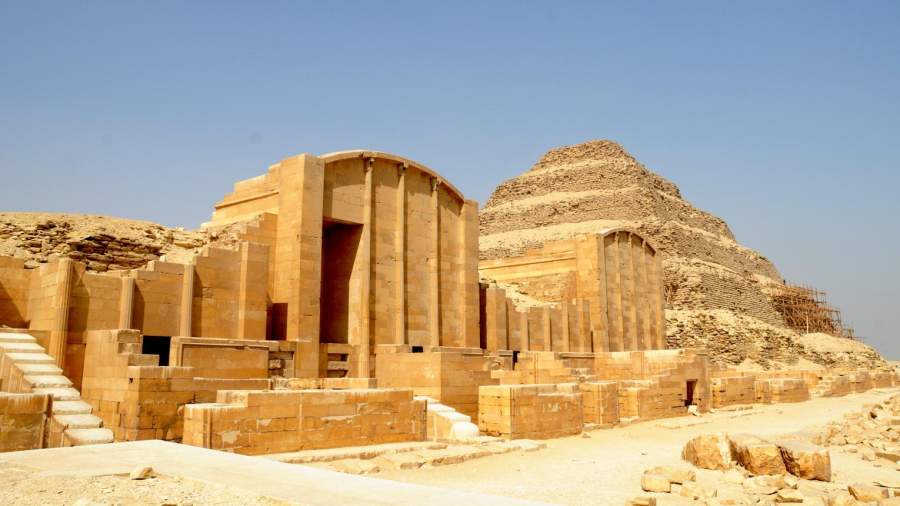
The Heb-Sed Festival Court is one of the most historically significant areas within the Step Pyramid Complex.
The Heb-Sed was a royal jubilee ceremony associated with renewing the king’s strength and reaffirming his authority to rule.
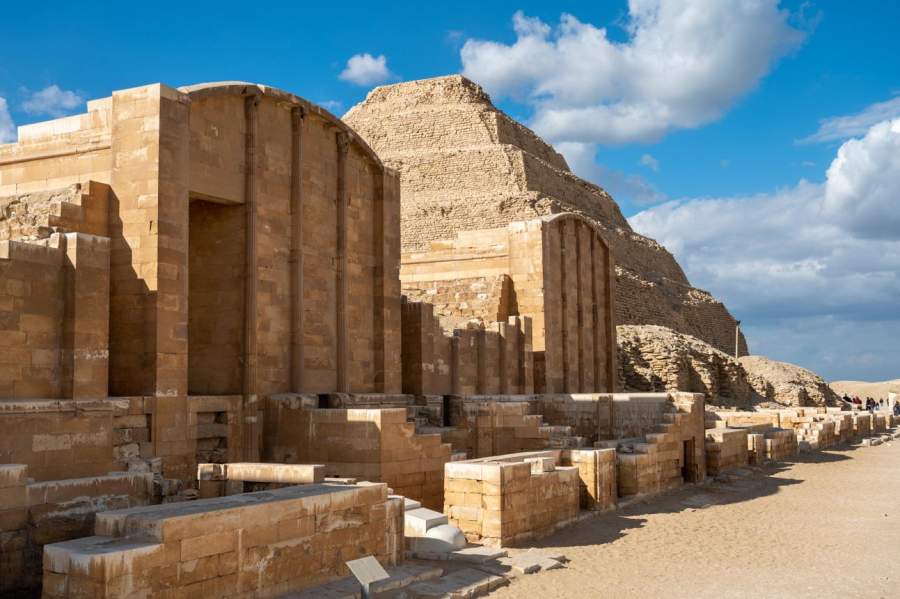
The complex includes two ceremonial courts and a series of stone structures representing shrines associated with the festival. These structures were designed to preserve the ritual setting in a permanent form, allowing the king’s symbolic participation to continue in the afterlife.
The court reveals an important aspect of ancient Egyptian royal beliefs: architecture was not only about creating physical spaces but also about sustaining religious and political ideas.
As visitors explore the area, the arrangement of shrines and open spaces helps reveal how the complex functioned as a carefully planned ceremonial landscape.
The Southern Tomb
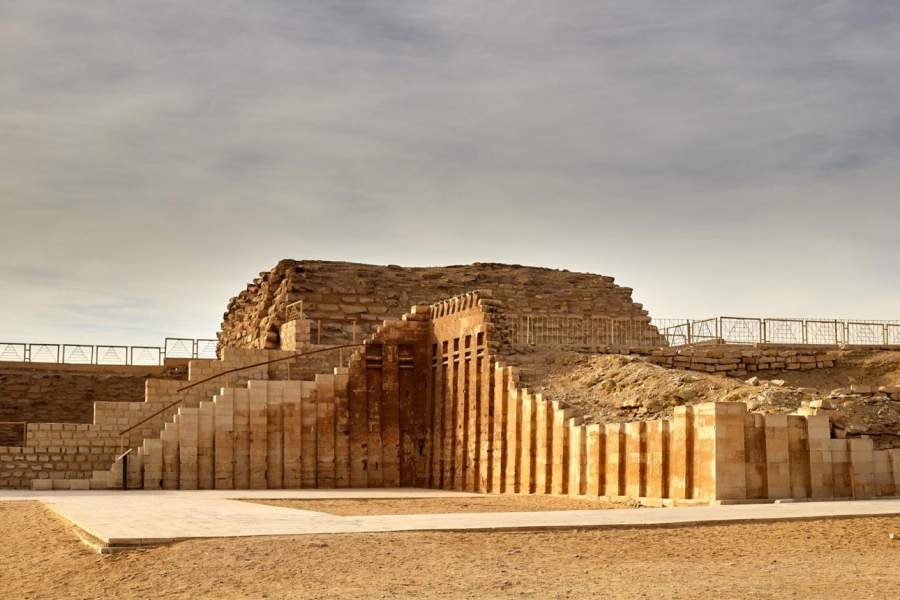
Located in the southwestern part of the complex, the Southern Tomb is another important monument associated with King Djoser.
Its exact purpose remains a subject of scholarly discussion. One interpretation, supported by the Egyptologist Jean-Philippe Lauer, suggests that it served as a symbolic burial for the king. Other theories have proposed different funerary or ritual functions.
The tomb contains an upper structure and underground passages leading toward a burial chamber. Its architectural features resemble elements found in the Step Pyramid itself.
Some of its corridors contain decorative elements associated with the king’s ritual activities, including representations connected with the Heb-Sed Festival.
The Southern Tomb adds another layer to the complex, demonstrating that Djoser’s funerary landscape included several structures whose functions extended beyond the main pyramid.
The Underground Chambers and Burial System
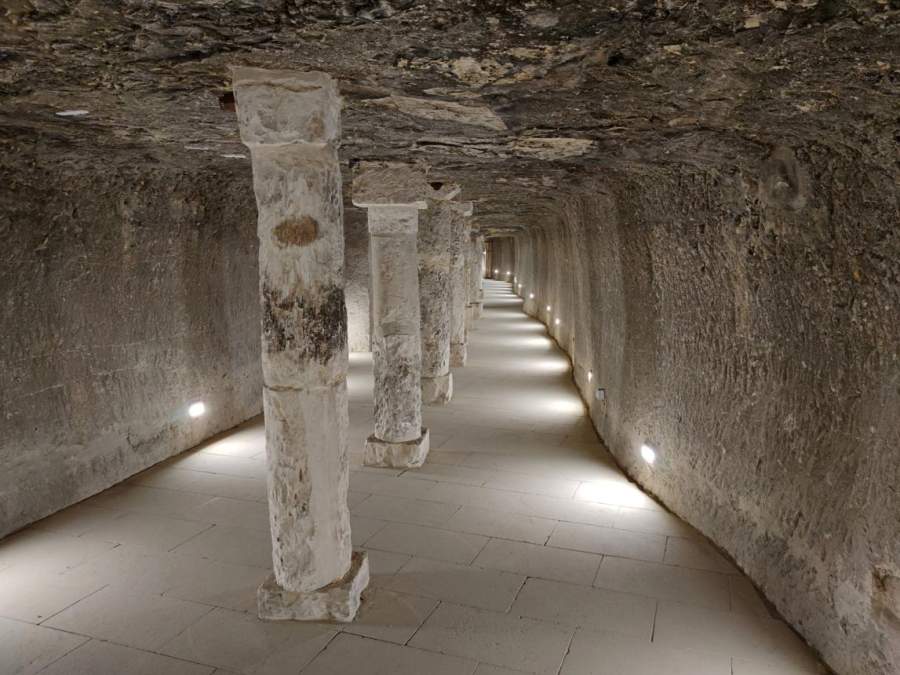
Beneath the Step Pyramid lies an extensive underground system of shafts, galleries, chambers, and passages.
The central burial area was constructed deep below the pyramid, with a large vertical shaft leading toward the burial chamber. The underground spaces also include galleries associated with the king’s funerary arrangements and members of his family.
These subterranean structures reveal the scale of the engineering involved in the complex.
The builders were not simply creating a visible monument above ground. They were also developing an elaborate underground environment connected with royal burial practices and beliefs about the afterlife.
Access to interior areas may be subject to current conservation arrangements and ticketing rules, so visitors should confirm what is open before planning their visit.
The Blue Faience Tiles
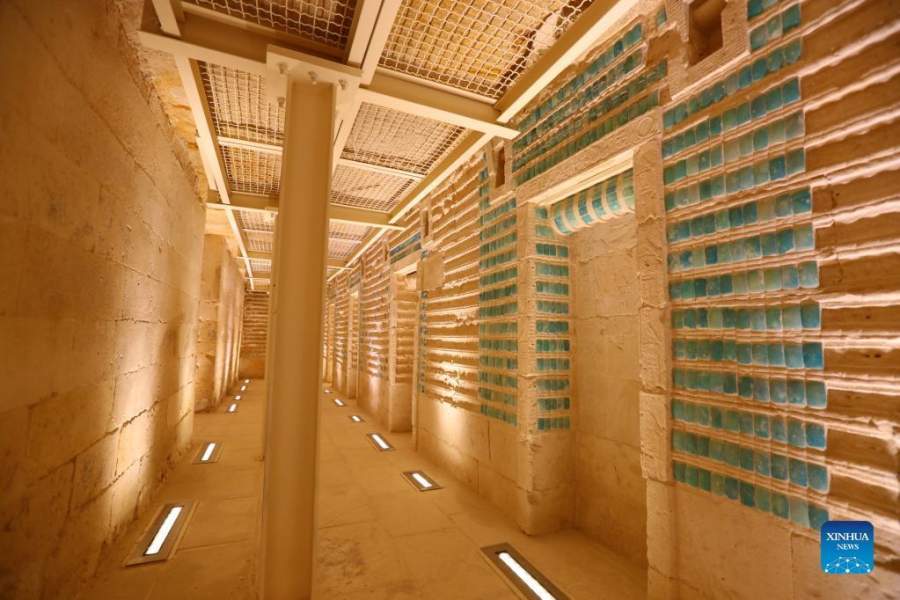
One of the most distinctive decorative features associated with the underground areas is the use of blue faience tiles.
These tiles were arranged to imitate reed matting, connecting the underground architecture with traditional building forms and symbolic decorative patterns.
The blue surfaces create a striking contrast with the surrounding stone and provide insight into the visual richness of the complex. Similar decorative elements are also documented in the Southern Tomb.
The tiles demonstrate that the Step Pyramid Complex was not simply a collection of undecorated stone structures. It incorporated carefully planned surfaces and motifs that contributed to the symbolic character of the royal burial environment.
Because access to underground spaces can vary, the availability of these features for direct viewing should be checked in advance.
The Serdab and the Statue of King Djoser
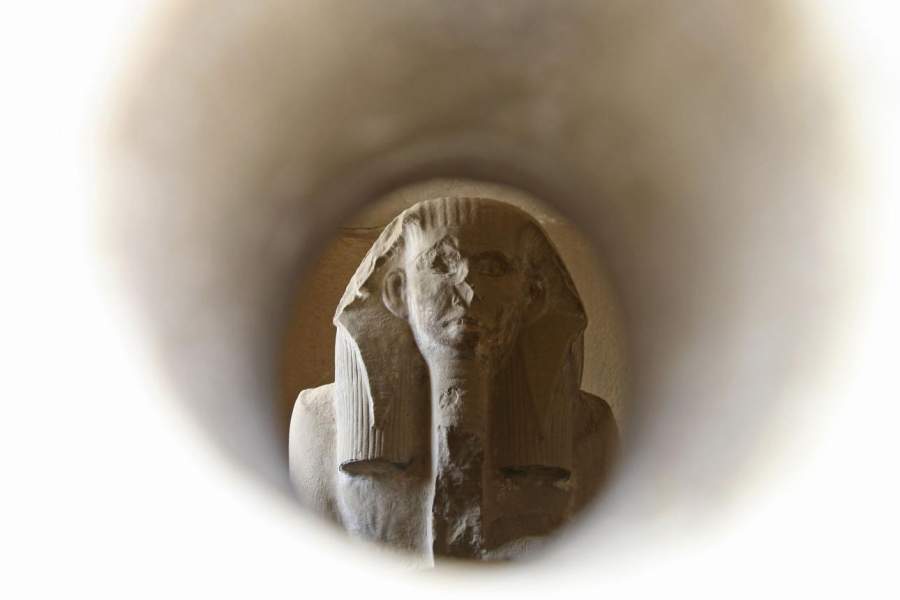
Near the northern side of the pyramid is a small enclosed structure known as the Serdab.
In ancient Egyptian funerary architecture, a serdab was designed to house a statue of the deceased. The structure associated with Djoser contained a statue of the king, positioned so that it could symbolically receive offerings and participate in the funerary rituals.
The original statue is preserved in the Egyptian Museum in Cairo, while a replica has been installed at the monument.
The serdab offers insight into ancient Egyptian beliefs about the relationship between the physical body, the royal image, and continued existence after death.
It also demonstrates that the Step Pyramid Complex was designed around religious ideas as well as architectural innovation.
The Step Pyramid and Ancient Egyptian Beliefs
To understand the Step Pyramid, it is important to consider the beliefs that shaped ancient Egyptian royal burial practices.
The Egyptians placed great importance on the king’s continued existence after death. Royal funerary monuments were designed to support this transition through burial chambers, ritual spaces, statues, offerings, and symbolic architecture.
The Step Pyramid Complex brought these elements together on an unprecedented scale.
Its pyramid, ceremonial courts, shrines, and underground galleries formed parts of a larger religious landscape intended to serve the king beyond his earthly life.
The monument therefore represents both a major engineering achievement and an expression of the religious worldview of Egypt’s early dynastic period.
Saqqara: More Than the Step Pyramid
Although the Step Pyramid is Saqqara’s best-known landmark, the wider archaeological site contains monuments from several periods of Egyptian history.
Saqqara served as a major necropolis for Memphis and remained an important burial and religious landscape for thousands of years. The area contains other pyramids, decorated private tombs, underground burial galleries, and monuments from later periods.
Visitors with additional time may be able to explore other attractions, depending on opening arrangements:
-
Pyramid of Unas: Known for its ancient Pyramid Texts inside the burial chambers.
-
Tomb of Mereruka: A richly decorated private tomb associated with a high-ranking official.
-
Serapeum of Saqqara: Underground galleries associated with the burial of sacred Apis bulls.
-
Imhotep Museum: A museum dedicated to archaeological discoveries and the history of Saqqara.
Combining the Step Pyramid with other accessible monuments provides a broader understanding of the region’s historical importance.
Restoration and Conservation of the Step Pyramid
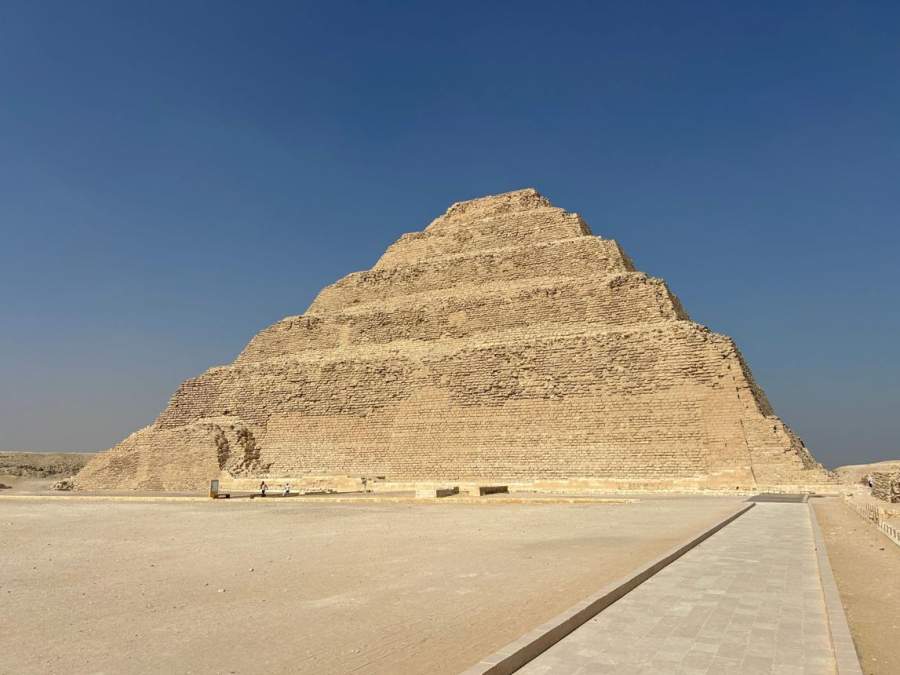
The Step Pyramid has undergone extensive conservation work to preserve its structure and improve the safety of the monument.
Restoration efforts have addressed deterioration affecting the pyramid’s exterior and underground areas. The Southern Tomb has also undergone conservation work, including the stabilization of walls and ceilings and the restoration of decorative elements.
These projects are important because the complex is both an architectural landmark and a fragile archaeological site.
Preserving the monument requires balancing visitor access with the need to protect ancient stonework, underground chambers, and decorative surfaces.
Visitors should follow site regulations, remain on authorized routes, and avoid touching or damaging historic features.
The Best Time to Visit the Step Pyramid Complex
The cooler months, particularly October through April, are generally comfortable for exploring Saqqara’s outdoor archaeological sites.
Morning visits are often preferable because temperatures are lower and the light can be excellent for photography.
Late afternoon can also produce attractive lighting across the pyramid and surrounding desert, although visitors should allow enough time to complete their visit before closing.
Comfortable walking shoes, drinking water, and sun protection are recommended, especially when exploring the wider archaeological area.
Opening arrangements and access to individual monuments may change, so it is best to check official visitor information before traveling.
How to Reach the Step Pyramid Complex from Cairo
Saqqara can be reached by road from Cairo, making the Step Pyramid Complex a practical destination for a half-day or full-day historical excursion.
Visitors can arrange private transportation, book an organized guided tour, or combine the site with other nearby attractions.
A knowledgeable Egyptologist guide can help explain the architectural development of the pyramid, the significance of the ceremonial courts, and the religious beliefs reflected in the complex.
If you plan to visit other monuments in Saqqara on the same day, confirm which sites are open and allow enough time for transportation and walking between locations.
Responsible Tourism at Saqqara
The Step Pyramid Complex is an irreplaceable part of Egypt’s cultural heritage.
Visitors can help protect it by following the instructions of site staff, respecting restricted areas, and avoiding contact with fragile stonework or decorative surfaces.
Photography and access rules may differ between the outdoor complex and enclosed monuments.
Responsible tourism helps preserve the site for future generations while allowing travelers to appreciate the remarkable achievements of ancient Egyptian civilization.
Why the Step Pyramid Complex Is Worth Visiting
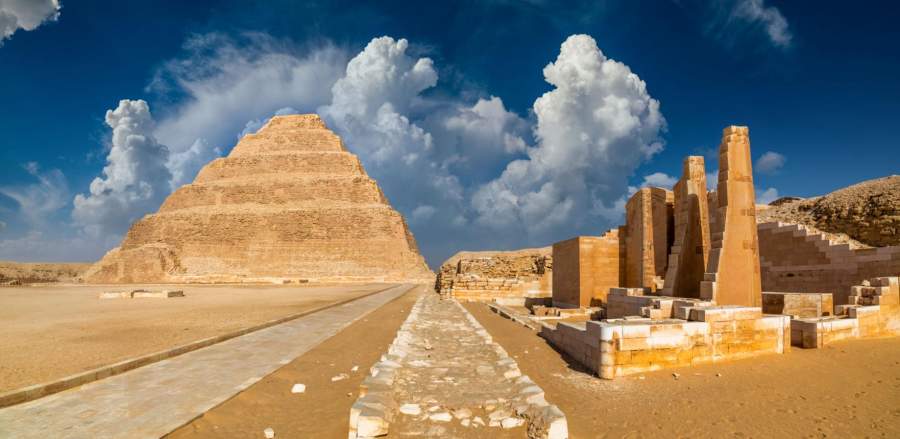
The Step Pyramid Complex offers something unique in the history of ancient architecture.
It preserves the transition from traditional mastaba tombs to monumental pyramid construction, revealing how Egyptian builders transformed familiar architectural forms into an entirely new type of royal monument.
The work traditionally associated with Imhotep, the six-tiered pyramid, the ceremonial courts, and the underground galleries together create a site of exceptional historical importance.
For visitors, the experience is not limited to admiring a pyramid from a distance. Exploring the wider complex reveals how architecture, religious belief, royal authority, and engineering came together more than four millennia ago.
Final Thoughts
The Step Pyramid Complex of King Djoser is one of the most important monuments in the history of ancient Egypt.
Built at Saqqara during the Third Dynasty, it marked a decisive stage in the development of monumental stone architecture and established a precedent for the pyramids that followed.
Its six levels rise above the desert as a reminder of the ambition and technical skill of Egypt’s early builders.
Beyond the pyramid itself, the entrance colonnade, Heb-Sed Festival Court, Southern Tomb, serdab, and underground chambers reveal a carefully planned environment shaped by royal funerary beliefs.
Today, the complex remains an essential destination for anyone interested in the origins of pyramid building and the architectural achievements of ancient Egypt.
Discover the Step Pyramid Complex with Magic Egypt Tours and explore the remarkable beginnings of Egypt’s monumental pyramid tradition.