

Siwa Oasis: Egypt’s Timeless Desert Sanctuary
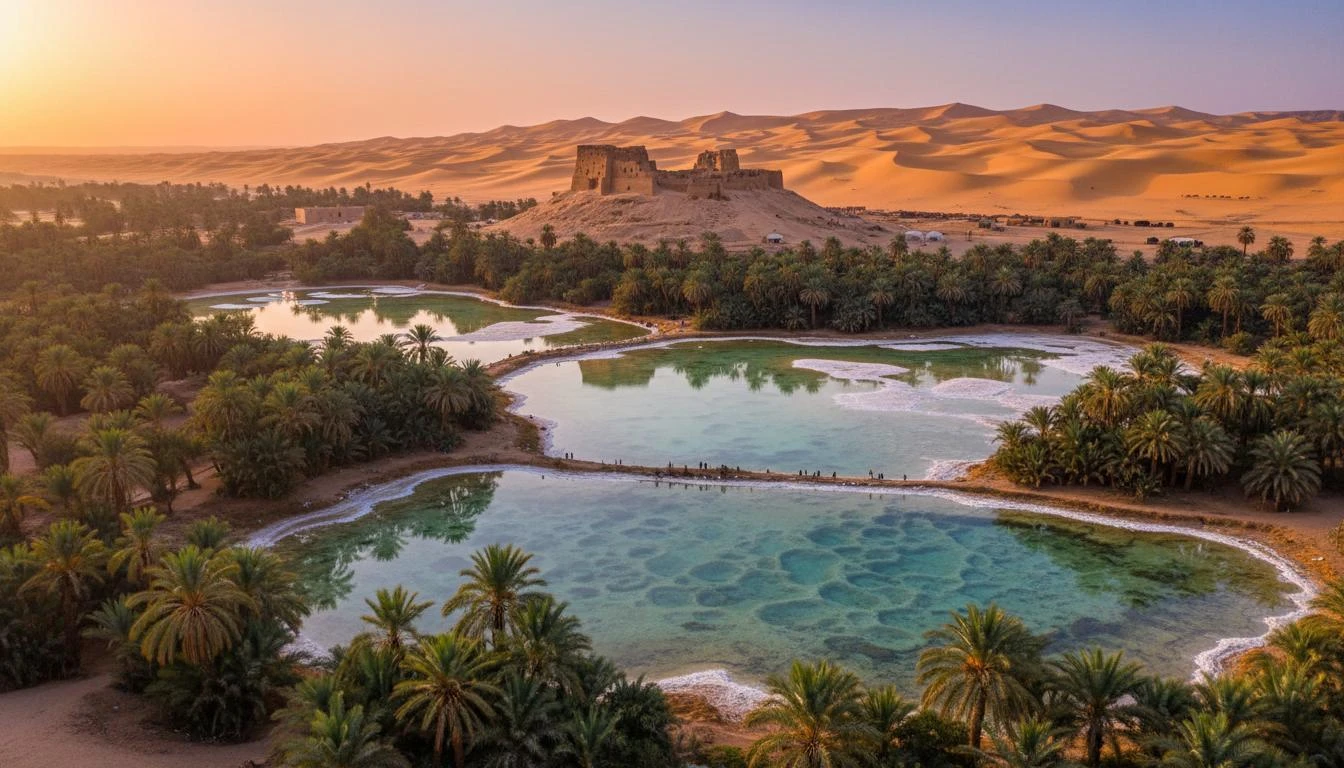
Imagine a place where golden desert dunes meet turquoise salt lakes, thousands of palm trees rise from the sand, and ancient mud-brick ruins overlook an oasis that seems almost untouched by time.
This is Siwa Oasis, one of Egypt’s most distinctive destinations and one of the most remote inhabited oases in the country.
Located in Egypt’s Western Desert, Siwa offers an unusual combination of nature, archaeology, traditional culture, desert adventure, and peaceful oasis life. Experience Egypt describes it as a desert sanctuary known for its salt lakes, hot springs, palm and olive groves, archaeological sites, and unique North African culture.
For centuries, Siwa existed at a distance from Egypt’s major urban centers. That relative isolation helped preserve a distinctive local identity, architecture, language, food, and traditions.
Today, visitors come to Siwa for very different reasons.
Some want to explore the ruins of Shali.
Others come searching for the history of the Oracle of Amun, famously associated with Alexander the Great.
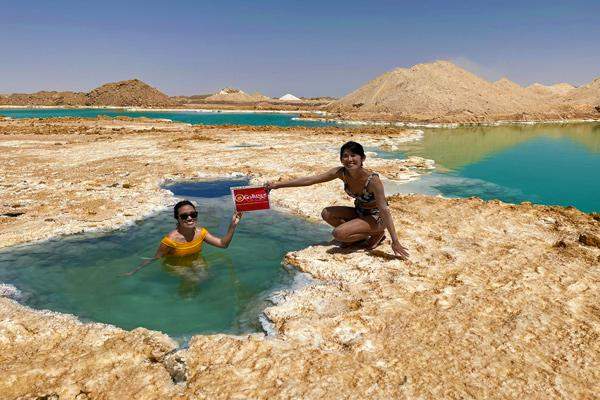
Some float in brilliantly blue salt lakes.
Others climb enormous dunes in the Great Sand Sea, swim in natural springs, or watch the sunset from a palm-covered island.
And many simply come to slow down.
Where Is Siwa Oasis?
Siwa lies in Egypt’s Matrouh Governorate, in the far western part of the country near the Libyan border.
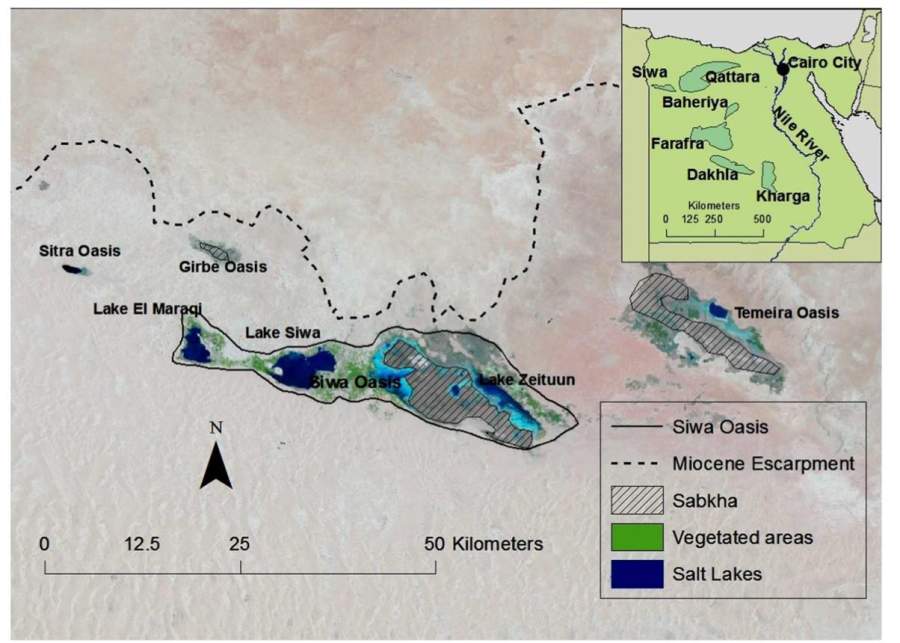
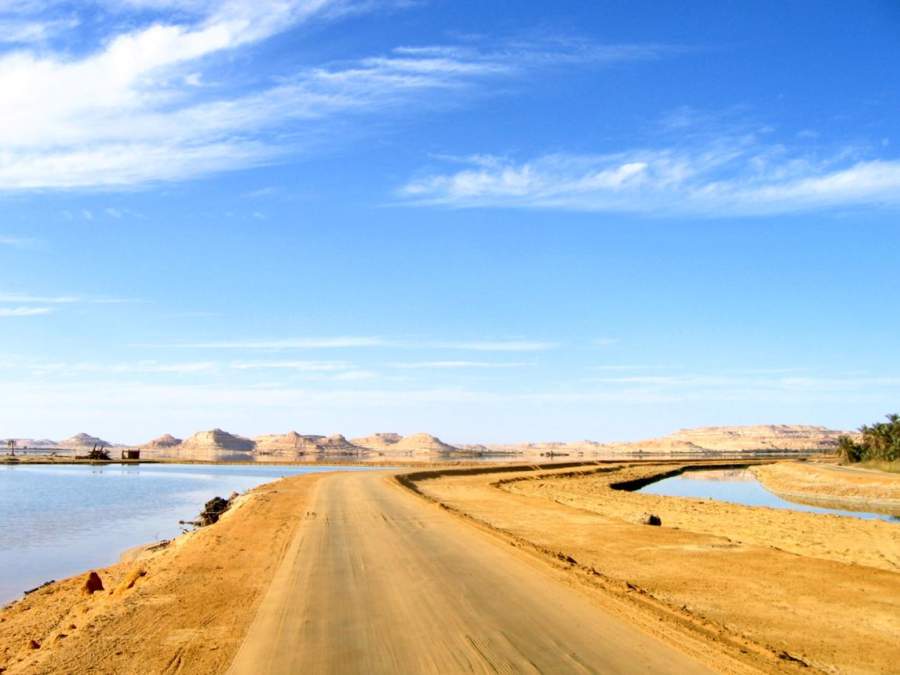
Experience Egypt places Siwa around 300 kilometers southwest of Marsa Matrouh and describes it as Egypt’s most remote desert oasis.
That distance is part of the destination’s character.
Siwa does not feel like a quick extension of a Cairo sightseeing itinerary.
The landscape gradually changes as you travel westward, with the urban environment giving way to vast desert horizons before the greenery of the oasis finally appears.
Then something extraordinary happens.
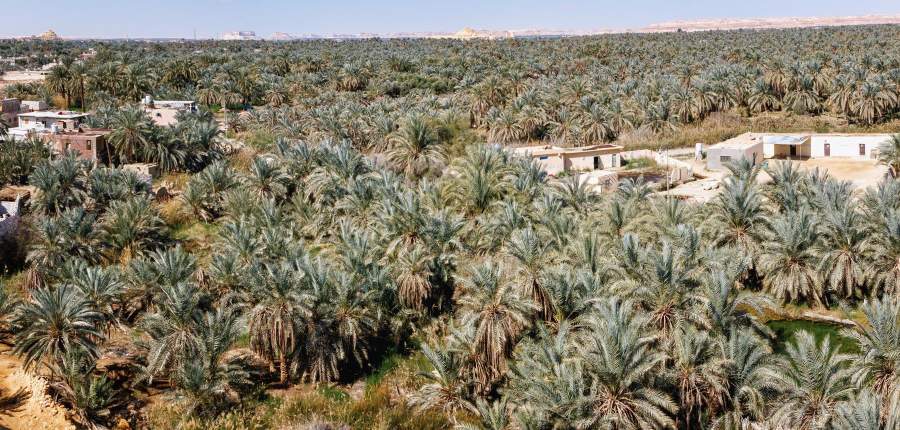
After kilometers of dry desert, palm trees begin to appear.
Water glitters between the vegetation.
Mud-brick buildings emerge from the landscape.
And the desert suddenly becomes an oasis.
An Oasis Between Water and Sand
Siwa’s defining feature is its extraordinary contrast.
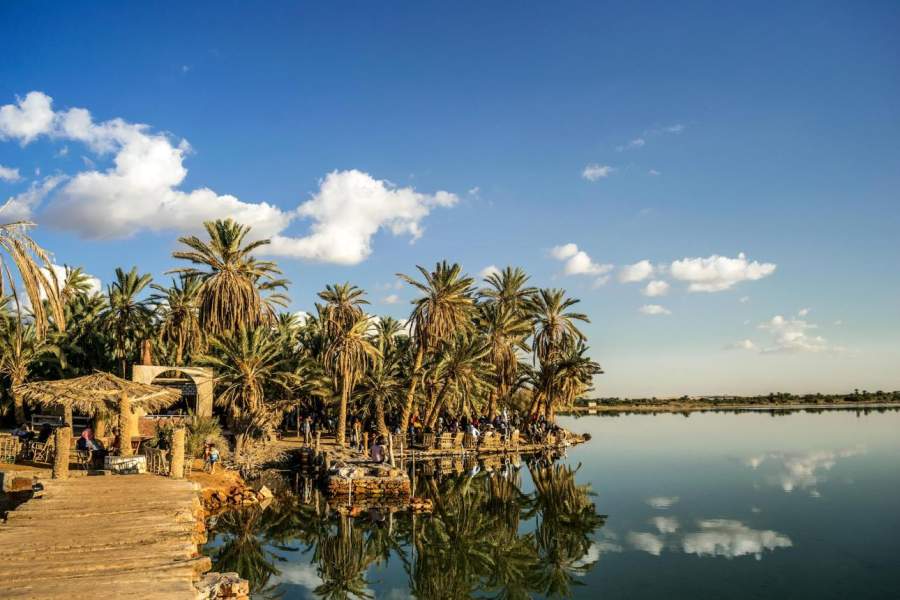
On one side, there is the desert.
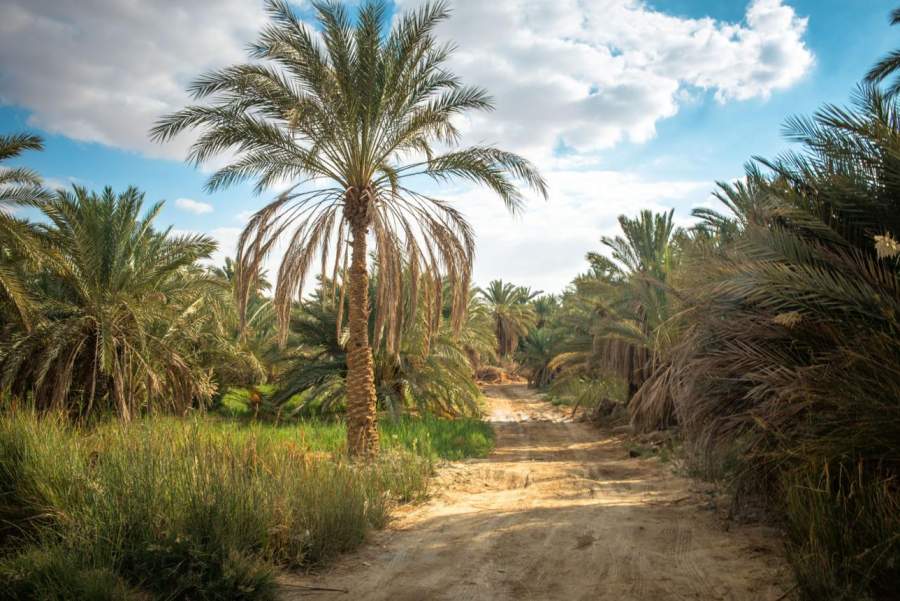
On the other, there are lakes, springs, palm groves, olive trees, and cultivated land.
Experience Egypt highlights Siwa’s salt lakes, hot springs, palm and olive groves, and serene landscapes as some of the defining features of the oasis.
The contrast is especially striking from higher viewpoints.
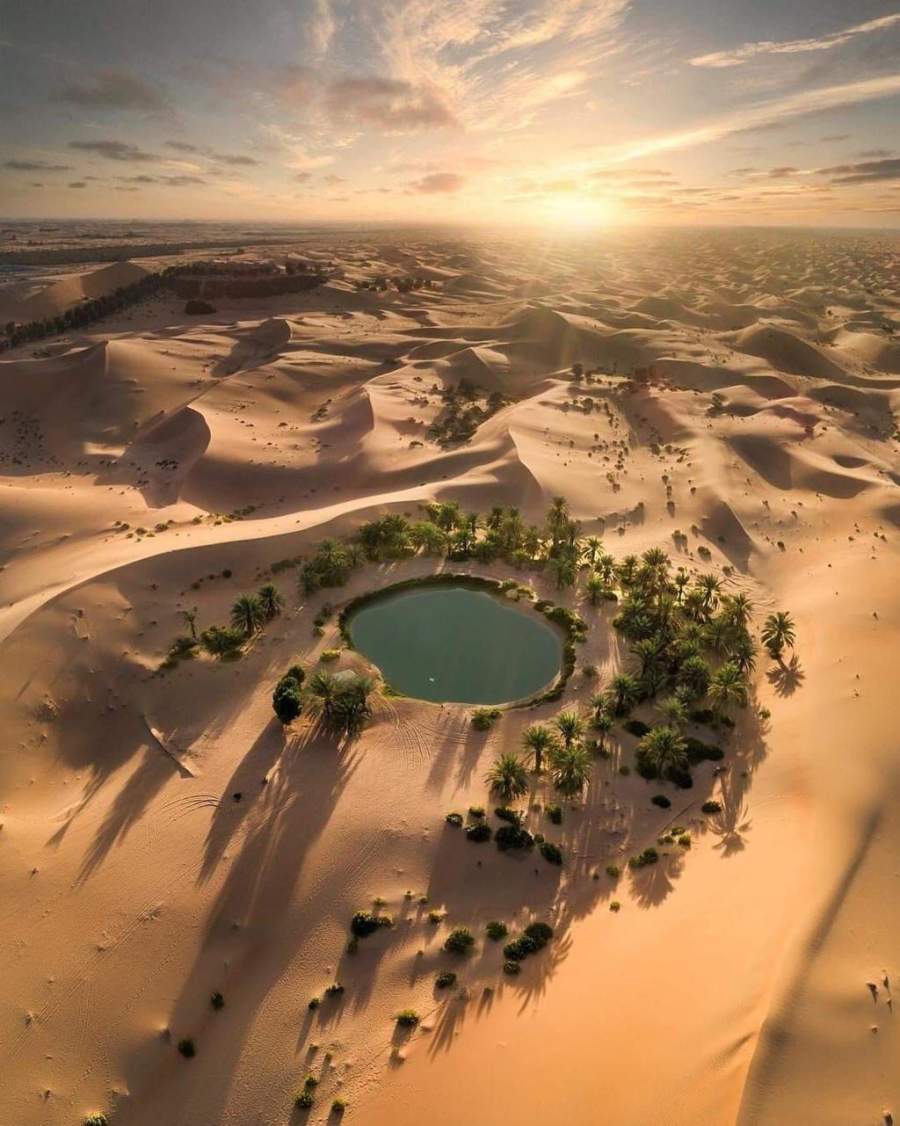
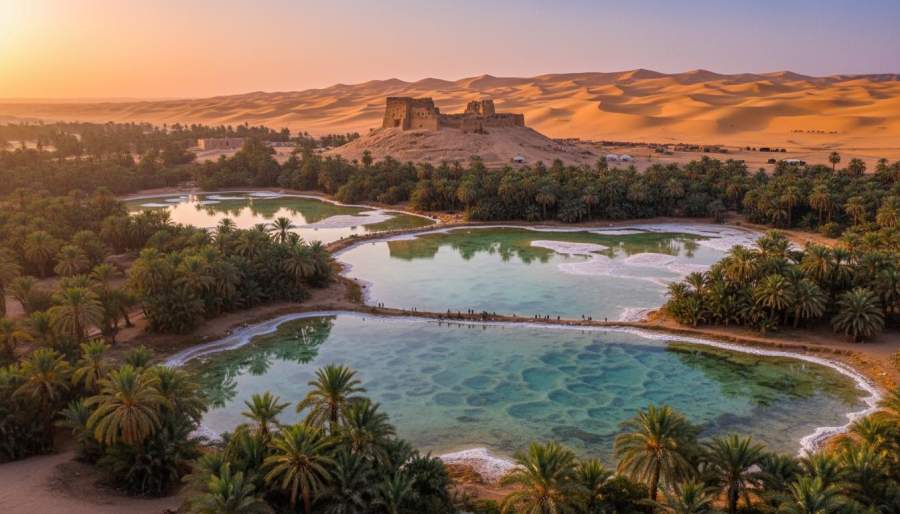
From above, the oasis appears like a green island surrounded by an enormous sea of sand.
The palms form dense patches of vegetation.
The lakes reflect the sky.
And beyond them, dunes stretch toward the horizon.
It is this combination that makes Siwa visually different from almost anywhere else in Egypt.
The Ancient Oasis of Amun
Siwa is not only beautiful.
It is deeply connected to ancient Egyptian history.
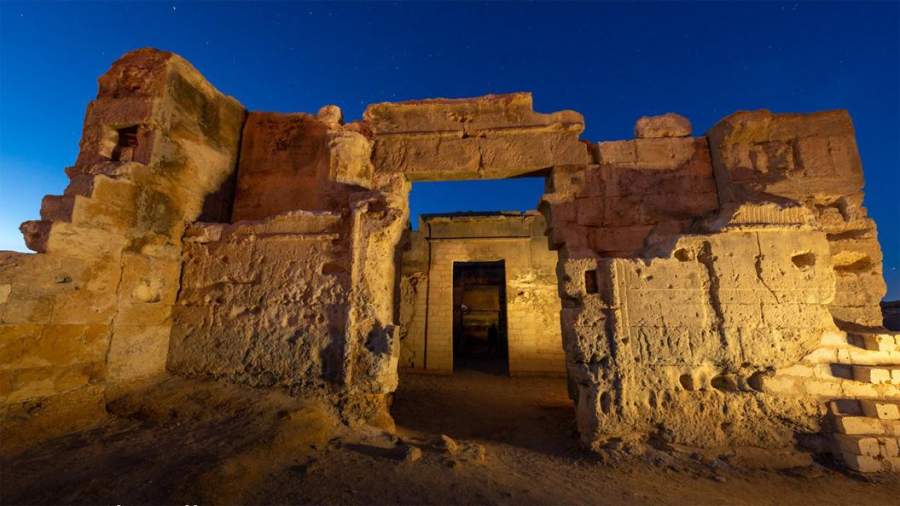
The oasis was historically associated with the worship of Amun, and the Oracle of Amun became famous throughout the ancient Mediterranean world.
Experience Egypt’s historical material identifies the Temple of the Oracle as the place where Alexander the Great came to seek the oracle’s guidance.
Alexander’s visit to Siwa in 331 BC became one of the most famous episodes in the oasis’s history.
According to the historical tradition, the oracle confirmed his divine connection with Amun.
Whether you approach the story from the perspective of archaeology, ancient religion, or the biography of Alexander, the visit transformed Siwa’s place in historical memory.
A remote desert oasis suddenly became associated with one of antiquity’s most famous rulers.
The Temple of the Oracle
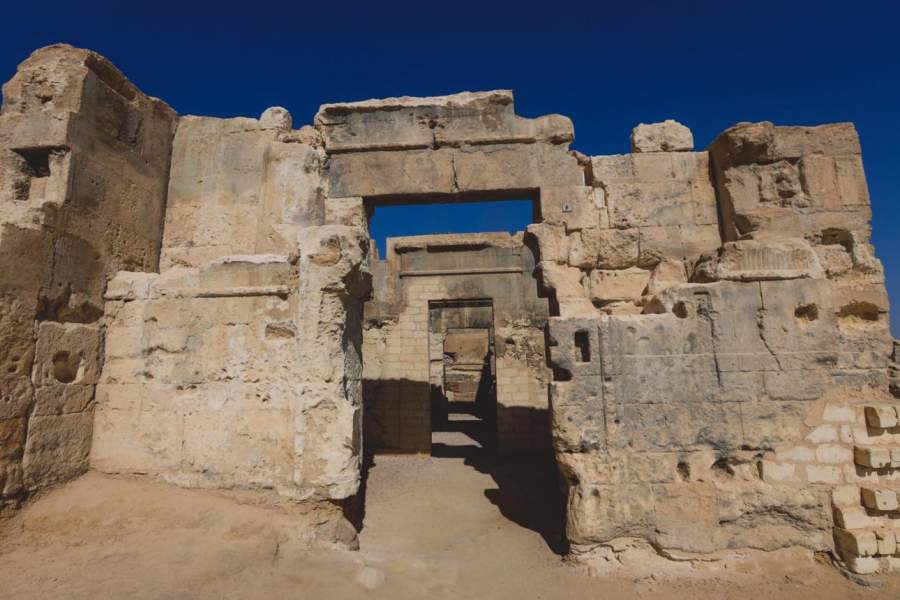
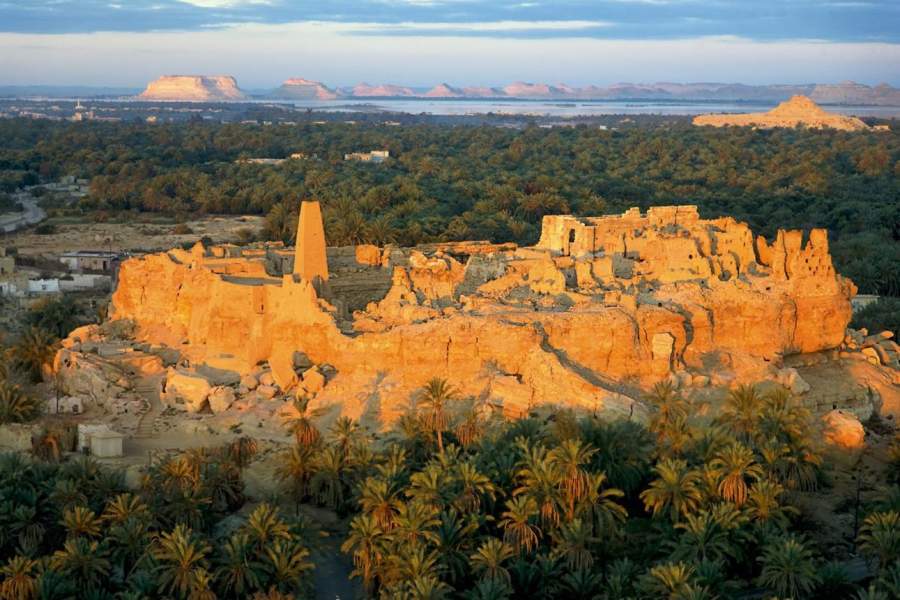
The remains of the Oracle sanctuary are located at Aghurmi, an ancient settlement associated with Siwa’s archaeological heritage.
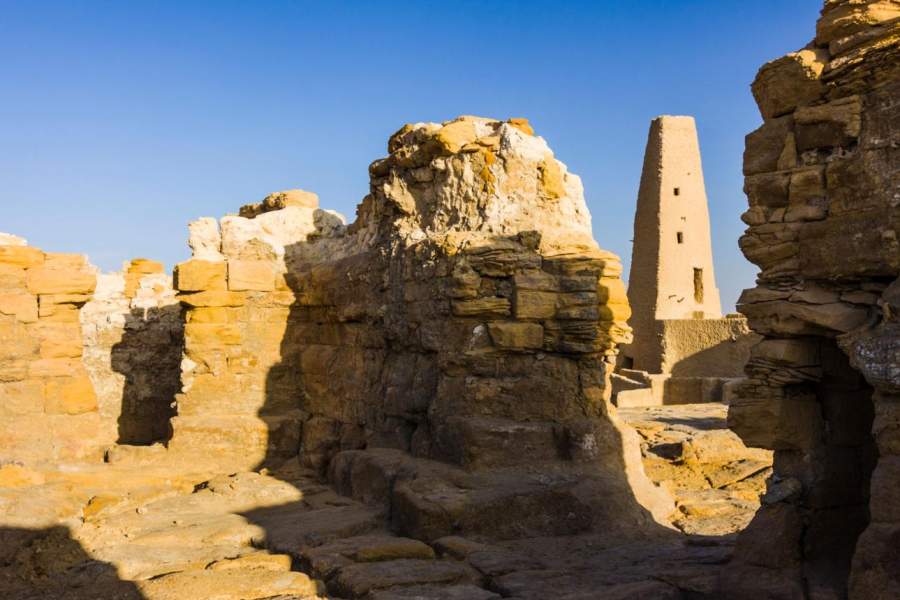
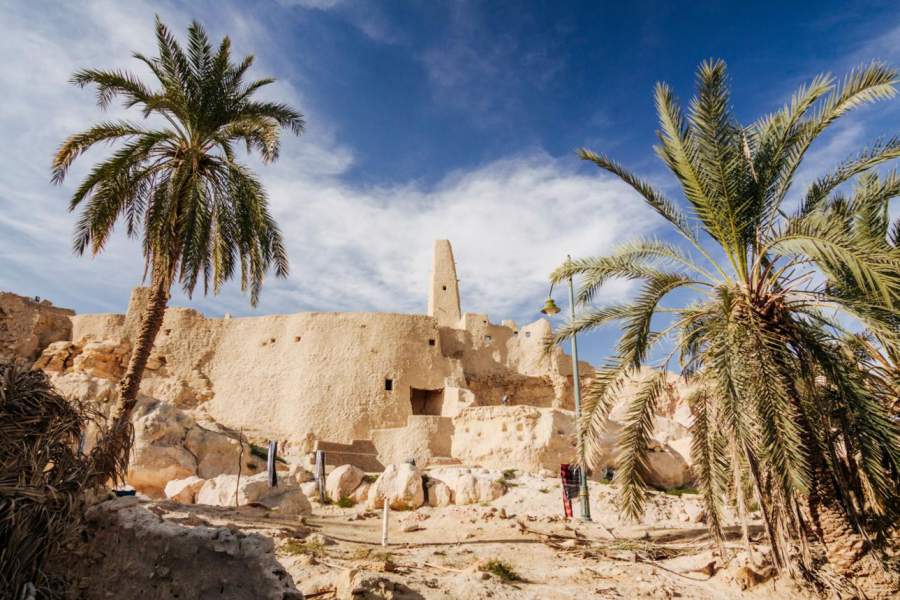
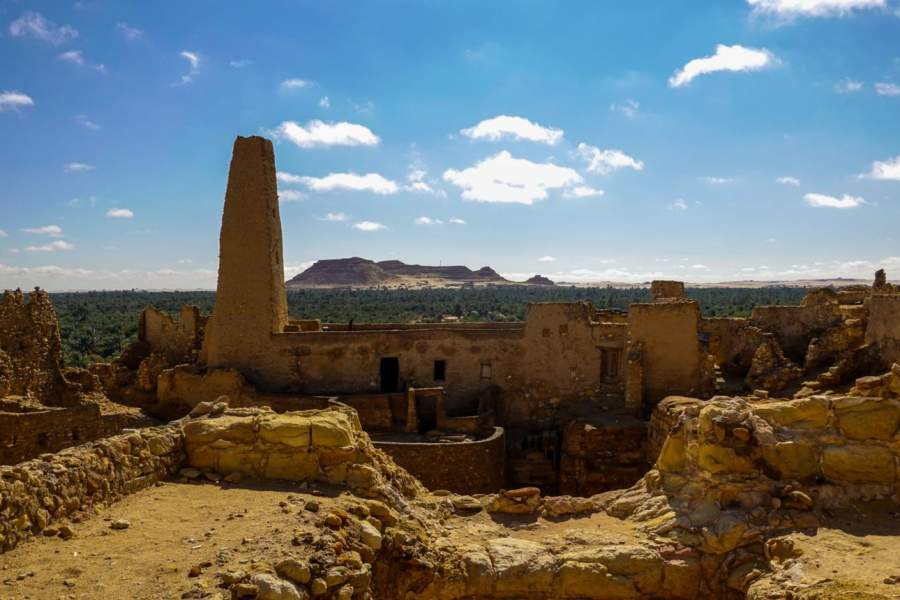
The temple occupies an elevated position overlooking part of the oasis.
Experience Egypt describes the sanctuary as being built on a hill overlooking Cleopatra’s Spring and notes that Alexander the Great sought the oracle here. The remains include decorated architectural elements and inscriptions.
Standing among the ruins, it is easy to understand why the location would have been significant.
The elevated temple provides a dramatic relationship between architecture and landscape.
Palm groves stretch below.
The desert extends beyond them.
And the ruins sit between these two environments.
This is one of Siwa’s most compelling characteristics: ancient history is not separated from nature. It exists directly within the oasis landscape.
Shali: The Ancient Heart of Siwa
If the Oracle represents Siwa’s ancient religious history, Shali represents its medieval urban heritage.
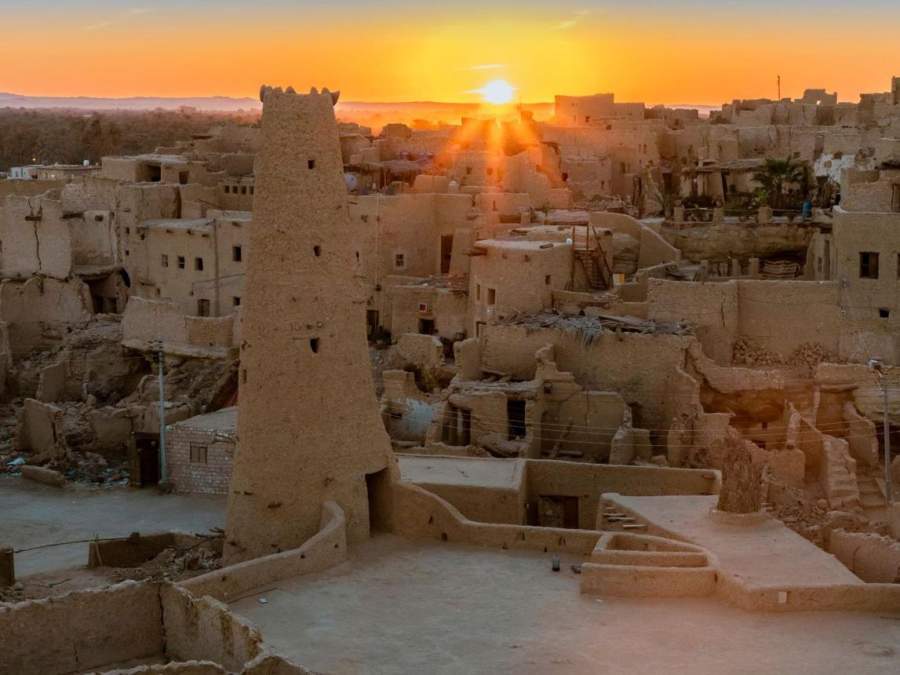
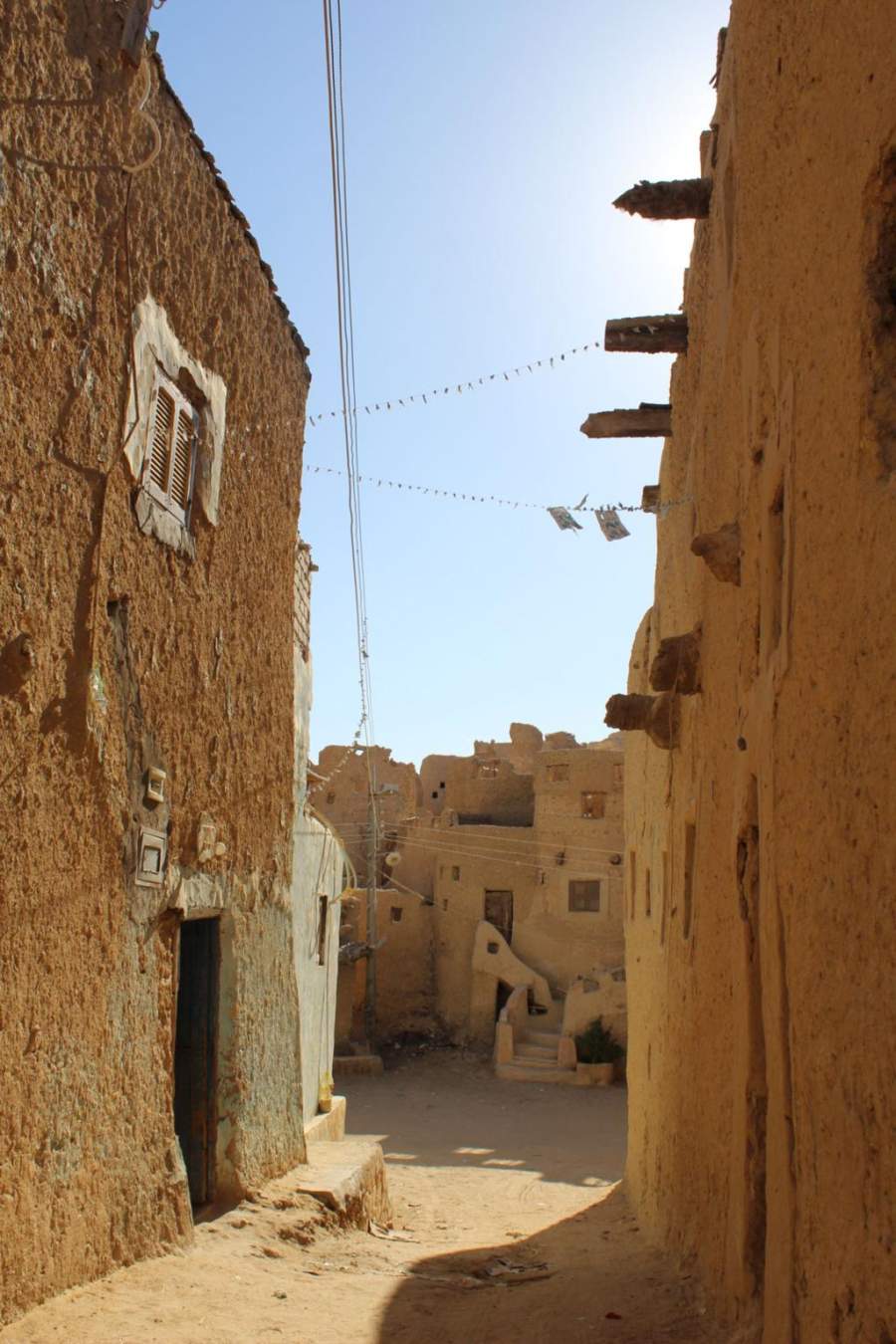
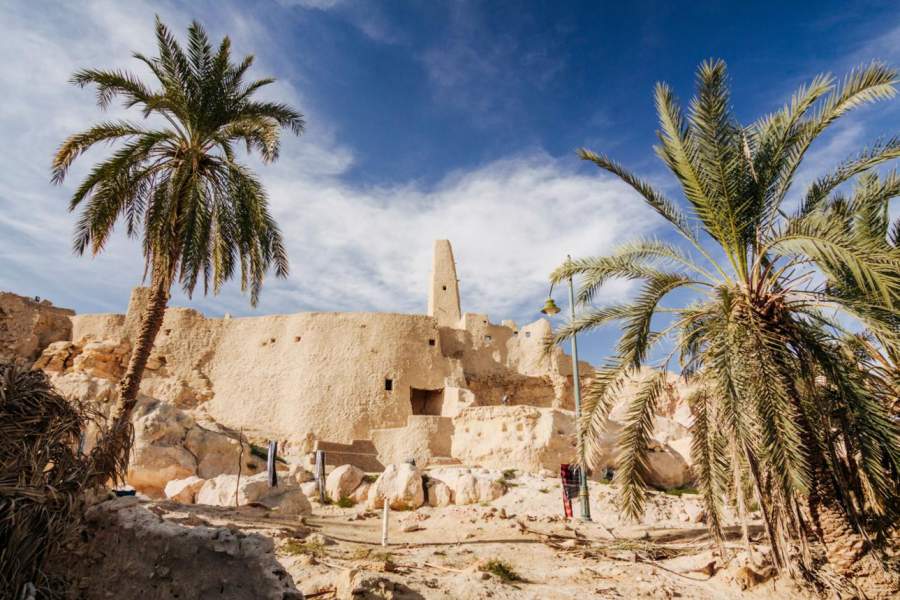
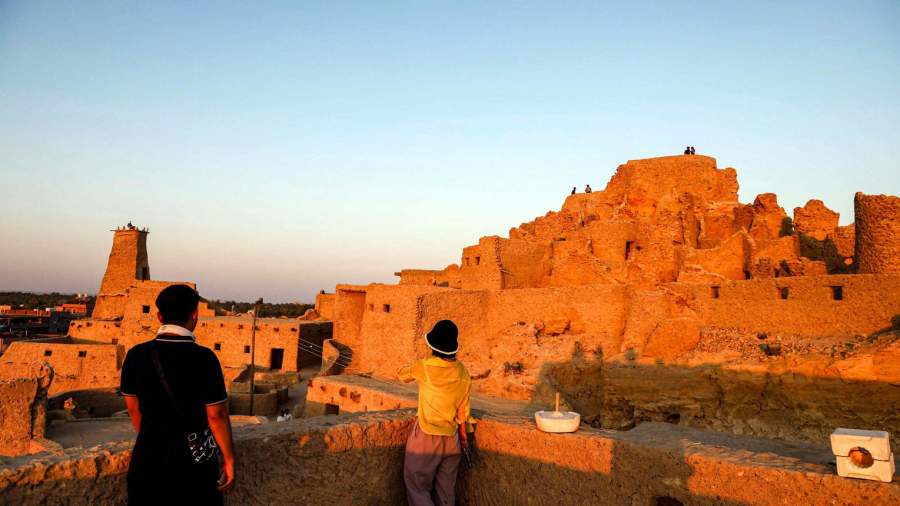
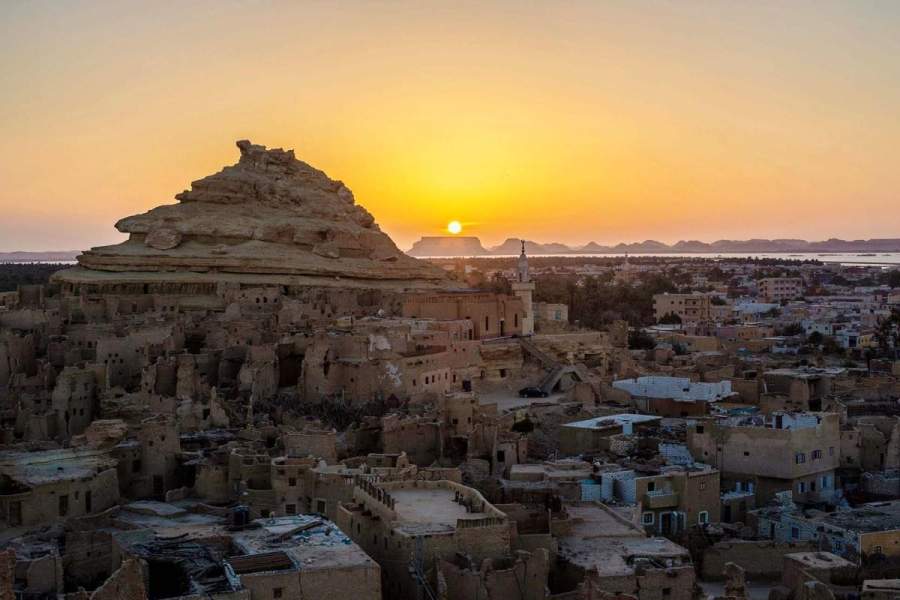
The Ministry of Tourism and Antiquities states that Shali was established in the 12th century AD and that the name “Shali” means “city” in the Siwi language. The settlement was constructed using kershef, a traditional building material made from clay saturated with salt.
When dry, kershef becomes remarkably hard.
The result is a distinctive architecture of thick earthen walls, narrow passages, towers, and interconnected buildings.
Shali was surrounded by a substantial defensive wall and contained houses, mosques, wells, and other structures.
The Ministry notes that the old city included six deep water wells, which served the inhabitants of the oasis.
Walking through Shali today means moving through the remains of a settlement shaped by the environmental conditions of Siwa itself.
The architecture was not imported from somewhere else.
It developed from local materials.
Exploring Shali Fortress
The restored sections of Shali offer one of the best ways to understand Siwa’s traditional architecture.
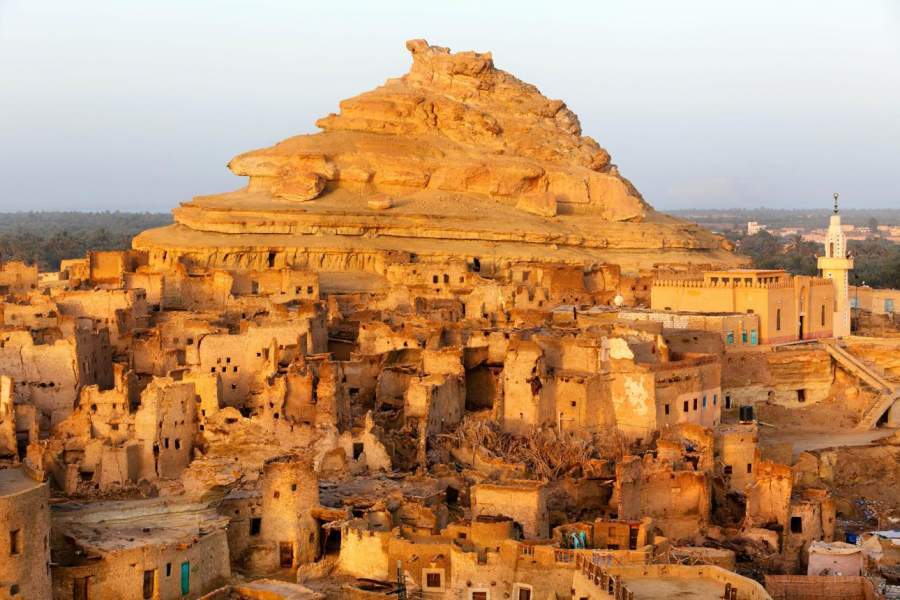
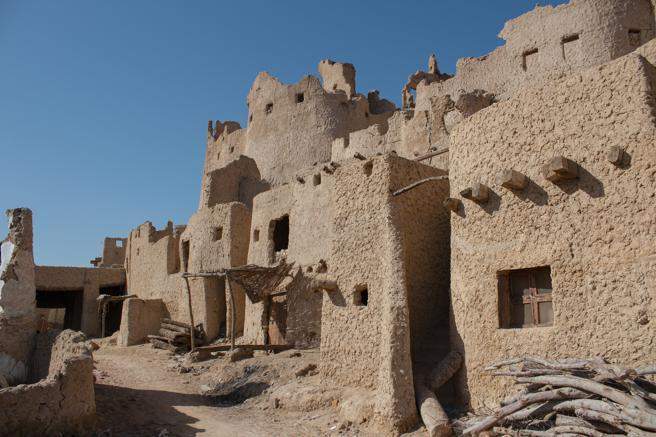
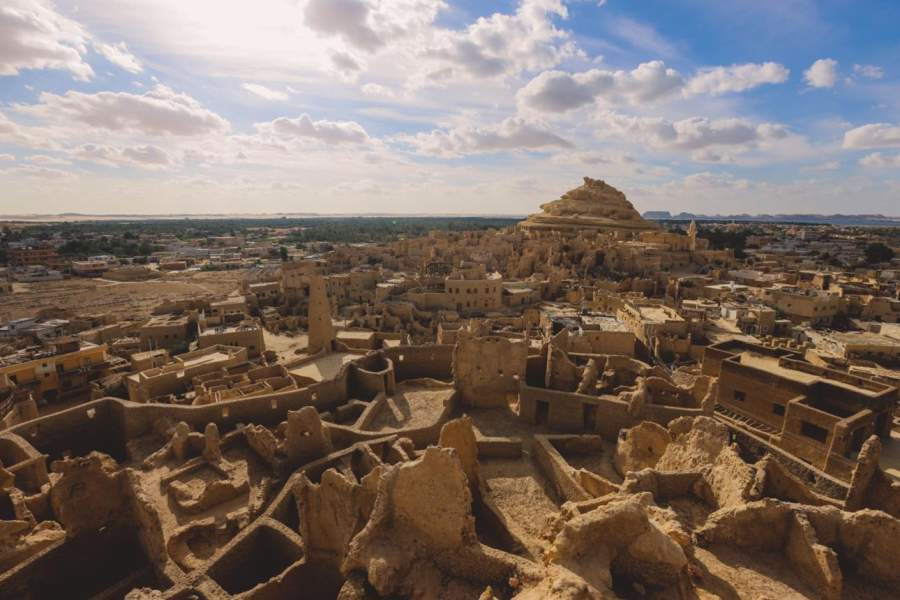
The Ministry of Tourism and Antiquities has documented restoration work that stabilized damaged walls, reopened passages, and restored parts of the old city using traditional materials and architectural approaches.
The settlement suffered major deterioration after heavy rains damaged the salt-and-mud structures in the 20th century.
Today, however, visitors can walk through parts of the historic city and explore its lanes and architectural remains.
From the higher parts of Shali, the view is particularly impressive.
The ancient settlement rises above the oasis, with palm groves and lakes stretching beyond it.
It is one of those viewpoints where the history and geography of Siwa become visible at the same time.
The Ancient Mosque of Shali
Among the structures within the old settlement is the Al-Ateeq Mosque.
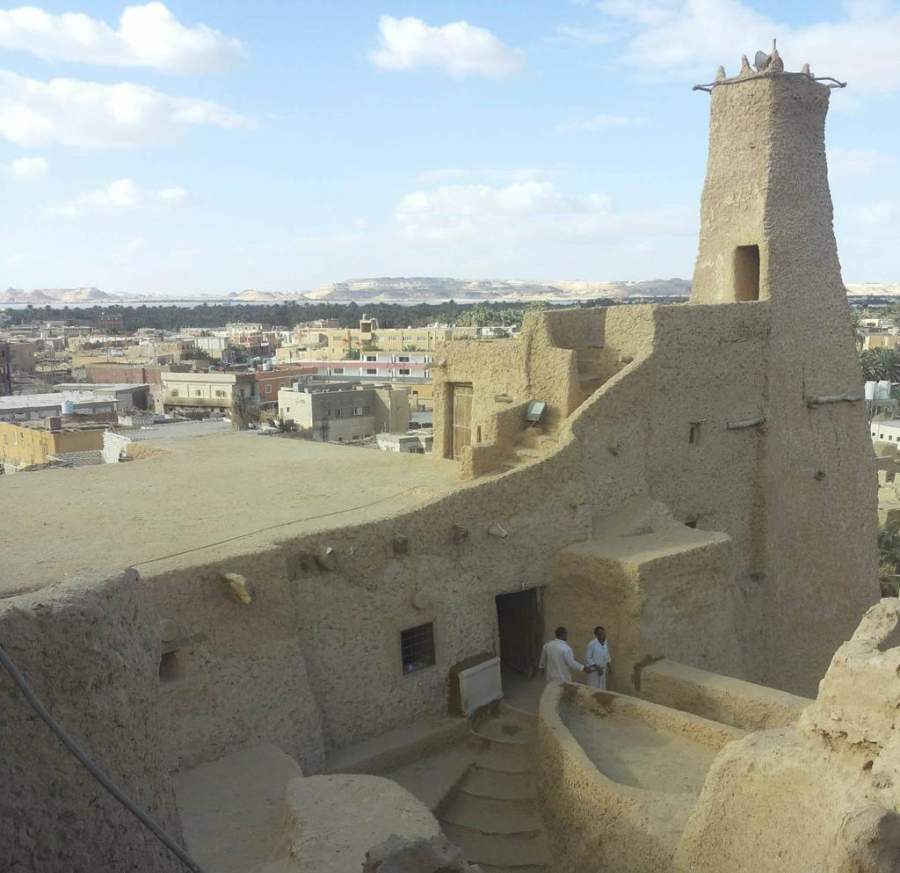
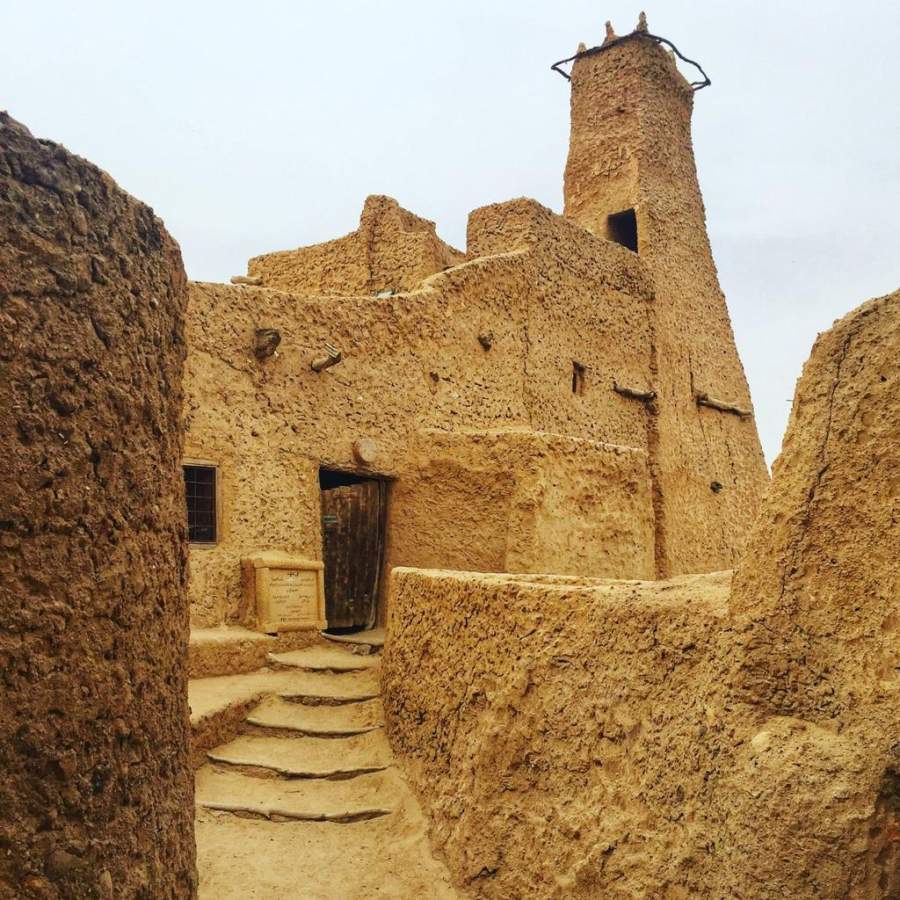
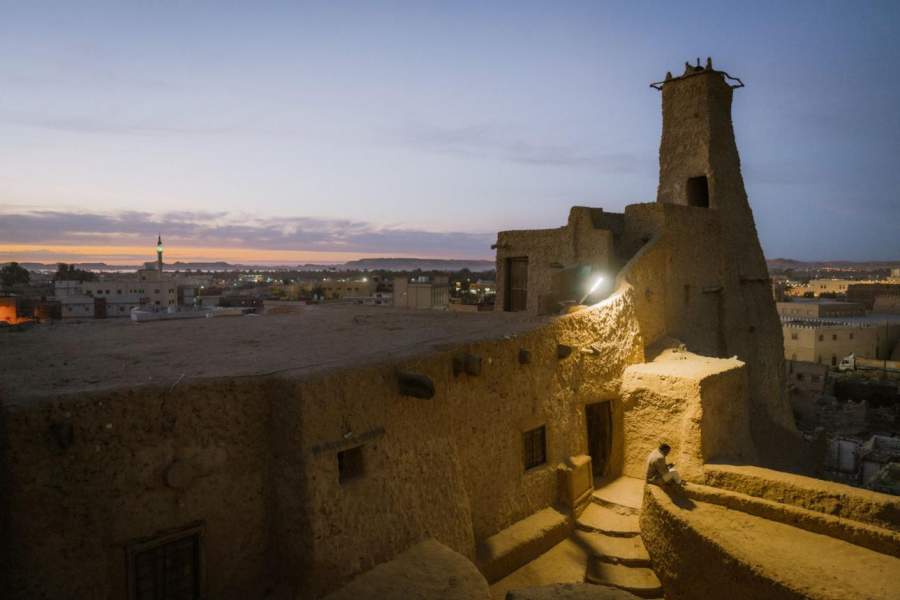
The Ministry describes the Al-Ateeq Mosque as the oldest mosque built from mud in Africa and notes that it was restored and opened in 2015.
The mosque forms part of the wider architectural story of Shali.
Its existence within the old fortified settlement shows how religious, residential, defensive, and communal functions were integrated into the same urban environment.
Another historic mosque, the Tandi Mosque, is also part of Shali’s heritage.
Together, these structures demonstrate the importance of preserving not only monumental buildings but also the everyday architecture of historic communities.
Siwan Culture
Perhaps the most important part of visiting Siwa is not a ruin or a landscape.
It is the people.
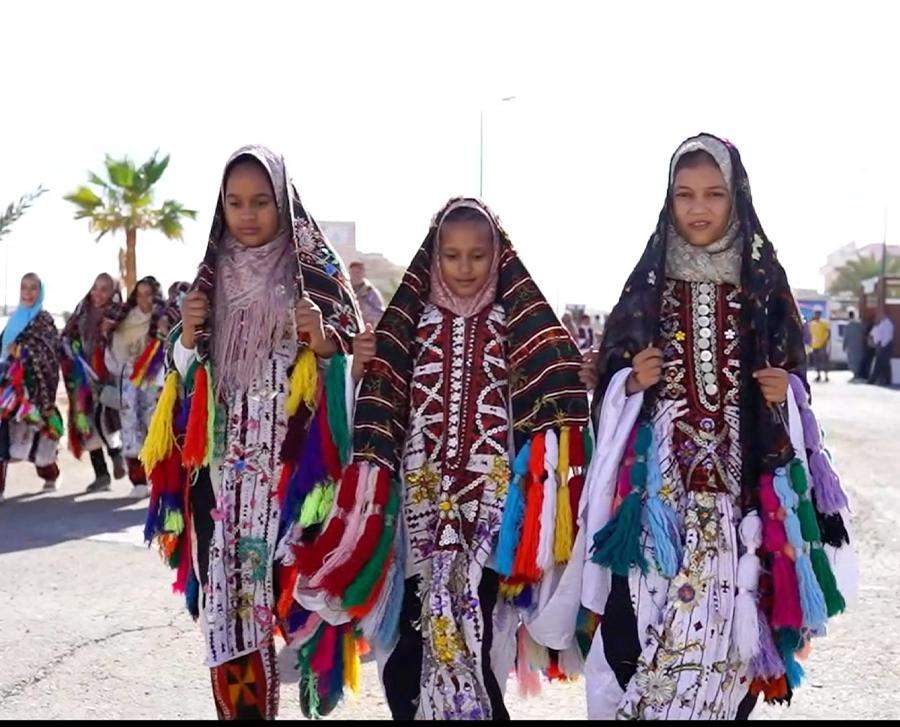
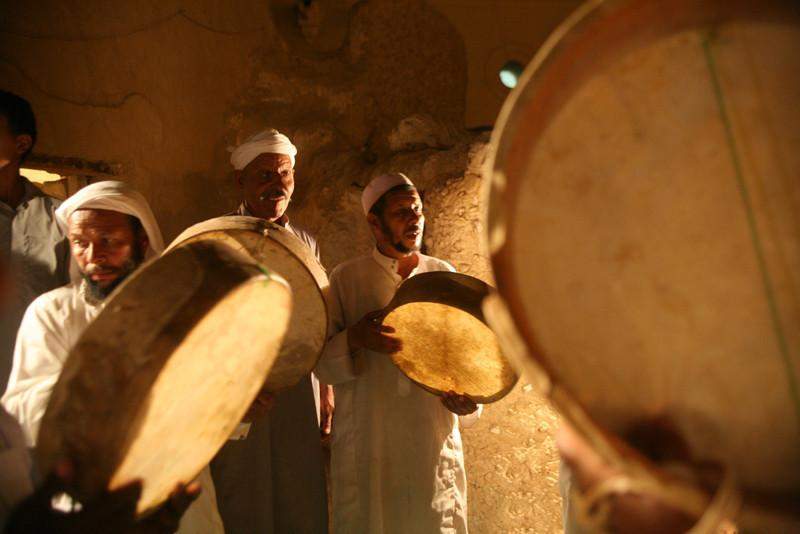
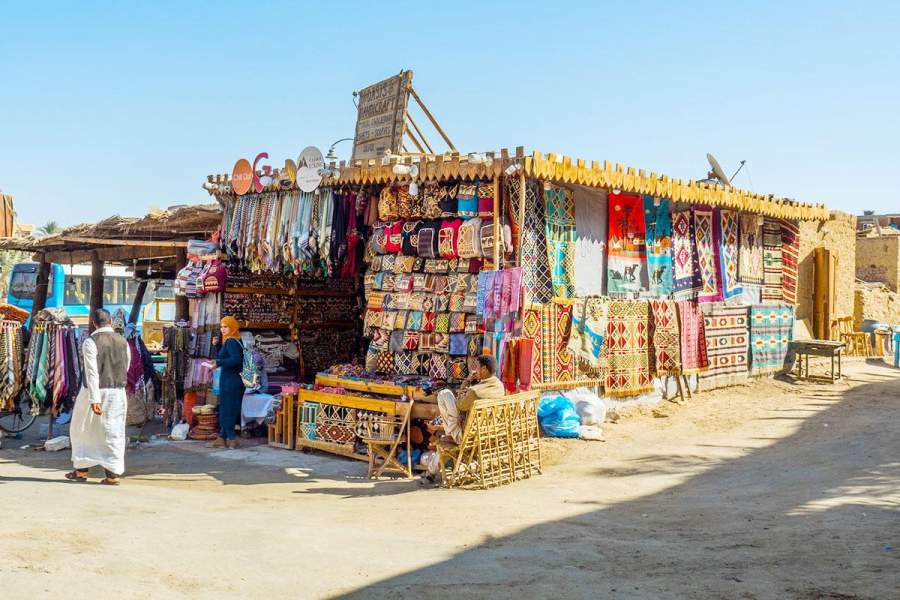
Experience Egypt describes Siwa as home to communities with a distinctive Amazigh heritage, preserved through local traditions, storytelling, language, food, and customs. It notes that Siwans speak Arabic as well as their own local language, which UNESCO considers endangered.
This cultural identity is one of the reasons Siwa feels different from many other Egyptian destinations.
The oasis developed its own traditions over generations of relative geographic isolation.
Visitors can encounter this heritage through local food, crafts, architecture, music, storytelling, and hospitality.
For travelers, this means that Siwa should not be treated simply as a desert landscape.
It is a living community.
Siwan Cuisine
Food is one of the easiest ways to experience local culture.
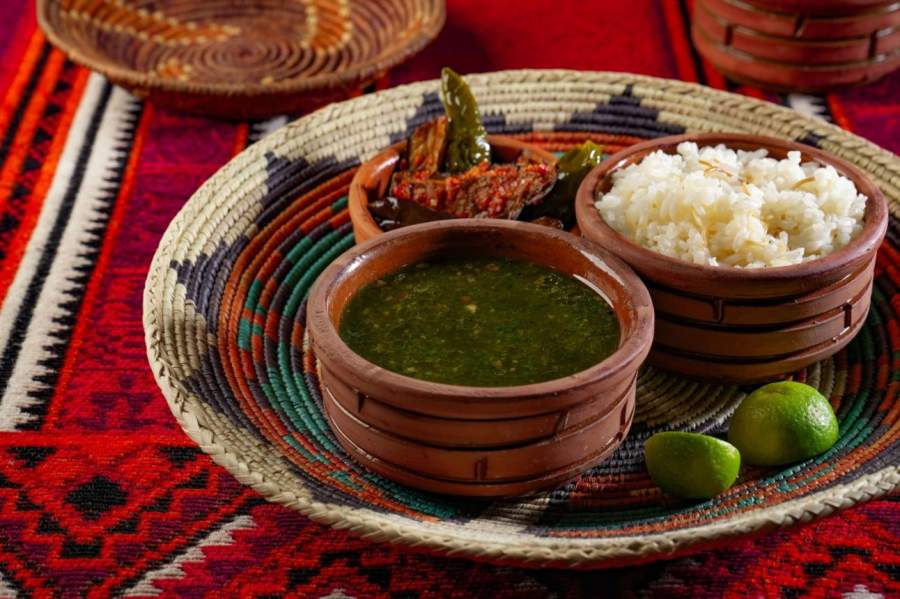
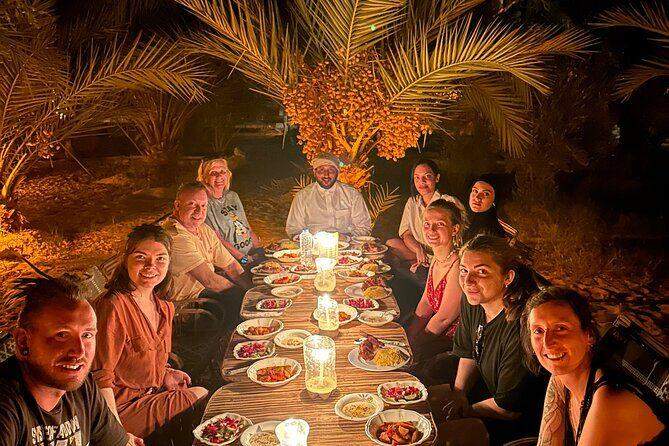
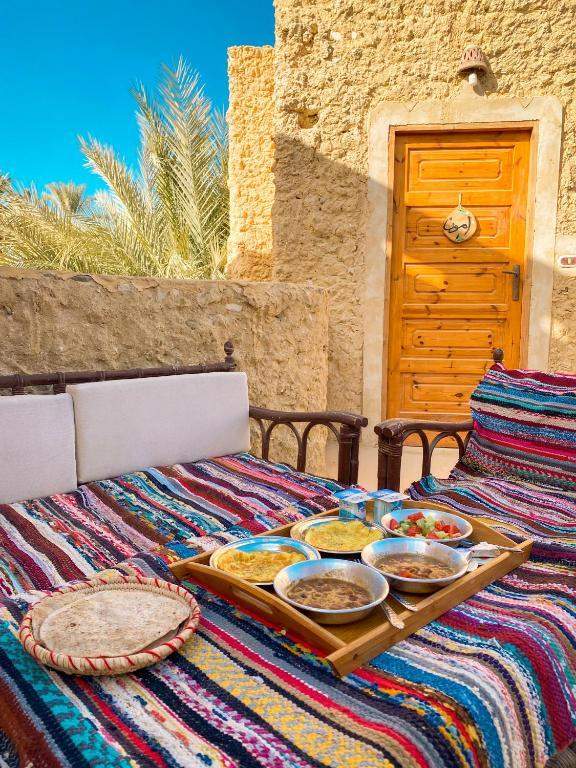
Experience Egypt highlights local Siwan cuisine and describes abou mardam, a traditional cooking method involving slow cooking meat and vegetables beneath the sand.
The culinary experience can also extend into desert excursions, where meals may be served around campfires beneath the night sky.
For visitors, local food provides another way to understand the oasis.
Palm cultivation, olives, dates, and desert agriculture have all contributed to the local food culture.
The result is cuisine closely connected to the landscape.
Cleopatra’s Bath
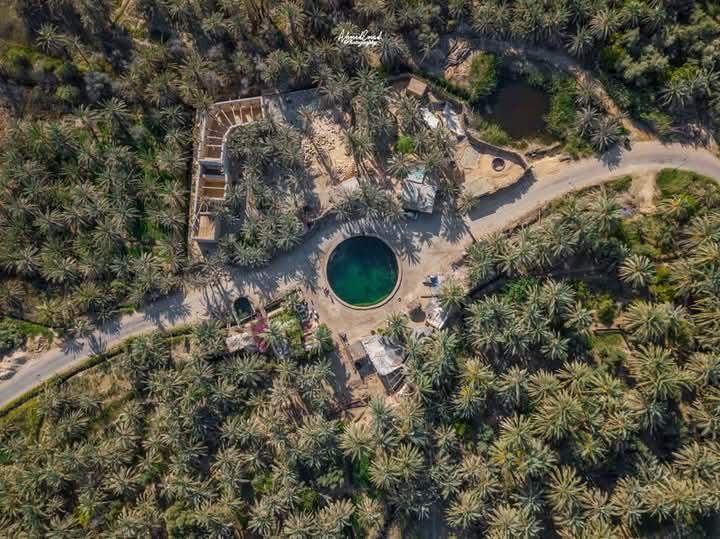
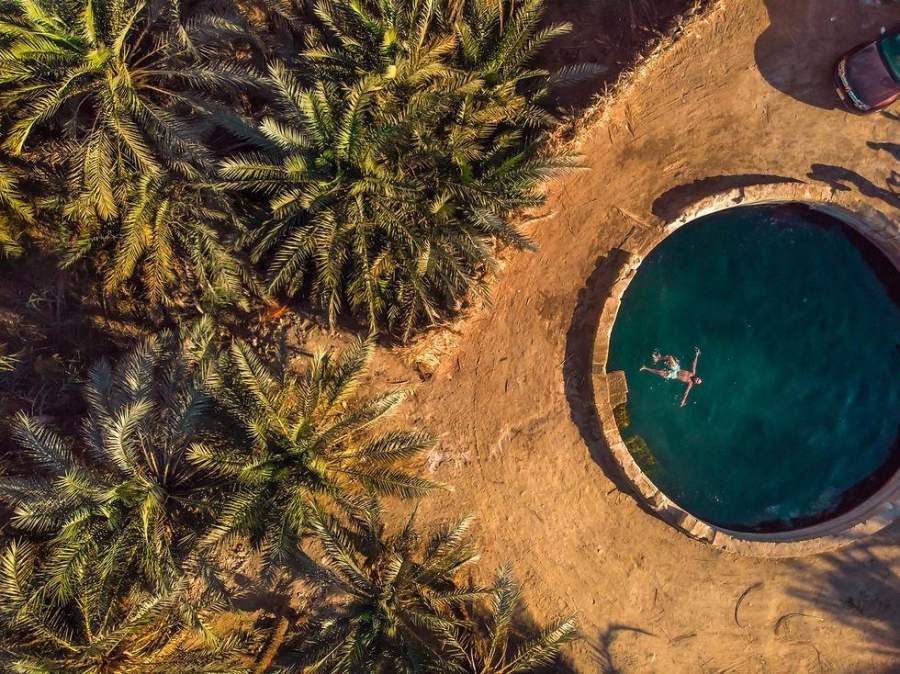
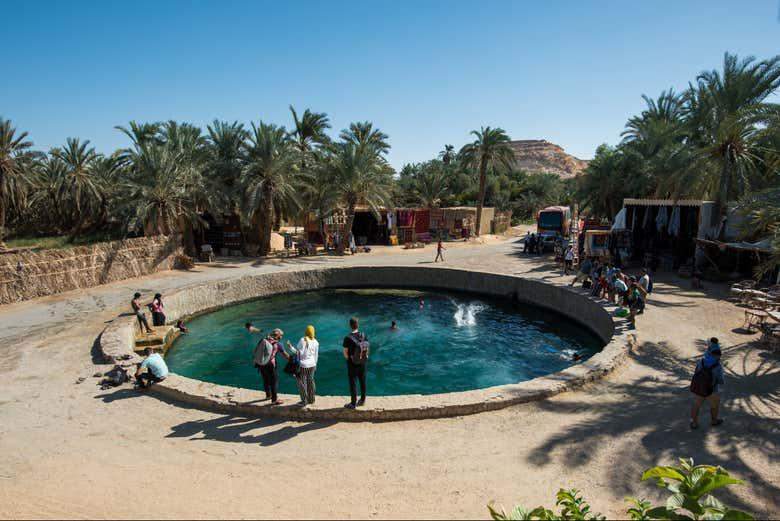
One of Siwa’s most famous natural attractions is Cleopatra’s Bath, a natural spring surrounded by the oasis landscape.
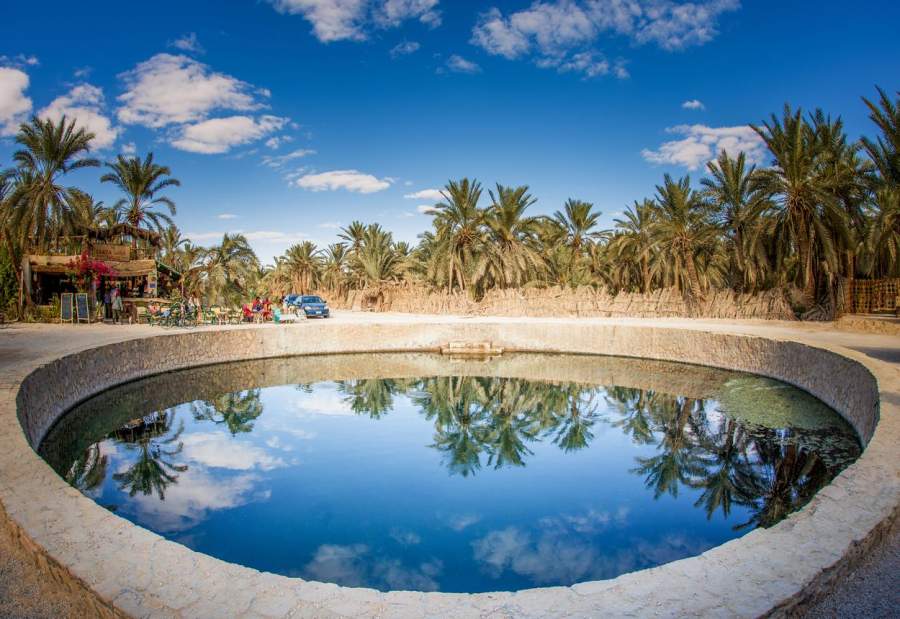
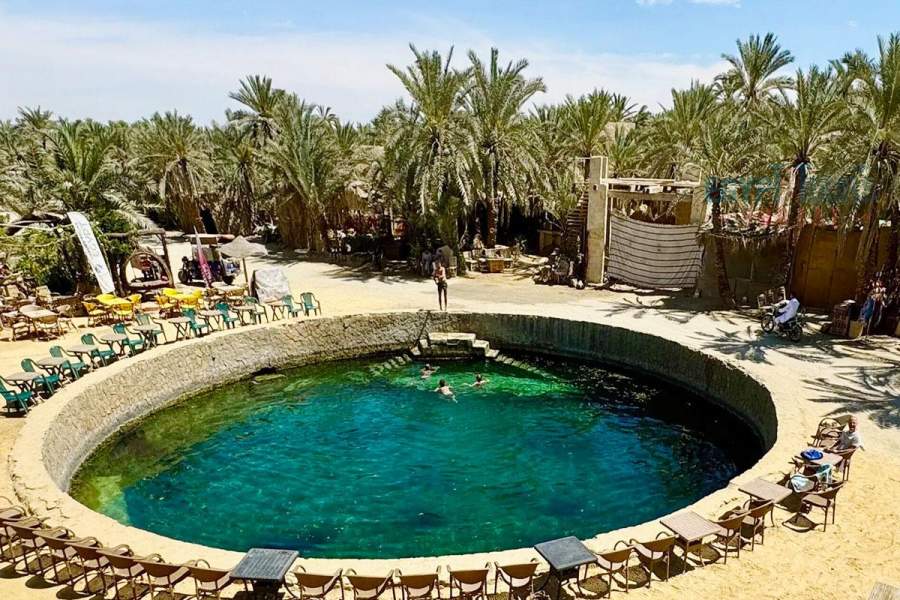
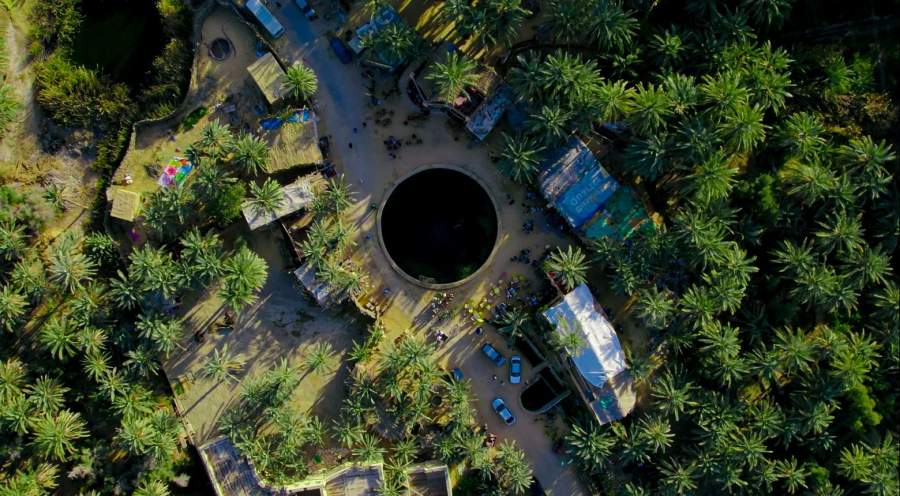
Experience Egypt describes Cleopatra’s Bath as one of Siwa’s most popular springs and notes that it is traditionally associated with the queen, although the story of Cleopatra bathing there is presented as a local legend rather than established historical fact.
The spring is surrounded by greenery and is a popular place for visitors to relax.
Its appeal comes from the combination of naturally occurring water and the surrounding oasis landscape.
It is also a reminder of one of Siwa’s most important characteristics:
water is everywhere.
In a desert environment, every spring and lake feels particularly extraordinary.
Salt Lakes: Siwa’s Blue Wonders
Then there are the salt lakes.
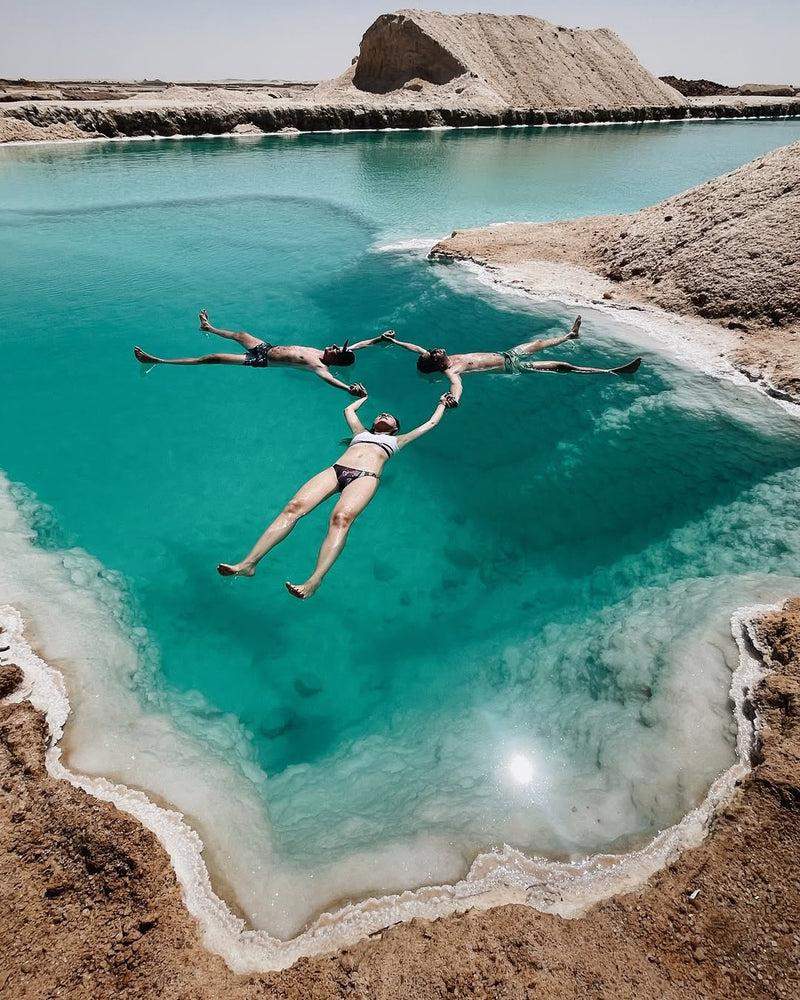
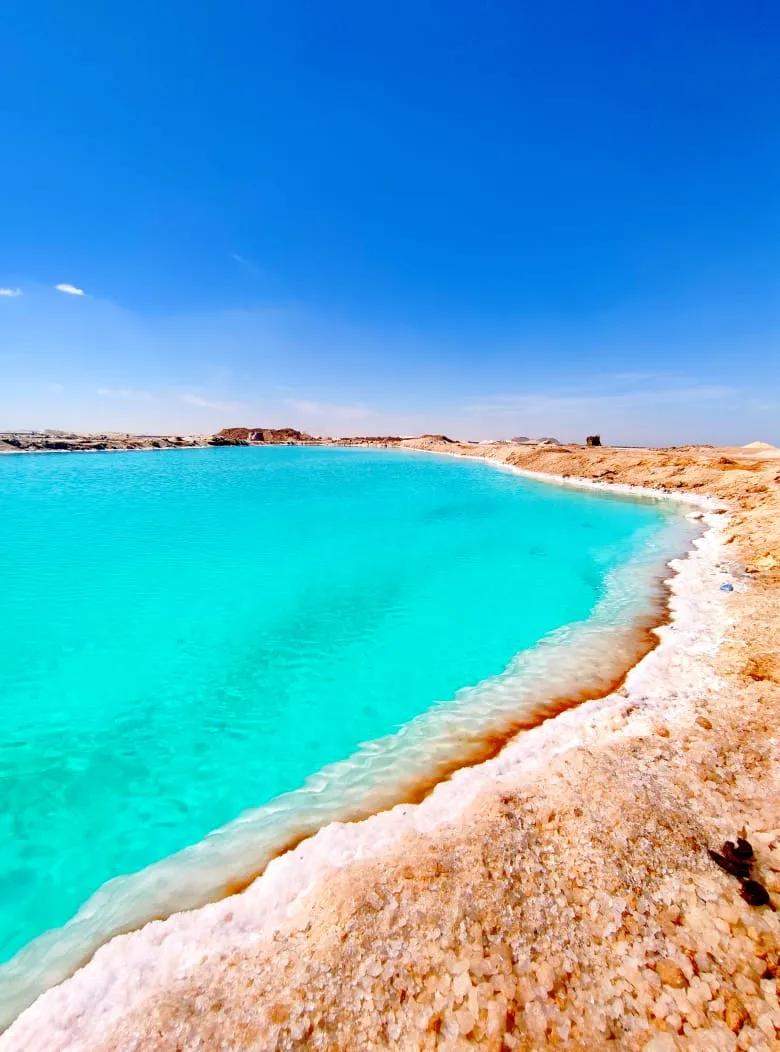
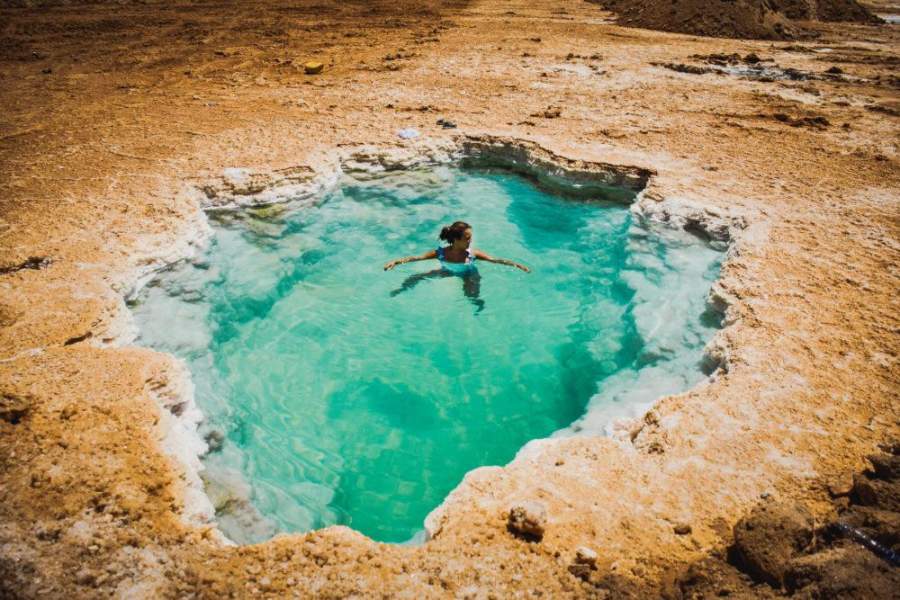
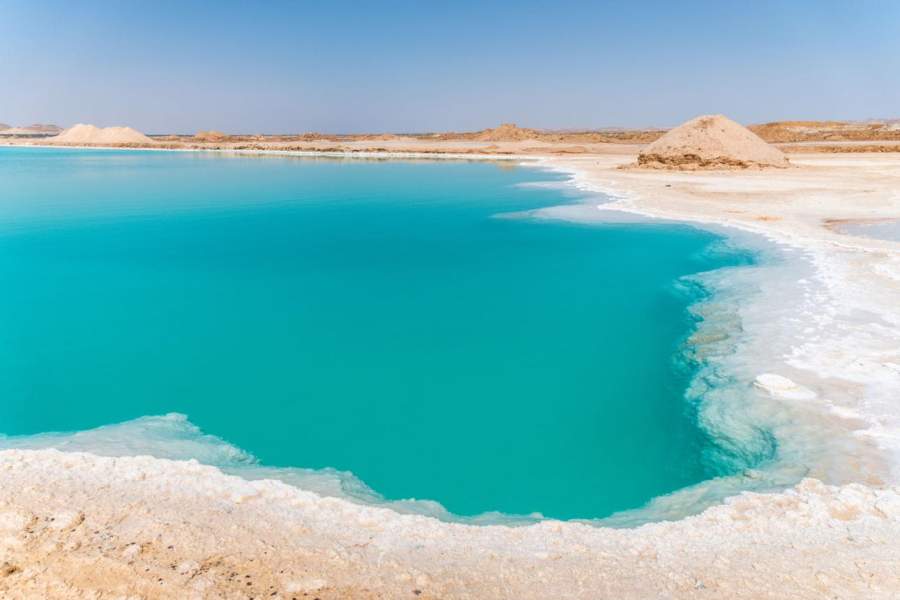
The intensely blue water of Siwa’s salt lakes creates one of the most recognizable landscapes in the oasis.
Experience Egypt highlights the opportunity to float in the oasis’s clear, blue salt lakes and identifies the salty lakes as one of Siwa’s signature attractions.
The contrast is extraordinary.
Golden desert.
Green palms.
Bright turquoise water.
White salt deposits.
It can look more like a tropical landscape than a desert oasis.
Visitors should follow local guidance when entering salt lakes, especially regarding which areas are suitable for swimming and how to protect the fragile surrounding environment.
Fatnas Island
For sunset, one of the most famous locations in Siwa is Fatnas Island.
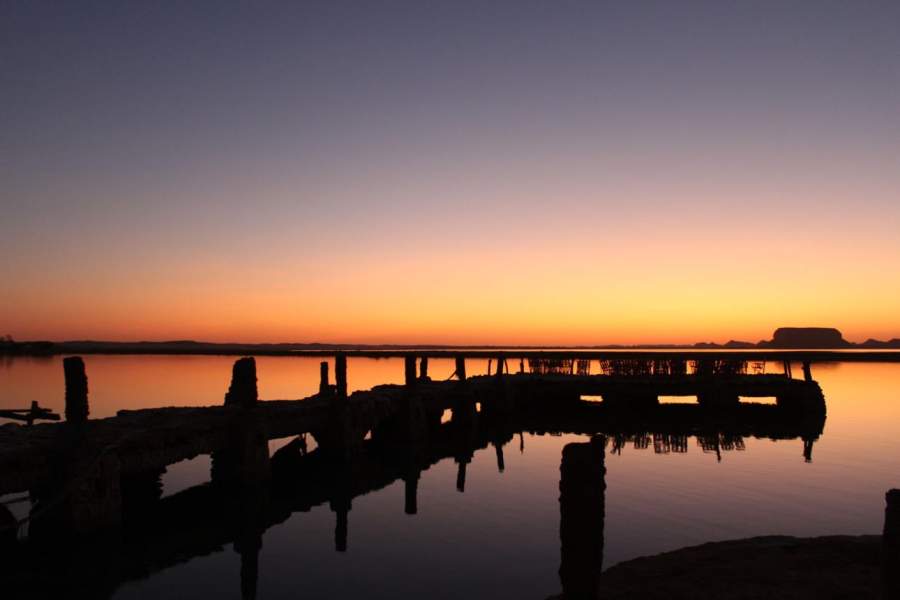
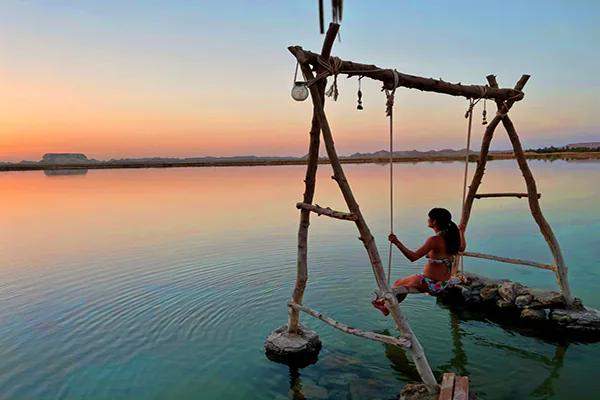
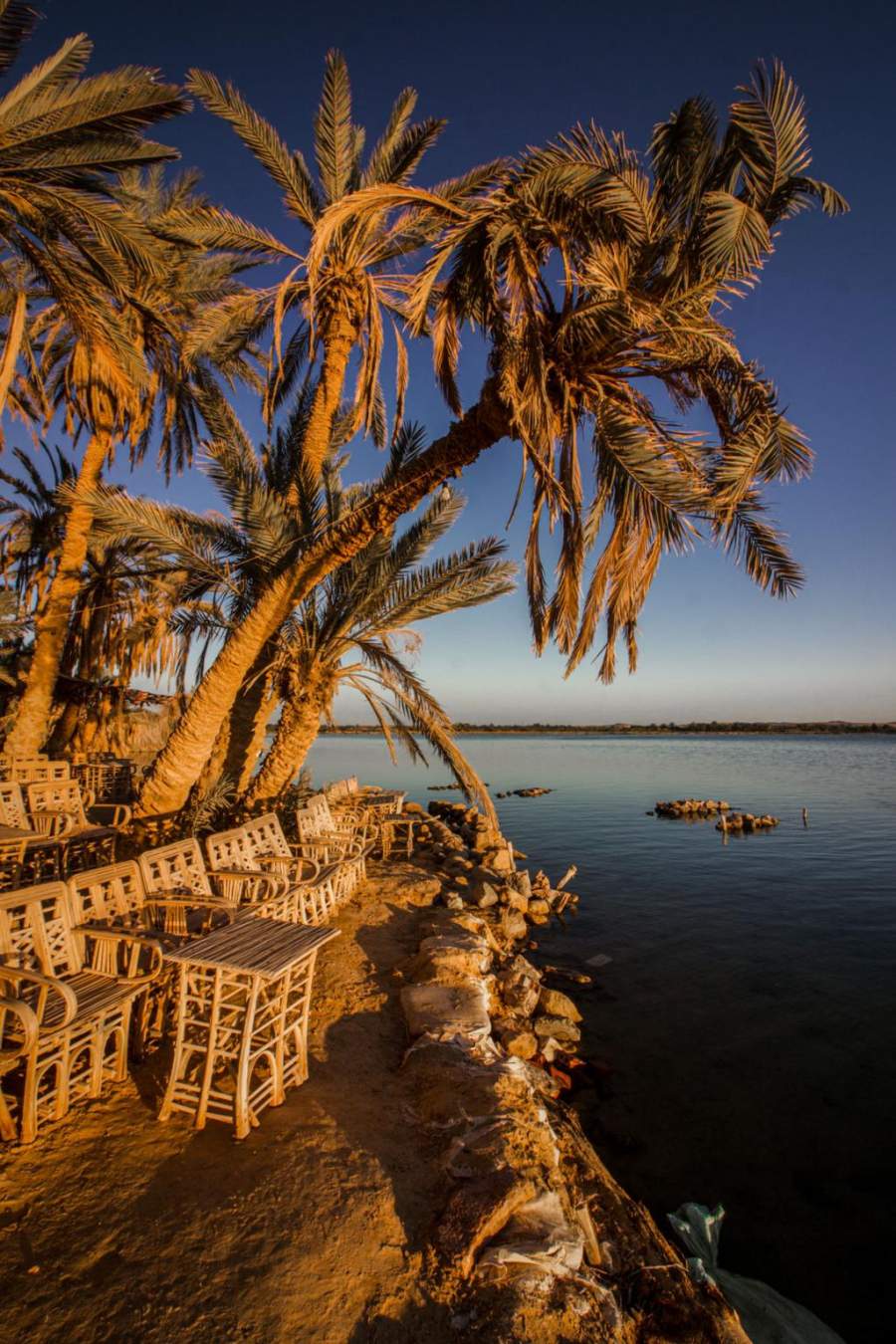
Fatnas sits beside Birket Siwa, surrounded by palms and water.
Experience Egypt highlights Siwa’s multicolored sunsets and recommends watching the sunset from the tops of the surrounding dunes.
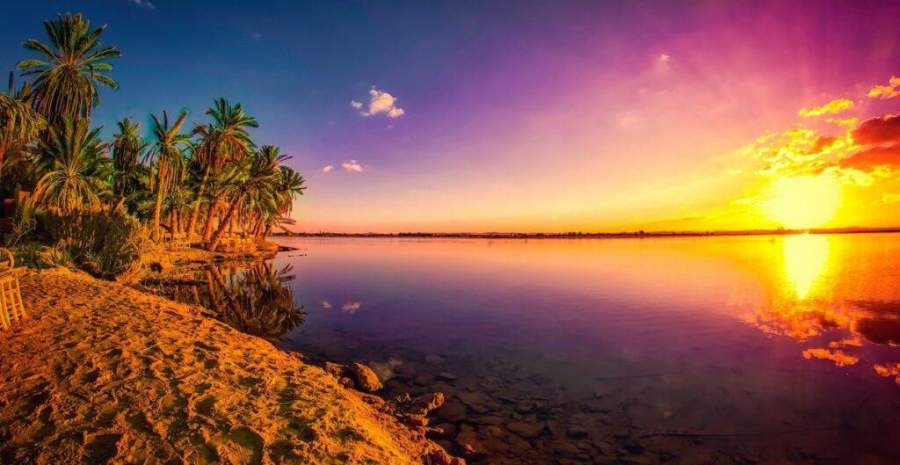
At Fatnas, the landscape becomes particularly atmospheric toward evening.
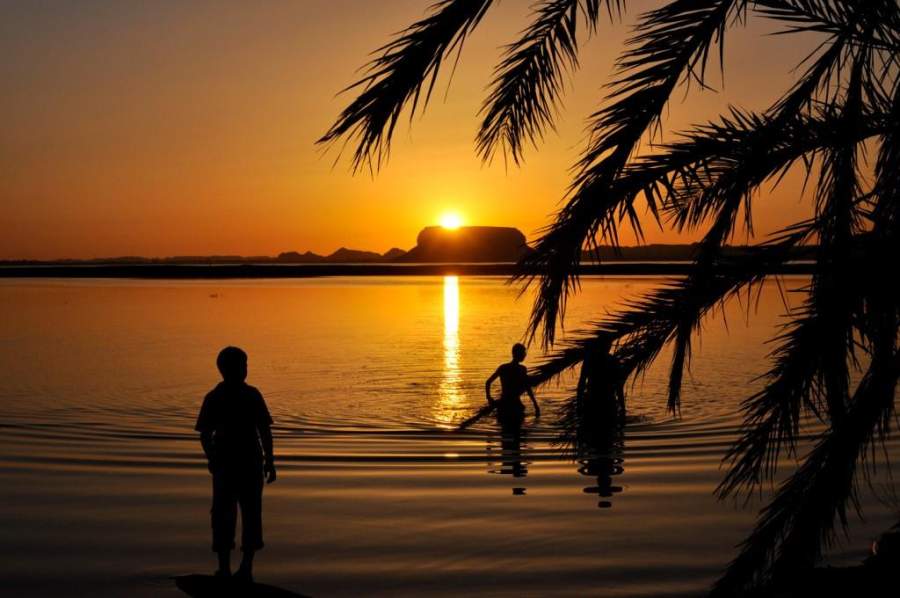
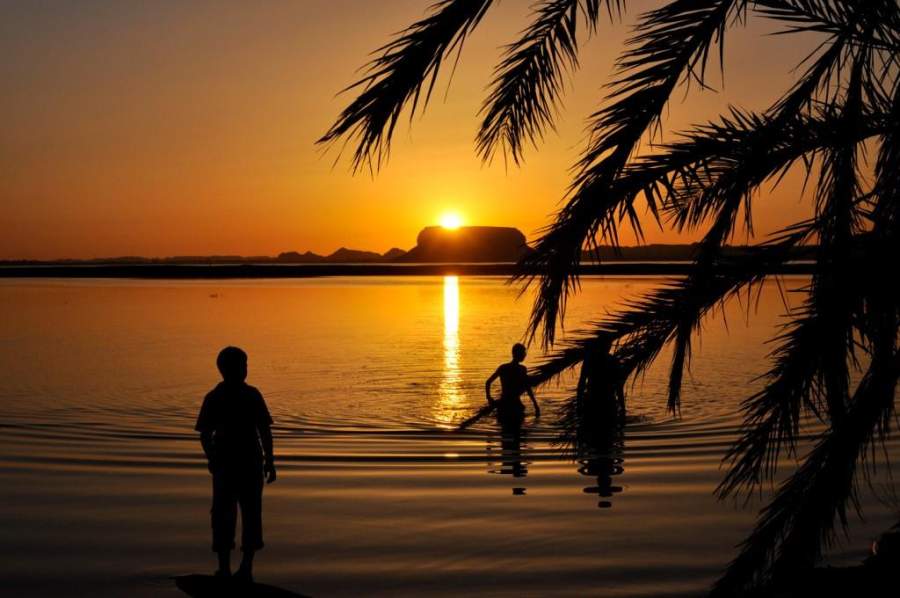
The palms form dark silhouettes.
The lake reflects the changing sky.
And the surrounding desert gradually turns golden, orange, and pink.
For many visitors, sunset is the moment when Siwa’s combination of desert and water becomes most striking.
The Great Sand Sea
Beyond the oasis lies an entirely different world.
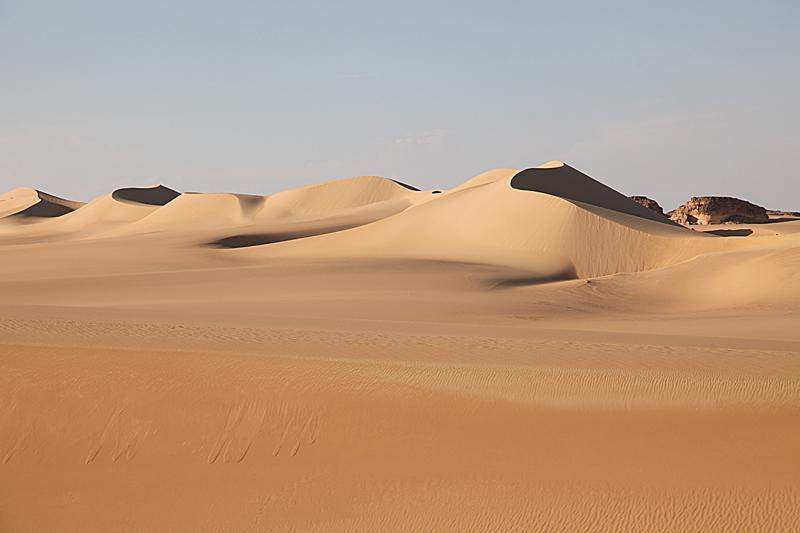
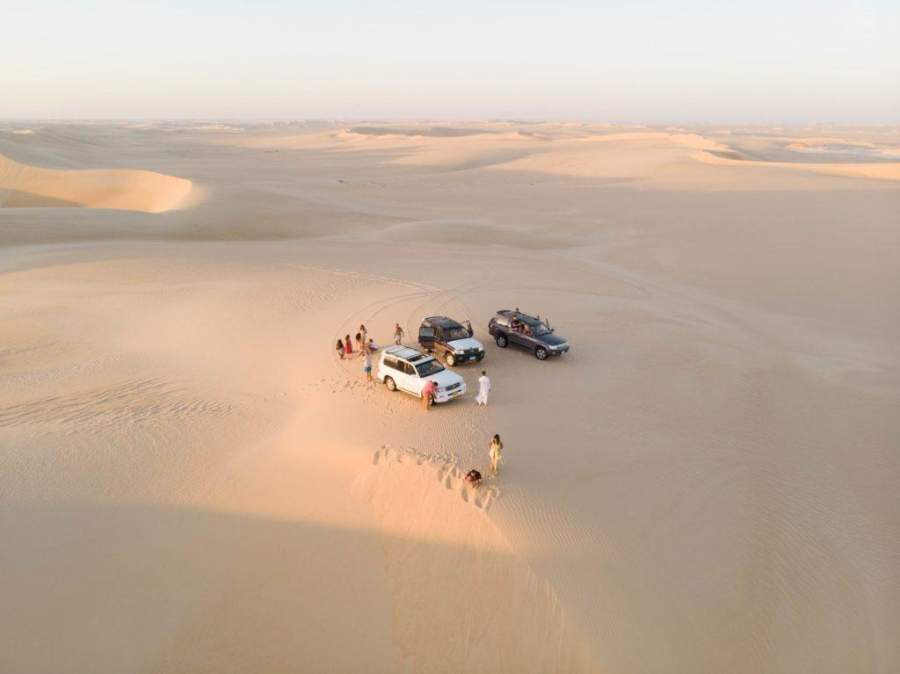
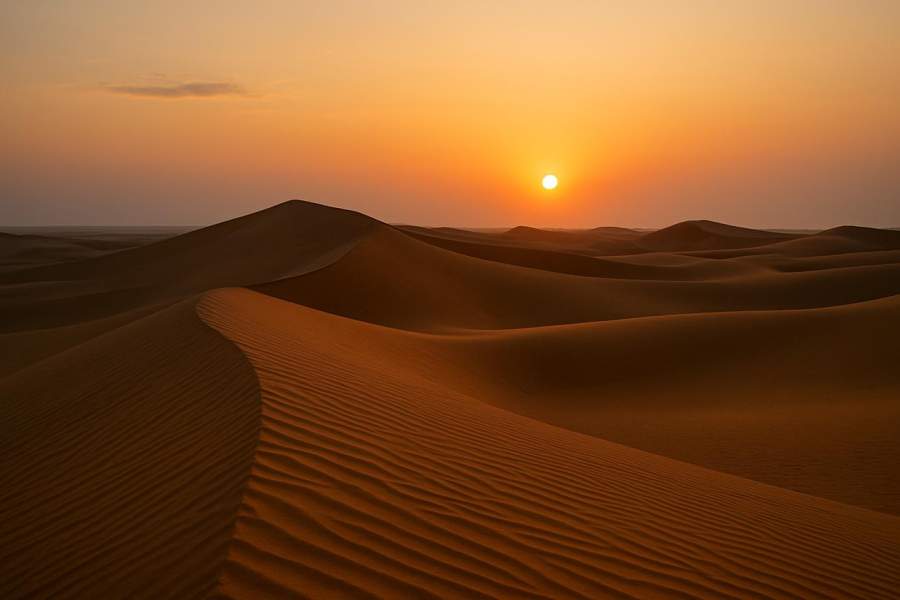
The Great Sand Sea stretches between the Siwa and Farafra regions and contains enormous fields of dunes.
Experience Egypt describes it as a vast desert landscape where travelers can climb, slide, and explore towering sand dunes.
A desert excursion into the Great Sand Sea is almost the opposite of relaxing beside an oasis lake.
Here, the landscape is dominated by sand.
Huge dunes rise and fall across the horizon.
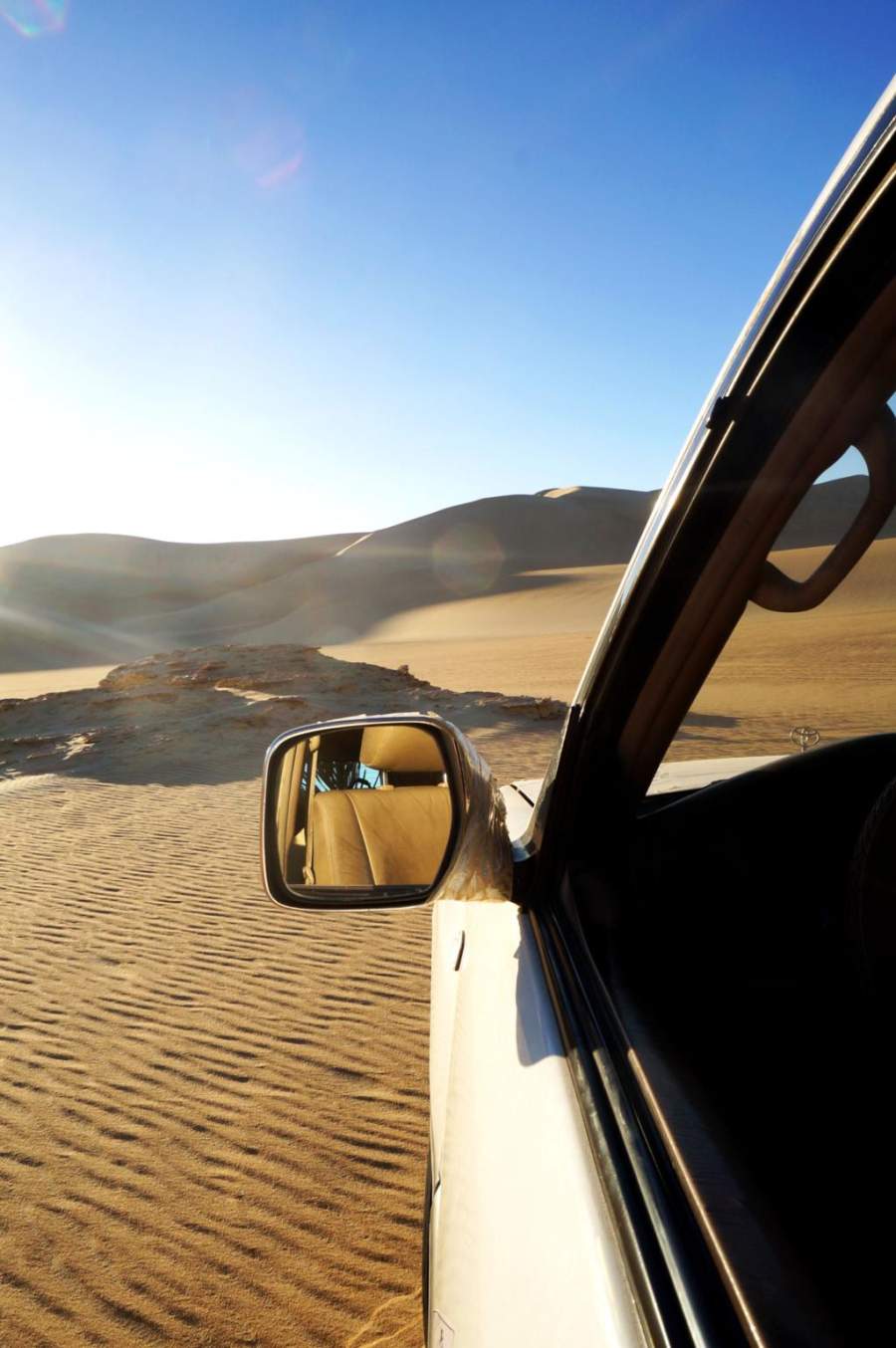
4x4 excursions, sandboarding, and dune activities can become part of the experience, depending on the route and operator.
And then, after hours in the desert, the oasis appears again in the distance.
Bir Wahed
Deep in the desert south of Siwa is Bir Wahed, another well-known attraction.
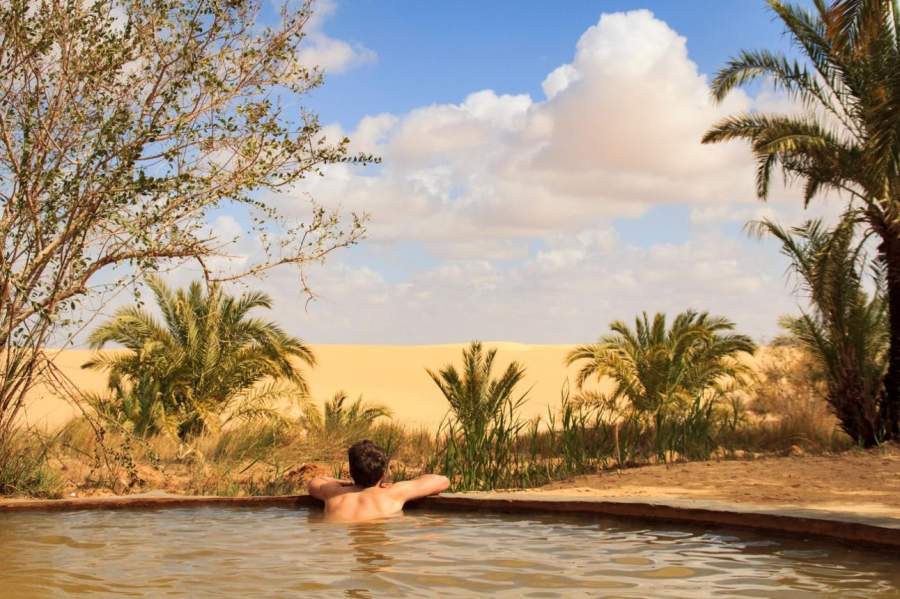
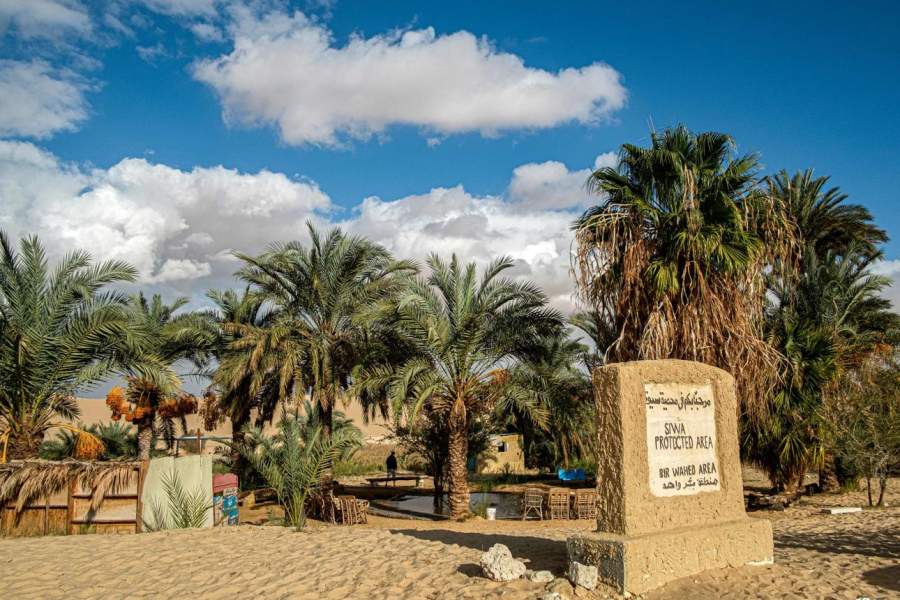
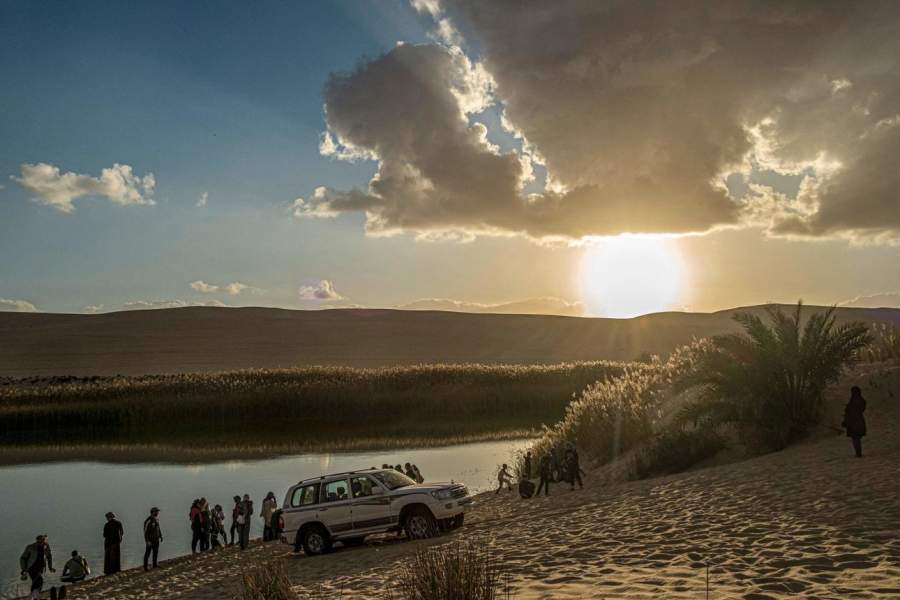
Experience Egypt describes Bir Wahed as a hot, bubbling sulfur spring in the desert, with a nearby lake that creates a striking contrast between warm spring water and cooler water.
The setting is what makes it particularly memorable.
Imagine sitting in naturally heated water while surrounded by dunes.
There are no city buildings on the horizon.
Just desert.
It is one of the clearest examples of how Siwa combines wellness, adventure, and landscape into a single experience.
Mountain of the Dead
Siwa’s archaeological attractions extend beyond Shali and the Oracle.
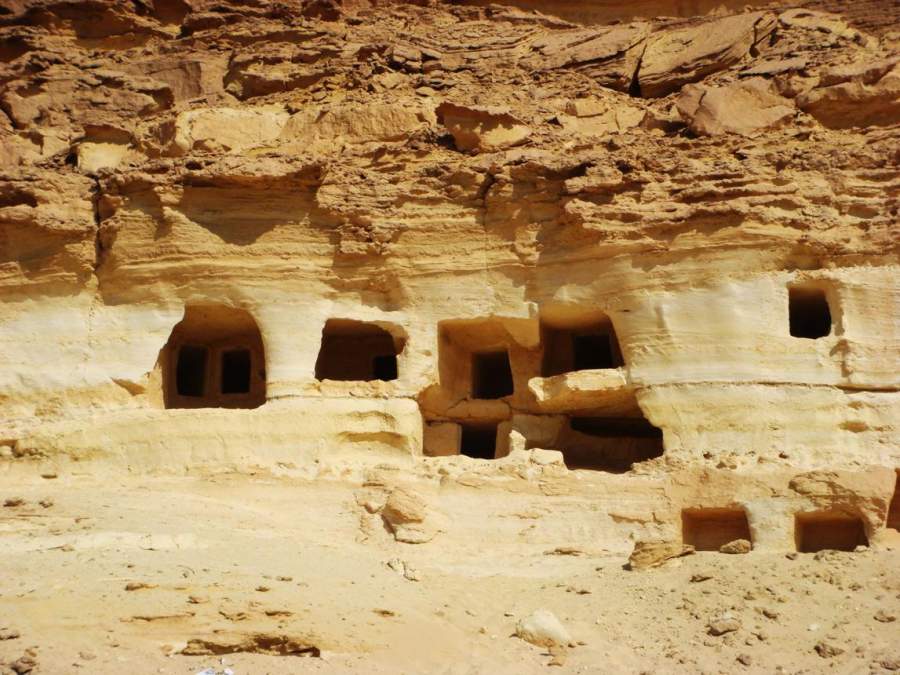
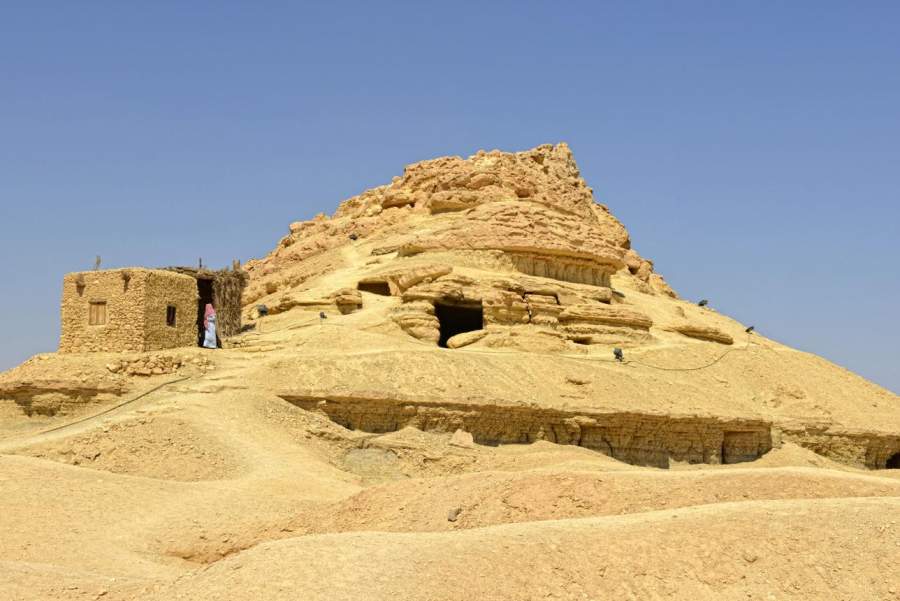
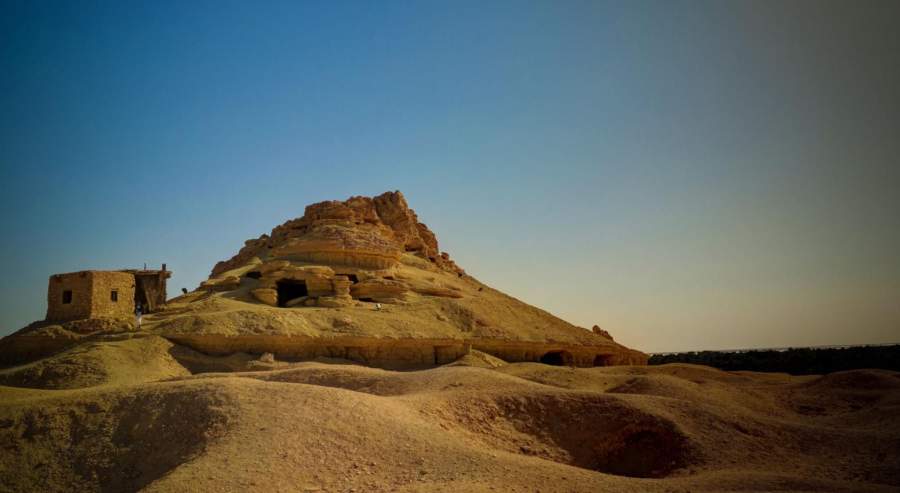
The Mountain of the Dead, known in Arabic as Gebel al-Mawta, contains numerous tombs dating from different historical periods.
Experience Egypt identifies tombs from the 26th and 30th Dynasties as well as later Greco-Roman periods.
Among the best-known is the Tomb of Si Amun, which contains preserved decorative scenes involving the deceased and Egyptian deities.
The mountain is also visually impressive.
It rises above the palm groves, giving visitors another elevated perspective over Siwa.
The result is a fascinating combination of archaeology and landscape.
Siwa as a Protected Natural Area
Siwa is not only culturally significant.
It is also an important natural environment.
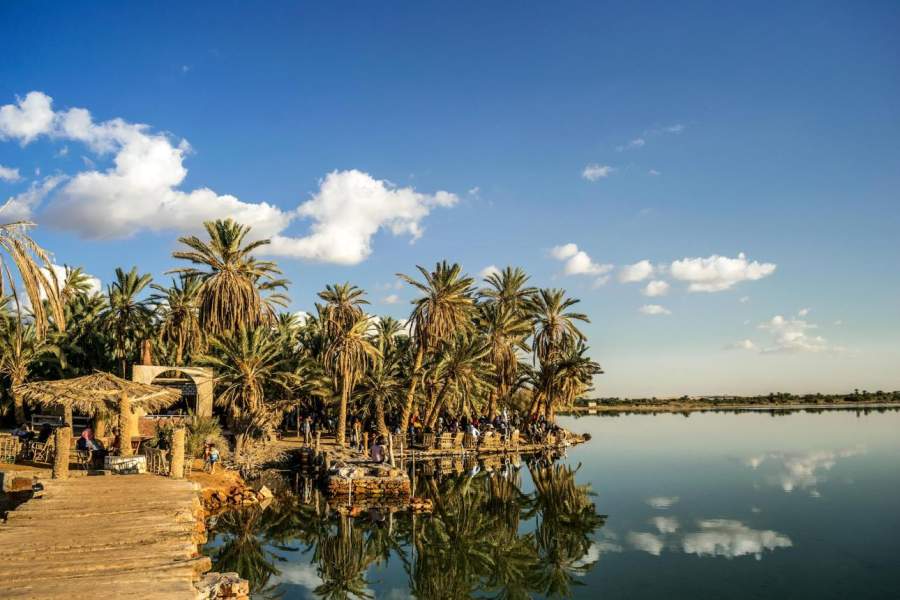
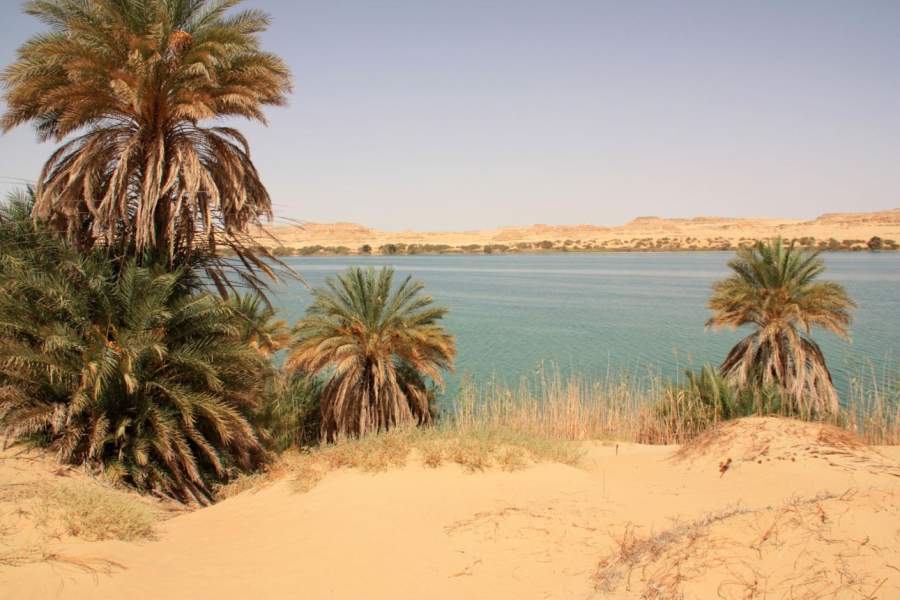
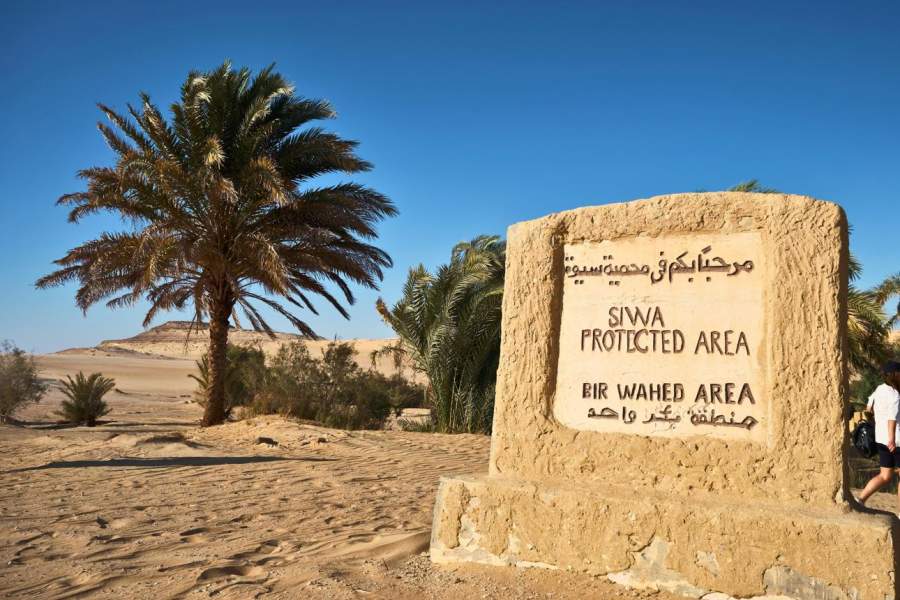
Experience Egypt identifies the Siwa Protectorate as one of Egypt’s major protected areas, covering approximately 7,800 square kilometers. It includes landscapes such as Shyata Lake, palm-lined areas, hot springs, and desert environments.
The protected area also supports wildlife, including migratory birds and the Dorcas gazelle.
This environmental dimension is important because Siwa’s appeal depends heavily on the relationship between water, vegetation, wildlife, desert, and local communities.
Protecting that relationship is essential to the future of the oasis.
Eco-Lodges and Sustainable Travel
Siwa has become particularly well known for its eco-lodges.
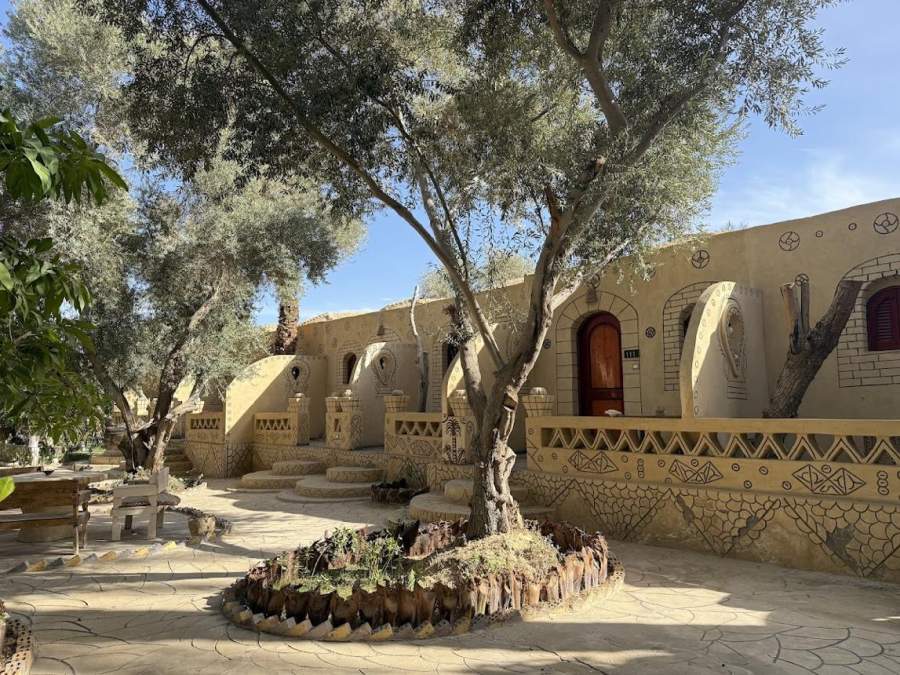
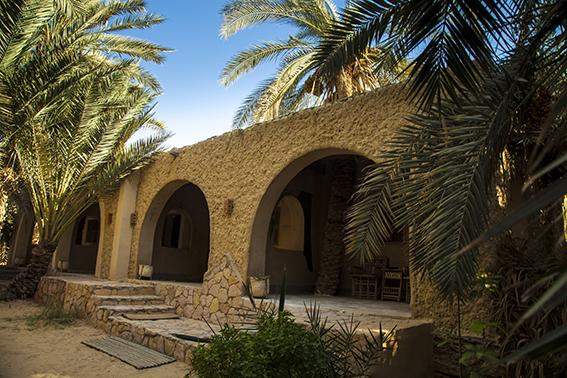
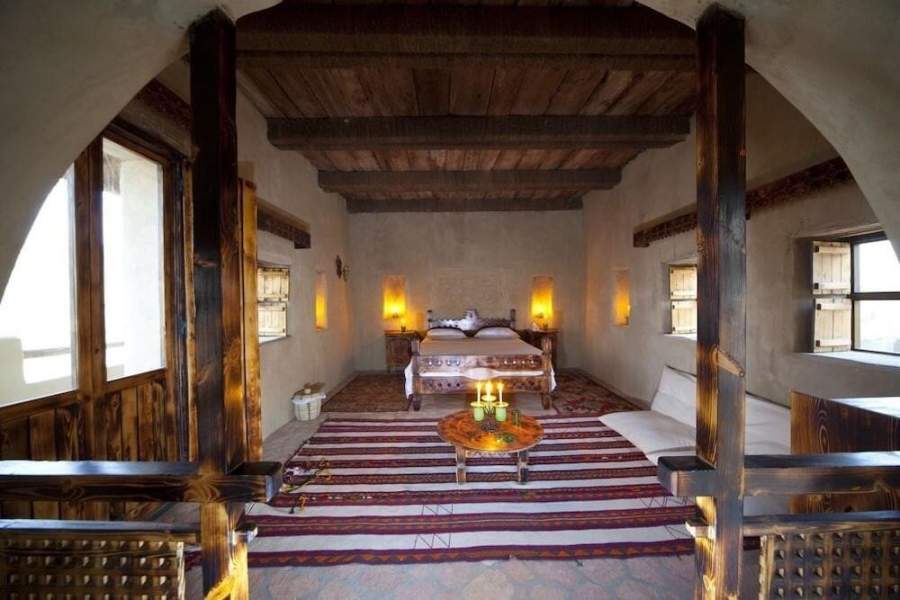
Experience Egypt highlights Siwa among Egypt’s major destinations for eco-lodging, with properties ranging from simple traditional accommodations to luxury eco-friendly retreats. Many use local materials and architectural traditions as part of their design.
Staying in an eco-lodge can make the trip feel more connected to the oasis.
Instead of separating yourself from the environment behind the walls of a conventional resort, the architecture often incorporates local materials, palm-covered surroundings, courtyards, and traditional design.
At night, candlelight, quiet courtyards, and desert skies create an atmosphere very different from a large urban hotel.
Desert Camping and Stargazing
Siwa becomes even quieter after dark.
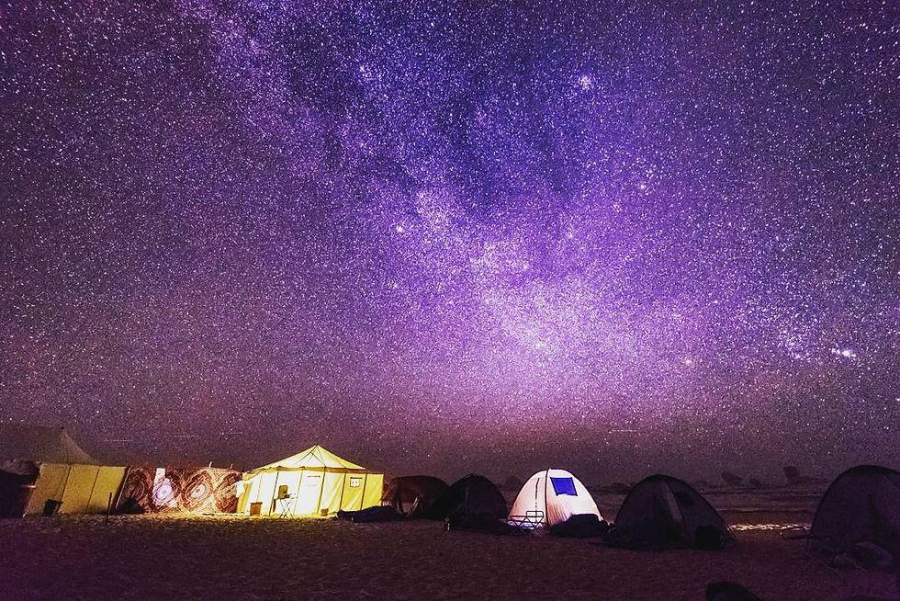
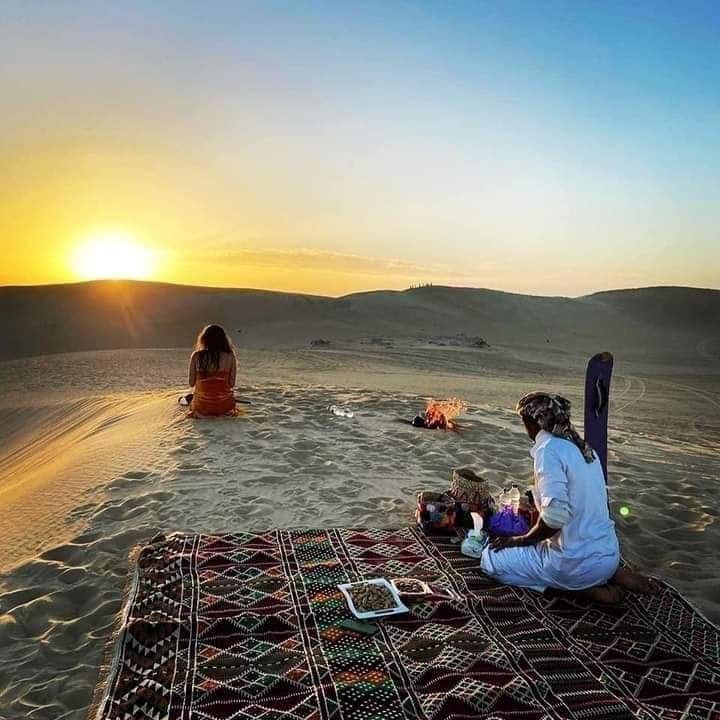
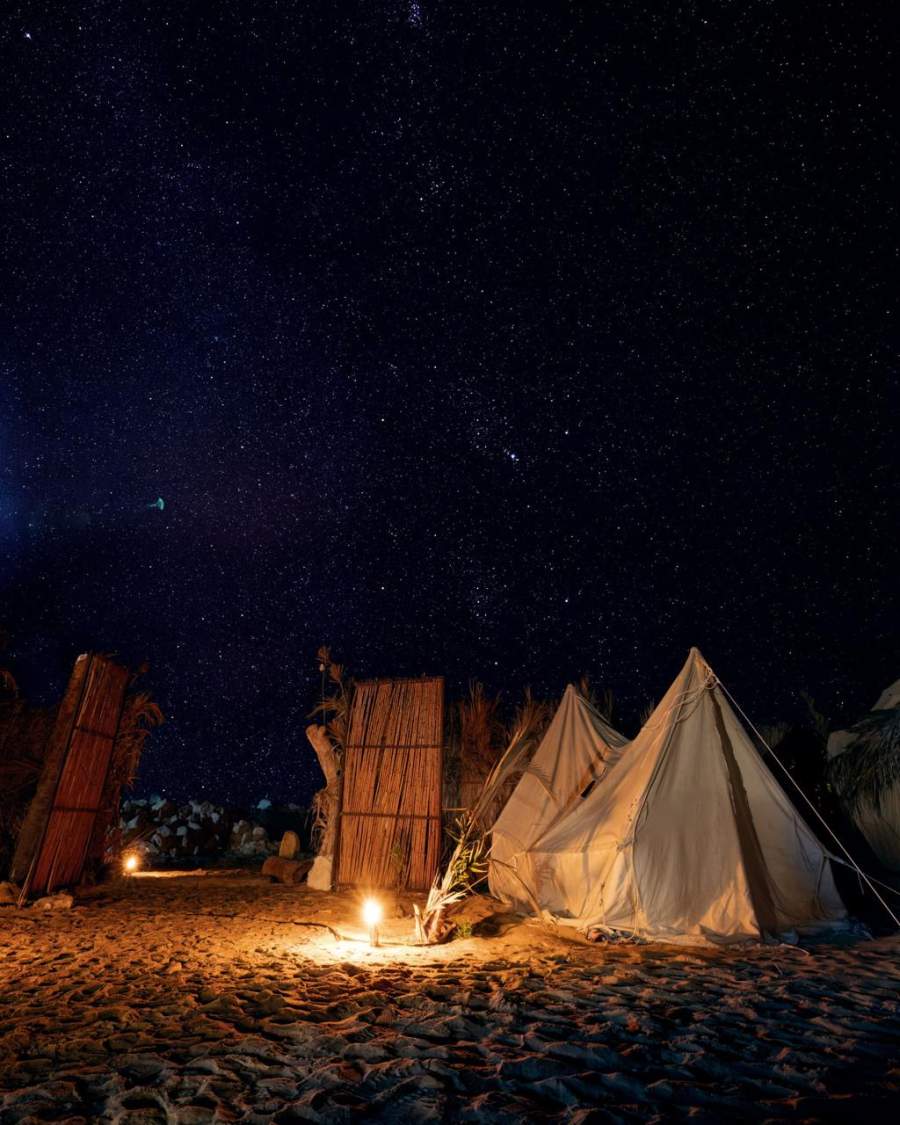
Desert excursions can include campfire dinners and overnight experiences beneath the stars.
Experience Egypt describes Siwan desert experiences involving traditional food and starlit campfire dinners.
Away from the lights of major cities, the desert provides an ideal setting for simply sitting outside and watching the night sky.
It is also a chance to experience the landscape in a completely different way.
During the day, Siwa is defined by color.
At night, it is defined by darkness and stars.
A Place for Slow Travel
Perhaps Siwa’s greatest attraction is difficult to photograph.
It is the pace of life.
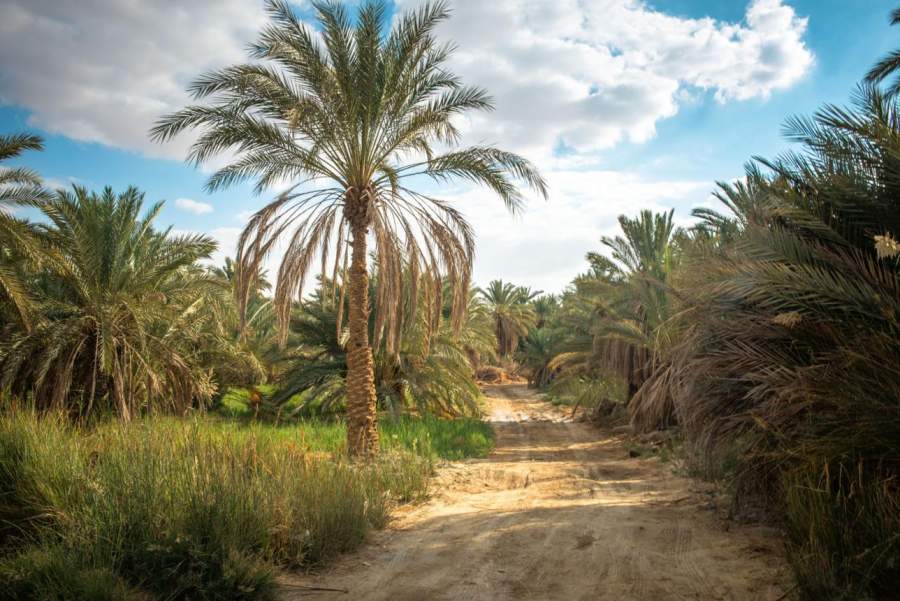
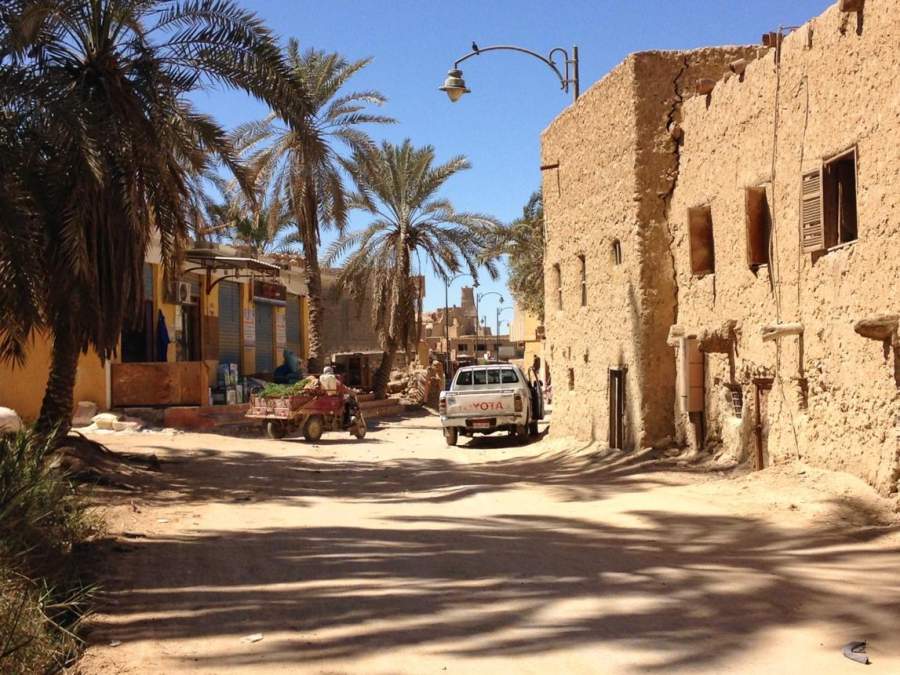
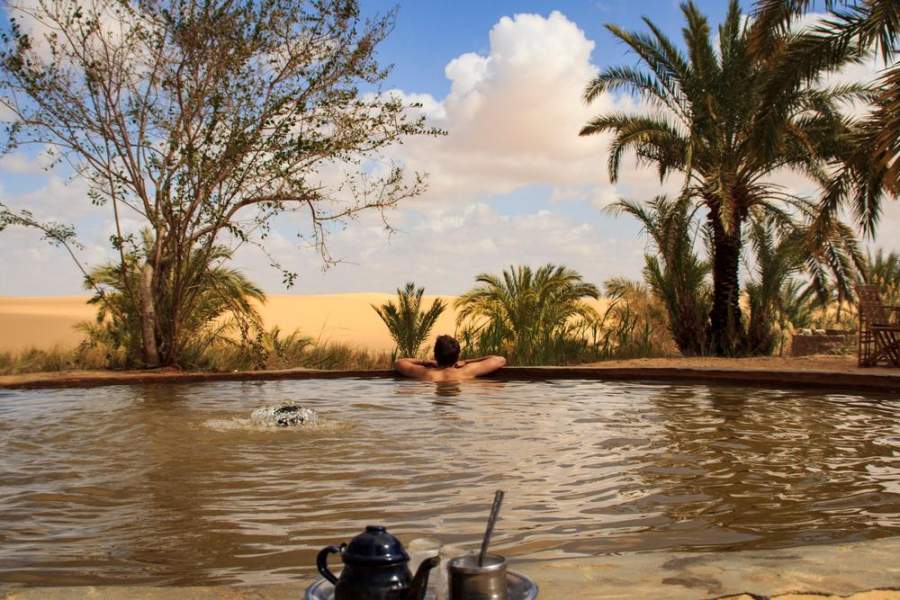
Experience Egypt describes Siwa as a tranquil desert sanctuary, emphasizing its winding streets, serene landscapes, palms, olive trees, salt lakes, and distinctive local culture.
You can spend a morning exploring archaeological ruins.
Then swim in a spring.
Later, sit beside a lake.
In the afternoon, wander through palm groves.
At sunset, climb a dune.
And after dark, eat around a campfire.
There is no need to fill every hour.
Siwa rewards travelers who slow down enough to notice the landscape.
How to Experience Siwa
A first visit can be organized around several different themes.
For history lovers
Explore:
- Shali Fortress
- The Temple of the Oracle
- Aghurmi
- Mountain of the Dead
- Other archaeological remains around the oasis
For nature lovers
Explore:
- Salt lakes
- Cleopatra’s Bath
- Fatnas
- Palm groves
- The Siwa Protectorate
For adventure travelers
Try:
- Great Sand Sea excursions
- Sandboarding
- 4x4 desert trips
- Bir Wahed
- Desert camping
For culture-focused travelers
Experience:
- Siwan cuisine
- Traditional crafts
- Local storytelling
- Eco-lodges
- Siwan architectural traditions
This variety is what makes Siwa so different from a destination built around one monument.
Planning Your Visit
Siwa is remote, so transportation and timing deserve attention.
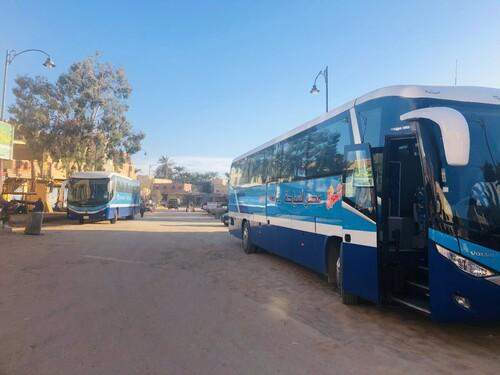
The long journey is part of what has historically helped preserve Siwa’s distinctive character.
For desert excursions beyond the oasis, travelers should use experienced local guides or reputable operators and follow access regulations, especially in protected areas.
For accommodation, visitors can choose between conventional hotels, locally run guesthouses, and eco-lodges.
Because Siwa contains both cultural heritage and sensitive natural environments, responsible tourism is particularly important.
Respect local customs.
Avoid damaging historic structures.
Do not remove archaeological or natural materials.
And follow local guidance when visiting lakes, springs, desert areas, and protected landscapes.
The Best Time of Day to See Siwa
Siwa changes dramatically throughout the day.
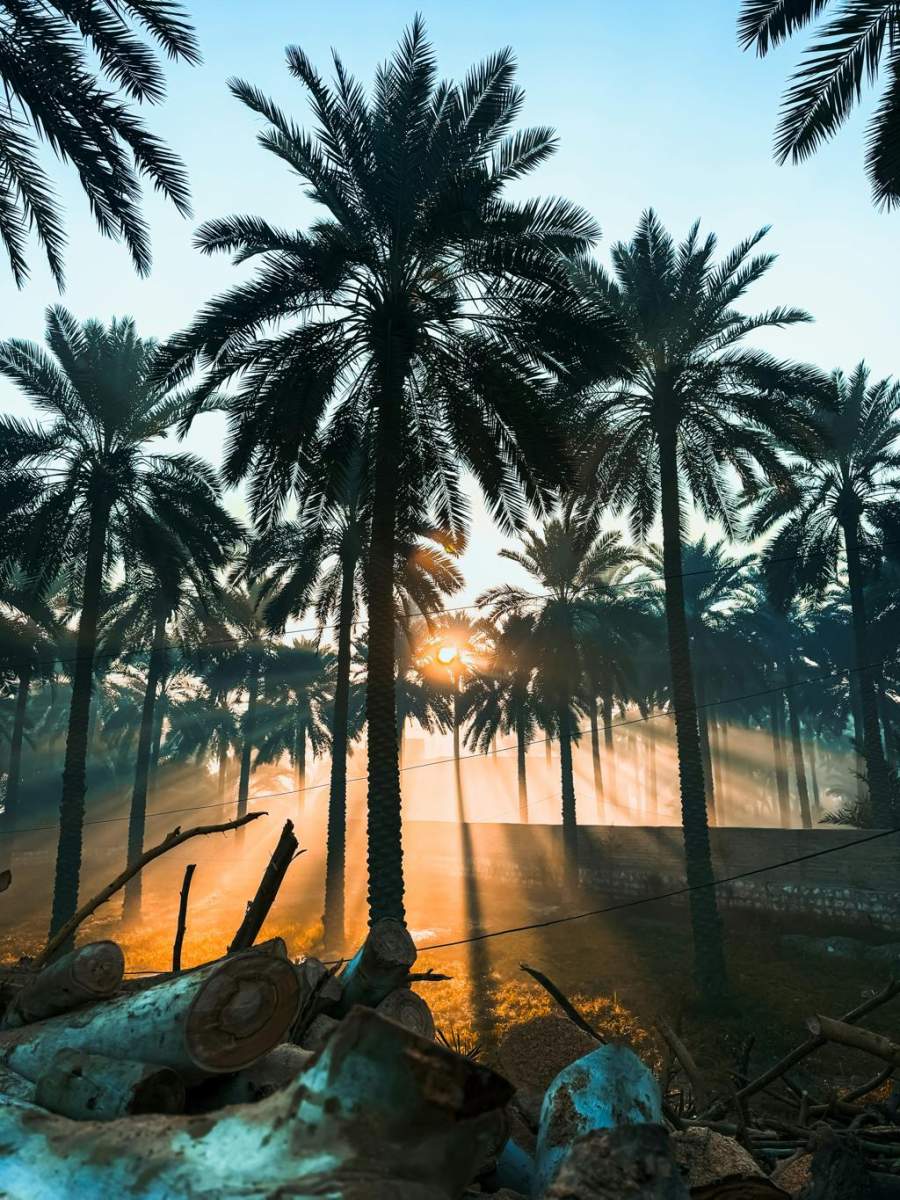
Morning is ideal for exploring archaeological sites and walking through the oasis before the strongest daytime heat.
Afternoon is perfect for springs, lakes, or a slower exploration of local streets.
Late afternoon is when the dunes begin to glow.
And sunset is one of the most beautiful moments to experience the oasis from a high viewpoint.
At night, the desert becomes a place for dinner, conversation, and stargazing.
In Siwa, time is not just something you measure.
It changes the landscape.
Final Thoughts
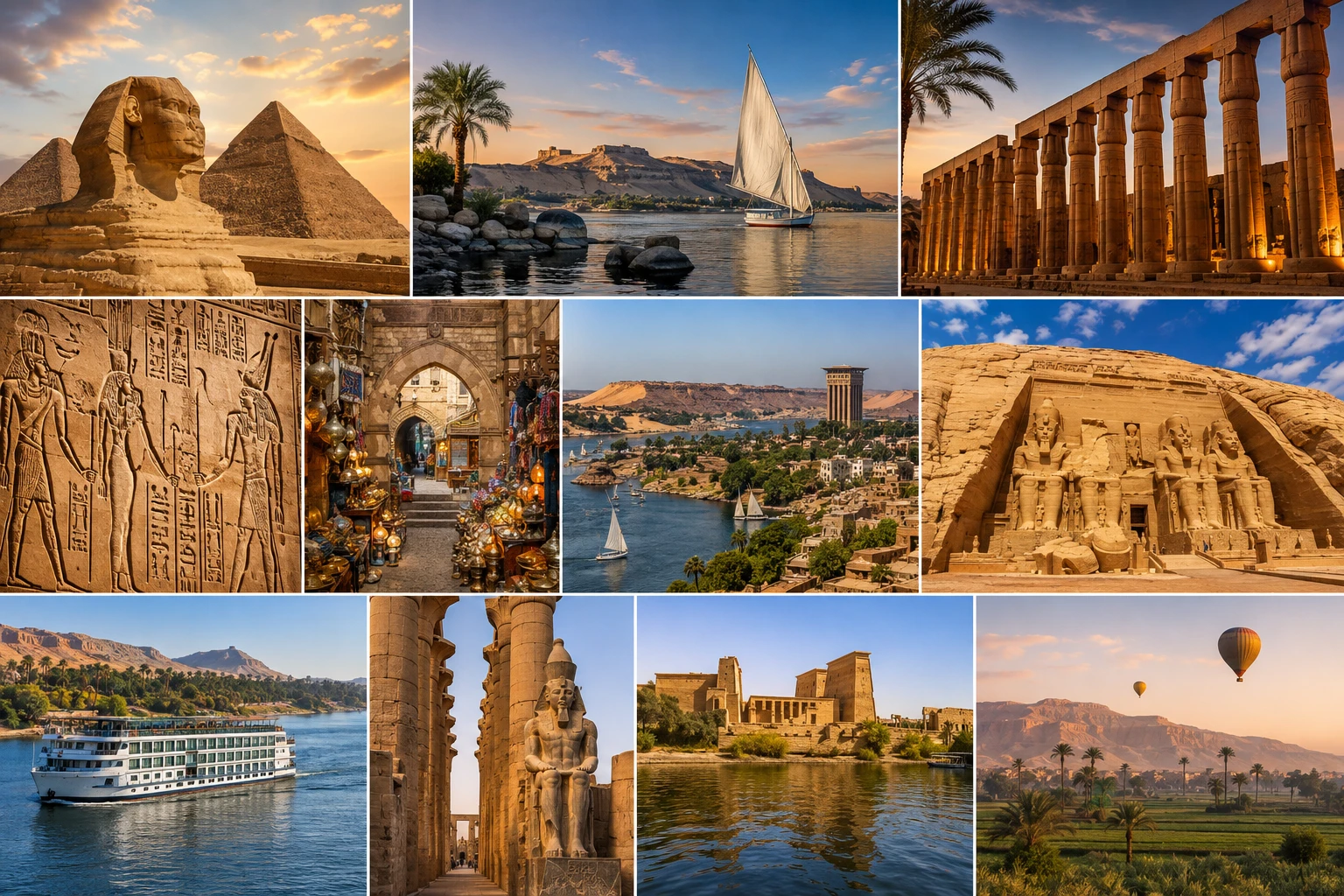
Siwa Oasis is one of the places where Egypt feels completely different from the image most travelers first imagine.
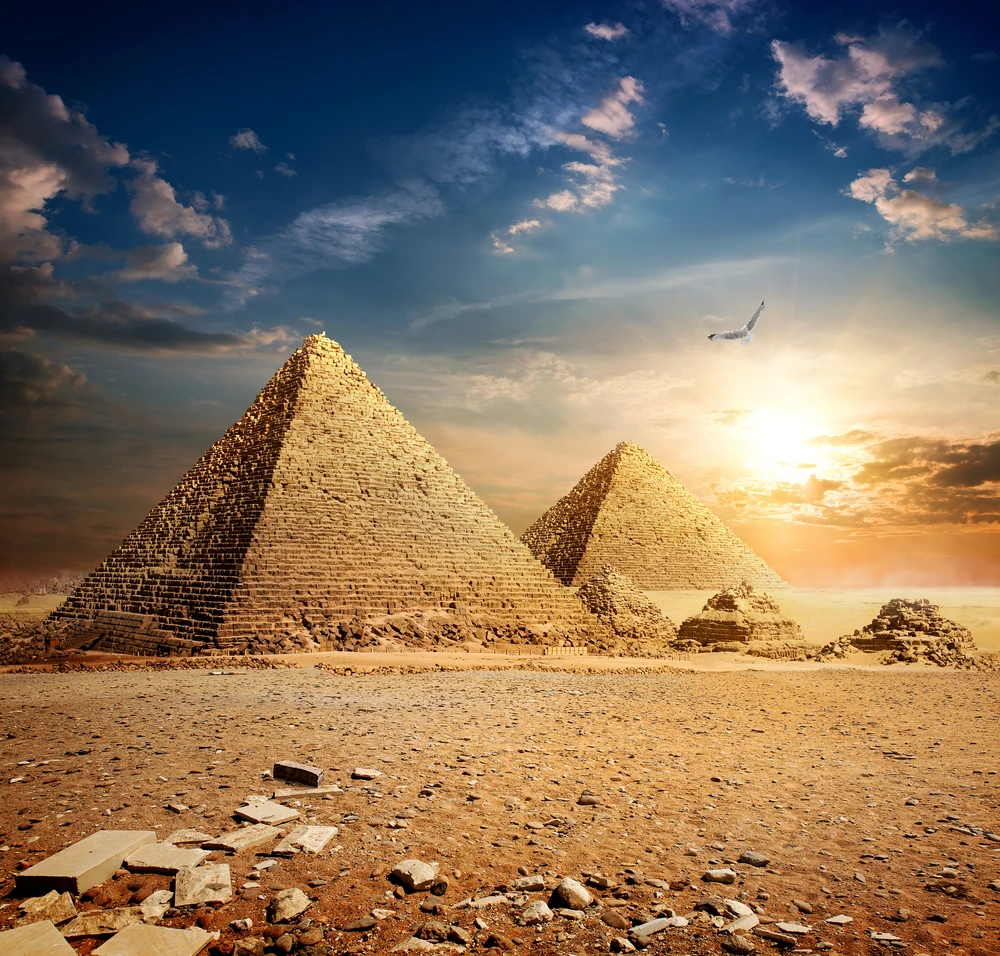
There are no pyramids dominating the horizon.
No crowded Nile cruises.
No enormous city streets.
Instead, there are palm groves, salt lakes, ancient ruins, mud-brick architecture, natural springs, enormous dunes, and a culture shaped by generations of life in the desert.
Shali tells the story of a historic oasis community.
The Oracle of Amun connects Siwa with the ancient world of Alexander the Great.
Mountain of the Dead reveals centuries of burial traditions.
Cleopatra’s Bath and the salt lakes show the extraordinary relationship between water and desert.
The Great Sand Sea provides adventure.
And Siwan culture gives the entire experience its human character.

Perhaps the best way to describe Siwa is not as a single attraction.
It is an entire world.
A world where water appears in the desert, ancient ruins rise above palm groves, and golden dunes begin almost where the oasis ends.
For travelers willing to make the journey west, Siwa offers something increasingly rare:
the chance to slow down, explore deeply, and experience an Egypt shaped by nature, history, and living culture.
Post a comment