

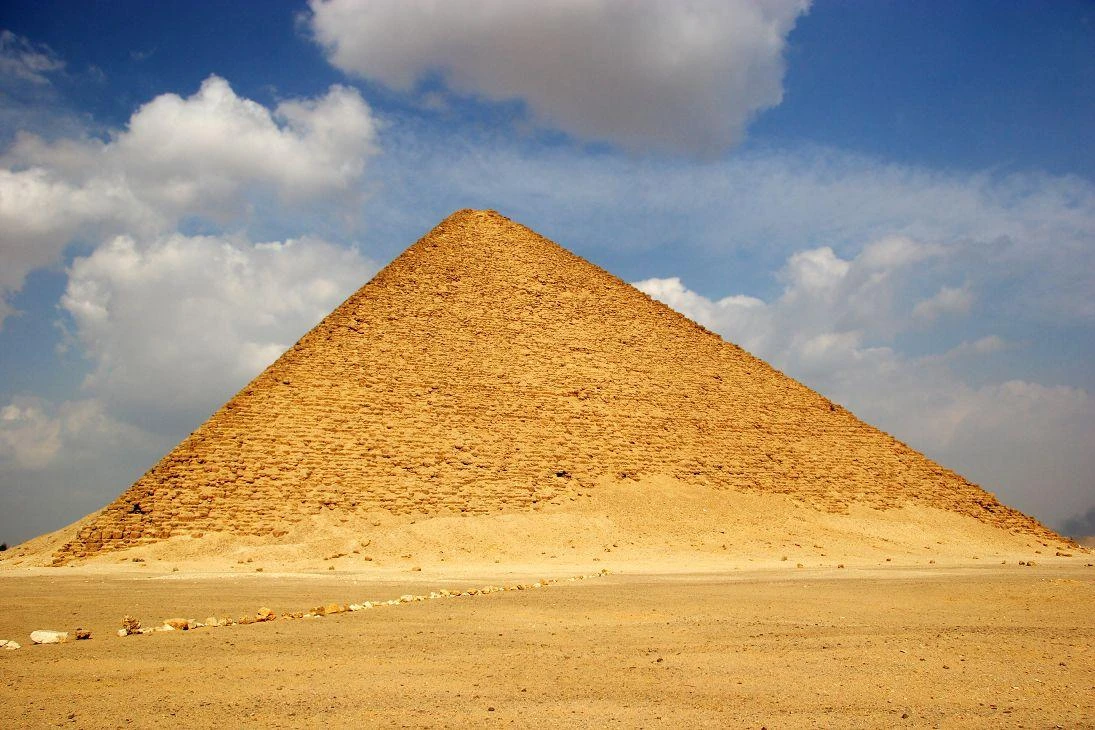
The Pyramids of Giza: History, Facts and the Story Behind Ancient Egypt's Greatest Monuments
Few monuments in the world are as instantly recognizable as the Pyramids of Giza.
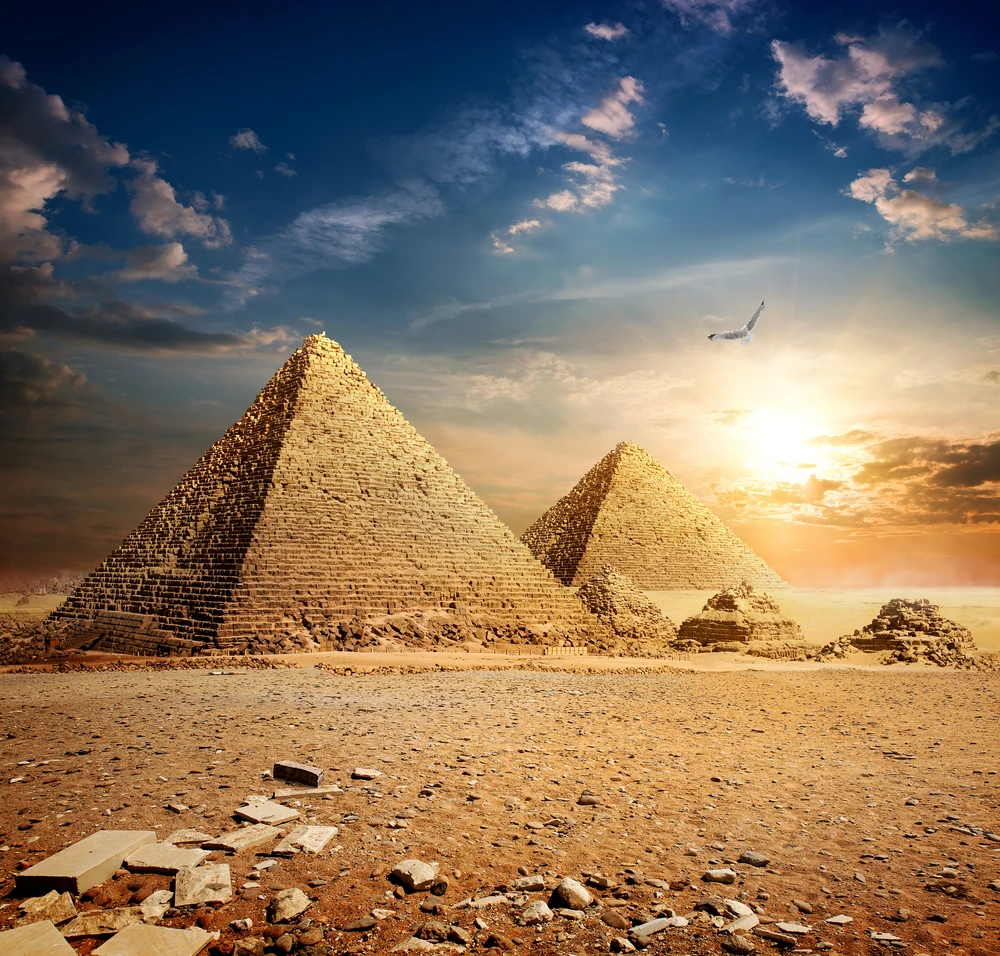
Standing on the western edge of modern Cairo, these enormous stone monuments have survived for more than four millennia. They were built during Egypt's Old Kingdom, when the Fourth Dynasty was at the height of its power, and they remain among the most important archaeological monuments ever created.
But the pyramids are more than enormous stone structures.
They were part of carefully planned royal complexes connected to temples, causeways, tombs and religious beliefs about the afterlife. Today, the Giza Plateau allows travelers to see not only the three famous pyramids, but also the Great Sphinx and a much larger archaeological landscape.
So, who built the Pyramids of Giza, why were they built, and what can you see when you visit them?
Let's go back to the beginning.
When Were the Pyramids of Giza Built?
The three main Pyramids of Giza were constructed during Egypt's Fourth Dynasty of the Old Kingdom, roughly between the 26th and 25th centuries BC.
The Ministry of Tourism and Antiquities dates the reign of King Khufu to approximately 2589–2566 BC, Khafre to about 2558–2532 BC, and Menkaure to about 2532–2503 BC.
The pyramids therefore belong to a relatively concentrated period of ancient Egyptian history rather than representing thousands of years of construction.
The sequence is straightforward:
Khufu → Khafre → Menkaure
Each ruler built a monumental funerary complex on the Giza Plateau.


The Great Pyramid of Khufu
The largest of the three monuments is the Great Pyramid, built for Pharaoh Khufu, also known by the Greek name Cheops.
According to Egypt's Ministry of Tourism and Antiquities, the pyramid originally reached approximately 146.5 meters in height. It remained the tallest human-made structure in the world for around 3,800 years.
That fact alone gives some idea of its extraordinary scale.
But the Great Pyramid was not simply an enormous tomb standing alone in the desert.
It was the central element of a larger royal complex that included temples, a causeway, subsidiary pyramids, tombs and other structures. The wider Giza Plateau contains evidence of the religious and administrative system surrounding the royal burials.
The Great Pyramid is also the only surviving monument of the Seven Wonders of the Ancient World. UNESCO describes it as one of the most important monuments in human history.
Today, visitors can appreciate its scale from the outside and, subject to current visitor arrangements and tickets, explore parts of its interior.


The Pyramid of Khafre
The second pyramid was built for King Khafre, the son of Khufu.
One of the most interesting things about Khafre's pyramid is that it can appear taller than the Great Pyramid when viewed from certain positions.
The reason is not that it is actually taller. Khafre's pyramid was constructed on higher ground, creating a powerful visual effect. Its original height was approximately 143.5 meters.
Look closely at the top of the pyramid and you can also see something particularly valuable: surviving sections of the original polished limestone casing.
These casing stones once covered much of the pyramid and gave its exterior a smoother, brighter appearance.
Khafre's complex is also closely connected with the Great Sphinx, which stands near his valley temple.
The Pyramid of Menkaure
The smallest of the three principal pyramids belongs to King Menkaure, the grandson of Khufu.
Its smaller scale should not be mistaken for a lack of ambition.
The complex incorporated substantial stonework, including granite associated with the pyramid's lower casing. The use of granite is particularly significant because the stone had to be transported from much farther south in Egypt.
Menkaure's pyramid also forms part of a wider complex containing temples and smaller pyramids.
Together, the three monuments demonstrate how royal pyramid construction developed within one dynasty while each king created his own funerary landscape.


Why Were the Pyramids of Giza Built?
The simplest answer is that the pyramids were built as royal funerary monuments.
Ancient Egyptian religion placed enormous importance on death and the afterlife. The king's burial was therefore not an isolated event but part of a much larger religious system.
A pyramid complex could contain:
- The main pyramid
- A mortuary temple
- A valley temple
- A causeway connecting the temples
- Smaller pyramids
- Elite tombs
- Boat burials
- Areas associated with the cult of the deceased king
The Ministry of Tourism and Antiquities explains that priests maintained the king's mortuary cult in these temples, presenting offerings and supporting the deceased ruler's transition into the afterlife.
This is why looking at the pyramid alone gives only part of the story.
The surrounding archaeological remains are equally important.
Who Built the Pyramids?
One of the most common questions visitors ask is whether the pyramids were built by slaves.
The reality is more complex than the popular image of endless groups of slaves dragging stones through the desert.
Archaeological evidence from the Giza area shows the existence of settlements and remains associated with the people who worked on the pyramid projects. UNESCO notes that the Memphis necropolis includes evidence connected with the people who worked on these monumental constructions.
The projects required an enormous organized workforce involving stone workers, craftsmen, transport workers, administrators and others.
Building the pyramids was therefore not simply an architectural achievement. It was also evidence of the organizational capacity of the Egyptian state.
The Great Sphinx of Giza
No visit to the pyramids is complete without seeing the Great Sphinx.
Carved directly from the limestone bedrock, the Sphinx has the body of a lion and a human head wearing royal symbolism.
The Egyptian Ministry of Tourism and Antiquities states that archaeological evidence points toward the Sphinx being created during the reign of Khafre, although discussions surrounding its precise dating and interpretation have long attracted scholarly attention.
Its location is especially revealing.
The Sphinx stands beside the structures associated with Khafre's valley temple and causeway, connecting the monument to the broader royal complex rather than treating it as a completely separate attraction.
For ancient Egyptians, the lion represented power, while the royal head connected that power with kingship.
The result is one of the most recognizable sculptures in human history.
How Did the Pyramids Become So Important?
The pyramids have fascinated travelers for thousands of years.
UNESCO's description of the Memphis and its Necropolis World Heritage property emphasizes that the pyramid fields contain exceptional monuments showing the development of Egyptian royal funerary architecture, from earlier tomb forms to the monumental pyramid.
The Giza pyramids are also part of the larger Memphis and its Necropolis – the Pyramid Fields from Giza to Dahshur, which was inscribed on the UNESCO World Heritage List in 1979.
This broader context is important.
The story of pyramid building did not begin at Giza.
Earlier developments at sites such as Saqqara and Dahshur helped Egyptian architects and builders experiment with increasingly sophisticated pyramid forms. The Step Pyramid of Djoser at Saqqara represents a major stage in this architectural evolution, while the pyramids at Dahshur demonstrate further experimentation before the monumental achievement at Giza.
For travelers interested in ancient Egyptian architecture, visiting Giza together with Saqqara and Dahshur provides a much deeper understanding of that progression.


What Can You See at the Pyramids of Giza Today?
A visit to the Giza Plateau can include considerably more than standing in front of the Great Pyramid.
Depending on your itinerary and the areas open to visitors, you can explore:
The Great Pyramid of Khufu
The largest pyramid and the centerpiece of the plateau.
The Pyramid of Khafre
Recognizable by its elevated position and surviving casing stones near the summit.
The Pyramid of Menkaure
The smallest of the three major pyramids, with its distinctive granite elements.
The Great Sphinx
A monumental limestone sculpture closely associated with Khafre's pyramid complex.
Valley and Mortuary Temples
These structures help explain how the pyramid complexes functioned as religious landscapes rather than isolated tombs.
The Surrounding Necropolis
The Giza Plateau also contains numerous tombs and archaeological remains connected with members of the royal family and elite society.
For first-time visitors, a private Egyptologist guide can make a major difference. Instead of simply photographing the pyramids, you can understand what each structure was designed to do and how the different parts of the complex fit together.
How Long Should You Spend at the Pyramids?
For a first visit, half a day can cover the major highlights, especially if your priority is Giza itself.
However, travelers with a strong interest in ancient Egyptian history should consider giving themselves more time and combining Giza with another archaeological site.
A particularly useful combination is:
Giza → Saqqara → Memphis → Dahshur
This allows you to see the Great Pyramid within the much larger story of pyramid development.
If you're planning a broader Egypt vacation, Giza can also be combined with Cairo's museums and historic neighborhoods before continuing south toward Luxor and Aswan.
What Is the Best Way to Visit the Pyramids?
The best approach depends on your travel style.
If this is your first trip to Egypt, a private guided visit can make the experience considerably easier.
A good itinerary should allow enough time to:
- See the three major pyramids.
- Visit the Great Sphinx.
- Understand the surrounding temples and tombs.
- Stop at the best viewpoints for photographs.
- Have time for questions rather than rushing from one monument to another.
Comfort also matters. The Giza Plateau is a large archaeological area, and Egypt's climate can make extended outdoor walking tiring, particularly during hotter periods.
For travelers who want to explore the wider pyramid story, Magic Egypt Tours also offers a Giza, Saqqara and Memphis experience, connecting the famous Giza monuments with earlier phases of ancient Egyptian civilization.
A Simple Giza Itinerary for First-Time Visitors
If you have one morning available, a practical plan could look like this:
Morning:
Start at the Giza Plateau and explore the Great Pyramid and the other two royal pyramids.
Late morning:
Continue toward the Great Sphinx and the associated temple area.
Midday:
Take a break and enjoy lunch before continuing to another Cairo attraction or returning to your hotel.
If you have a full day:
Add Saqqara and Memphis to understand how Egyptian pyramid architecture developed before and after the Giza monuments.
Why the Pyramids Still Matter
The greatest achievement of the Pyramids of Giza may not simply be that they survived.
It is that they still allow us to ask questions about the people who built them.
How did an ancient state organize such enormous projects?
How were materials transported?
How did architecture, religion and royal power come together?
And what did the people who stood beside these monuments thousands of years ago believe would happen after death?
The pyramids do not answer every question.
That is part of their power.
They are archaeological evidence, architectural masterpieces and living symbols of ancient Egypt at the same time.
And when you finally stand beside the Great Pyramid, the most striking thing may be realizing that the monument is not merely old.
It is the surviving center of a civilization whose ideas, engineering and artistic achievements continue to influence the world today.
Plan Your Visit to the Pyramids of Giza
If you're planning your first trip to Egypt, the Pyramids of Giza deserve more than a quick photo stop.
With a private guide, comfortable transportation and a well-planned itinerary, you can understand the monuments rather than simply see them.
Post a comment