

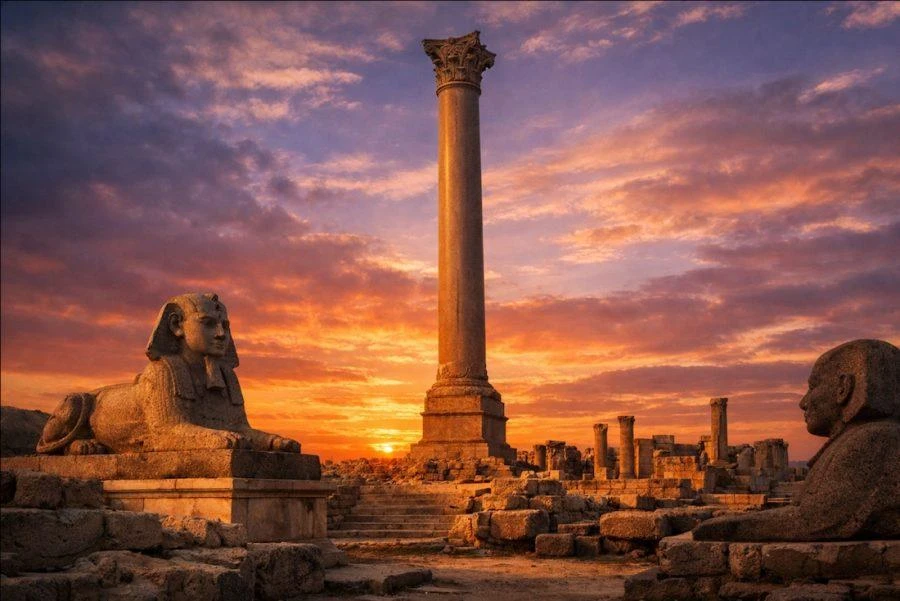
Pompey’s Pillar: The Story of Alexandria’s Great Roman Column
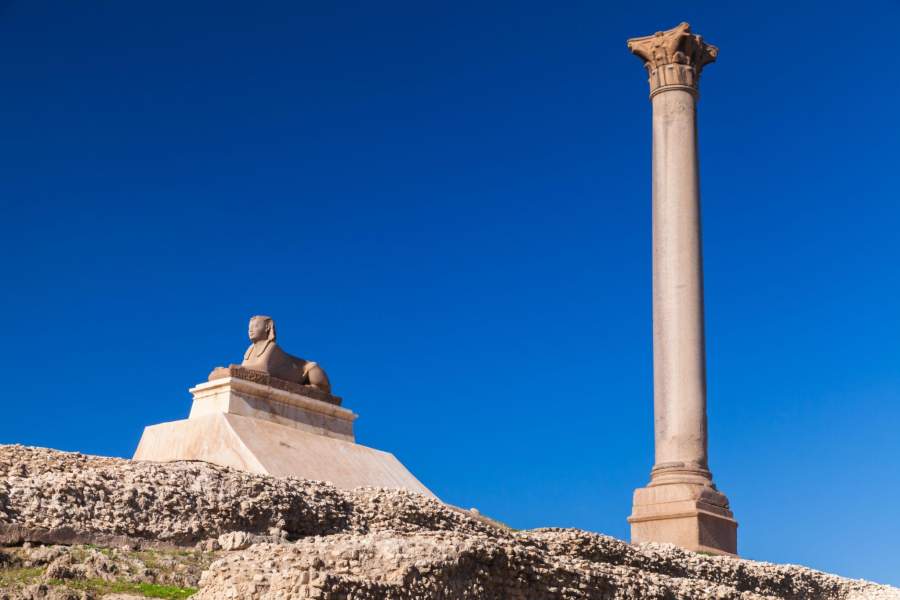
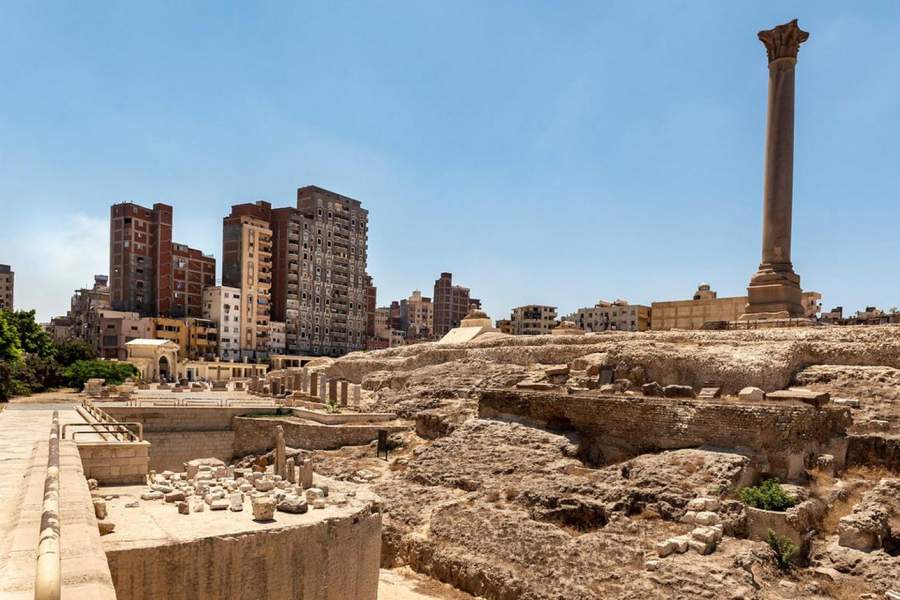
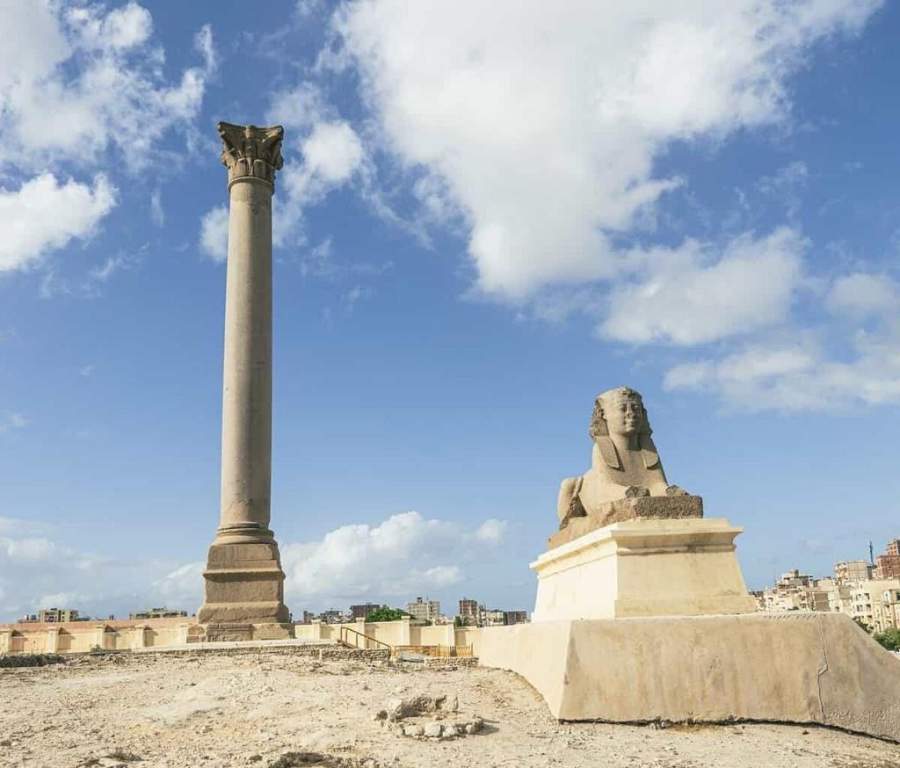
Pompey’s Pillar, officially known as Diocletian’s Column or Amoud El-Sawari, is one of the most recognizable surviving monuments of ancient Alexandria. Rising above the ruins of the ancient Serapeum, the massive red-granite column is a remarkable survivor from Roman Alexandria.
Despite its famous name, the monument has nothing to do with Pompey the Great. It was actually erected during the reign of the Roman emperor Diocletian, around 297 AD, according to the Egyptian Ministry of Tourism and Antiquities and UNESCO.
Standing among the ruins of one of Alexandria's most important ancient religious complexes, the column offers a fascinating glimpse into the city's Roman, Greek, and Egyptian past.
Where Is Pompey’s Pillar?
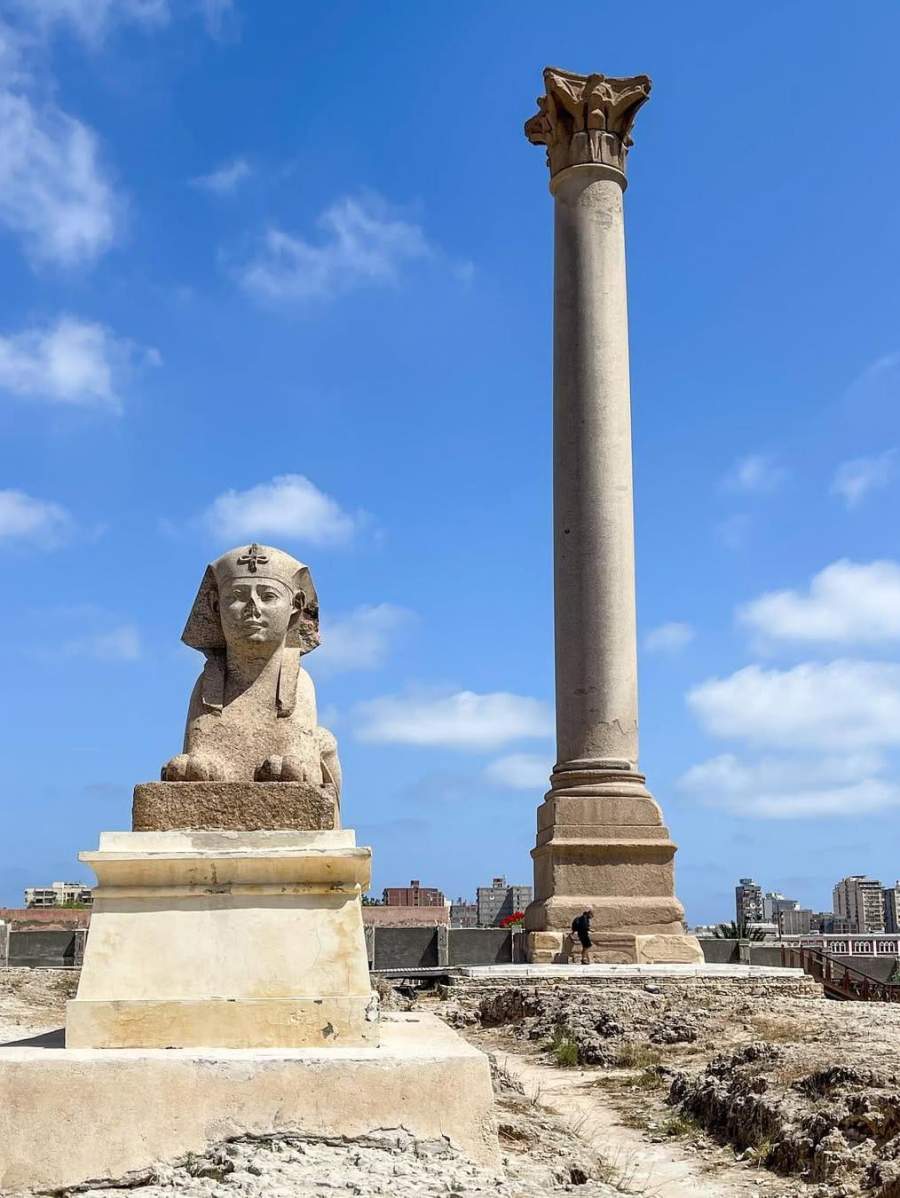
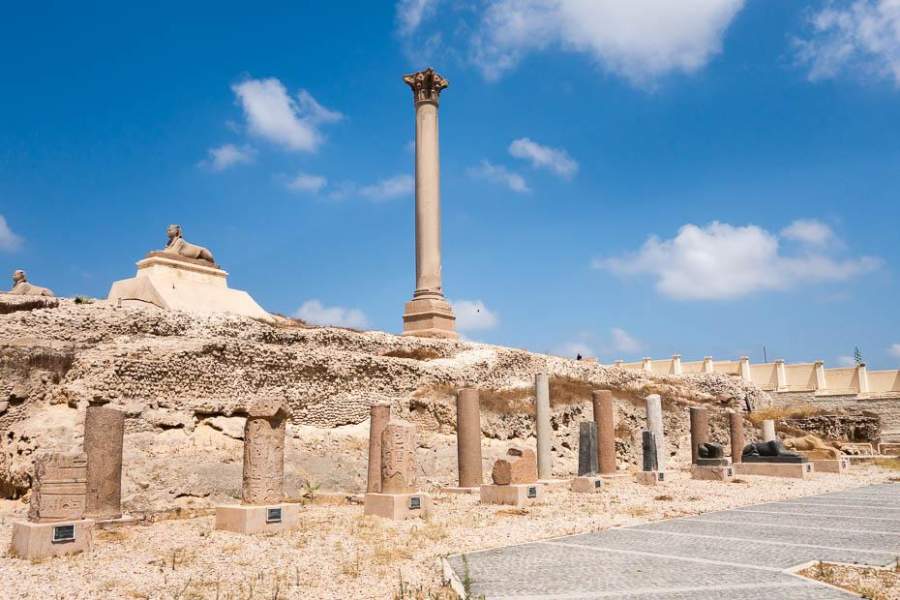
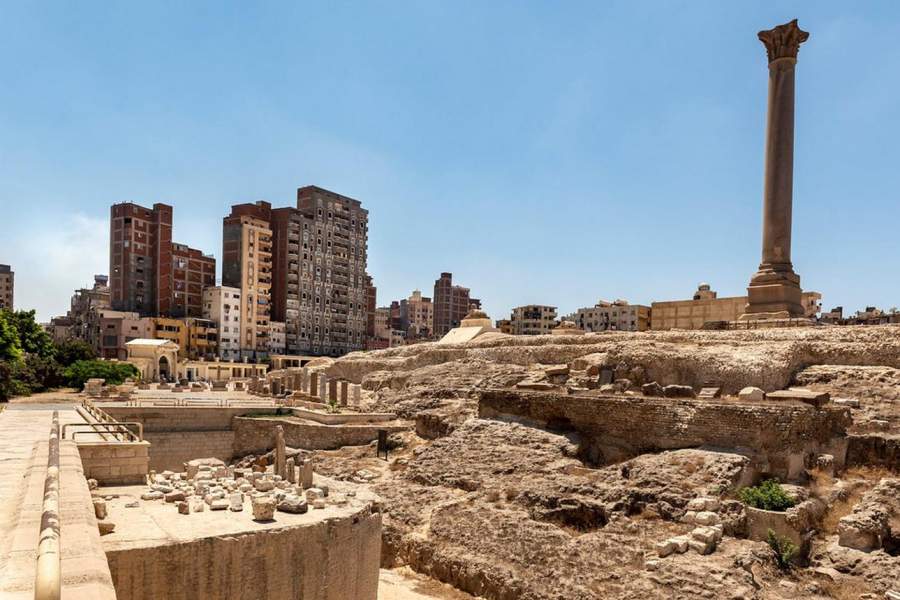
Pompey’s Pillar stands in the Kom El-Shoqafa area of Alexandria, immediately beside the remains of the ancient Serapeum, the great temple dedicated to the god Serapis.
The monument sits on a small hill associated with the ancient area of Rhakotis, near Alexandria's western necropolises.
Its location is particularly significant because several important archaeological attractions are concentrated nearby, including:
- Catacombs of Kom El Shoqafa
- Serapeum
- Pompey's Pillar
- Other remains of ancient Alexandria
This makes the area one of the best places to explore Alexandria's Greco-Roman archaeological heritage.
Why Is It Called Pompey’s Pillar?
This is one of the most interesting facts about the monument.
The name “Pompey’s Pillar” is incorrect.
The column was not built for Pompey the Great, the famous Roman general.
Instead, the Egyptian Ministry of Tourism and Antiquities identifies it as Diocletian's Column, dating to the late 3rd century AD.
The popular name apparently became associated with the monument through later historical traditions and misunderstandings.
Today, both names are commonly encountered:
Pompey's Pillar — the traditional tourist name
Diocletian's Column — the historically accurate identification
The Arabic name Amoud El-Sawari, meaning “Column of the Horsemen,” is also widely used.
Who Built Pompey’s Pillar?
The column was erected under the Roman emperor Diocletian around 297 AD.
This was a turbulent period in Roman Egypt.
Alexandria had experienced political and military unrest, and Diocletian's monument was connected with his imperial presence in the city.
UNESCO describes the column as having been erected by Diocletian in 297 AD, while the Egyptian Ministry of Tourism and Antiquities dates it to the late 290s AD.
The monument therefore belongs to a very different period from the famous Ptolemaic Alexandria associated with Cleopatra VII.
By the time Diocletian's column was erected, Alexandria had already existed for more than six centuries.
The Monument’s Massive Granite Shaft
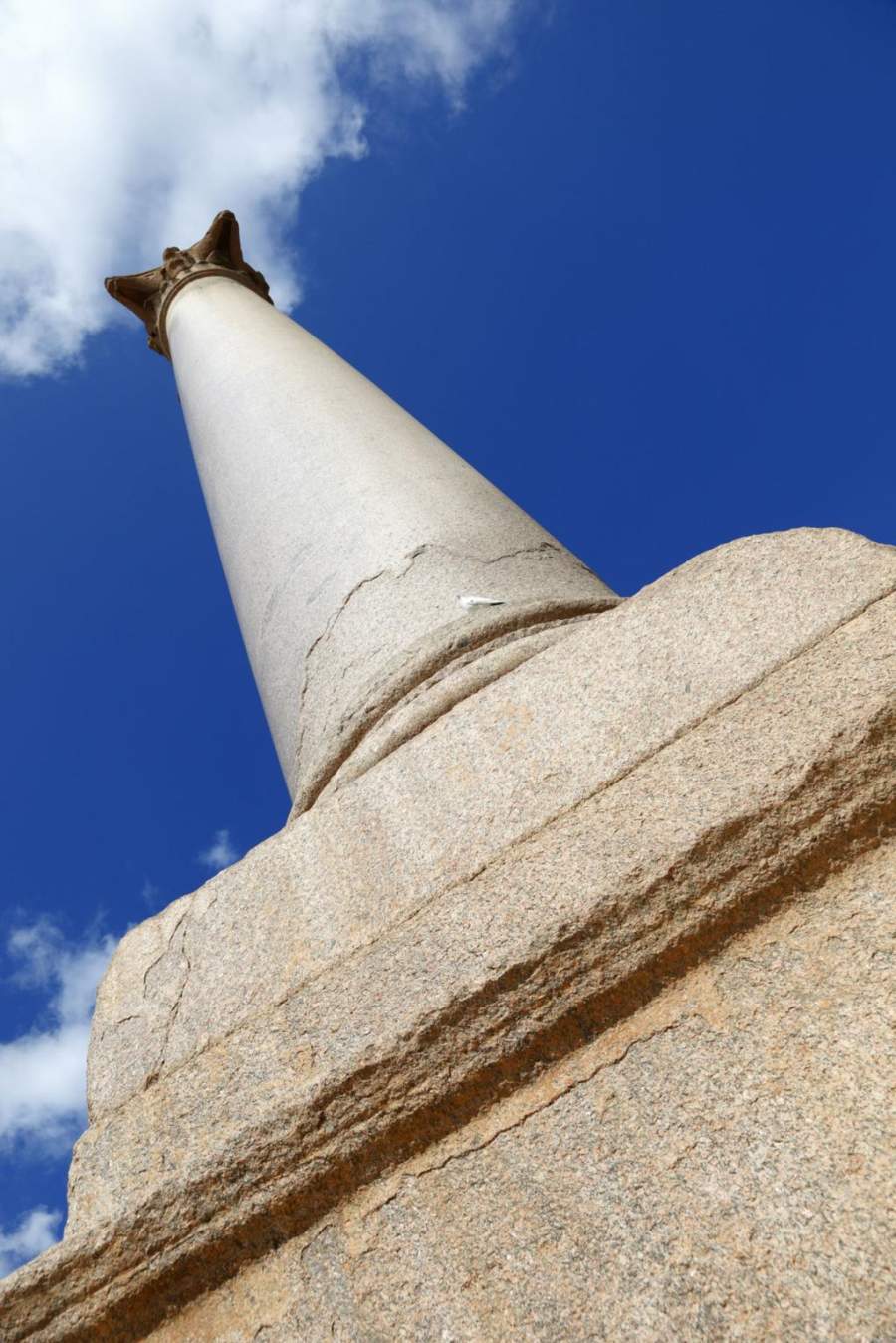
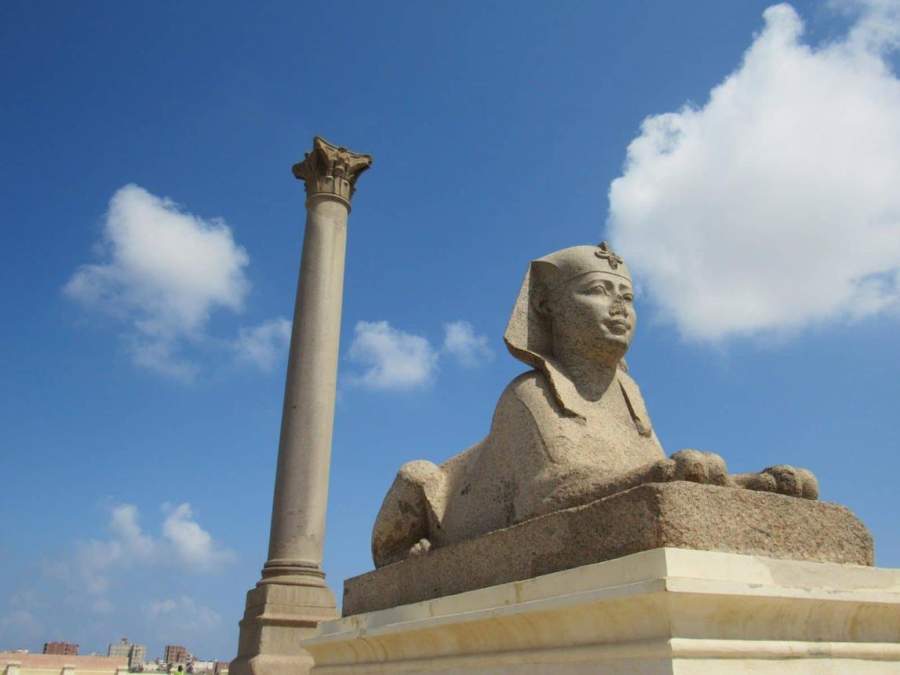
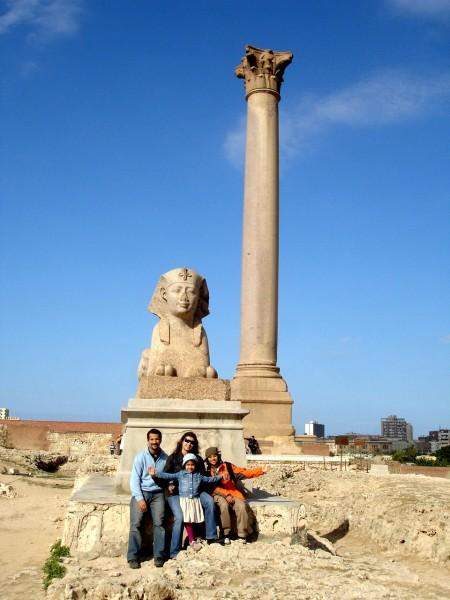
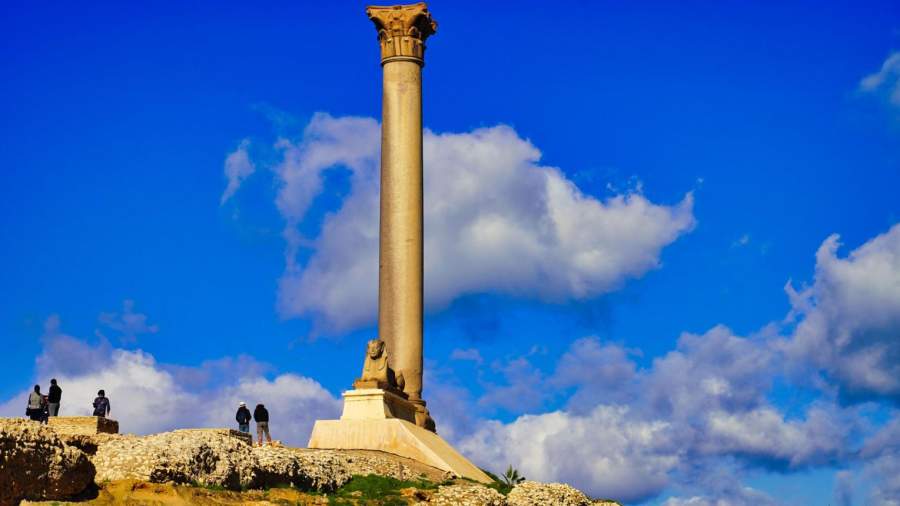
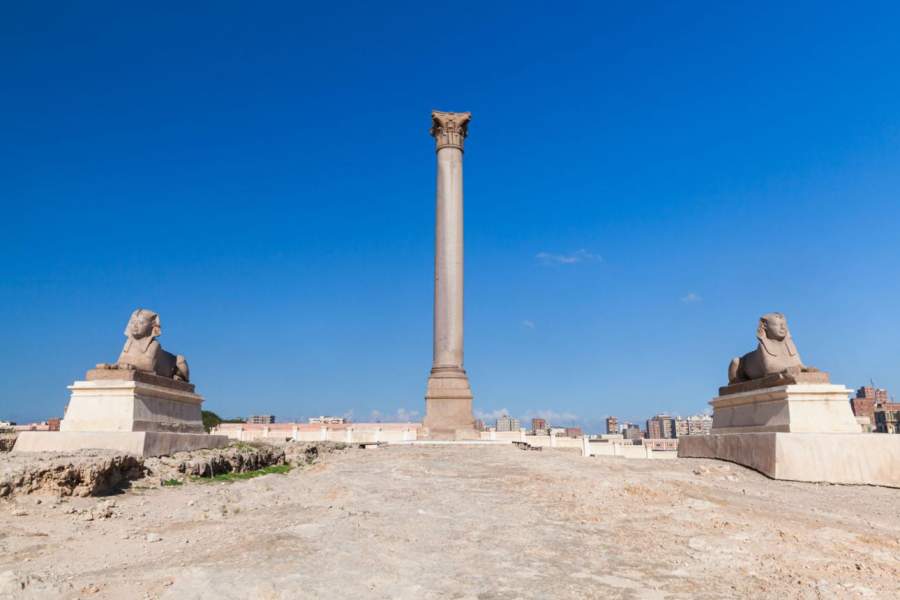
One of the most extraordinary characteristics of Pompey's Pillar is its enormous single-block granite shaft.
UNESCO describes it as a rare example in the Greco-Roman world of a column carved from a single block of granite. The granite came from Aswan, hundreds of kilometers to the south.
The surviving column is approximately:
- 22 meters high for the shaft
- About 2.7 meters in diameter at the base
- Set on a substantial pedestal
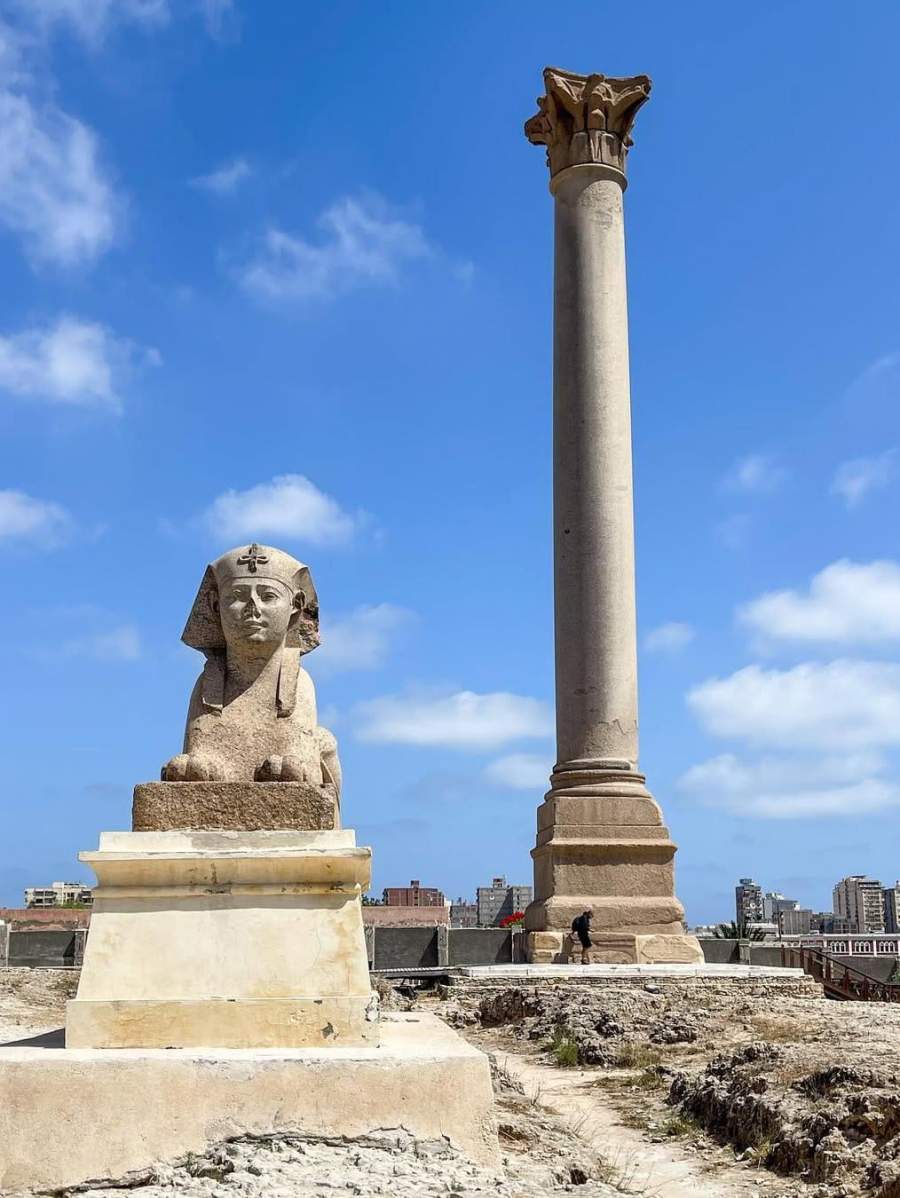
- Topped by a large Corinthian capital
Including the base and capital, the surviving monument reaches approximately 30 meters in height.
This makes the column an extraordinary feat of ancient stoneworking and transportation.
Granite From Aswan
The stone itself tells an important story.
The column was carved from Aswan granite, a material widely used by ancient Egyptian builders for monuments, obelisks, statues, and architectural elements.
Aswan lies far to the south of Alexandria.
Transporting an enormous granite block from southern Egypt to Alexandria would have required sophisticated organization and the use of the Nile as a major transportation route.
The column therefore represents more than Roman engineering.
It also reflects the enormous logistical capabilities that allowed massive stone monuments to travel across Egypt.
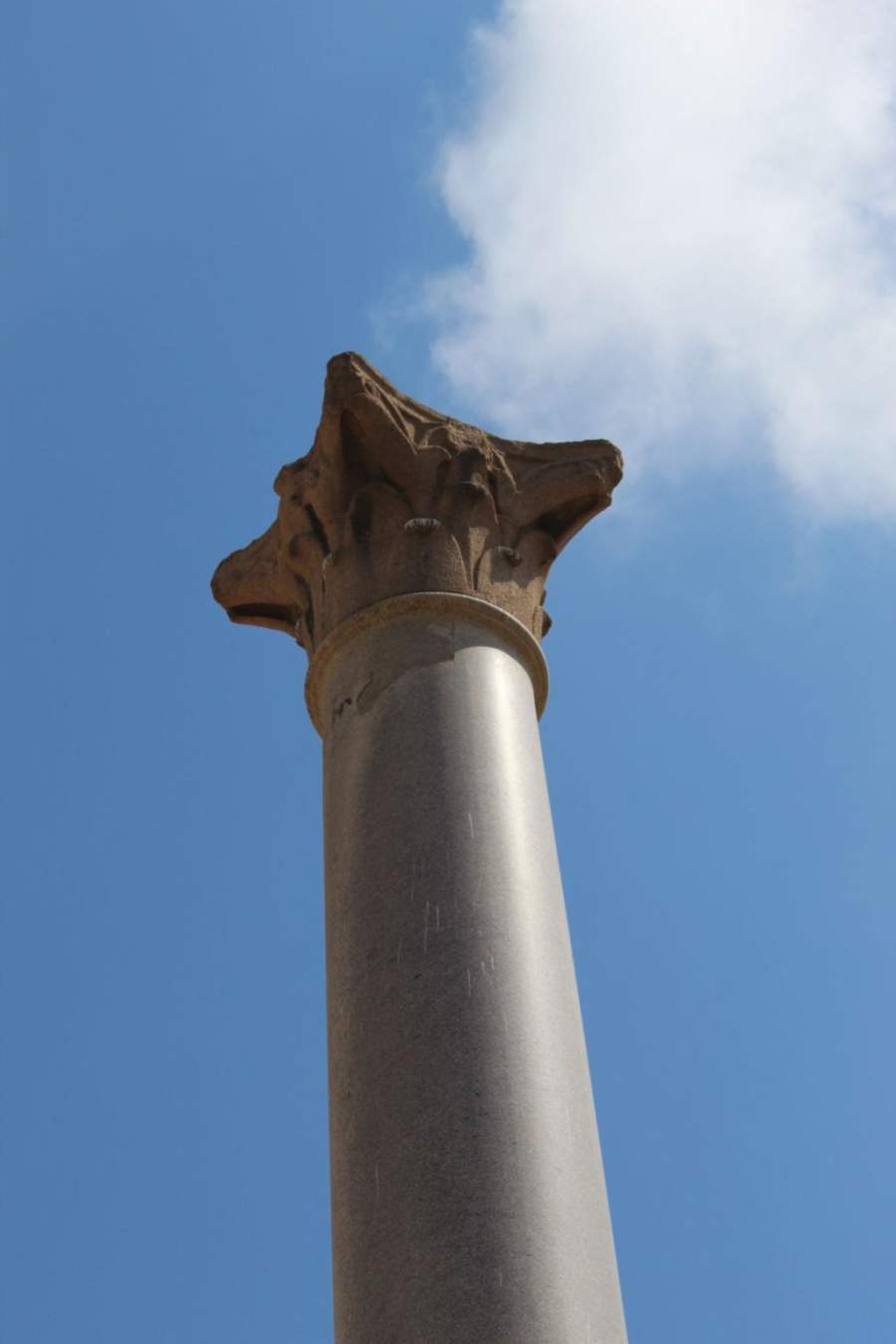
The Corinthian Capital
At the top of the column is a large Corinthian capital.
The Corinthian order was a major architectural style of the Greco-Roman world and is recognizable for its elaborate decoration, particularly the carved acanthus leaves.
The capital creates a striking contrast with the massive Egyptian granite shaft below it.
This mixture is representative of Alexandria itself:
Egyptian stone + Greek architectural tradition + Roman imperial monument
The monument therefore visually reflects the multicultural environment of Roman Egypt.
A Statue of Emperor Diocletian
The column originally supported a monumental statue.
UNESCO records that the capital once carried an equestrian statue of Diocletian, which remained there until approximately the 7th century.
The original statue has not survived.
But imagining the column crowned by a huge imperial figure gives a better idea of the monument's original visual impact.
A towering column of red granite, topped by the representation of the Roman emperor, would have communicated a powerful message about imperial authority.
The Connection With the Serapeum
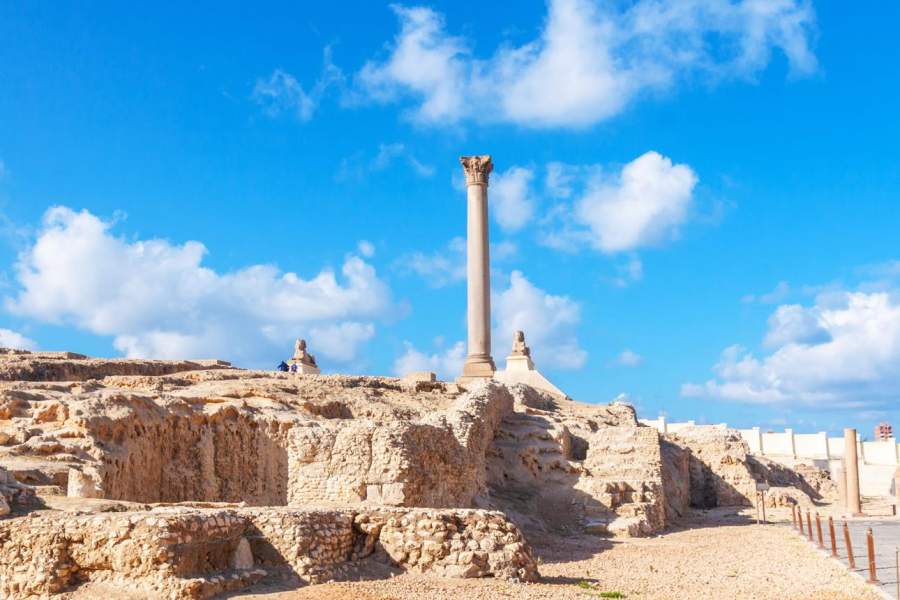
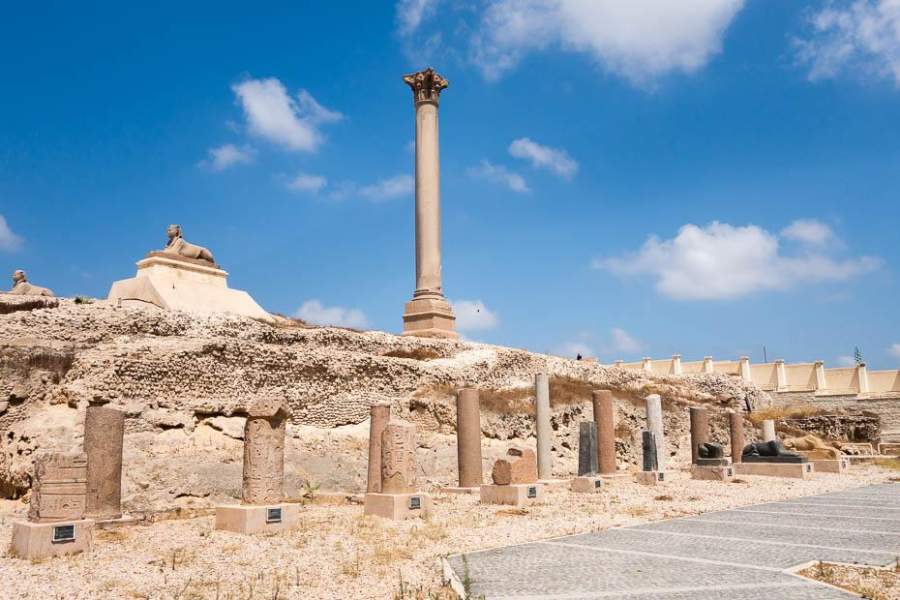
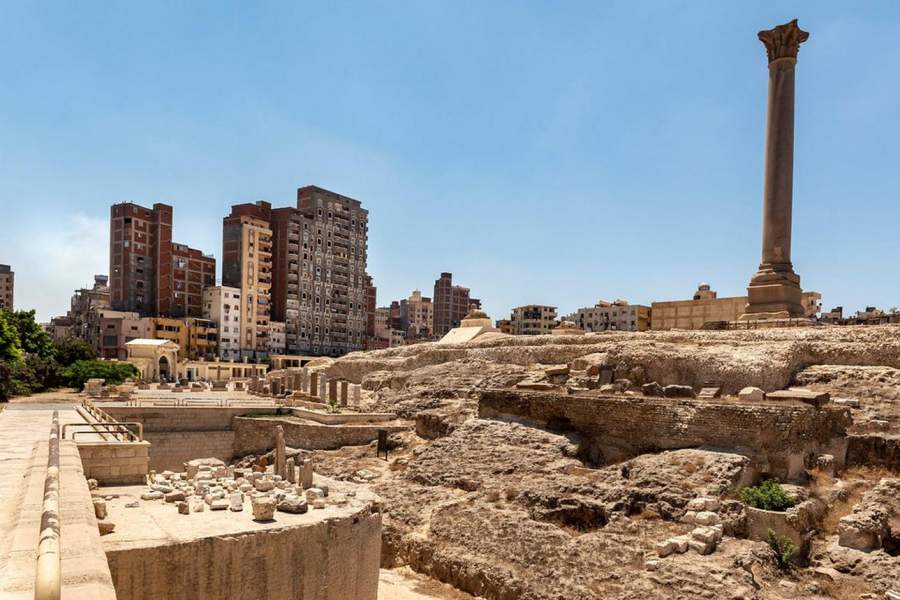
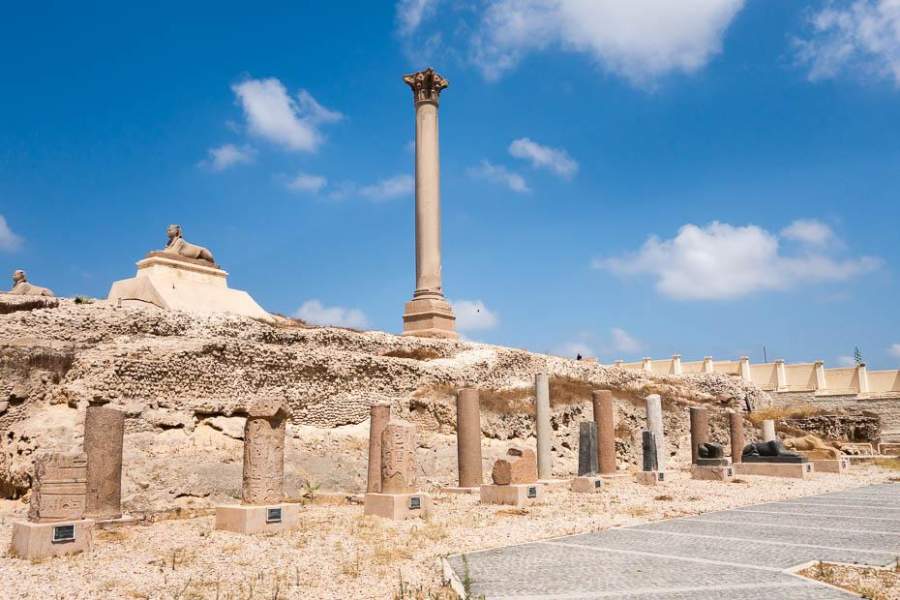
Pompey's Pillar stands directly beside the remains of the ancient Serapeum, one of Alexandria's most important religious complexes.
The Serapeum was dedicated to Serapis, a deity created through the combination of Greek and Egyptian religious traditions.
UNESCO describes Serapis as a combination of Greek and Egyptian divine traditions, particularly associated with Zeus and Apis.
The temple became an important religious center during the Ptolemaic and Roman periods.
Its location beside Pompey's Pillar creates an extraordinary archaeological landscape where monuments from different periods stand together.
The Ancient Serapeum
The Serapeum was originally constructed during the Ptolemaic period and became one of the most important temples in ancient Alexandria.
UNESCO states that the Serapeum was built in the 2nd century BC and dedicated to Serapis.
The complex included monumental architecture and underground structures.
UNESCO's description mentions a long underground tunnel carved into the rock, with crypts and recesses associated with the temple and its library.
The Egyptian Ministry of Tourism and Antiquities notes that the Serapeum was the principal temple of Serapis and that it was destroyed after paganism was outlawed in the late Roman period.
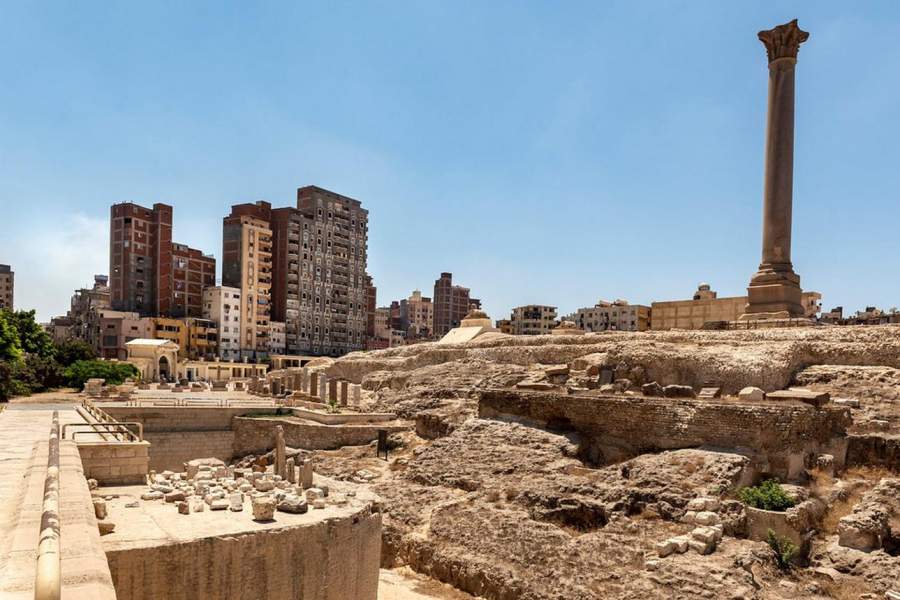
Today, only fragments of this once-important complex remain.
Why Did Diocletian Build the Column?
The monument is generally understood as a Roman imperial monument associated with Diocletian.
Its exact original purpose and context have been the subject of scholarly discussion.
The monument may have commemorated Diocletian's role in restoring order in Alexandria after periods of conflict.
What is clear is that the column belongs to the political and architectural world of the late Roman Empire rather than the earlier Ptolemaic period.
Its monumental size and prominent location would have made it an unmistakable symbol of Roman imperial authority.
Alexandria During the Roman Period
To understand Pompey's Pillar, it is important to understand how Alexandria had changed by the 3rd century AD.
Alexandria was founded by Alexander the Great in 331 BC and became the capital of Ptolemaic Egypt.
Under the Ptolemies, it developed into a major center of:
- Trade
- Scholarship
- Science
- Philosophy
- Art
- Religion
Egypt became a Roman province after the defeat of Cleopatra VII and Mark Antony in 30 BC.
The city remained one of the most important urban centers of the eastern Mediterranean.
The Egyptian Ministry of Tourism and Antiquities describes Alexandria as having remained the largest and most important city in the eastern Mediterranean until the rise of Constantinople in the 5th century AD.
Pompey's Pillar belongs to this later Roman chapter of the city's extraordinary history.
Alexandria’s Multicultural Architecture
One of the most fascinating aspects of Alexandria is the way different cultures appear in its archaeological remains.
The city contains evidence of:
Ancient Egyptian traditions
Greek culture
Roman imperial architecture
Christian history
Islamic heritage
Pompey's Pillar is a particularly clear example.
The granite itself reflects Egypt's ancient quarrying traditions.
The column's architectural design belongs to the Greco-Roman world.
Its dedication to Diocletian reflects Roman imperial power.
And its location beside the Serapeum connects it with the complex religious history of Alexandria.
The Sphinxes Near the Column
The area around Pompey's Pillar contains additional ancient remains.
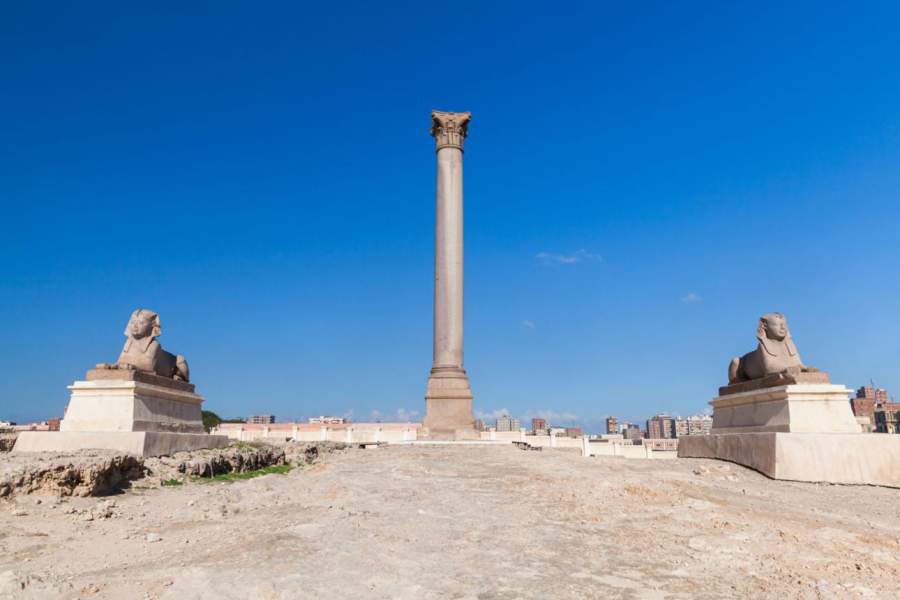
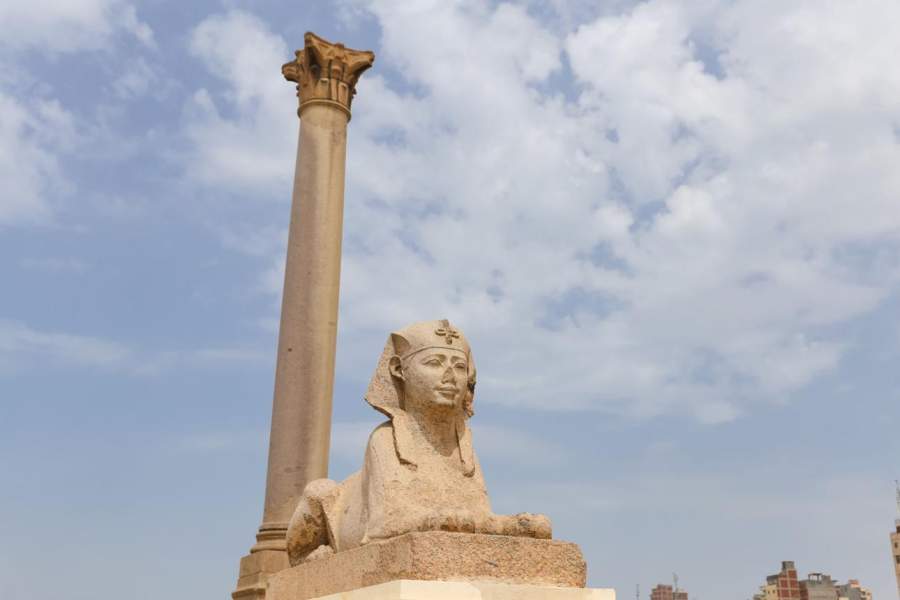
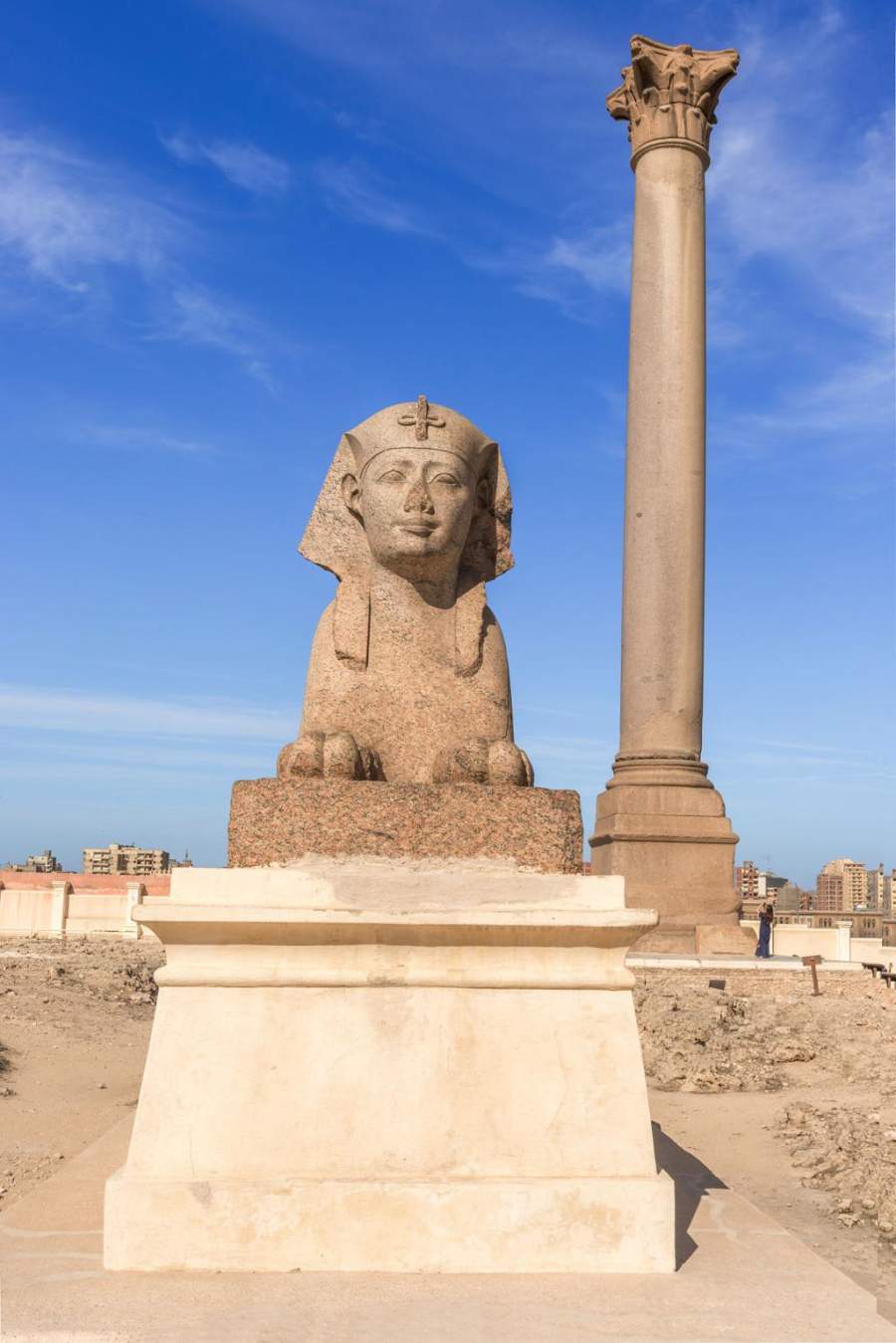
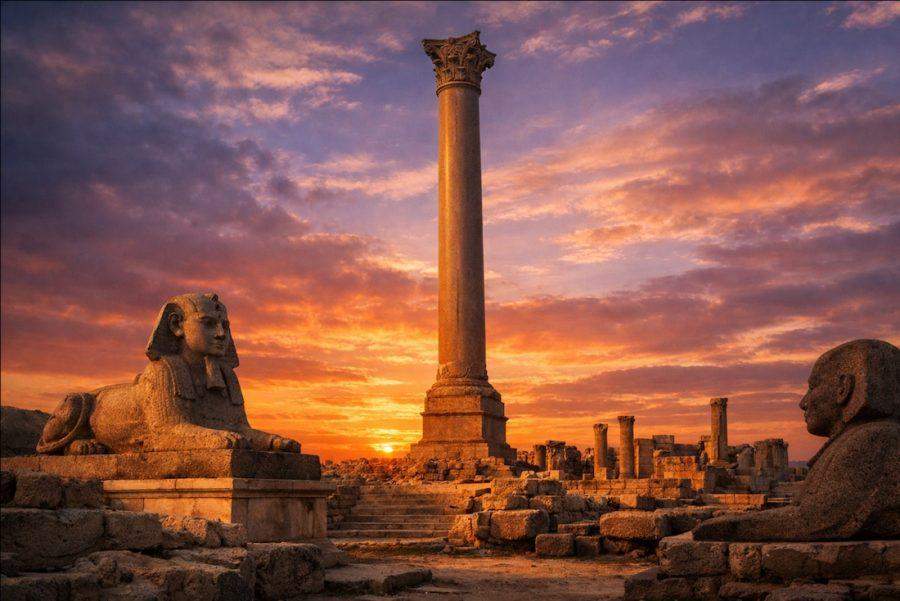
UNESCO records that two Ptolemaic sphinxes found in the vicinity were placed on either side of the column. Other ancient Egyptian objects were also found in the surrounding area, including statues and architectural fragments.
This creates another fascinating visual combination.
A Roman imperial column stands among monuments and objects that represent earlier Egyptian and Ptolemaic traditions.
The archaeological site therefore contains evidence from multiple historical periods rather than representing one single era.
What Happened to the Serapeum?
The religious history of the site changed dramatically in late antiquity.
Christianity became increasingly influential throughout the Roman Empire, and pagan religious institutions faced growing restrictions.
The Serapeum was eventually destroyed after pagan worship was suppressed.
The Egyptian Ministry of Tourism and Antiquities notes that the Serapeum was destroyed in 391 AD, after the Byzantine emperor Theodosius outlawed paganism.
The destruction transformed the landscape around the column.
The temple disappeared, but the enormous granite column survived.
That survival is one reason Pompey's Pillar is so important today.
Pompey’s Pillar as a Survivor
Alexandria suffered earthquakes, political changes, wars, urban development, and centuries of reuse.
Many of its most famous monuments disappeared.
The legendary Pharos Lighthouse is gone.
The ancient Library of Alexandria no longer survives as a building.
The royal palaces of the Ptolemies have largely disappeared beneath the modern city and sea.
Against this background, the survival of Pompey's Pillar is remarkable.
UNESCO describes it as the only ancient monument of such a dimension surviving in Alexandria.
Today, it provides one of the clearest physical reminders of the monumental scale of ancient Alexandria.
Underwater Alexandria
Pompey's Pillar is also connected to a much larger archaeological story.
A considerable portion of ancient Alexandria now lies underwater.
The Egyptian Ministry of Tourism and Antiquities reports extensive underwater archaeological remains in Alexandria's Eastern Harbour, including ancient architectural elements, statues, and remains associated with the city's royal quarter.
This means that the archaeological story of Alexandria extends far beyond what visitors can see on land.
The modern coastline conceals portions of the ancient city beneath the Mediterranean.
Pompey's Pillar is therefore one surviving piece of a much larger archaeological landscape.
Pompey’s Pillar and Kom El Shoqafa
One of the best ways to experience the area's history is to visit Pompey's Pillar and the Catacombs of Kom El Shoqafa together.
The two monuments reveal different aspects of Roman Alexandria.
Pompey's Pillar shows monumental imperial architecture.
Kom El Shoqafa reveals underground funerary traditions.
The catacombs famously combine Egyptian religious imagery with Greek and Roman artistic traditions, while Pompey's Pillar demonstrates the monumental architecture of the Roman Empire.
Together, they tell a much richer story about Alexandria's multicultural society.
Other Attractions Near Pompey’s Pillar
A visit to Pompey's Pillar can easily be combined with several other Alexandria attractions.
Catacombs of Kom El Shoqafa
An extraordinary underground necropolis combining Egyptian, Greek, and Roman traditions.
Serapeum
The ancient religious complex associated with Serapis.
Kom El-Dikka
An archaeological site containing a Roman theater, baths, lecture halls, and mosaics.
Graeco-Roman Museum
A museum dedicated specifically to the history and archaeology of Egypt during the Greek and Roman periods.
Bibliotheca Alexandrina
The modern library and cultural complex built near the historic location associated with the ancient Library of Alexandria.
Qaitbay Citadel
A medieval fortress overlooking the Mediterranean, located on the site associated with the ancient Pharos.
Visiting Pompey’s Pillar
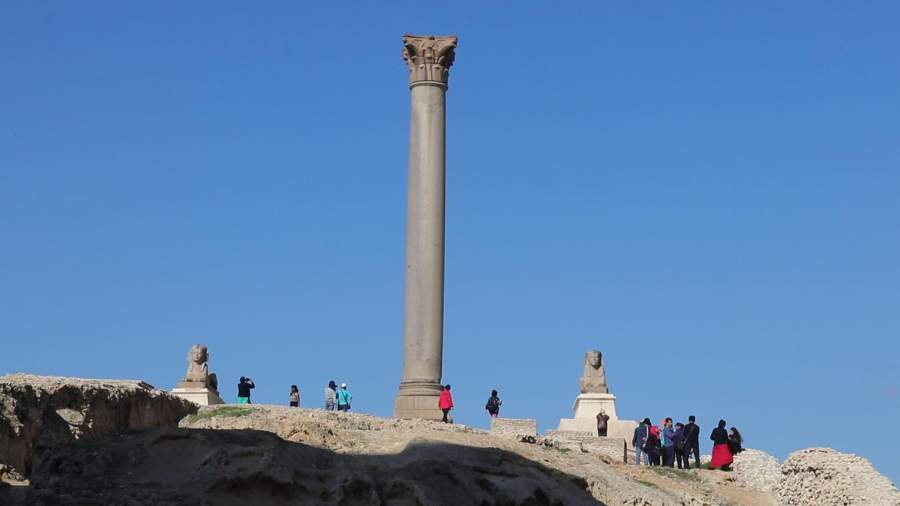
Pompey's Pillar is an open archaeological monument in Alexandria and can be incorporated into a wider tour of the city's ancient sites.
Because it is located near several other monuments, visitors can combine it with the Catacombs of Kom El Shoqafa and Serapeum in the same archaeological outing.
For current opening hours, ticket prices, and visitor regulations, check the Egyptian Ministry of Tourism and Antiquities before your visit, since these details may change.
The official ministry identifies the monument as Diocletian's Column, while noting that it is more popularly—but incorrectly—known as Pompey's Pillar.
Best Time to Visit
Alexandria's Mediterranean climate makes the city particularly pleasant during the cooler months, especially when you plan to explore several outdoor archaeological sites.
Morning visits can be especially comfortable and provide better light for photographing the granite column and surrounding ruins.
If you are planning to visit Pompey's Pillar together with Kom El Shoqafa and other archaeological sites, starting earlier in the day can help you make the most of your itinerary.
Why Visit Pompey’s Pillar?
Pompey's Pillar is worth visiting because it represents several chapters of Alexandria's history in one place.
It tells the story of:
- Roman imperial power
- Egyptian granite craftsmanship
- Greco-Roman architecture
- The cult of Serapis
- The ancient Serapeum
- The transformation of Alexandria
- The survival of ancient monuments
But perhaps its greatest attraction is its scale.
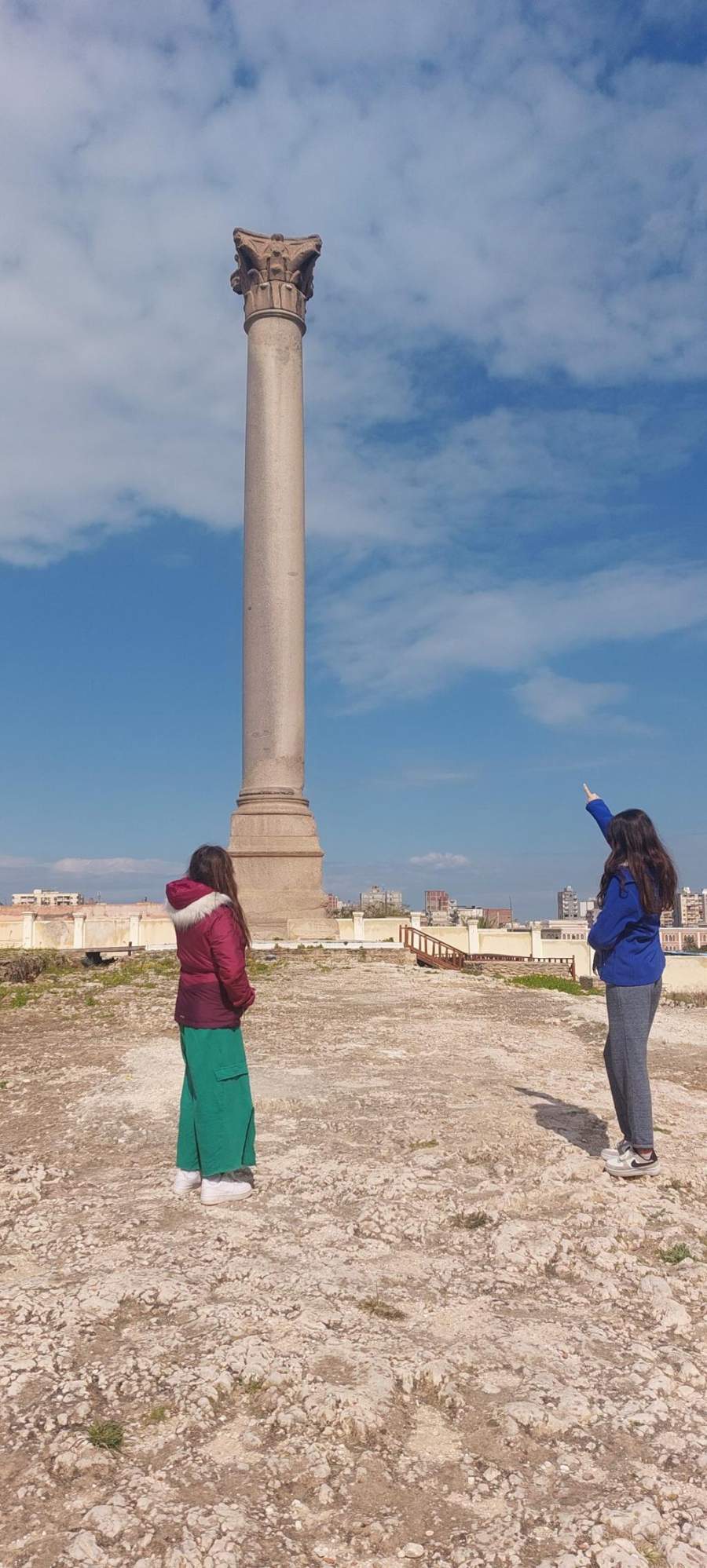
Standing beside the enormous granite shaft gives visitors a direct sense of the engineering ambitions of Roman Alexandria.
It is one thing to read about a 22-meter granite column.
It is something else to stand beneath it.
Final Thoughts
Pompey's Pillar is one of Alexandria's most impressive surviving monuments—and one of its most misunderstood.
Despite the famous name, it was not built for Pompey.
It is actually Diocletian's Column, a monumental Roman structure erected around 297 AD.
Its enormous Aswan-granite shaft, Corinthian capital, imperial associations, and location beside the ancient Serapeum make it an exceptional survivor of Roman Alexandria.
But the monument becomes even more fascinating when viewed as part of the larger archaeological landscape.
Nearby are the Catacombs of Kom El Shoqafa, the ruins of the Serapeum, and other remains of ancient Alexandria.
Together, these monuments reveal a city where Egyptian, Greek, and Roman traditions met and evolved over centuries.
Today, Pompey's Pillar stands above the ruins as a powerful reminder of that lost city—a single enormous column that survived while much of ancient Alexandria disappeared.
Post a comment