
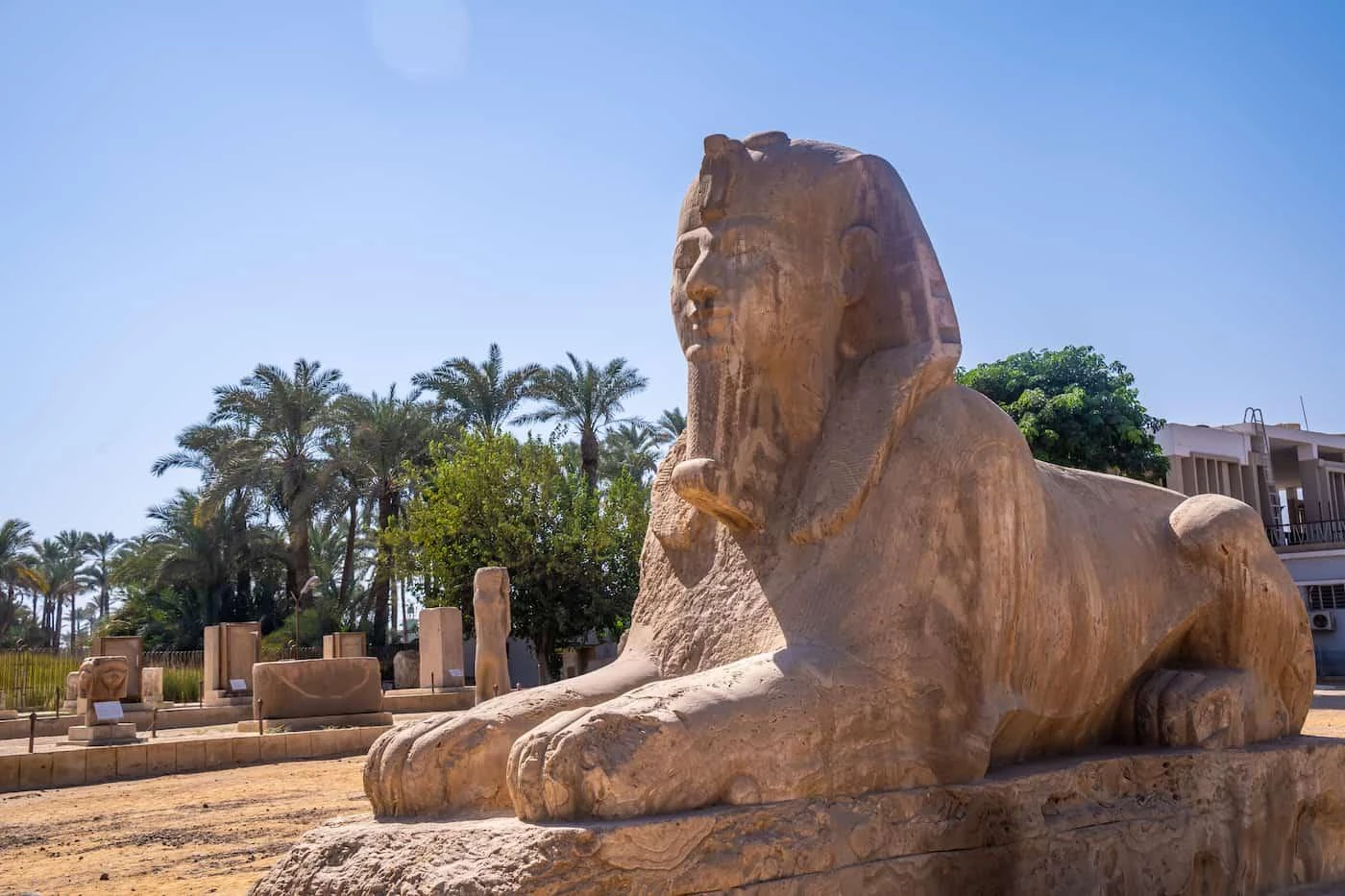
Introduction: Discover Memphis, Egypt’s Ancient Capital
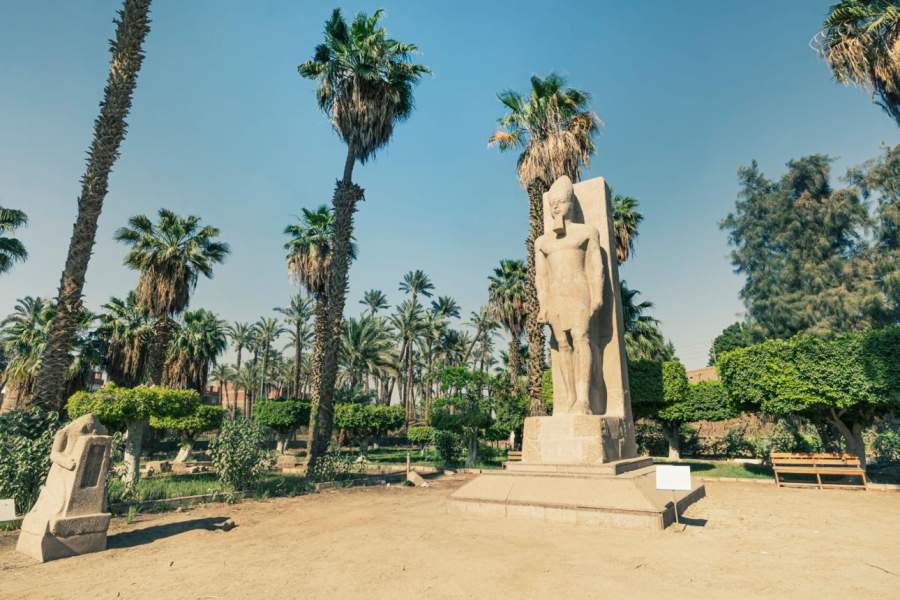
Located in Mit Rahina, south of Cairo, the Memphis Open-Air Museum preserves the remains and monuments of Memphis, one of the most important cities in ancient Egyptian history.
Memphis served as a major political and religious center during the early dynastic period and the Old Kingdom. Strategically positioned near the entrance to the Nile Delta, it played a significant role in the administration, commerce, and religious life of ancient Egypt.
Today, the open-air museum displays monumental statues, carved stone reliefs, architectural fragments, and other archaeological discoveries that reveal the city's former importance.
A visit to Memphis is particularly rewarding for travelers interested in ancient Egyptian civilization. The museum is also commonly included in excursions that combine Memphis with the Step Pyramid of Djoser at Saqqara and other nearby archaeological sites.
The Colossal Statue of Ramses II
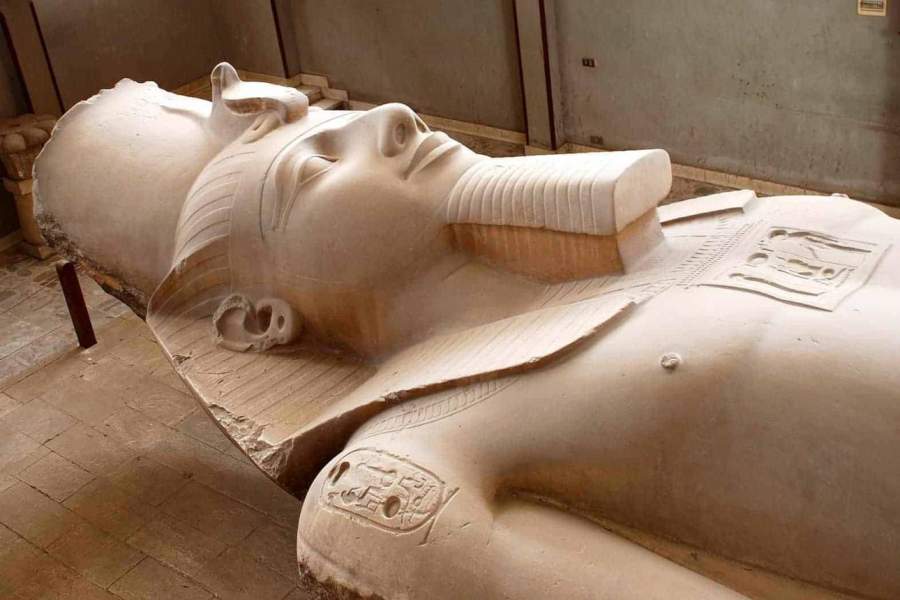
One of the museum’s most famous attractions is the enormous statue of Ramses II, one of the most celebrated pharaohs of ancient Egypt.
The statue demonstrates the extraordinary craftsmanship achieved by Egyptian sculptors, who worked with massive stone blocks to create representations of royal power and authority.
Although the statue is displayed horizontally because its lower portions are missing, its impressive size and detailed features remain remarkable. Visitors can observe the pharaoh’s facial features, royal headdress, and sculpted details that reflect traditional Egyptian artistic conventions.
Ramses II ruled during the Nineteenth Dynasty and is remembered for his extensive building projects, military campaigns, and monumental temples. His legacy can be seen throughout Egypt, including at Abu Simbel and the Ramesseum in Luxor.
The statue at Memphis offers an opportunity to appreciate his influence while exploring one of the country’s most historically significant ancient cities.
The Alabaster Sphinx: A Remarkable Ancient Sculpture
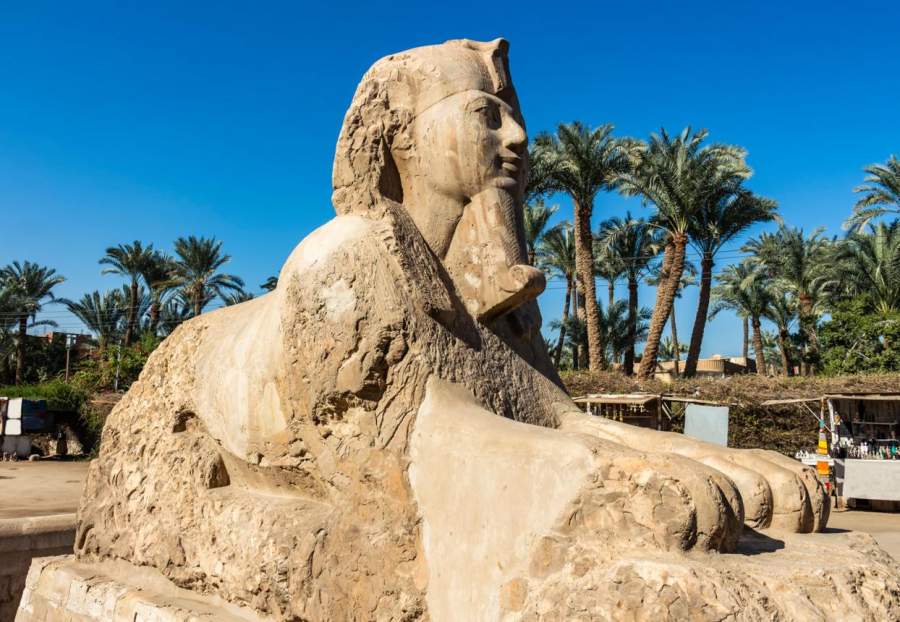
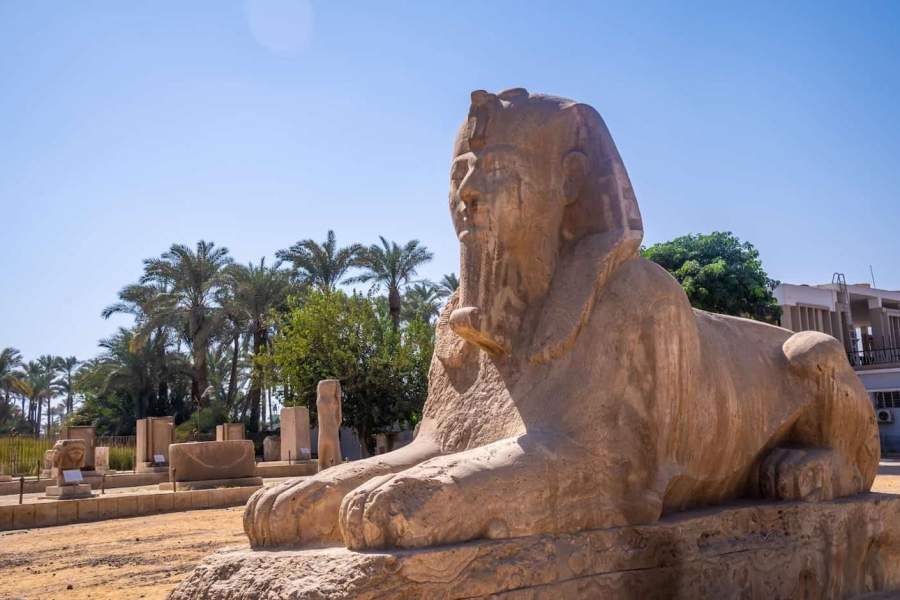
Another highlight of the Memphis Open-Air Museum is the impressive alabaster sphinx, a large sculpture carved from translucent Egyptian calcite, commonly known as Egyptian alabaster.
The sphinx combines a lion’s body with a human head, a form associated with royal strength, protection, and authority in ancient Egyptian art.
Unlike the monumental Great Sphinx of Giza, which is carved from limestone and located on the Giza Plateau, the Memphis sphinx is smaller and displayed within the museum grounds.
Its elegant proportions and carefully carved features demonstrate the artistic traditions used to represent royal and sacred figures.
The exact identification of the ruler represented by the sculpture has been debated, so it is best appreciated as an important example of ancient Egyptian monumental art rather than attributed with certainty to a particular pharaoh.
Memphis: A City at the Heart of Ancient Egyptian Civilization
Memphis was founded near the beginning of Egypt’s unified state and became one of the principal centers of royal administration. Its location between Upper and Lower Egypt made it an important strategic and economic hub.
The city was also associated with the worship of Ptah, a major creator god connected with craftsmanship and artistic creation. The religious importance of Memphis contributed to its prominence for centuries.
Although the ancient city eventually declined as political power shifted to other centers, its historical influence remained significant. Its archaeological remains offer clues about the development of Egyptian government, religion, architecture, and urban life.
Much of ancient Memphis now lies beneath modern settlements or has disappeared over time. The open-air museum preserves selected monuments and artifacts, allowing visitors to encounter tangible remains of this once-great capital.
Ancient Egyptian Art and Monumental Architecture
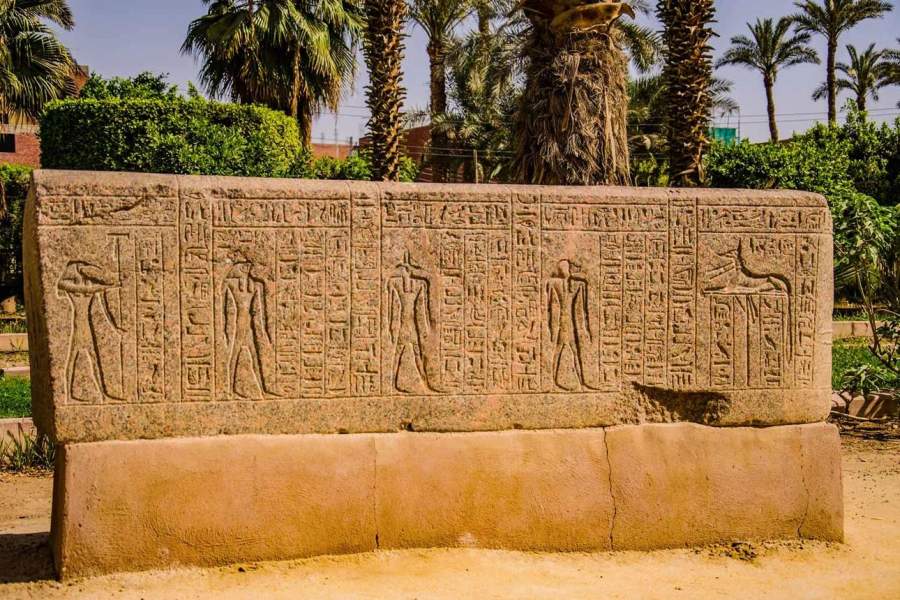
Beyond its most famous statues, the museum contains a collection of stone sculptures, architectural fragments, reliefs, and other objects recovered from the Memphis area.
These artifacts reveal the skill of ancient Egyptian artisans, who developed distinctive methods for carving stone, creating royal portraits, and decorating religious monuments.
Hieroglyphic inscriptions and sculptural details can help researchers understand royal titles, religious beliefs, and the historical context of individual objects.
As you explore the museum, pay attention to differences in scale, carving techniques, and artistic style. These details demonstrate how Egyptian art evolved over different periods while maintaining recognizable visual traditions.
The open-air setting allows visitors to see many of these monuments within a landscaped archaeological environment, providing a more relaxed experience than exploring a large enclosed museum.
Visiting Memphis Open-Air Museum
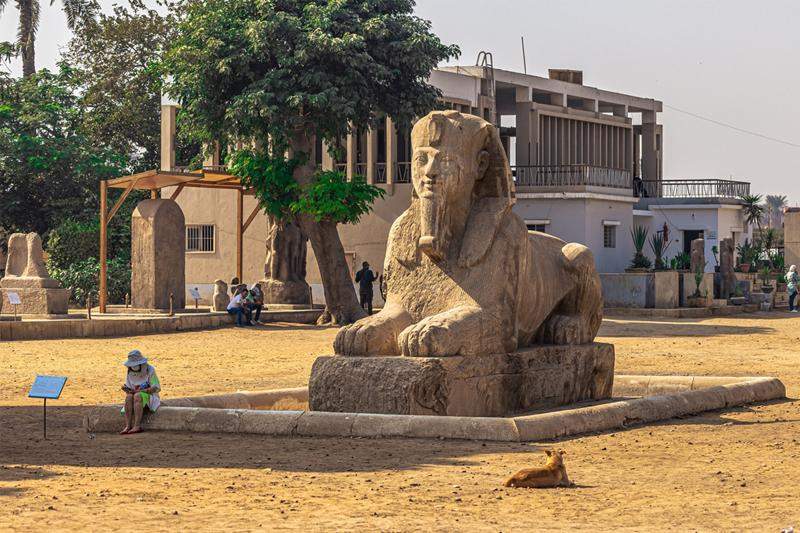
The Memphis Open-Air Museum is located in Mit Rahina, approximately 20–25 kilometers south of central Cairo, although actual travel time depends on traffic and your starting point.
Most visits are relatively short compared with larger archaeological complexes, making Memphis an excellent addition to a day trip focused on the ancient history of the Memphis region.
During your visit, you can admire the colossal statue of Ramses II, view the alabaster sphinx, and explore the other archaeological displays. A knowledgeable Egyptologist guide can explain the significance of the monuments and how Memphis contributed to the development of ancient Egyptian civilization.
For a more complete excursion, many travelers combine the museum with Saqqara, home to the famous Step Pyramid of Djoser, and sometimes Dahshur, known for its distinctive pyramids.
Comfortable walking shoes, drinking water, and sun protection are recommended, particularly during warmer months. Check current opening hours, admission fees, and visitor arrangements before traveling.
Memphis and the Saqqara Archaeological Area
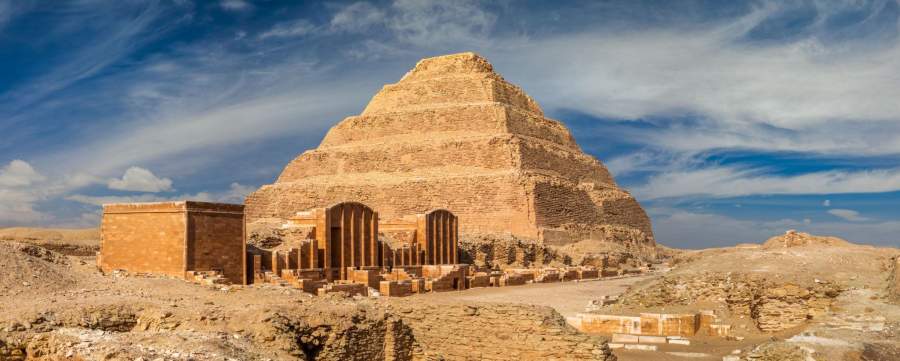
One of the greatest advantages of visiting Memphis is its proximity to other important archaeological sites.
Saqqara contains the Step Pyramid of Djoser, widely regarded as a major milestone in the evolution of monumental stone architecture. Built during the Third Dynasty, the pyramid represents an important stage in the development of the royal pyramid complexes that followed.
Dahshur provides another perspective on pyramid construction, with monuments such as the Bent Pyramid and the Red Pyramid illustrating architectural experimentation during the Old Kingdom.
Together, Memphis, Saqqara, and Dahshur help tell the story of Egypt’s early political power, religious beliefs, and architectural innovation.
Exploring these locations in one itinerary gives visitors a deeper understanding of how the ancient Egyptian state developed and how its rulers expressed their authority through monumental construction.
Why Memphis Open-Air Museum Deserves a Visit
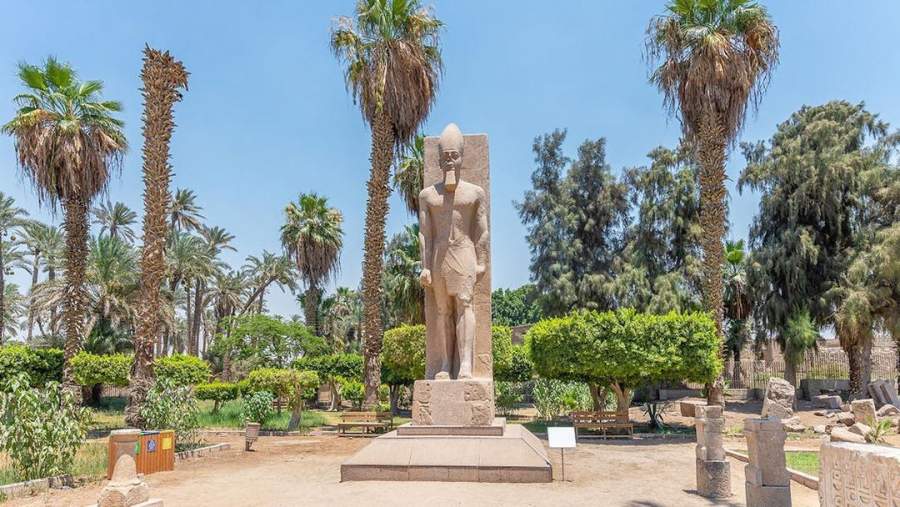
Memphis Open-Air Museum offers a meaningful introduction to a city that played a central role in ancient Egyptian history.
Its monumental sculptures provide a direct connection to the pharaohs, while its archaeological collections reveal the artistic, political, and religious traditions that shaped the ancient capital.
For visitors exploring Egypt beyond its most famous pyramids, Memphis offers a valuable opportunity to discover another chapter of the country’s remarkable past.
Whether you are passionate about archaeology or simply curious about the civilization that built Egypt’s greatest monuments, Memphis is a worthwhile stop on a historical tour from Cairo.
Explore Ancient Egypt with Magic Egypt Tours
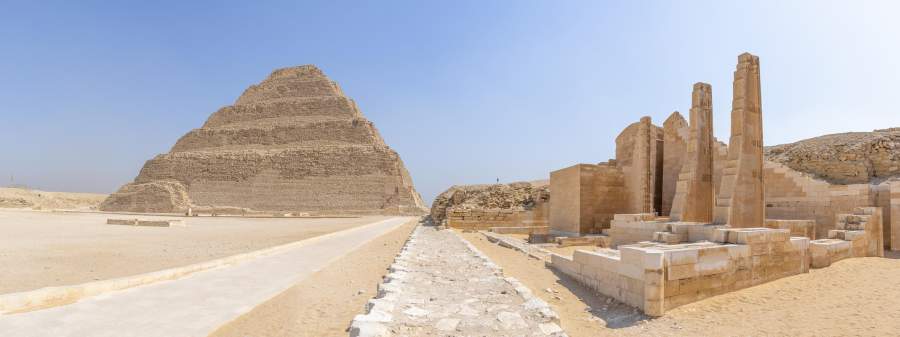
Discover the ancient wonders surrounding Cairo with Magic Egypt Tours. Explore Memphis, walk among the monuments of Saqqara, and learn about the pharaohs, architects, and artisans who helped shape one of the world’s greatest civilizations.
With a carefully planned itinerary and the insights of an experienced Egyptologist guide, you can connect these extraordinary archaeological sites into one memorable journey through ancient Egyptian history.
Plan your Egypt adventure with Magic Egypt Tours and discover the stories behind the monuments that have endured for thousands of years.