Kom Ombo Temple: The Unique Double Temple of Ancient Egypt
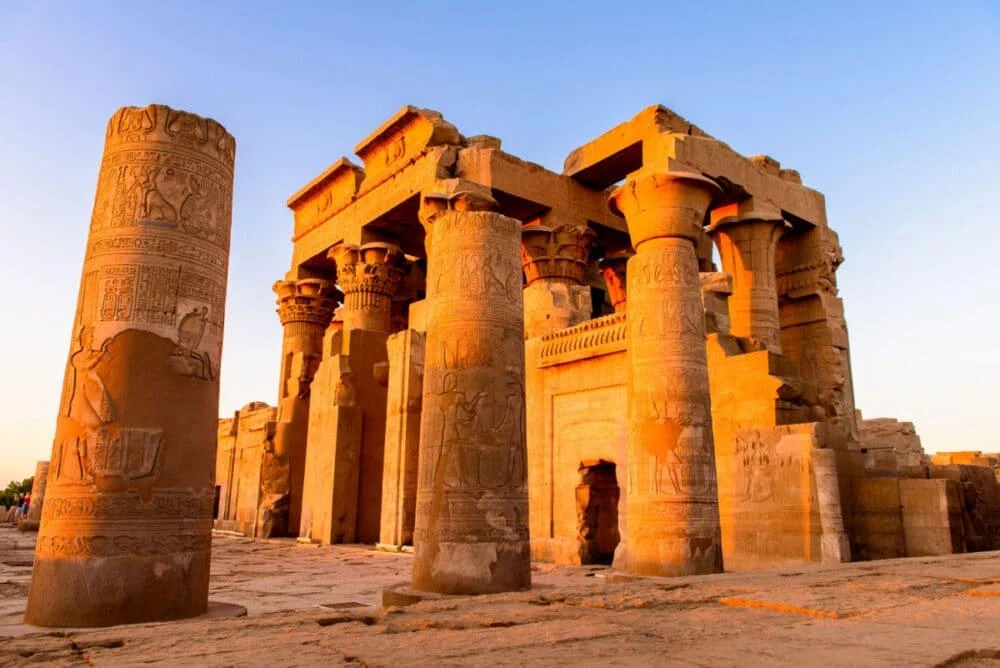
Perched dramatically on a bend of the Nile River near Aswan, Kom Ombo Temple is one of the most unusual ancient temples in Egypt. Unlike most Egyptian temples, Kom Ombo was designed as a double temple, with two nearly symmetrical sections dedicated to two different gods: Sobek, the crocodile god, and Haroeris (Horus the Elder).
Its riverside location, fascinating mythology, detailed reliefs, and connection to ancient Egyptian medicine and astronomy make Kom Ombo one of the most interesting stops on a Nile cruise.


Where Is Kom Ombo Temple?
Kom Ombo Temple is located in the town of Kom Ombo, approximately 45 kilometers north of Aswan on the eastern bank of the Nile.
Its position directly beside the river made it particularly important in ancient times. Today, the same location makes the temple a popular stop for travelers taking a Nile cruise between Luxor and Aswan.
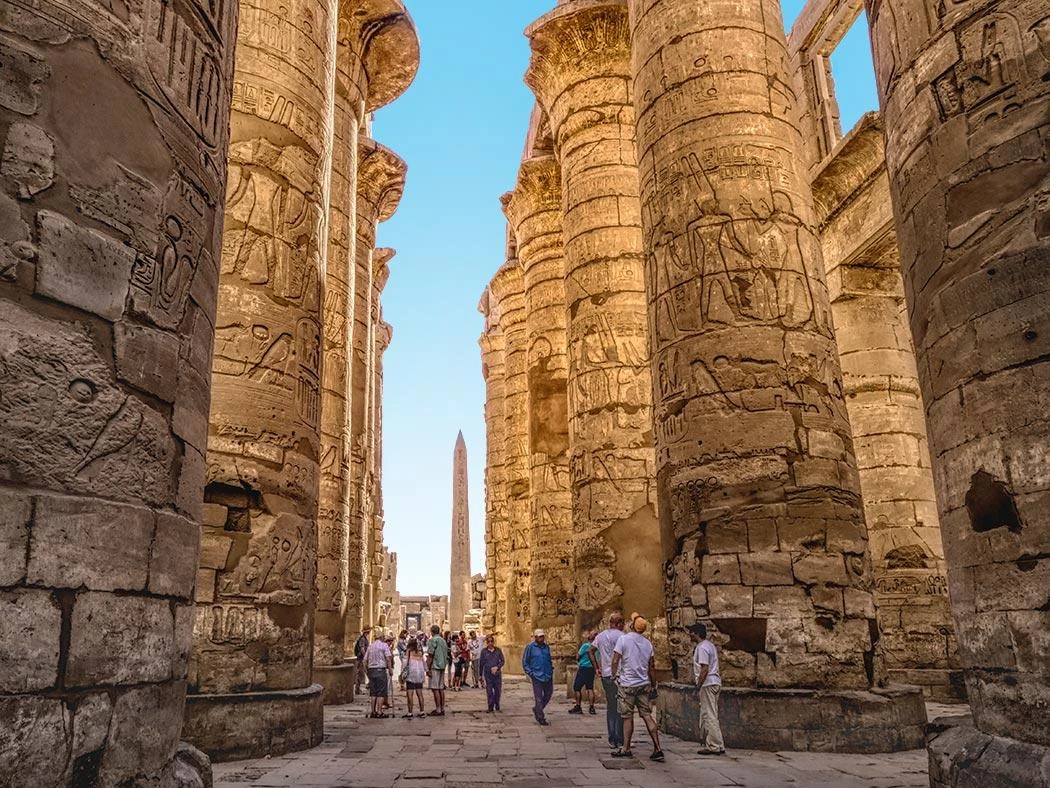
As boats approach the temple from the Nile, visitors can see its massive columns and ancient walls rising above the riverbank.
Who Built Kom Ombo Temple?
The temple that visitors see today was primarily constructed during the Ptolemaic period, beginning under Ptolemy VI Philometor and continuing under later Ptolemaic rulers.
Roman emperors also added to and modified parts of the complex.
Although much of the surviving structure dates from the Greco-Roman period, the location had religious importance before the current temple was constructed.


The combination of Egyptian religious traditions with Ptolemaic and Roman architectural influences makes Kom Ombo an excellent example of the later development of Egyptian temple architecture.
Why Is Kom Ombo Temple Unique?
The most fascinating feature of Kom Ombo is its double design.
The temple was essentially divided into two parallel sections.
One side was dedicated to Sobek, the crocodile god, while the other was dedicated to Haroeris, or Horus the Elder.
This meant that many architectural elements were duplicated:
- Two entrances
- Two sanctuaries
- Two sets of chapels
- Parallel halls
- Separate religious areas


The symmetrical design is one of the reasons the temple stands out from other ancient Egyptian monuments.
The Temple of Sobek
Sobek was an ancient Egyptian deity represented as a crocodile or a human with a crocodile's head.
He was associated with the Nile, fertility, water, and royal power.
Because crocodiles lived in the Nile, Sobek became closely connected with the river and its life-giving waters.
At Kom Ombo, visitors can see numerous representations of Sobek throughout the temple.


The temple's connection to Sobek reflects the enormous importance of the Nile to ancient Egyptian civilization.
The Temple of Haroeris
The second half of Kom Ombo was dedicated to Haroeris, an aspect of Horus known as "Horus the Elder."
Horus was one of the most important gods in ancient Egyptian religion and was commonly represented as a falcon or as a man with a falcon's head.
Horus was strongly associated with kingship and protection.
The presence of both Sobek and Horus at Kom Ombo reflects the temple's unusual religious character.
The Famous Medical Relief
One of the most intriguing details at Kom Ombo is a relief that depicts various objects that resemble ancient medical and surgical instruments.


The relief has attracted enormous interest because the objects look surprisingly similar to instruments used by doctors and surgeons.
The temple also contains evidence connected to ancient Egyptian approaches to medicine and healing.
However, it is important not to assume that every object shown in the relief represents a modern surgical instrument in exactly the same sense. Interpretations of ancient Egyptian reliefs can be more complicated than modern descriptions suggest.
The Ancient Egyptian Calendar
Another fascinating relief at Kom Ombo is associated with the ancient Egyptian calendar and religious festivals.


Ancient Egyptians carefully observed the cycles of the sun, moon, and stars because agriculture, religious ceremonies, and daily life were closely connected to the natural environment.
The inscriptions at Kom Ombo provide valuable insight into the religious and calendrical traditions of the period.
The Crocodile Museum
One of the most interesting additions to a visit is the Crocodile Museum, located next to the temple.


The museum contains preserved crocodile mummies and artifacts associated with the worship of Sobek.
The exhibits help explain why crocodiles were both feared and revered in ancient Egyptian culture.
Seeing the preserved crocodiles provides a fascinating connection between the temple's religious beliefs and the Nile environment surrounding it.
The Nile and Kom Ombo
The relationship between Kom Ombo and the Nile is impossible to miss.
The temple was deliberately positioned beside one of the world's most important rivers.

For ancient Egyptians, the Nile was the foundation of civilization. It provided water, transportation, agriculture, fishing, and fertile land.
The worship of Sobek at Kom Ombo therefore had a natural connection to the river environment.
For modern travelers, the location creates one of the most beautiful temple experiences in Egypt.
What Can You See at Kom Ombo?
A visit to the temple allows you to explore several important features:
- The monumental entrance
- The double temple layout
- Columns covered with inscriptions
- Reliefs of Sobek and Horus
- Royal and religious scenes
- Ancient hieroglyphic inscriptions
- The temple's sanctuaries
- The crocodile museum
- Views of the Nile
Take your time when walking through the temple because many of its details are found in the carved walls and columns.
Best Time to Visit Kom Ombo
Kom Ombo is located in southern Egypt, where summer temperatures can become very high.
The cooler months from October to April are generally more comfortable for exploring outdoor archaeological sites.
If you are visiting as part of a Nile cruise, early morning or late afternoon can also provide excellent conditions for photography.


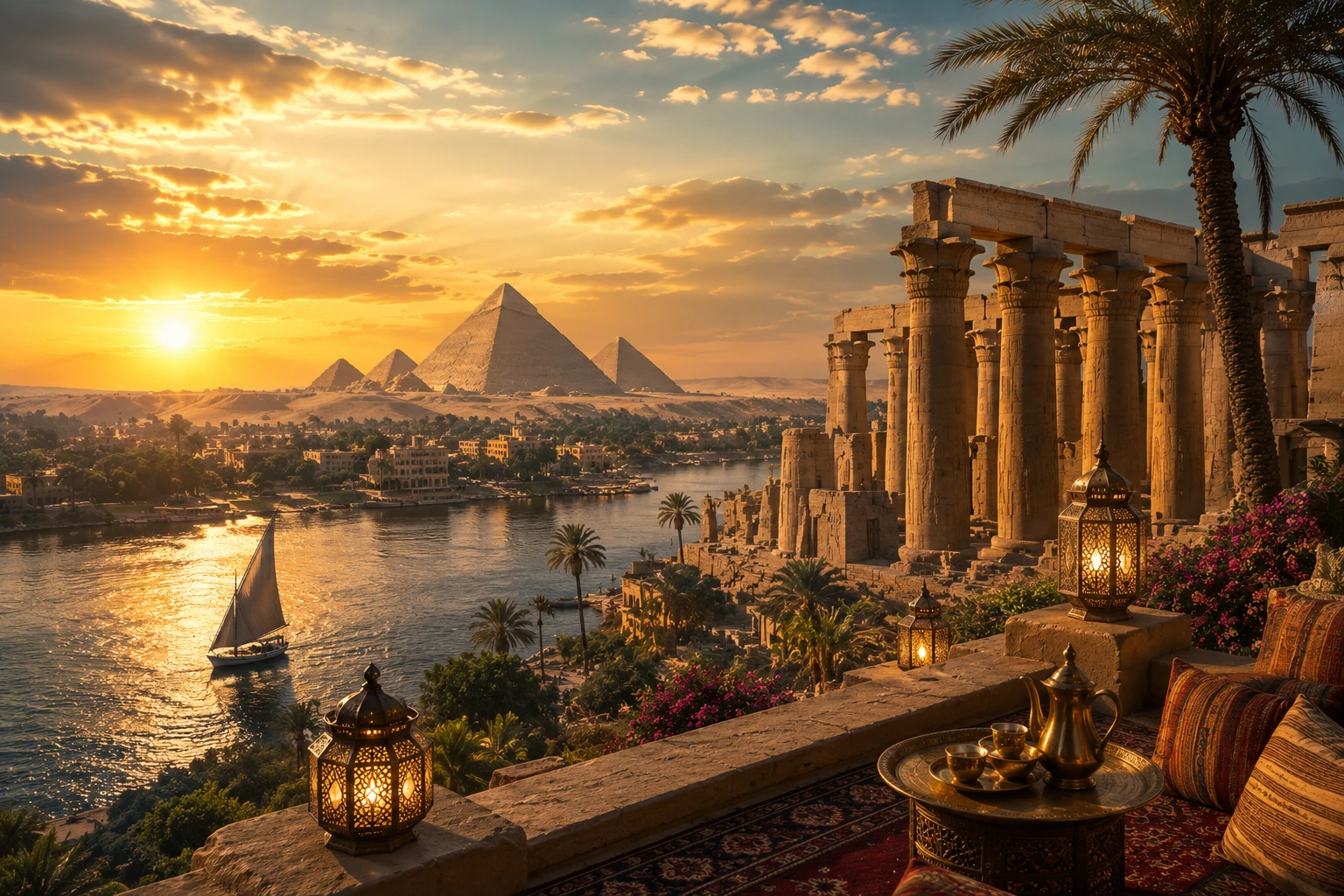
Sunset can be particularly beautiful, with the warm light illuminating the ancient stone walls while the Nile flows beside the temple.
How to Visit Kom Ombo
The easiest way for many international visitors to experience Kom Ombo is as part of a Nile cruise between Luxor and Aswan.
Cruise boats commonly stop near the temple, allowing passengers to walk directly from the river to the archaeological site.
You can also visit Kom Ombo independently from Aswan or Luxor by road.
Because the temple is located between the two major southern destinations, it works particularly well as part of a broader Nile Valley itinerary.
Why Should You Visit Kom Ombo Temple?
Kom Ombo is worth visiting because it offers something different from the pyramids and the major temples of Luxor.
Here, you can see:
A unique double temple dedicated to two gods.
The fascinating cult of Sobek, connected to crocodiles and the Nile.
Detailed Ptolemaic and Roman-period reliefs.
The Crocodile Museum, with preserved crocodile mummies.
A spectacular location beside the Nile.
Together, these elements make Kom Ombo one of the most memorable archaeological sites in southern Egypt.
Final Thoughts
Kom Ombo Temple is a remarkable monument that combines architecture, mythology, medicine, religion, and the natural world of the Nile.
Its unusual double design makes it instantly recognizable, while its dedication to Sobek and Haroeris reveals the complex religious traditions of ancient Egypt.
The nearby Crocodile Museum adds another fascinating dimension to the experience, allowing visitors to learn more about the ancient worship of Sobek and the special role crocodiles played in Egyptian culture.
Whether you arrive by road or as part of a Nile cruise, Kom Ombo is a destination that deserves a place on any southern Egypt itinerary.
Standing beside the Nile as the sun sets over the ancient columns, it becomes easy to understand why this temple remains one of the most fascinating places to visit in Egypt.
Post a comment