

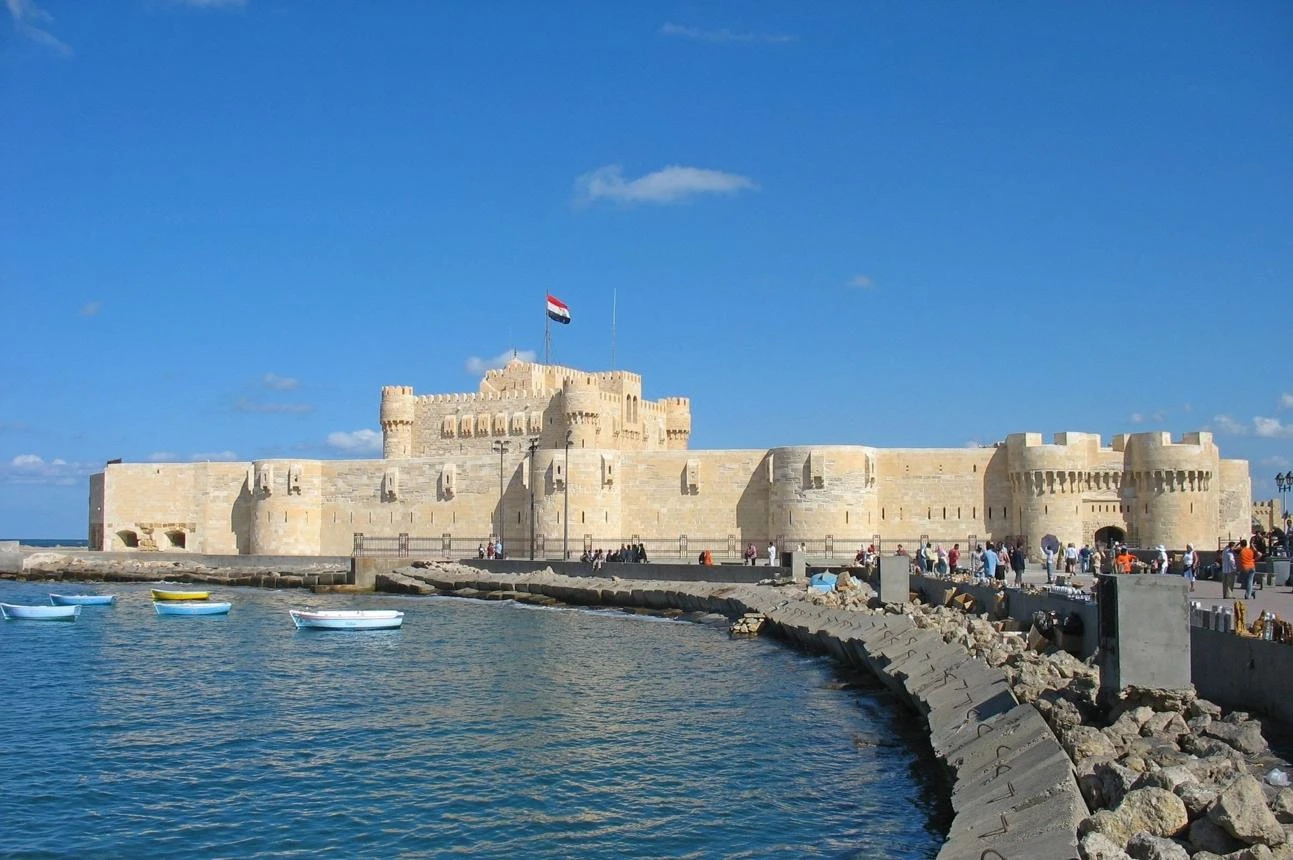
Citadel of Qaitbay: Alexandria’s Medieval Fortress on the Mediterranean
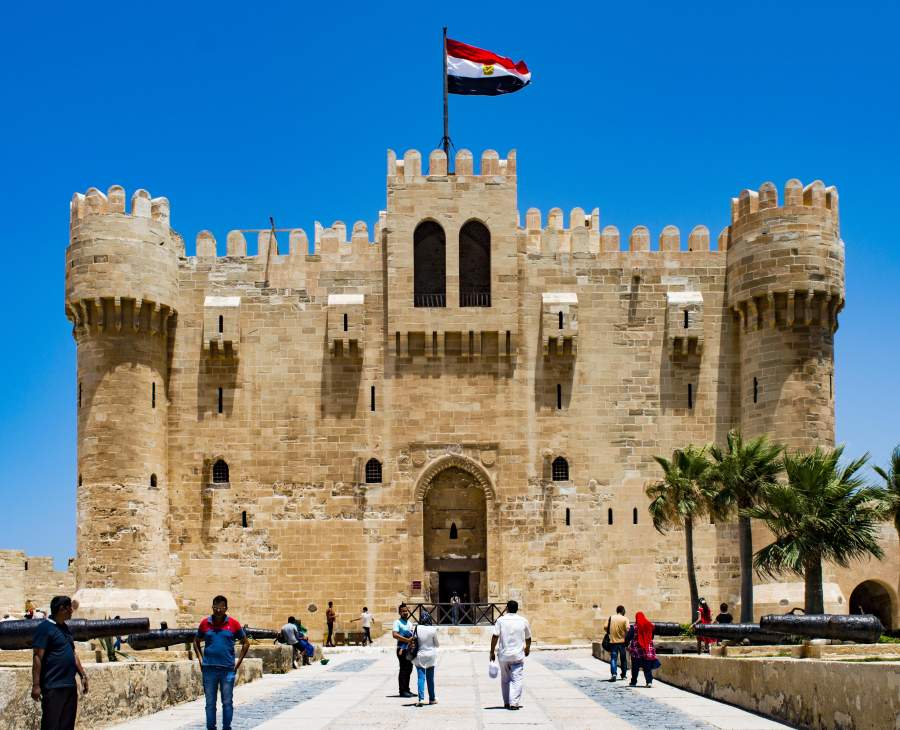
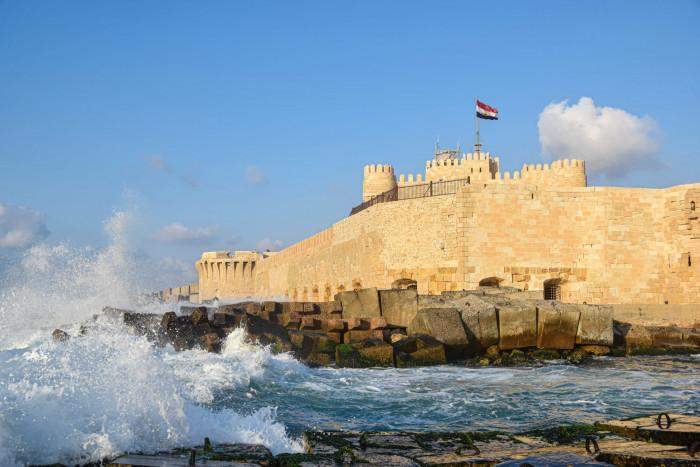
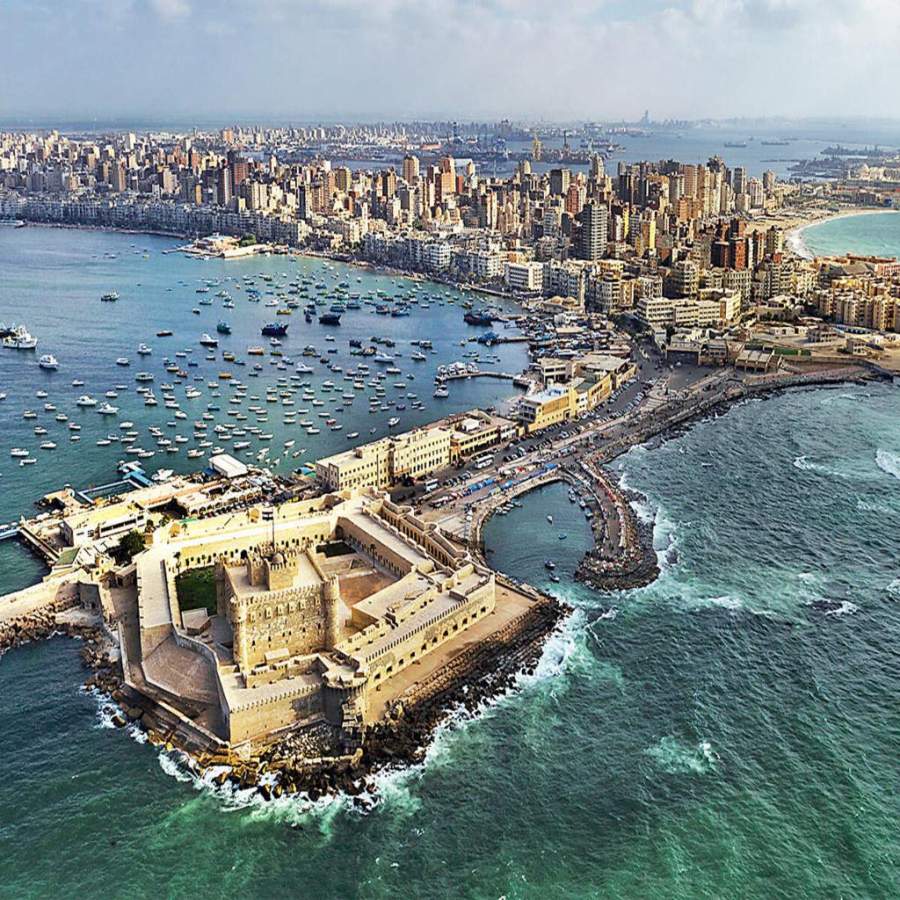
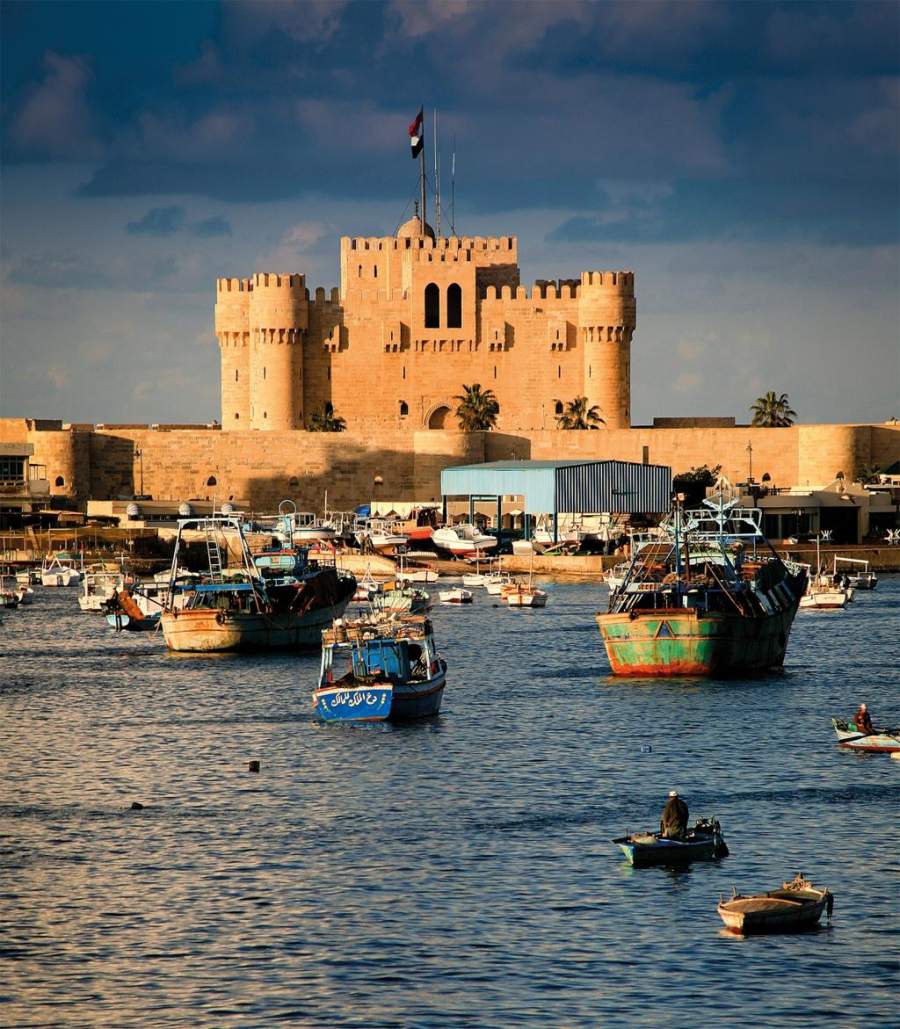
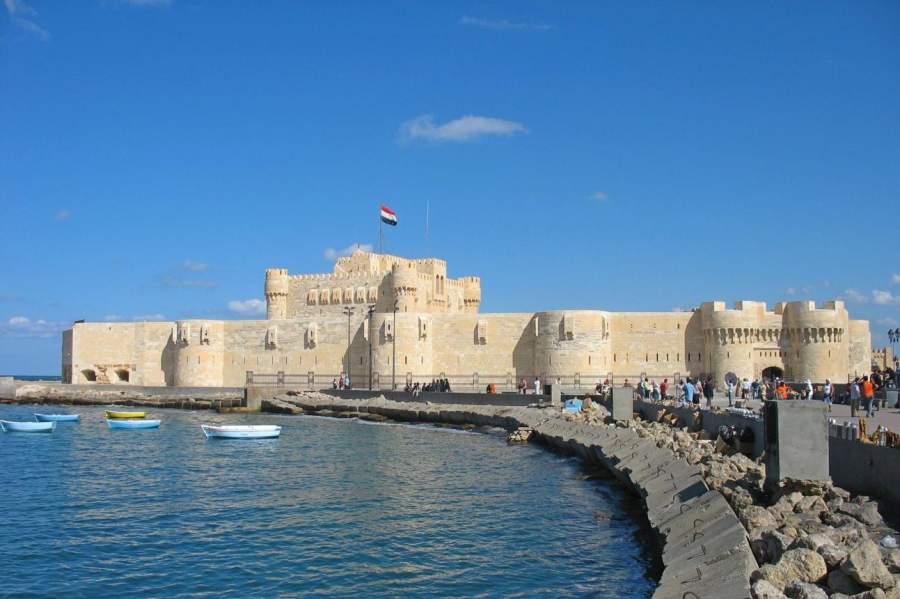
The Citadel of Qaitbay, also known as Qaitbay Fort, is one of Alexandria’s most recognizable landmarks and one of the most impressive medieval fortifications on Egypt’s Mediterranean coast.
Standing at the eastern tip of the Pharos Peninsula, the fortress occupies one of the most historically significant locations in Alexandria. It was built by the Mamluk Sultan Al-Ashraf Qaitbay between 1477 and 1479 AD, on the site of Alexandria’s ancient lighthouse.
Today, the citadel combines military architecture, Mediterranean scenery, and the archaeological memory of one of the ancient world's most famous structures—the Pharos Lighthouse.
For visitors, it offers something rare: the opportunity to stand inside a 15th-century fortress while looking across waters that once surrounded the legendary lighthouse of ancient Alexandria.
Where Is the Citadel of Qaitbay?
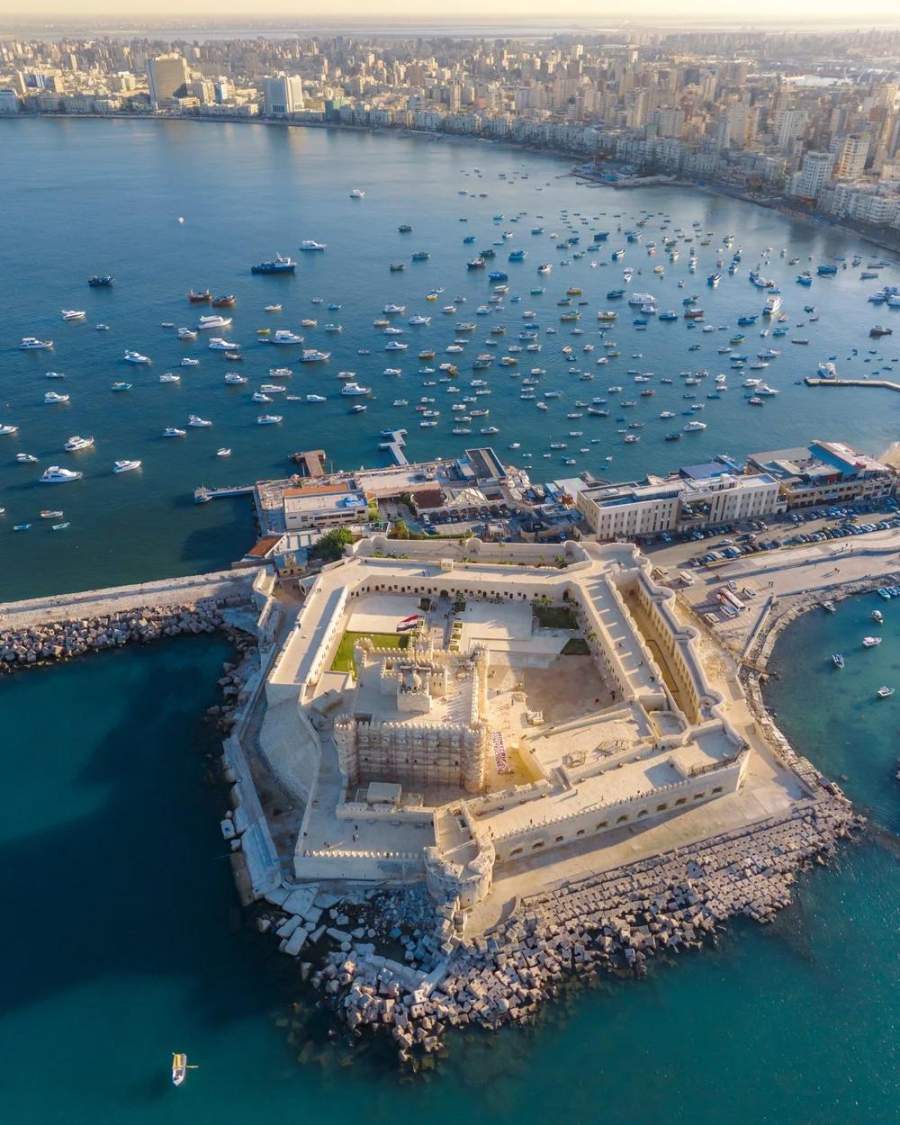
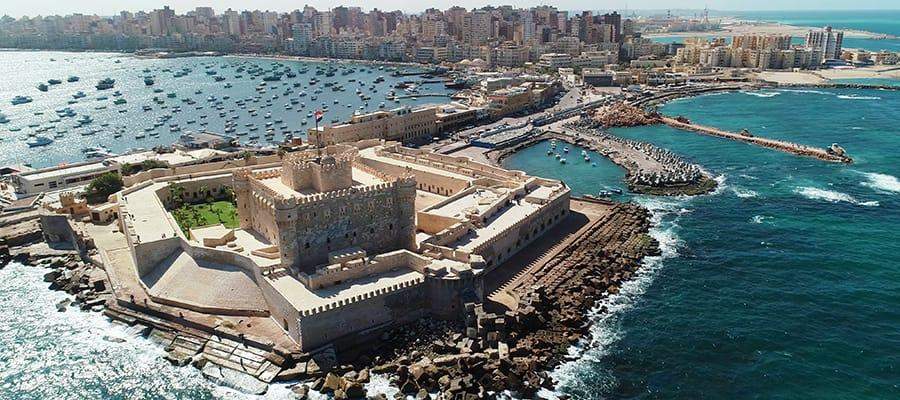
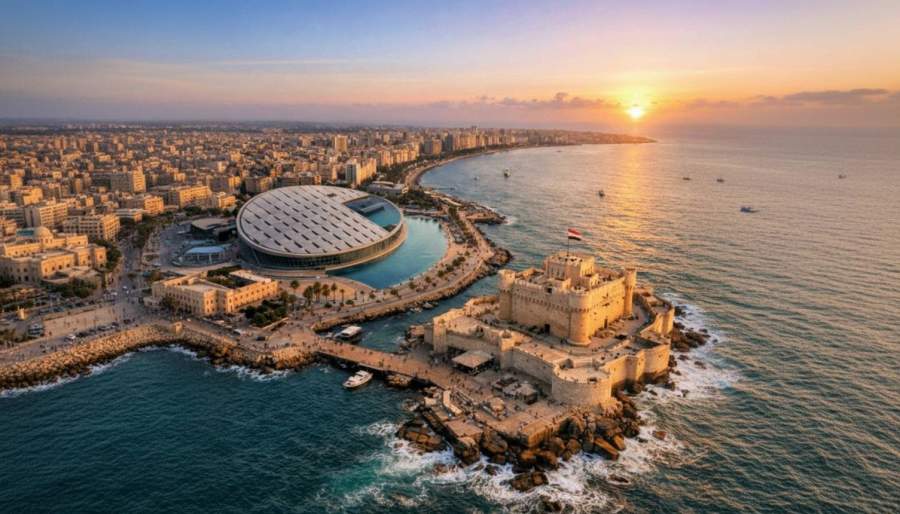
The citadel is located at the eastern end of the Pharos Peninsula, on the Mediterranean waterfront of Alexandria.
Its position was strategically important because it overlooked the entrance to the city's harbor.
The Egyptian Ministry of Tourism and Antiquities describes Qaitbay Fort as one of the most important forts on the Mediterranean coast. Its location allowed it to play a defensive role against naval attacks.
The surrounding area is also part of Alexandria's extraordinary archaeological landscape.
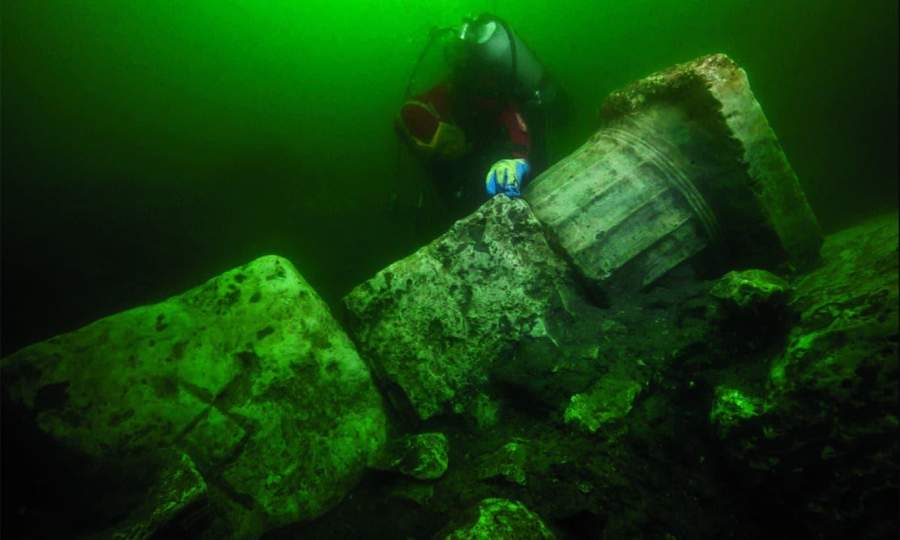
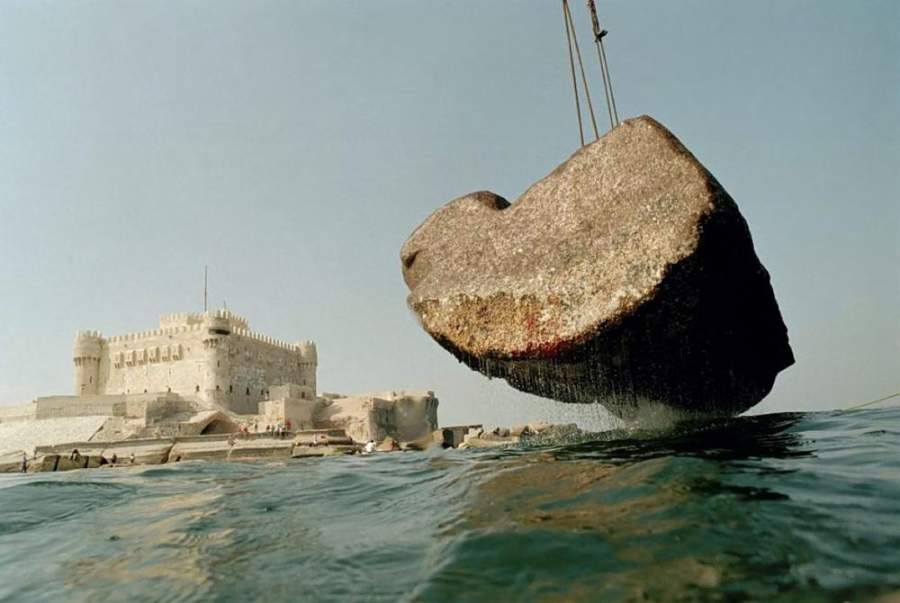
Just offshore are underwater remains associated with ancient Alexandria, including architectural blocks believed to have fallen from the ancient lighthouse and other structures.
The Story Behind the Citadel
The history of the site goes back much further than the fortress itself.
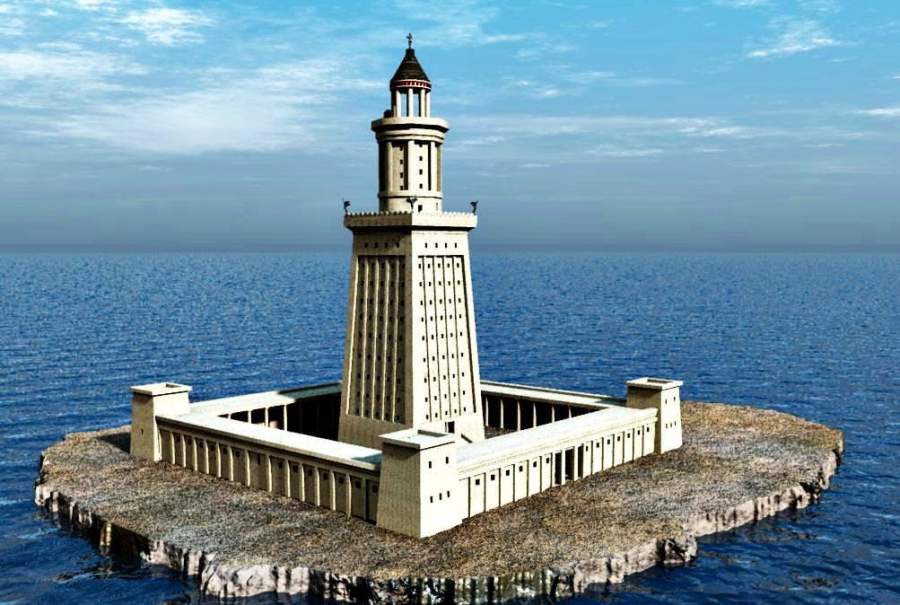
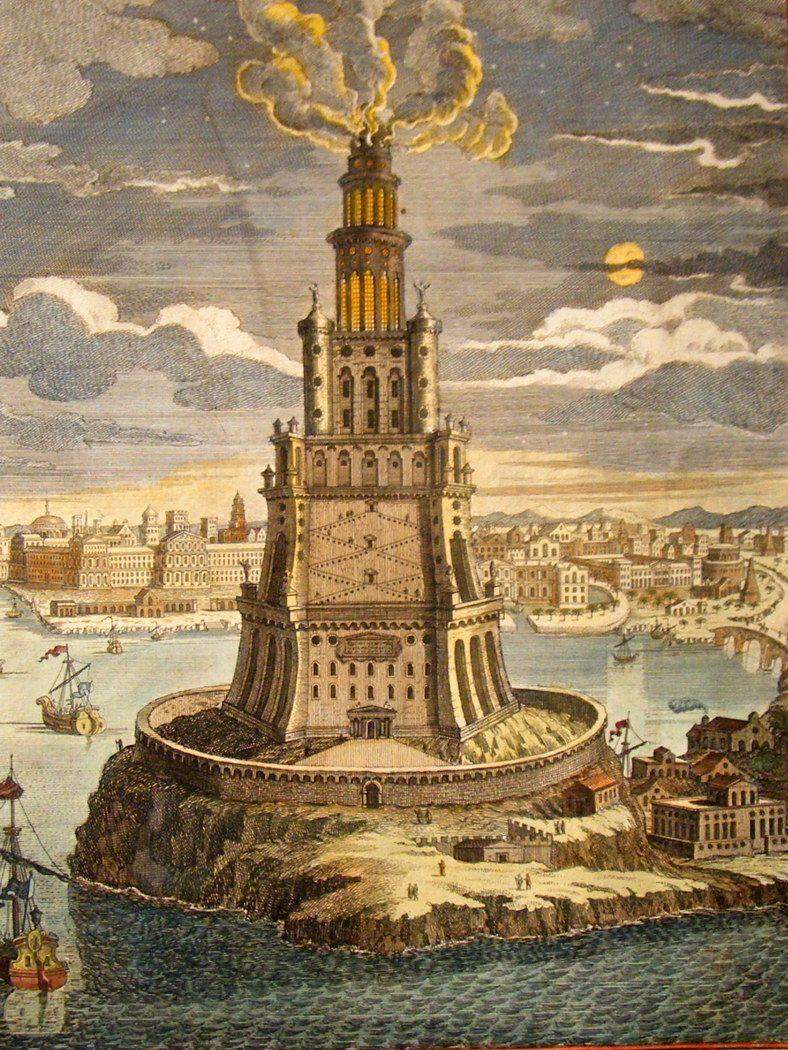
Before Qaitbay's citadel was constructed, this location was occupied by the Pharos Lighthouse, one of the most famous monuments of antiquity.
The lighthouse stood on the island of Pharos and guided ships toward Alexandria's harbor.
It was built during the Ptolemaic period and became one of the Seven Wonders of the Ancient World. UNESCO's historical documentation describes the lighthouse as a monumental structure more than 100 meters high, with three principal sections.
Over centuries, earthquakes damaged the lighthouse.
By the medieval period, much of the ancient structure had collapsed.
The Mamluk ruler Sultan Qaitbay later chose the strategic location for a new defensive fortress.
Sultan Qaitbay
The fortress takes its name from Sultan Al-Ashraf Abu al-Nasr Qaitbay, one of the most prominent rulers of the Circassian Mamluk period.
He ordered the construction of the citadel between 882 AH / 1477 AD and 884 AH / 1479 AD.
Qaitbay was known for his extensive building program throughout Egypt and the wider Mamluk territories.
His monuments can be found in Cairo as well as Alexandria.
The famous Sultan Qaitbay Complex in Cairo's Northern Cemetery is another major monument associated with his reign.
At Alexandria, his priority was different.
The city needed a strong coastal defense.
The citadel was therefore designed primarily as a military fortress capable of protecting Alexandria's harbor from naval attacks.
Built on the Site of the Pharos Lighthouse
Perhaps the most fascinating aspect of Qaitbay Citadel is its relationship with the ancient lighthouse.
The fortress was constructed over the ruins of Alexandria's Lighthouse.
The Egyptian Ministry of Tourism and Antiquities explicitly identifies the citadel as having been built over the ruins of the ancient lighthouse.
This means that the location has served two different purposes across different periods:
Ancient Alexandria:
A lighthouse guiding ships.
Medieval Alexandria:
A fortress defending the city.
The site therefore represents a remarkable transformation in the history of Alexandria.
What Happened to the Lighthouse?
The Pharos Lighthouse survived for many centuries but was progressively damaged by earthquakes.
UNESCO records that the lighthouse suffered severe damage during the medieval period and eventually collapsed after a series of earthquakes between approximately the 8th and early 14th centuries.
By the time Qaitbay's fortress was constructed in the 15th century, the lighthouse had largely disappeared.
However, the archaeological story did not end there.
Evidence from underwater excavations around the citadel has helped researchers identify massive stone blocks and architectural elements believed to have fallen from the lighthouse and its surrounding structures.
The Architecture of Qaitbay Citadel
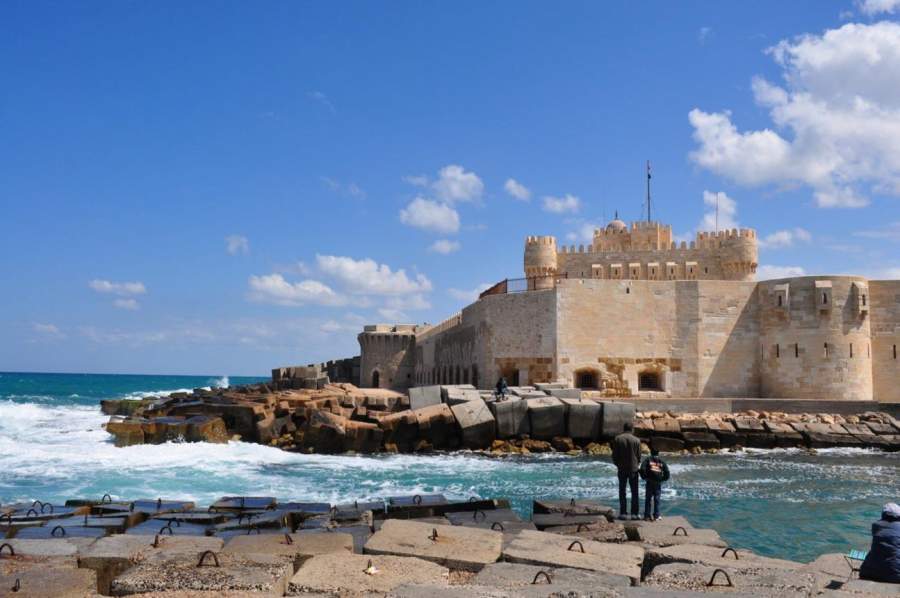
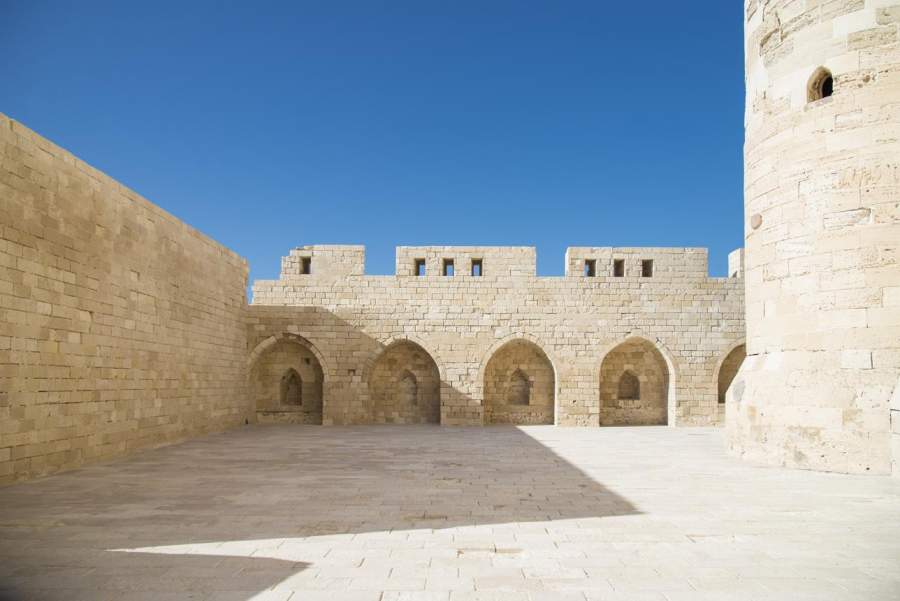
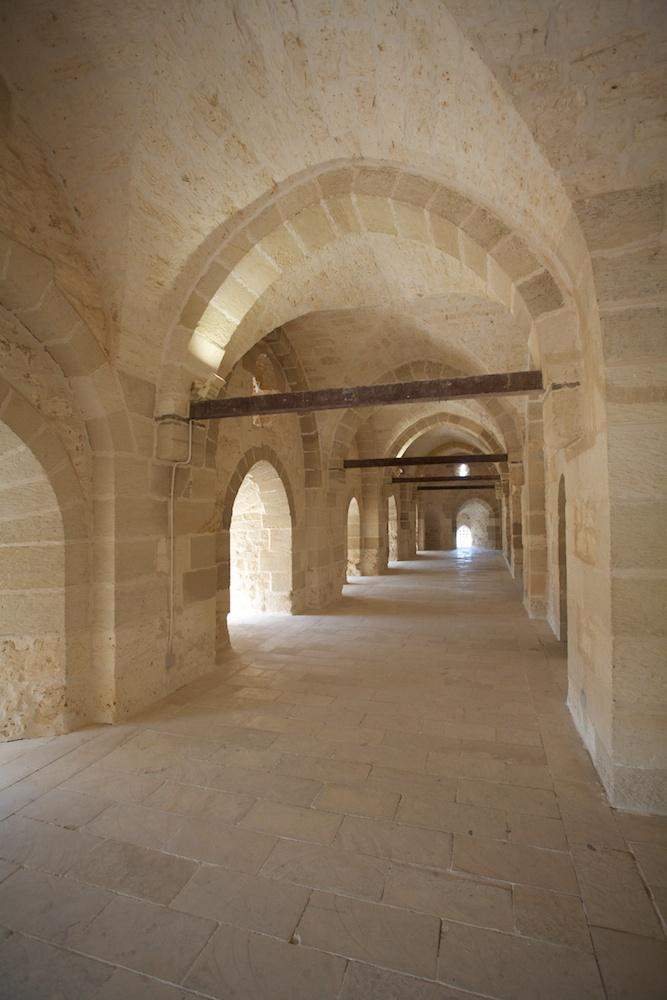
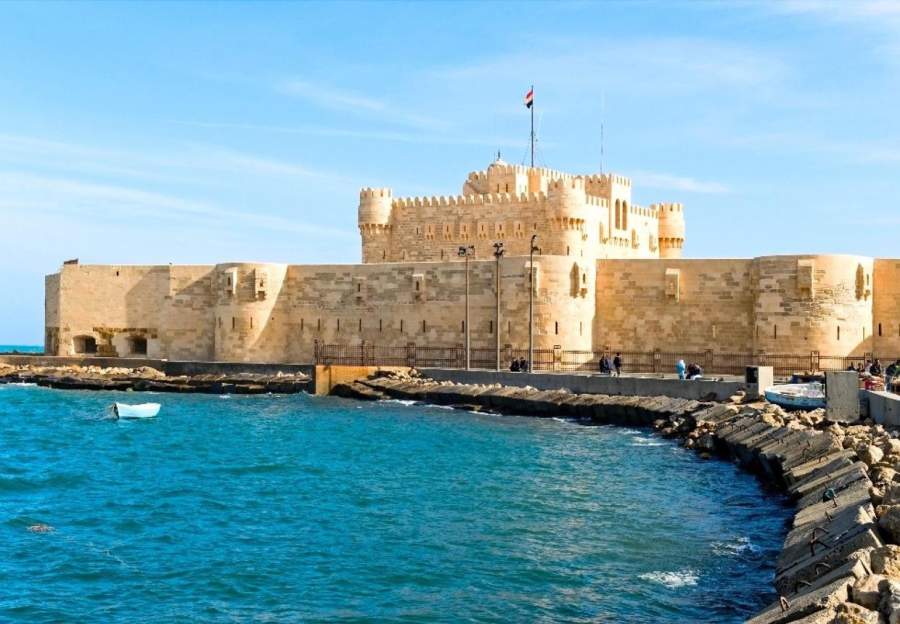
The fortress covers an area of approximately 17,550 square meters and was constructed primarily from limestone.
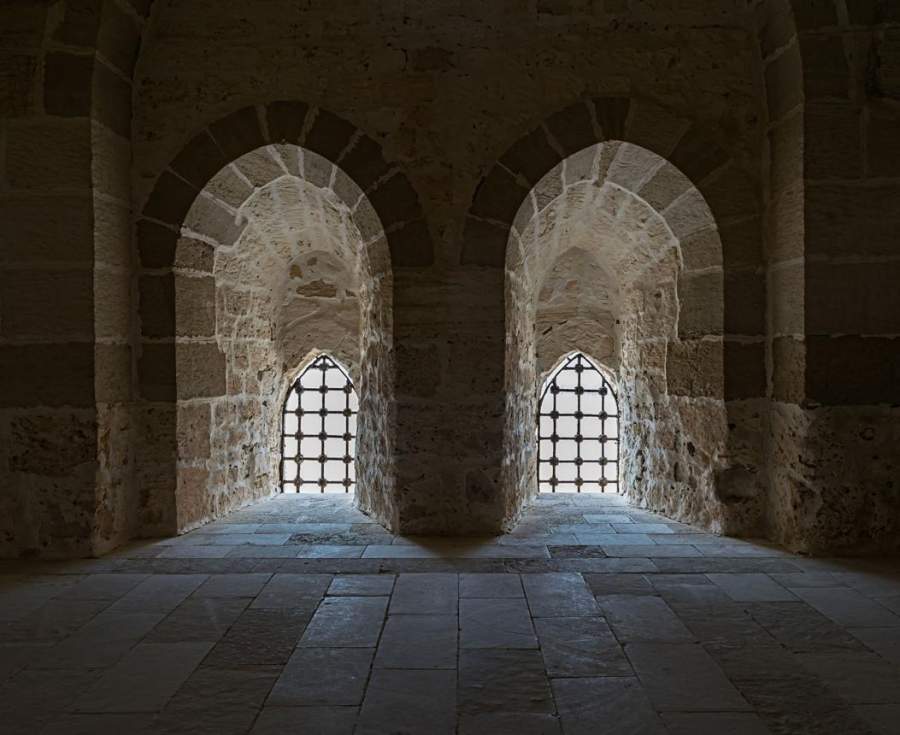
An outer defensive wall surrounds the complex, while an inner wall encloses the main courtyard and internal buildings.
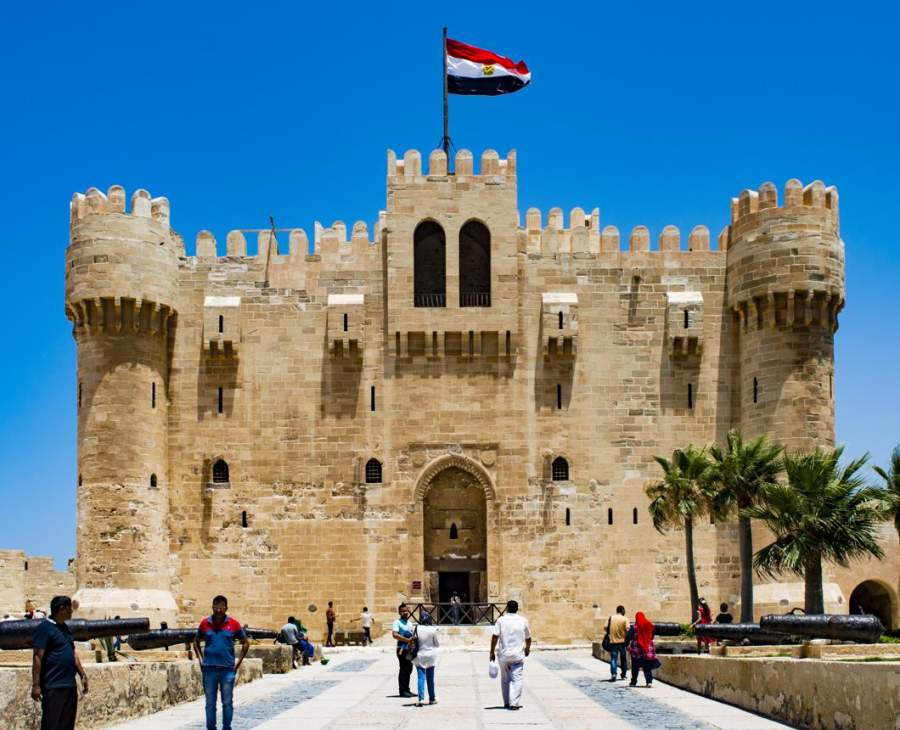
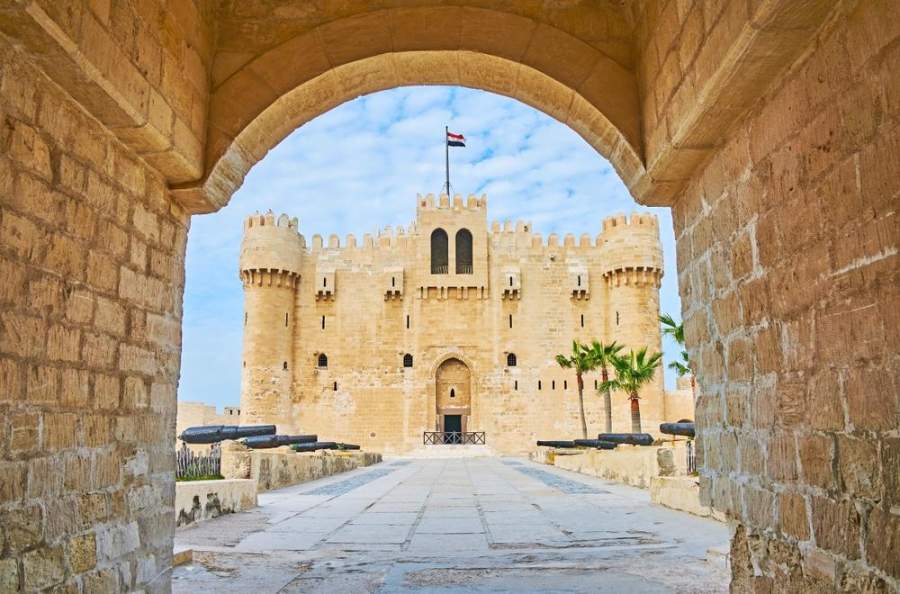
The main tower dominates the fortress.
It is a massive three-story square structure, with semi-circular defensive towers occupying its corners.
These towers feature projecting balconies that allowed defenders to observe and protect the surrounding approaches.
The architecture combines practical military requirements with the decorative traditions of Mamluk construction.
The Main Tower
The main tower is the architectural heart of the fortress.
From its elevated position, defenders could monitor the sea and the approaches toward Alexandria.
The tower's square plan provided a strong defensive structure, while the surrounding towers and walls created multiple layers of protection.
Inside the fortress, rooms served different military functions.
Some were used as barracks, while others provided storage and support facilities for the soldiers stationed there.
The design shows that Qaitbay Citadel was not simply a symbolic monument.
It was a functioning military installation.
The Entrance and Courtyard
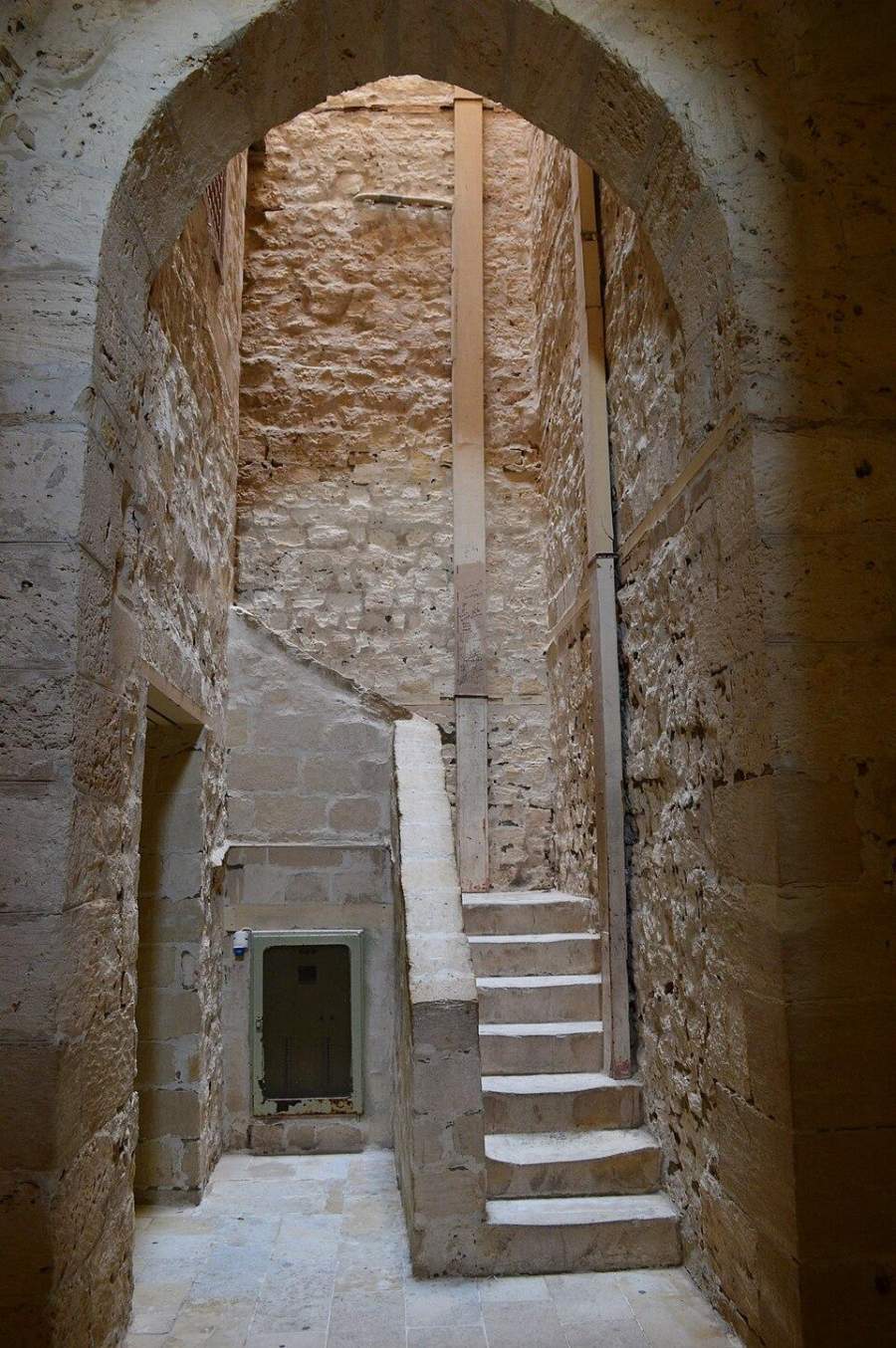
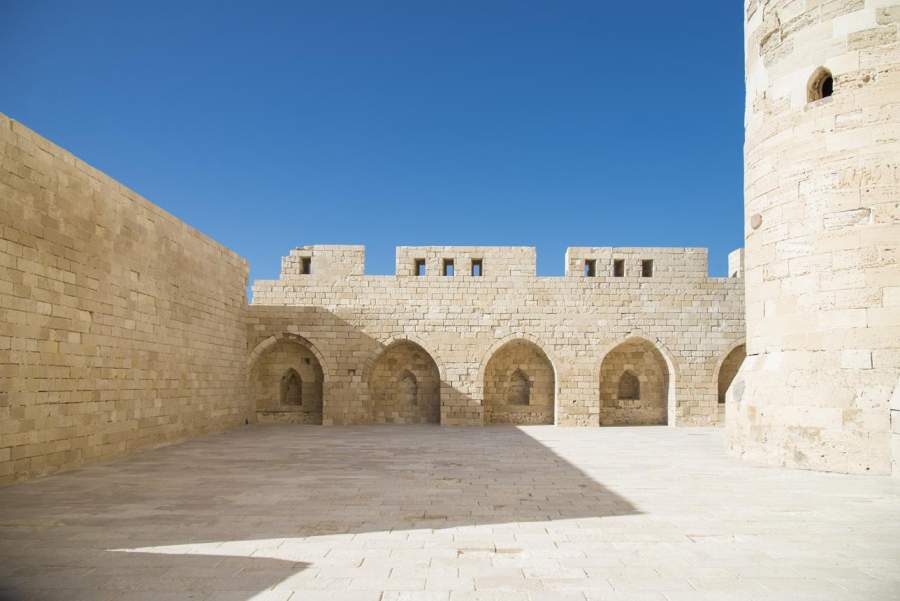
The entrance leads into the fortress's main courtyard.
From there, visitors can see the massive central tower and the surrounding defensive structures.
The courtyard provided space for movement between different parts of the fortress and connected the defensive and residential areas.
Walking through the entrance today offers an interesting contrast.
The fortress appears compact from outside, but once inside, its different levels, chambers, stairs, towers, and walls reveal a much more complex structure.
Water Supply Inside the Fortress
A fortress cannot survive without water.
The builders therefore included a water tank near the main tower to supply soldiers and their horses.
This seemingly simple feature is an important reminder of the practical considerations behind medieval military architecture.
A coastal fortress had to be prepared to withstand periods when outside supplies might be difficult to obtain.
Food storage, water, accommodation, and defensive positions all had to work together.
Qaitbay Citadel as a Defensive Fortress
The primary purpose of the citadel was to protect Alexandria against naval attacks.
Its position at the mouth of the harbor gave defenders an excellent strategic advantage.
From the fortress, soldiers could monitor ships approaching the city and use the elevated walls and towers to defend the coastline.
The location was particularly important because Alexandria had remained one of the major ports of the Mediterranean for centuries.
The fortress was therefore part of a much longer tradition of defending Alexandria's maritime gateway.
The Mediterranean Views
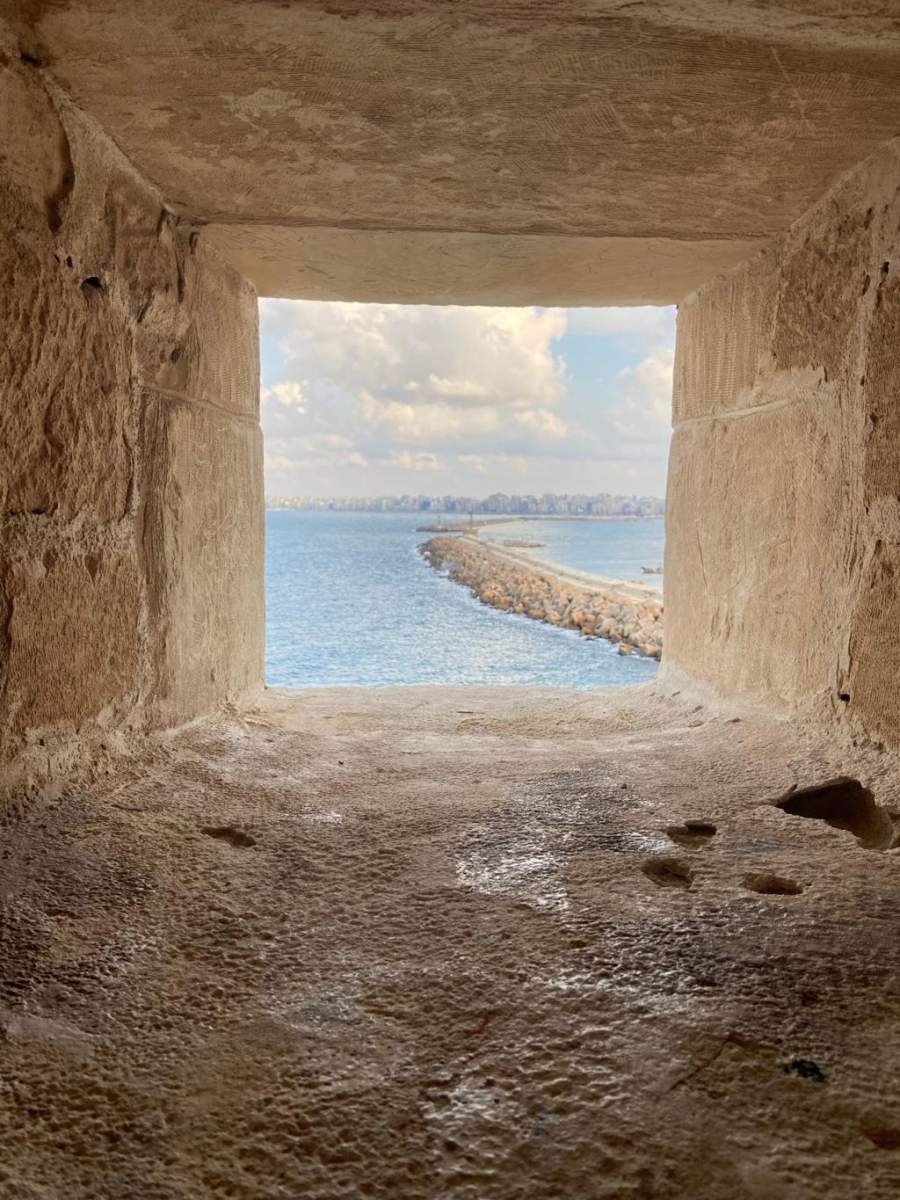
Today, one of the greatest attractions of the citadel is its panoramic view of the Mediterranean.
From the fortress walls, visitors can look across the sea in several directions.
The contrast between the pale limestone of the fortress and the blue Mediterranean creates one of Alexandria's most recognizable landscapes.
The view also helps visitors understand why the site was so strategically valuable.
The fortress is positioned directly where the ancient city met the sea.
The Underwater Archaeology Around Qaitbay
The waters around the citadel are among the most fascinating underwater archaeological areas in Alexandria.
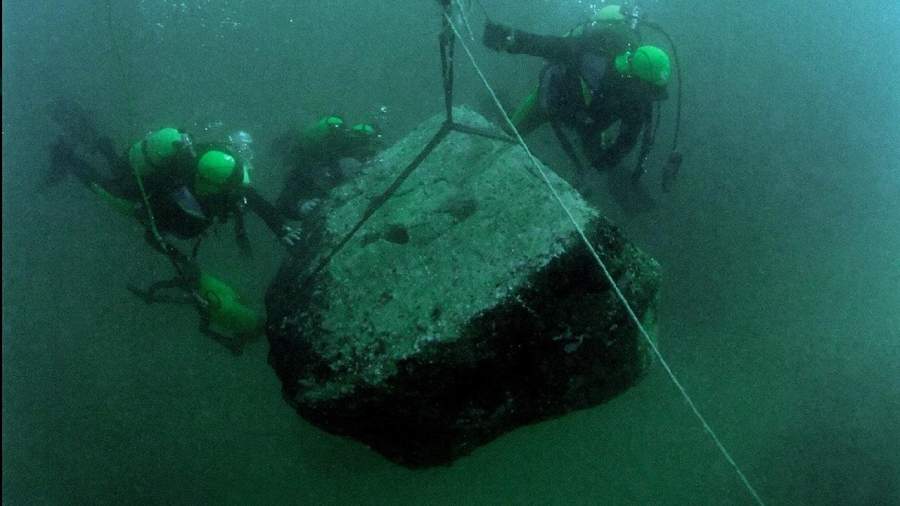
According to the Egyptian Ministry of Tourism and Antiquities, archaeological work at the Qaitbay Fort underwater site began in 1994.
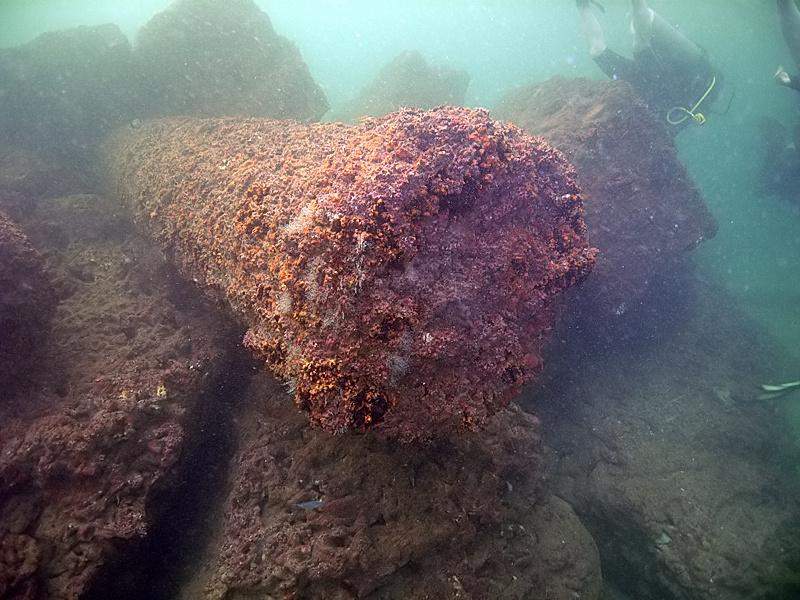
More than 3,000 architectural objects have been discovered, including:
- Columns
- Statues
- Bases
- Capitals
- Architectural blocks
The ministry also reports the identification of remains from three ancient ships, with surviving cargo, dating from approximately the 3rd century BC to the 7th century AD.
Some of the largest stone pieces weigh more than 20 tons.
Their arrangement underwater has helped researchers investigate the remains of structures that once stood around ancient Alexandria's harbor.
Evidence of the Ancient Lighthouse Underwater
The underwater archaeological site also contains remains believed to be associated with the ancient Pharos Lighthouse and its island.
The Ministry of Tourism and Antiquities notes that many massive pieces weighing more than 20 tons are arranged along a line extending northward from the citadel, supporting the interpretation that they fell from a large or high structure.
These discoveries are important because very little of the lighthouse remains standing above water today.
The underwater archaeology around Qaitbay therefore provides one of the best opportunities to study the physical remains of the legendary Pharos.
The Citadel Through Later History
Qaitbay Citadel continued to attract attention because of its strategic location.
Over the centuries, Alexandria's rulers modified and maintained its defenses.
The fortress remained part of the city's coastal defense system as military technology changed.
It was also subjected to conservation and enlargement operations over time.
The Egyptian Ministry of Tourism and Antiquities notes that significant conservation work took place in 2003.
The survival of the fortress today is therefore the result not only of its original construction but also of repeated maintenance and restoration.
The Qaitbay Visitor Center
A visitor center was recently inaugurated inside one of the halls of the fortress's main tower.
According to the Egyptian Ministry of Tourism and Antiquities, the center was created in cooperation with the French Center for Alexandrian Studies.
Its displays provide information about several archaeological features associated with ancient Alexandria, including:
- The Royal Port
- Timonium
- Antirodos Island
- Sea docks
- Ancient shipyards
- The development of Alexandria's defensive fortifications
- The ancient lighthouse
The center includes nine bilingual Arabic-English information panels, maps, diagrams, and a film about the ancient lighthouse site.
This makes the visit more informative for travelers who want to understand the history of the site rather than simply photograph the fortress.
Qaitbay and Ancient Alexandria
The citadel stands at the edge of a city with a history stretching back more than two thousand years.
Alexandria was founded by Alexander the Great in 331 BC and became the capital of Ptolemaic Egypt.
The city later flourished under Roman and Byzantine rule.
Its ancient landscape included:
- The Pharos Lighthouse
- The Great Library
- Royal palaces
- Temples
- Theaters
- Harbors
- Monumental avenues
- Necropolises
UNESCO describes ancient Alexandria as a major Mediterranean metropolis influenced by both Egyptian and Hellenistic traditions.
Qaitbay Citadel represents a much later chapter in that history, but its location connects it directly with the ancient city.
Qaitbay Citadel and the Pharos Lighthouse
The relationship between the two monuments is perhaps the most compelling reason to visit.
The Pharos Lighthouse was built to help guide ships.
The Qaitbay Citadel was built to defend the city.
Both structures occupied the same strategic point.
The lighthouse represented Alexandria's maritime importance during antiquity.
The fortress represented the city's military importance during the Mamluk period.
Today, only the fortress remains above the water.
Yet beneath and around it, archaeological discoveries continue to reveal traces of the ancient lighthouse.
This creates a fascinating physical connection between two very different eras of Alexandria.
What to See Inside Qaitbay Citadel
A visit to the fortress can include several architectural and historical highlights.
The Main Tower
The three-story central defensive structure is the most imposing part of the fortress.
Courtyard
The central courtyard provides access to various parts of the complex.
Defensive Towers
The semi-circular corner towers were designed to strengthen the fortress's defenses.
Barracks
Rooms within the fortress were used to house soldiers.
Water Tank
The fortress included a water supply system for soldiers and horses.
Visitor Center
The recently opened center explains the archaeological and defensive history of the area.
Mediterranean Walls
The exterior walls offer panoramic views over Alexandria's harbor and the Mediterranean.
Nearby Attractions
The Citadel of Qaitbay is located near several important attractions, making it easy to include in an Alexandria sightseeing itinerary.
Bibliotheca Alexandrina
The modern Library of Alexandria and a major cultural and architectural landmark.
Alexandria National Museum
A museum documenting the history of Alexandria and Egypt.
Graeco-Roman Museum
Dedicated to Egypt's Greek and Roman heritage.
Catacombs of Kom El Shoqafa
An underground necropolis famous for its combination of Egyptian, Greek, and Roman traditions.
Pompey's Pillar
A massive Roman-era granite column near the ancient Serapeum.
Kom El-Dikka
An archaeological area containing Roman remains, including a theater and bath complex.
Visiting several of these attractions together provides a broader picture of Alexandria's long history.
Visiting the Citadel of Qaitbay
The Egyptian Ministry of Tourism and Antiquities currently lists Qaitbay Citadel as open daily from 9:00 AM to 8:00 PM.
The current listed admission prices are:
- Foreign adults: EGP 200
- Foreign students: EGP 100
- Egyptian adults: EGP 60
- Egyptian students: EGP 30
These prices and opening hours can change, so checking the official Ministry of Tourism and Antiquities page before your visit is recommended.
Official Qaitbay Citadel information – Egyptian Ministry of Tourism and Antiquities
Best Time to Visit
Because the citadel is located directly beside the Mediterranean, the experience can be especially enjoyable during the cooler months.
Morning visits provide comfortable conditions for walking around the fortress and exploring its interior.
Late afternoon can be particularly attractive for photography, as the changing light emphasizes the limestone walls and Mediterranean horizon.
If you want to combine Qaitbay Citadel with several other Alexandria attractions, starting earlier in the day can give you more time to explore the city.
How Long Should You Spend There?
A visit of approximately one to two hours can allow enough time to explore the main tower, courtyard, defensive areas, visitor center, and viewpoints.
If you are particularly interested in Alexandria's ancient history and want to study the architecture and exhibits carefully, you may want to stay longer.
The surrounding waterfront is also worth exploring after leaving the fortress.
Why Visit Qaitbay Citadel?
The Citadel of Qaitbay is special because it connects three different stories in one location.
Ancient Alexandria
The site of the legendary Pharos Lighthouse.
Medieval Alexandria
The powerful Mamluk fortress built by Sultan Qaitbay.
Modern Alexandria
A major Mediterranean city where archaeological remains, museums, and modern life exist side by side.
Few places in Alexandria make this historical layering so easy to see.
You can stand inside a 15th-century fortress while looking across the Mediterranean toward the location of an ancient wonder of the world.
Final Thoughts
The Citadel of Qaitbay is more than a medieval fortress.
It is a monument built on top of one of the most famous archaeological locations in the world.
Constructed between 1477 and 1479 by Sultan Qaitbay, the fortress protected Alexandria's coast and occupied the strategic site of the ancient Pharos Lighthouse.
Its massive limestone walls, defensive towers, central courtyard, military rooms, and spectacular Mediterranean views make it one of Alexandria's defining landmarks.
But its greatest significance lies beneath and around it.
Underwater archaeological discoveries have revealed thousands of architectural pieces and remains associated with ancient Alexandria, including material believed to have fallen from the Pharos Lighthouse.
For travelers exploring Alexandria, Qaitbay Citadel offers a rare opportunity to experience Egyptian, Greco-Roman, and Mamluk history in a single location.
It is a place where the story of the ancient lighthouse meets the story of the medieval fortress—and where the Mediterranean continues to surround both.
Post a comment