Catacombs of Kom El Shoqafa: Alexandria’s Underground World of Ancient Egypt and Rome
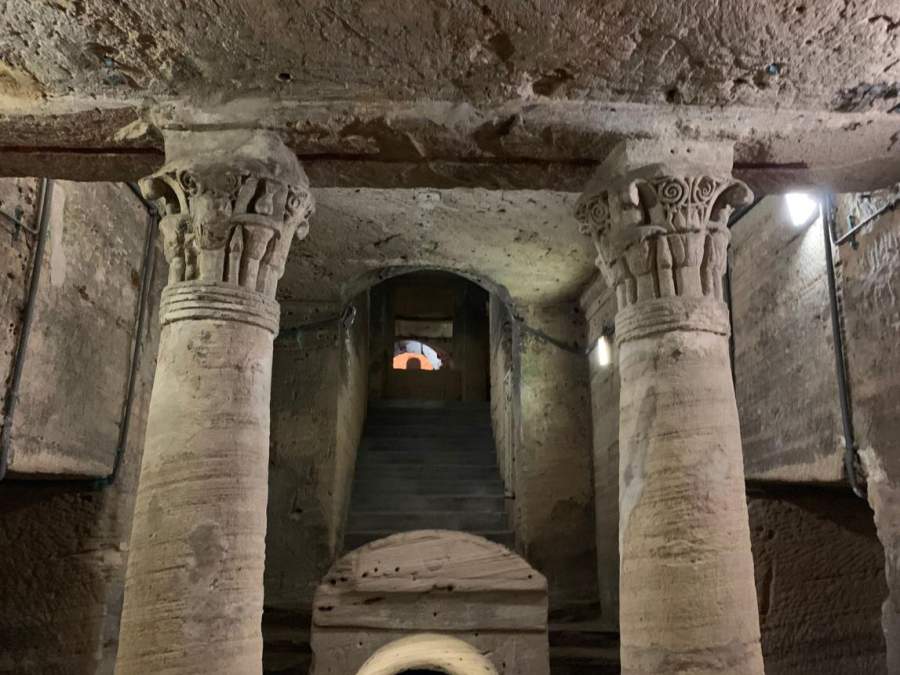
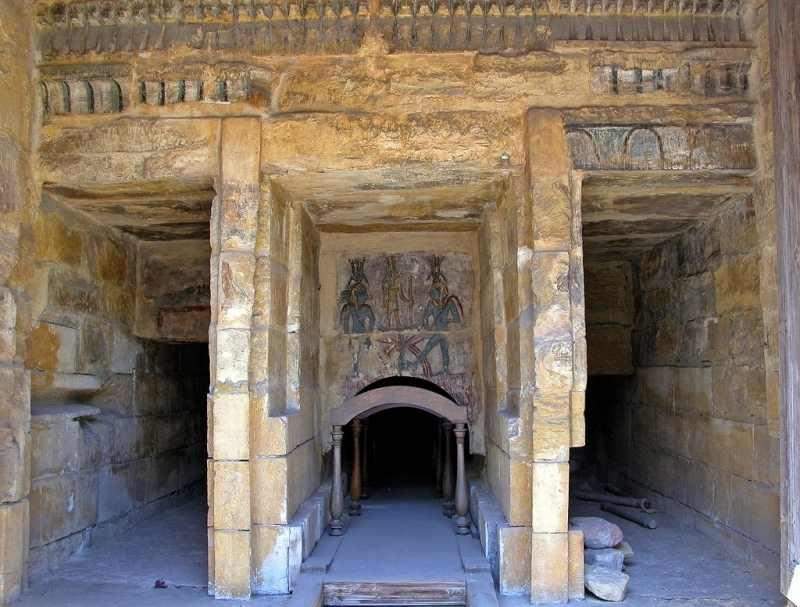
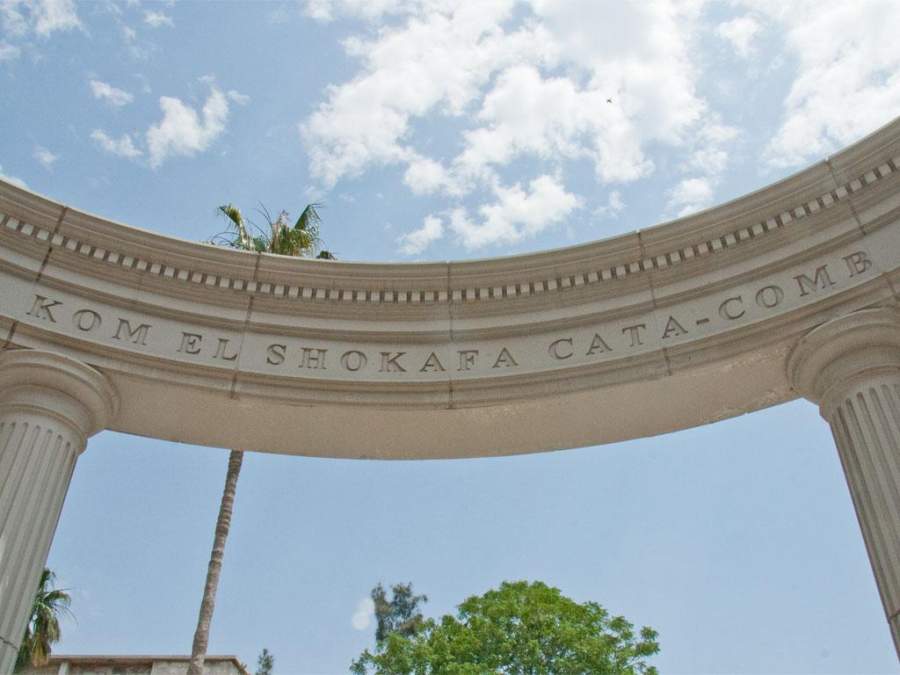
The Catacombs of Kom El Shoqafa are among the most fascinating archaeological monuments in Alexandria, Egypt. Hidden beneath the modern city, this extraordinary underground necropolis combines ancient Egyptian religious traditions with Greek and Roman architecture and artistic styles.
The name Kom El Shoqafa is commonly translated as “Mound of Shards”, a reference traditionally associated with the pottery fragments found around the site.
Dating mainly from the late 1st century AD or early 2nd century AD, the catacombs were used for several centuries and became one of Alexandria's most important surviving Roman-period funerary complexes. UNESCO describes the site as an exceptional example of the fusion of Egyptian and Greco-Roman artistic traditions.
What makes Kom El Shoqafa particularly special is not simply its underground architecture.
It is the remarkable way that different cultures appear together in one monument.
Egyptian gods can appear alongside Roman architectural elements. Classical decorative motifs coexist with ancient Egyptian funerary imagery. The result is a monument that reflects the multicultural character of Greco-Roman Alexandria.
Where Are the Catacombs of Kom El Shoqafa?
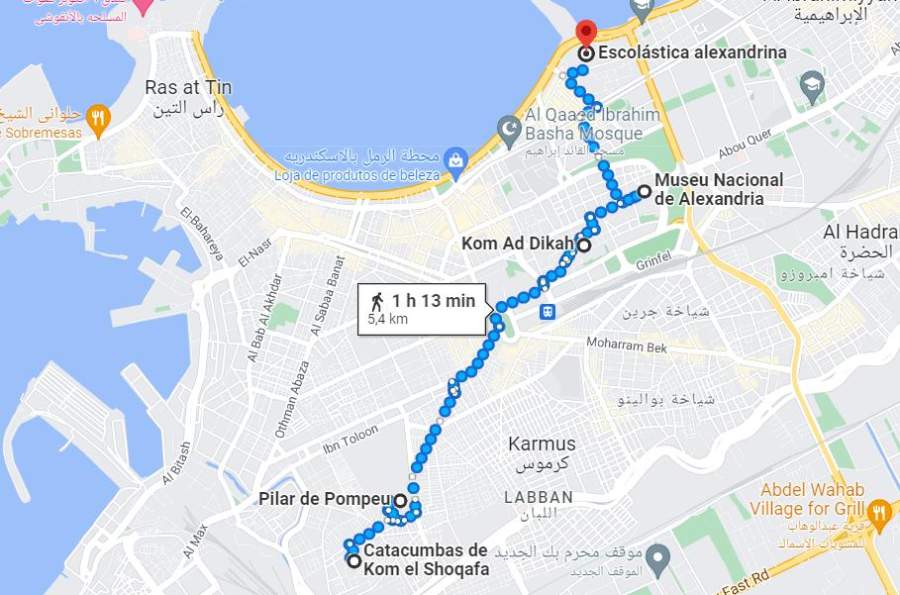
The catacombs are located in Alexandria, near the ancient Serapeum and the famous monument known today as Pompey's Pillar.
Alexandria was founded by Alexander the Great in 331 BC and later became the capital of Ptolemaic Egypt. Under the Ptolemies and subsequently the Romans, the city became one of the major cultural and commercial centers of the Mediterranean.
The Catacombs of Kom El Shoqafa formed part of the ancient city's extensive necropolises.
Unlike monumental temples built above ground, the catacombs were carved into the rock beneath the surface, creating a hidden funerary world of stairways, chambers, galleries, burial niches, and decorated rooms.
When Were the Catacombs Built?
The main complex dates from approximately the end of the 1st century AD or beginning of the 2nd century AD and continued to be used until approximately the 4th century AD.
This means the catacombs belong to a period when Alexandria was already a deeply multicultural city.
Greek traditions had shaped the city since its foundation.
Egyptian religious traditions remained powerful.
Roman political and architectural influence became increasingly important after Egypt became part of the Roman Empire in 30 BC.
Kom El Shoqafa reflects this historical mixture directly through its architecture and decoration.
An Underground Necropolis
The complex was not simply a single tomb.
It developed into a larger underground necropolis containing multiple burial areas.
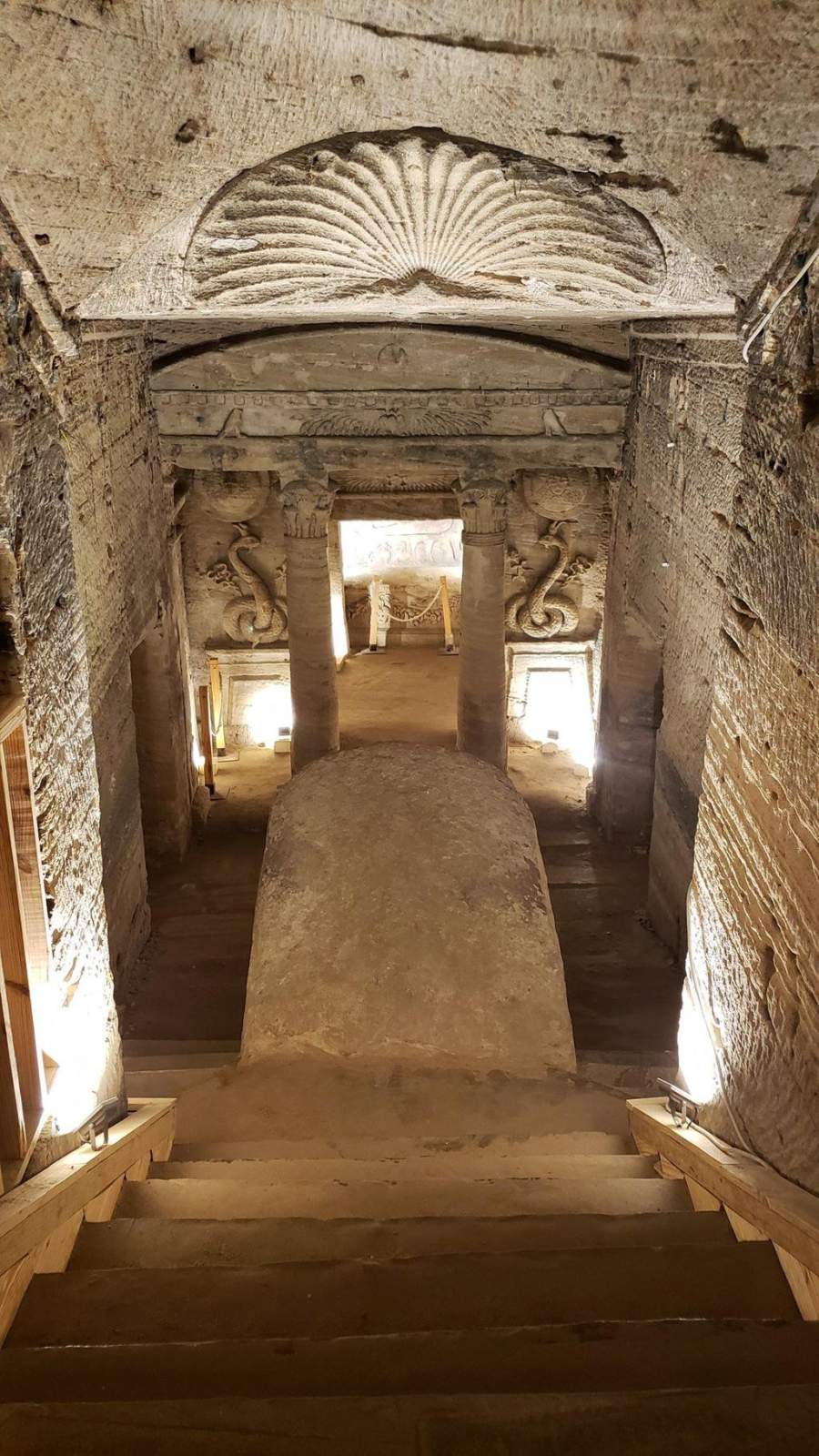
According to UNESCO's description, the principal tomb is approximately 20 meters deep and consists of three underground levels. A spiral staircase leads downward into the complex, connecting a rotunda, a triclinium, and galleries containing numerous burial niches known as loculi.
The layout creates a fascinating journey.
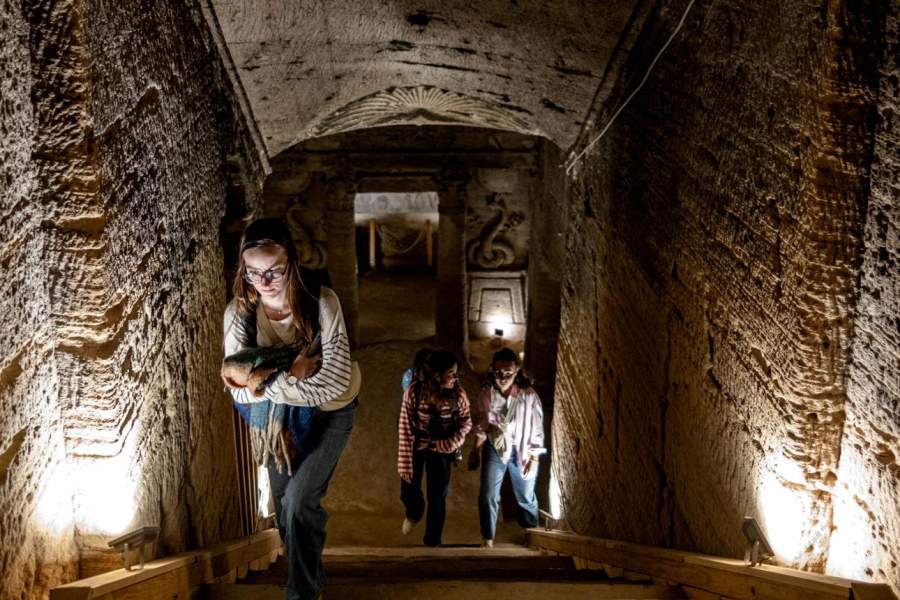
Visitors descend gradually from the surface into the underground world, moving through spaces that were designed around the rituals and practical needs of ancient burial.
The Spiral Staircase
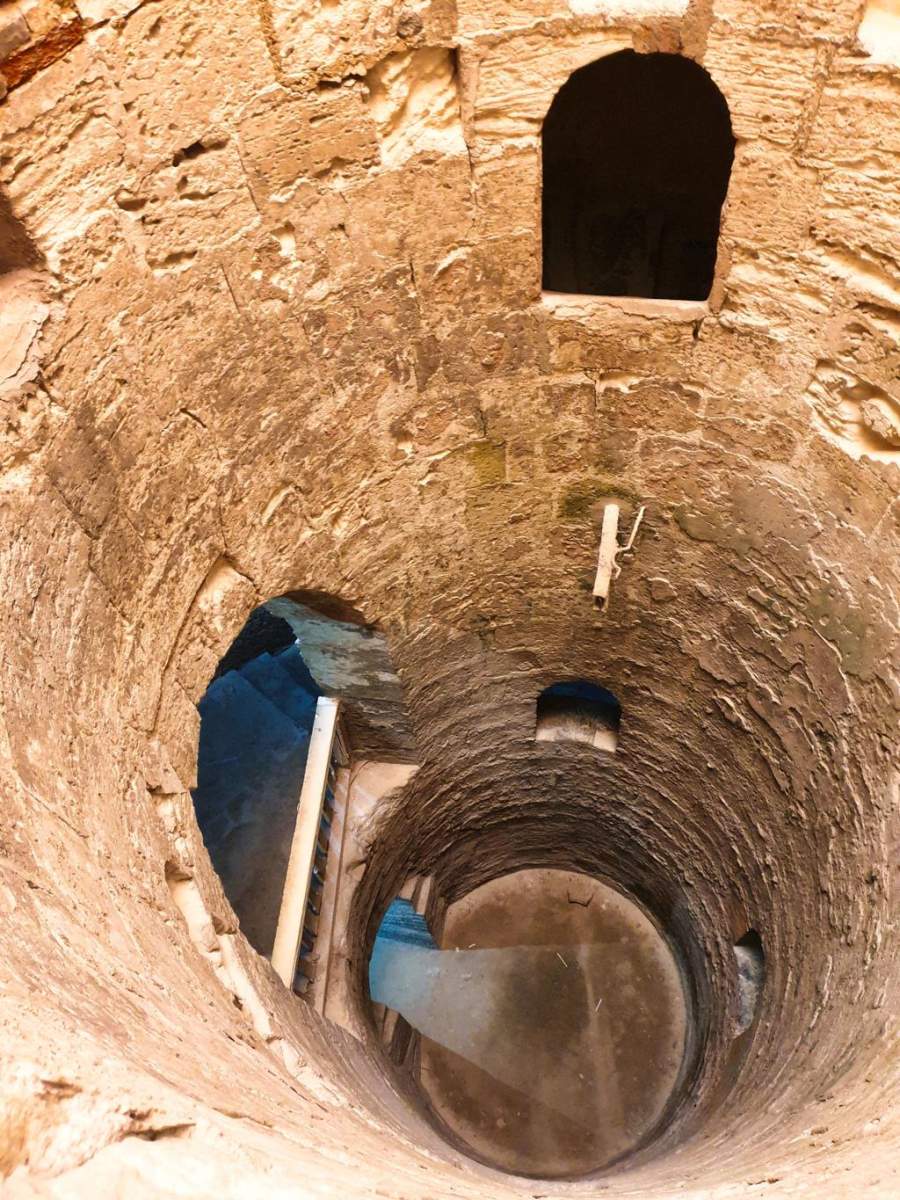
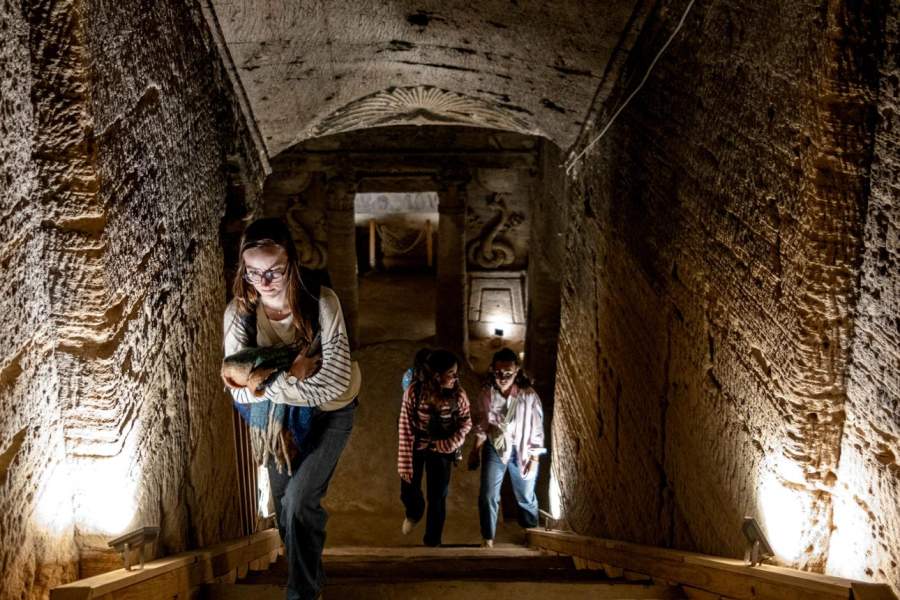
One of the first remarkable features encountered is the spiral staircase.
The staircase descends around a central shaft, allowing access to the lower levels.
The design is particularly striking because visitors gradually move from the bright world above ground into the darker underground chambers.
The staircase is therefore both a practical architectural feature and an important part of the experience of the monument.
As you descend, the modern city of Alexandria seems to disappear, replaced by stone walls, ancient carvings, and underground chambers.
The Rotunda
At the bottom of the staircase is a circular space known as the rotunda.
From here, different parts of the funerary complex can be accessed.
The rotunda is one of the architectural features that gives the catacombs their distinctive appearance.
It also acts as a transition between the staircase and the principal burial areas.
The architecture demonstrates how the builders adapted a subterranean environment to create an organized funerary complex.
The Triclinium: A Banquet for the Dead
One of the most interesting spaces in Kom El Shoqafa is the triclinium.
A triclinium was a dining or banquet room.
At Kom El Shoqafa, the space was associated with funerary banquets held in honor of the deceased. UNESCO specifically identifies the triclinium as part of the underground complex.
Funerary meals were an important part of ancient Mediterranean traditions.
Families and communities could gather to remember the deceased, make offerings, and participate in rituals.
The presence of a banquet room inside the catacombs therefore gives us an insight into the social dimension of ancient burial practices.
Death was not necessarily treated as an isolated event.
It could involve family, food, ritual, remembrance, and community.
The Main Burial Chamber
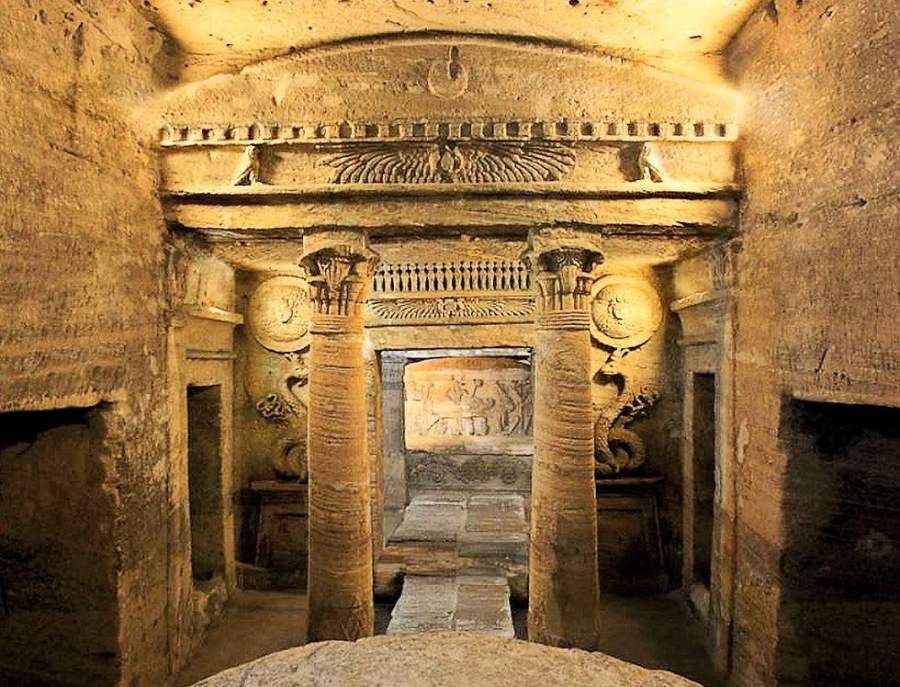
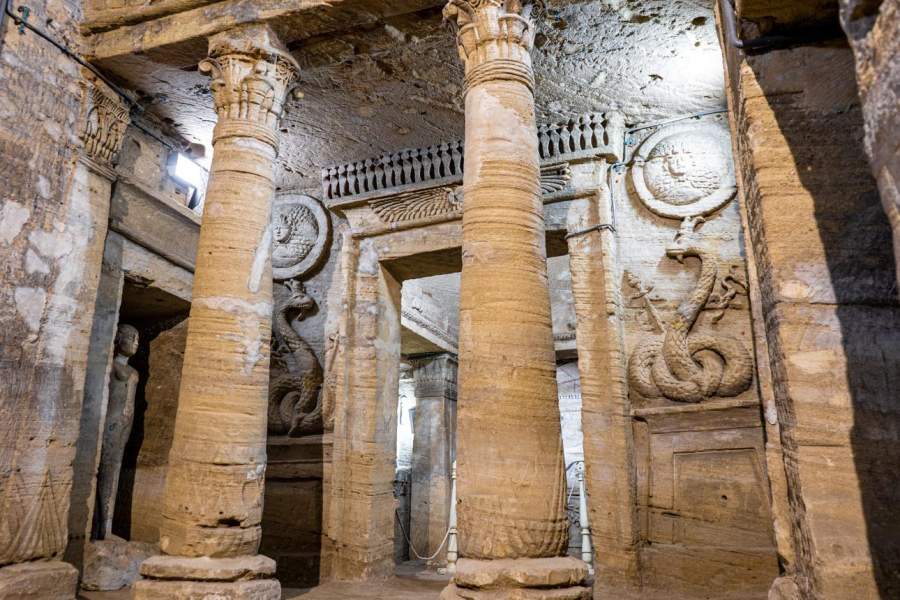
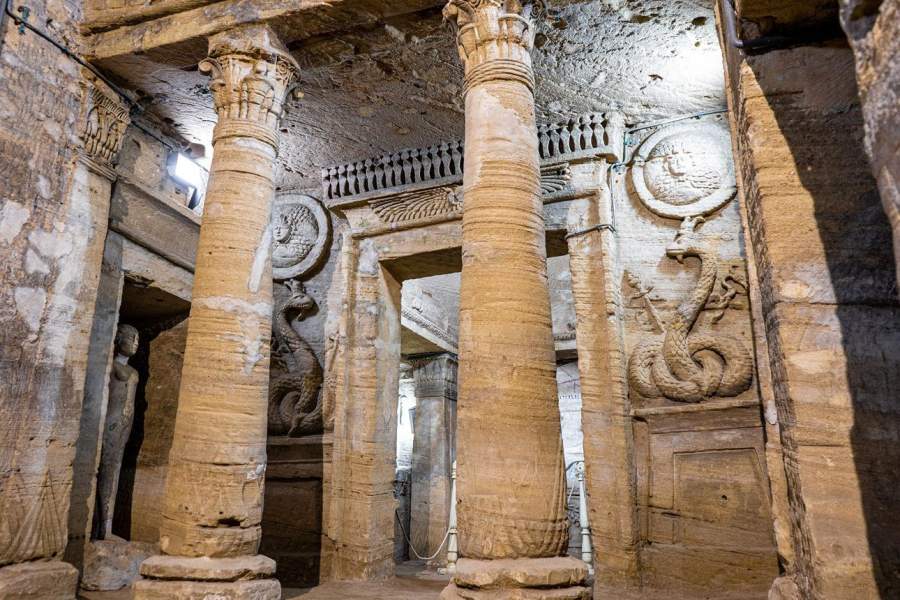
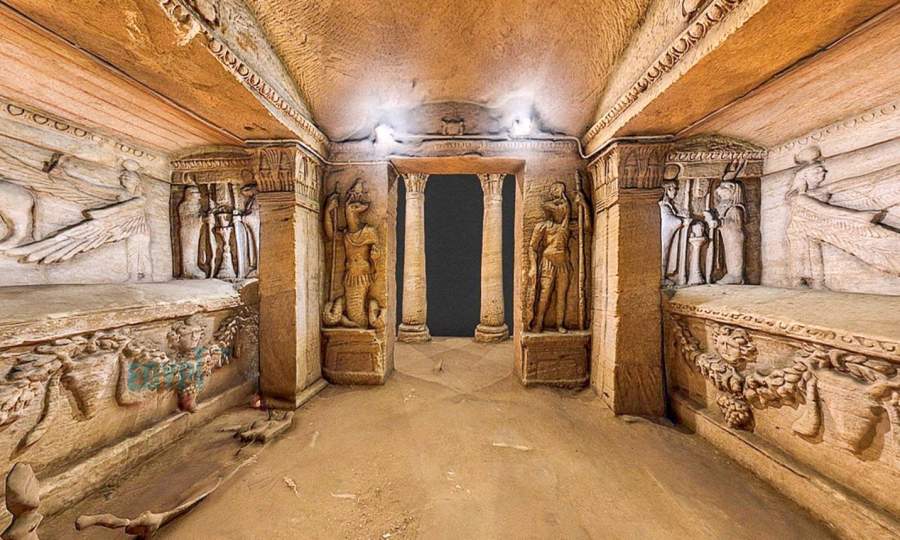
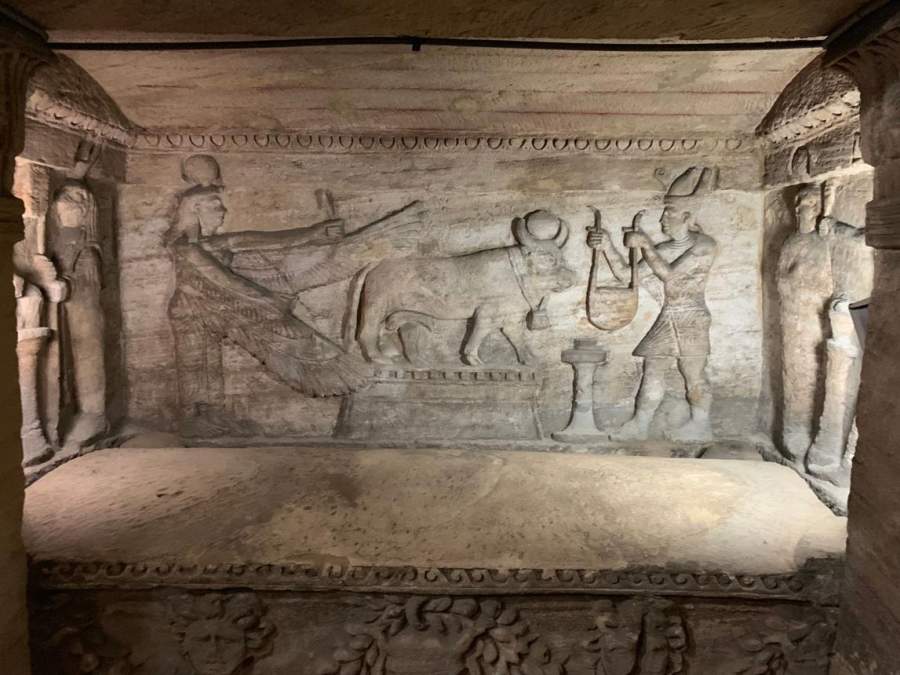
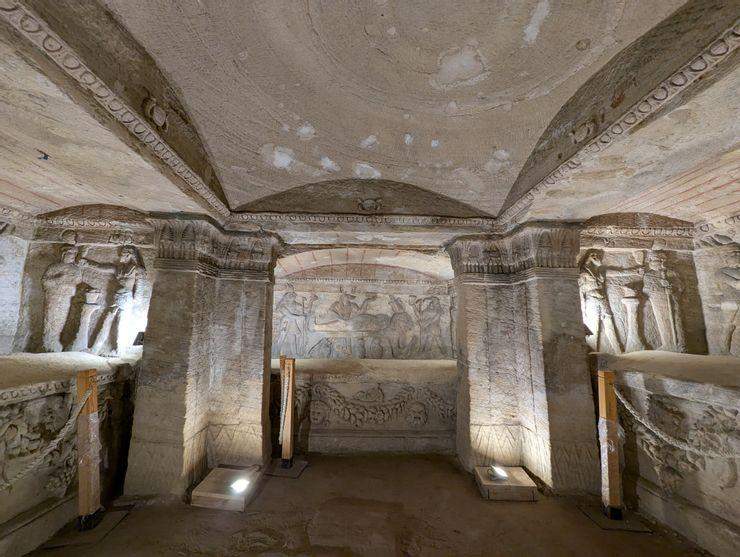
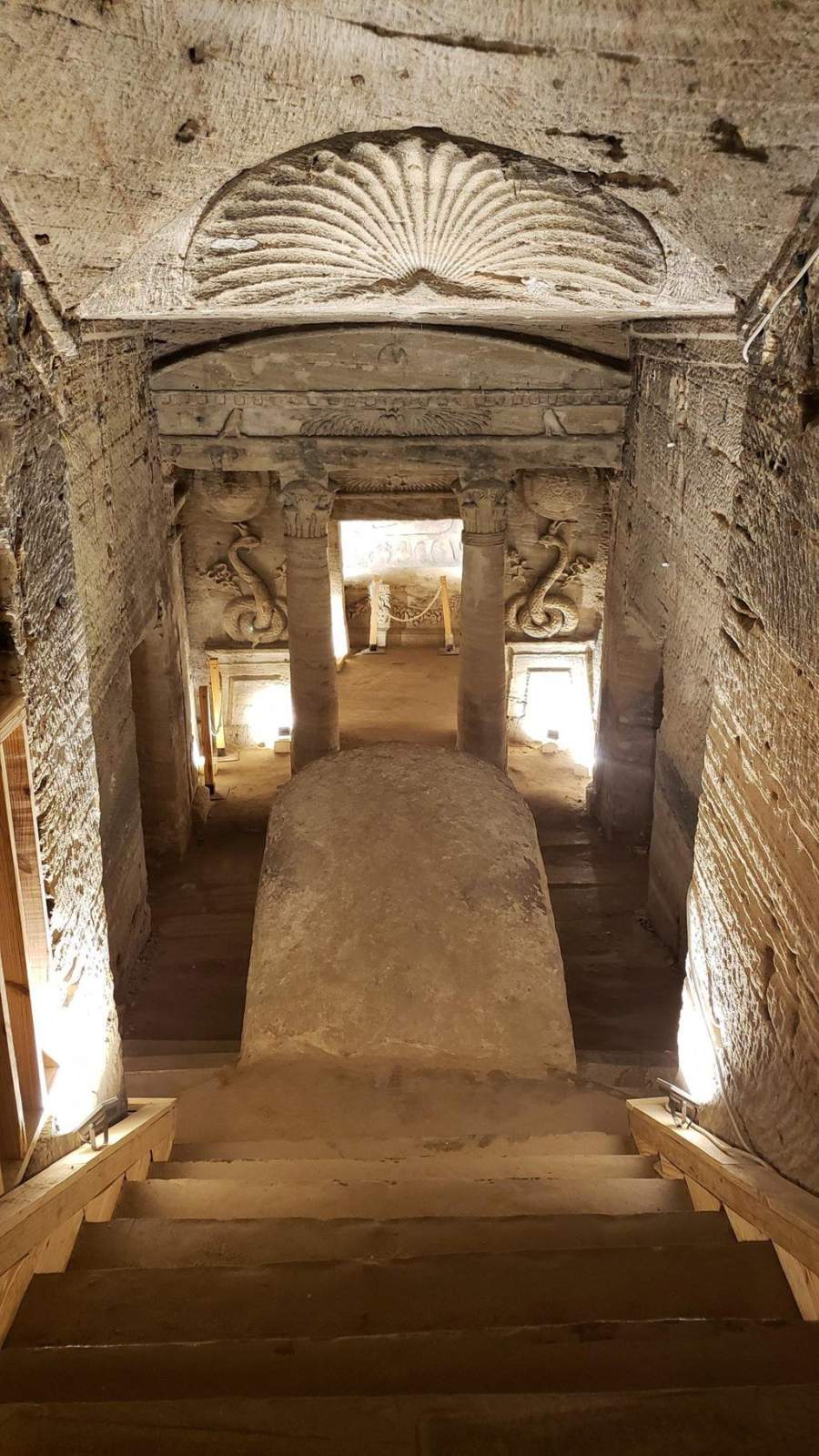
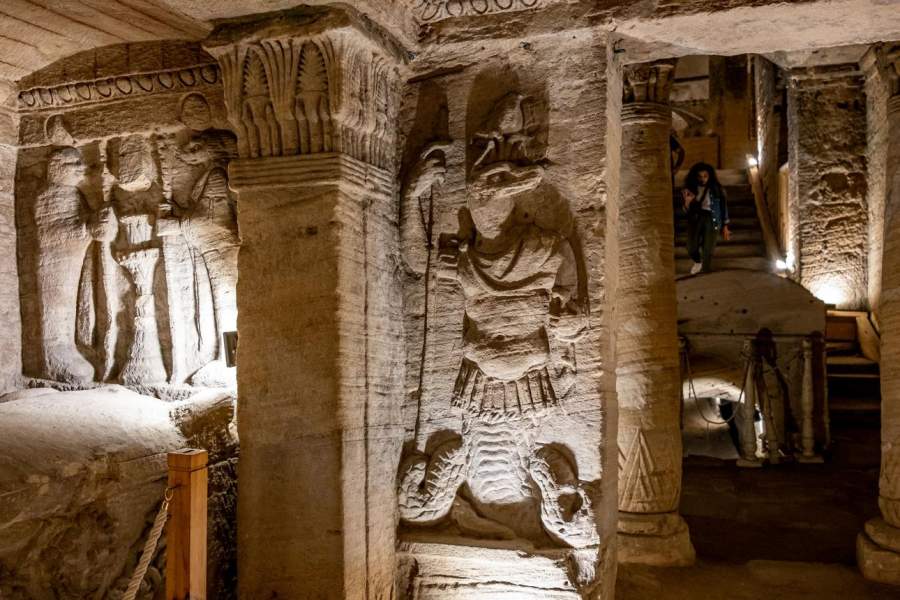
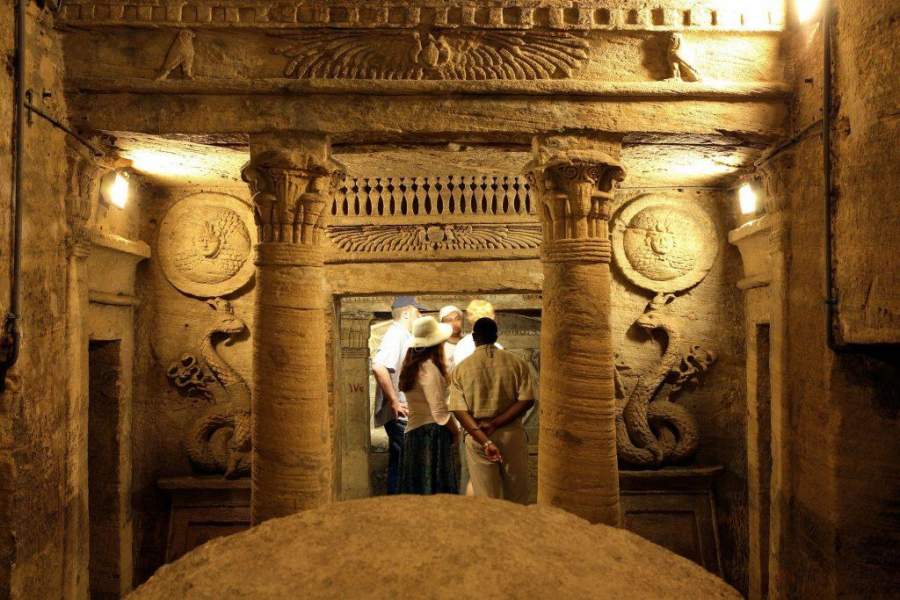
The central burial chamber is perhaps the most visually impressive part of the complex.
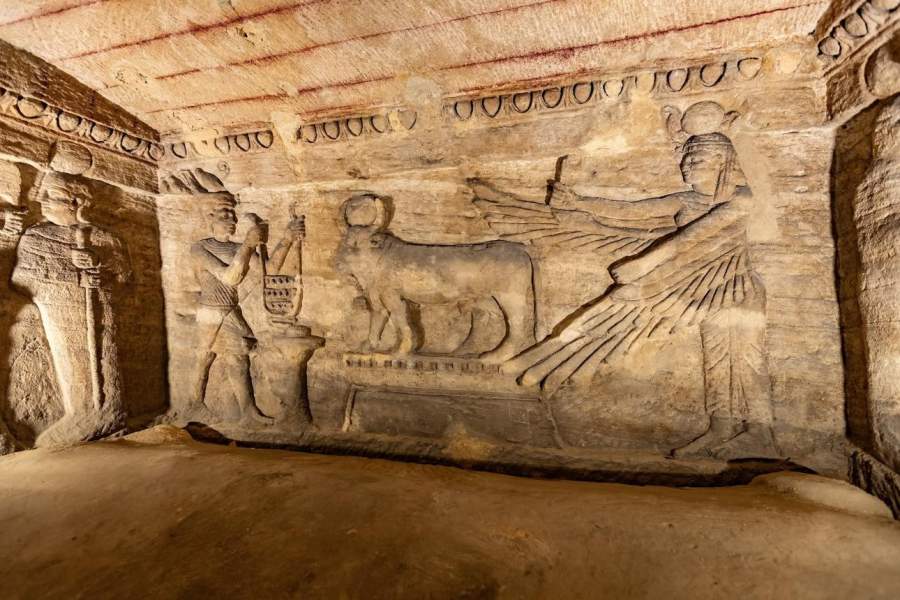
Its decoration demonstrates the extraordinary mixture of cultural traditions that defines Kom El Shoqafa.
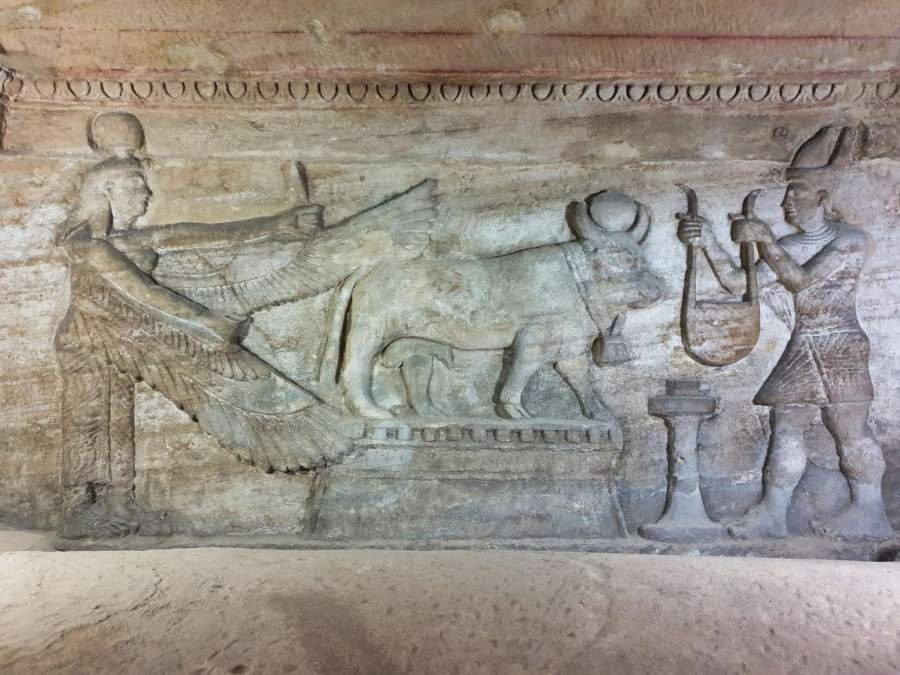
The chamber contains architectural elements that look distinctly classical, while the carved figures and religious scenes draw heavily on ancient Egyptian traditions.
This combination is not simply a modern interpretation.
The Egyptian Ministry of Tourism and Antiquities describes Kom El Shoqafa as a Roman-era necropolis in which Greek-style catacombs and triclinia coexist with paintings and reliefs that combine ancient Egyptian and Greek beliefs and artistic traditions.
The Famous Egyptian-Roman Artistic Fusion
One of the reasons historians and visitors find Kom El Shoqafa so fascinating is its syncretic art.
Imagine seeing:
Egyptian gods + Roman clothing + Greek architectural forms + Egyptian funerary symbolism
all within the same underground monument.
This was the cultural reality of Roman Alexandria.
The city was home to people from different backgrounds, and religious and artistic traditions interacted with one another.
Kom El Shoqafa provides an especially vivid example of this cultural exchange.
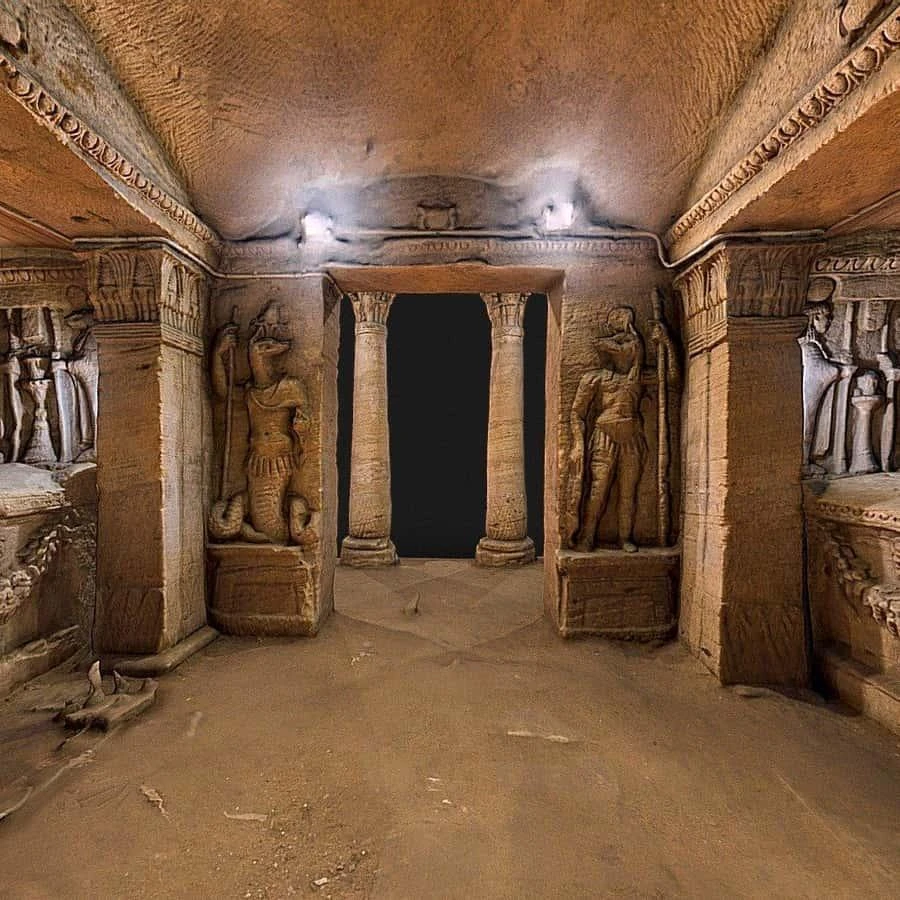
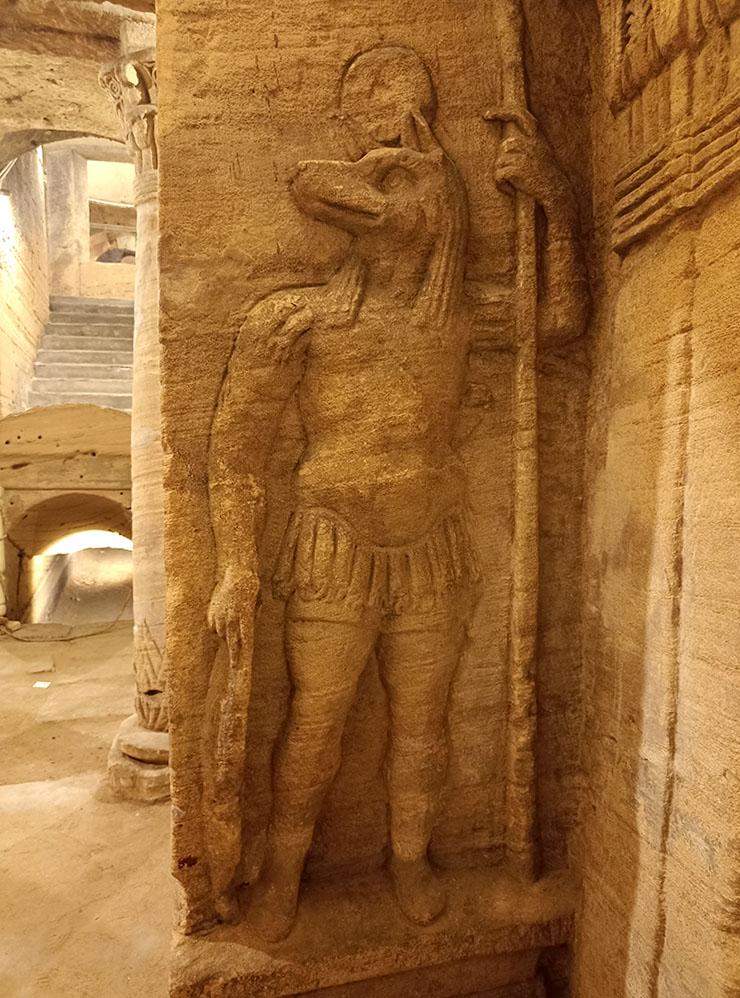
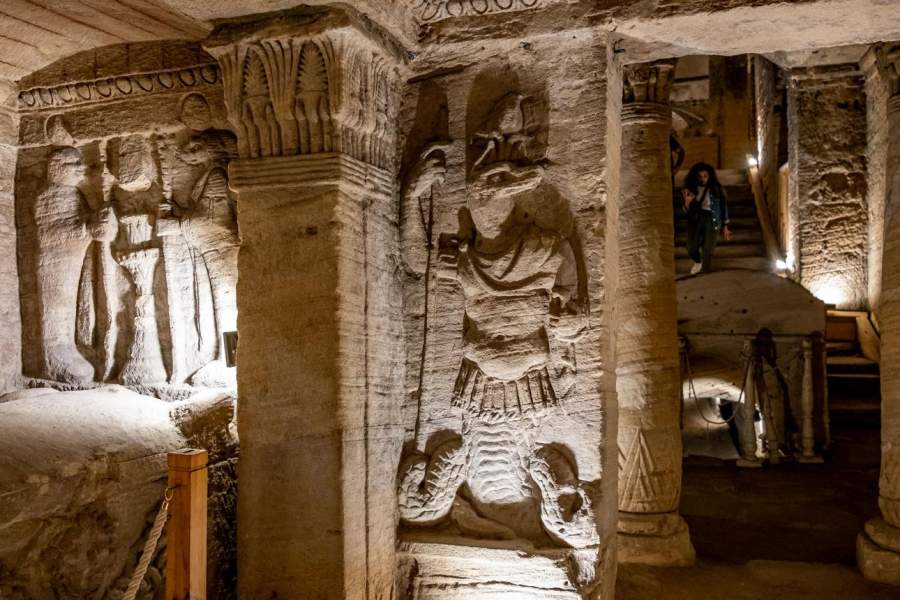
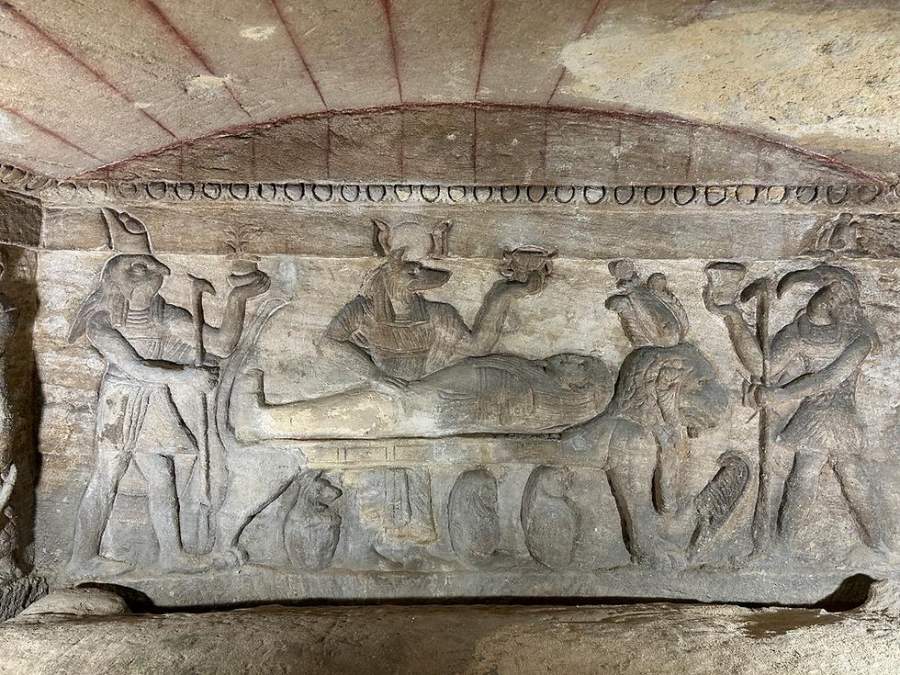
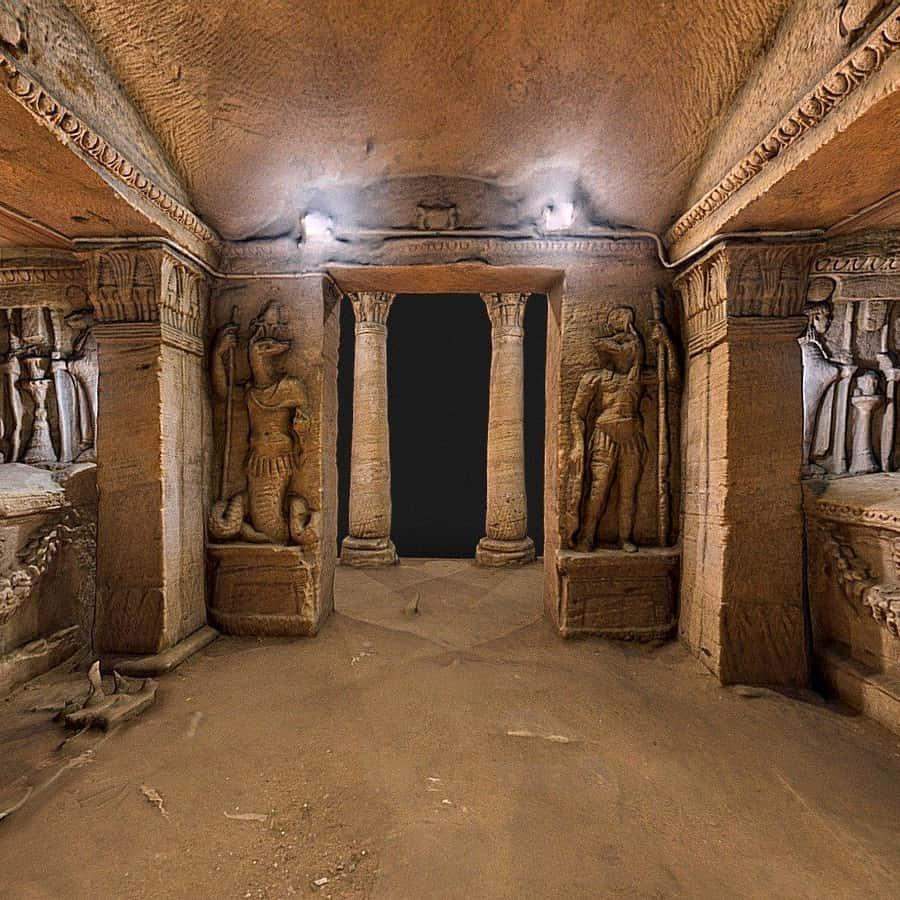
Anubis as a Roman Soldier
One of the most famous images in the catacombs is a representation of Anubis, the ancient Egyptian god associated with funerary practices and the protection of the dead.
At Kom El Shoqafa, Anubis is depicted with features that combine Egyptian religious imagery with Roman military clothing.
UNESCO specifically highlights this unusual representation, describing Anubis as dressed as a Roman legionary while retaining Egyptian religious attributes.
The image captures the essence of Kom El Shoqafa.
An ancient Egyptian deity is represented using the visual language of Roman power.
Rather than replacing Egyptian religion, Roman influence became part of the artistic vocabulary through which the ancient gods continued to be represented.
The Serpent Motifs
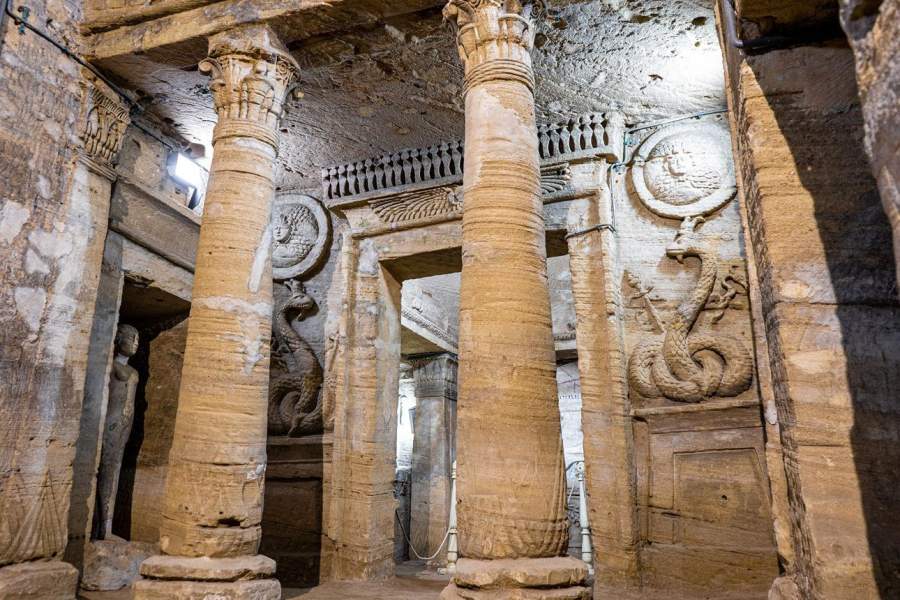
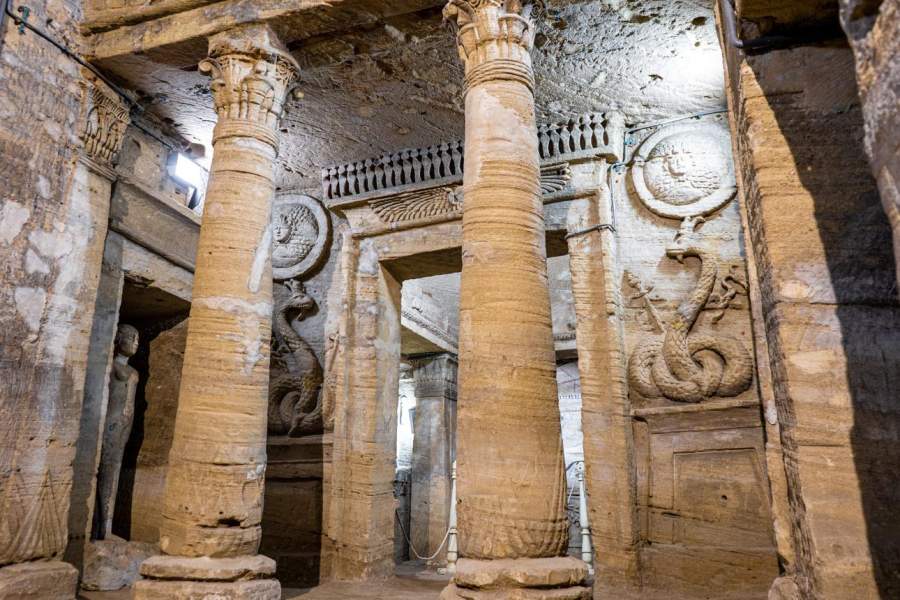
Another striking feature of the main chamber is the presence of serpent imagery.
Snakes were powerful symbols in ancient Egyptian religion, and serpent representations could be associated with protection and divine power.
At Kom El Shoqafa, serpent imagery appears alongside classical architectural elements, creating another example of the artistic mixture found throughout the complex.
The decorative program is therefore not random.
Different symbols communicate ideas about protection, death, transformation, and the afterlife.
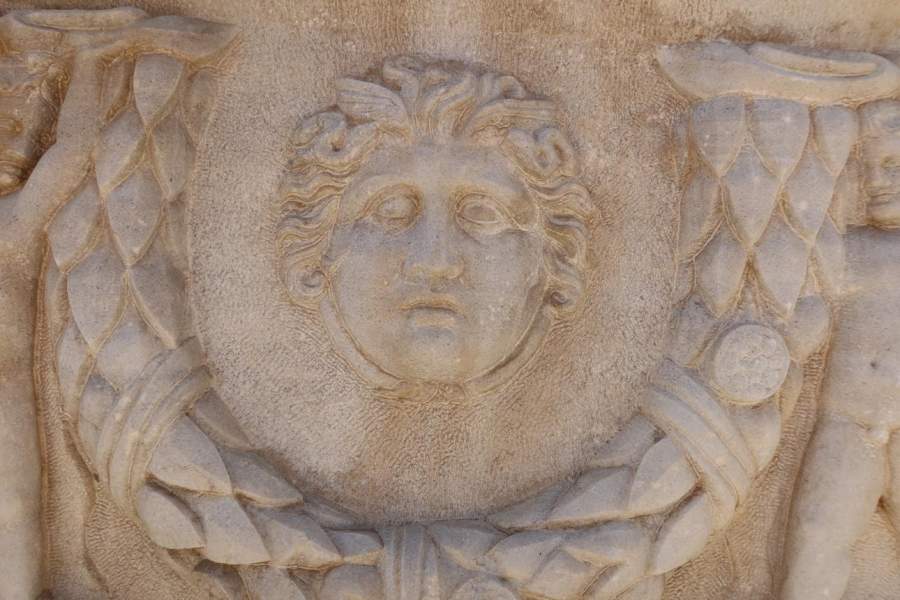
The Medusa and Classical Elements
The catacombs also contain decorative elements influenced by the Greco-Roman world.
Classical motifs such as Medusa imagery, garlands, columns, and architectural ornamentation appear alongside Egyptian religious representations.
This combination is one of the reasons Kom El Shoqafa is so valuable for understanding Alexandria's cultural history.
The monument does not fit neatly into a category such as purely Egyptian, purely Greek, or purely Roman.
Instead, it represents a world in which these traditions existed together.
The Sarcophagi
The main burial chamber contains large rock-cut sarcophagi.
Their decoration incorporates classical motifs, including floral elements and other Greco-Roman decorative forms.
Interestingly, some of the large sarcophagi are reported to have remained unused, with their lids sealed.
The presence of these monumental burial containers illustrates the importance placed on the funerary chamber even though the entire complex lies underground.
Rather than creating a modest underground grave, the builders transformed the subterranean space into an elaborate architectural environment.
The Burial Niches
Beyond the main chamber, galleries connect to numerous loculi—small burial niches carved into the walls.
These niches provided space for burials and allowed the necropolis to accommodate more individuals as its use expanded.
This is one reason the original family tomb eventually developed into something much larger.
UNESCO describes the main tomb as having probably begun as a simple family burial vault before developing into a genuine necropolis.
That evolution tells us something important about the site.
Kom El Shoqafa was not necessarily planned from the beginning as the enormous complex visitors see today.
It developed over time as burial needs expanded.
The Tigra Tomb
Near the main tomb is another important funerary monument known as the Tigra Tomb.
Although smaller than the principal complex, it is notable for its well-preserved frescoes.
UNESCO describes the decoration as belonging to a later style and emphasizes the way Egyptian elements are combined with Greco-Roman symbols.
The Tigra Tomb therefore provides another example of the cultural mixture characteristic of Alexandria's western necropolises.
Why Is Kom El Shoqafa Important?
The Catacombs of Kom El Shoqafa are important for several reasons.
1. They preserve Alexandria's multicultural history
The monument reflects the interaction of Egyptian, Greek, and Roman traditions.
2. They reveal ancient funerary practices
The burial chambers, loculi, triclinium, and religious decoration provide evidence about how people treated and remembered their dead.
3. They demonstrate architectural adaptation
The builders transformed underground rock into a complex architectural environment.
4. They preserve religious syncretism
Egyptian gods and beliefs continued to appear while adopting elements from the Greco-Roman world.
5. They represent Roman Alexandria
The catacombs provide a window into the cultural world that developed after Egypt became part of the Roman Empire.
The Egyptian Ministry of Tourism and Antiquities identifies Kom El Shoqafa as the most well-known surviving Roman-era necropolis in Alexandria.
Kom El Shoqafa and Ancient Alexandria
To understand the catacombs, it helps to understand the city around them.
Alexandria was founded as a Greek city but developed into a multicultural metropolis.
The Ptolemaic rulers adopted and interacted with Egyptian religious traditions while maintaining strong Greek cultural connections.
Later, Roman rule added another layer.
This created an environment in which artistic and religious traditions could merge.
The catacombs are therefore almost like a stone record of Alexandria's cultural identity.
The underground architecture tells the story of people who lived between different cultural worlds.
Kom El Shoqafa and Pompey's Pillar
The catacombs are located close to the famous Serapeum and Pompey's Pillar.
Despite its popular name, Pompey's Pillar was not actually erected for Pompey. The monument is associated with the Roman emperor Diocletian and dates to the late 3rd century AD.
This makes the area particularly interesting for visitors because several important remains of Roman Alexandria are concentrated nearby.
A visit to Kom El Shoqafa can therefore be combined with other archaeological attractions in the area.
Other Places to Visit in Alexandria
After exploring the catacombs, visitors can continue to other important Alexandria attractions.
Pompey's Pillar
A monumental granite column standing near the ancient Serapeum.
Serapeum
The ancient sanctuary dedicated to Serapis, once one of Alexandria's major religious centers.
Kom El-Dikka
An archaeological complex containing a Roman theater or odeion, baths, lecture rooms, houses with mosaics, and workshops.
Bibliotheca Alexandrina
The modern library complex built near the site traditionally associated with the ancient Library of Alexandria.
Qaitbay Citadel
A famous medieval fortress overlooking the Mediterranean and associated with the location of Alexandria's ancient Pharos lighthouse.
Combining these attractions allows visitors to experience several different chapters of Alexandria's history in a single day.
Visiting the Catacombs of Kom El Shoqafa
The catacombs are an archaeological site in modern Alexandria and are accessed through an underground entrance.
Because the monument is subterranean, visitors should be prepared for stairs, uneven surfaces, and enclosed spaces.
The underground environment can also feel very different from Alexandria's bright Mediterranean streets above.
For current opening hours, ticket prices, and visitor regulations, it is best to check the Egyptian Ministry of Tourism and Antiquities before visiting, as these details can change. The ministry's Alexandria archaeological-sites page confirms Kom El Shoqafa as one of the city's principal surviving Roman-era monuments.
Best Time to Visit
Alexandria has a Mediterranean climate, so the city can be enjoyable throughout much of the year.
For sightseeing, spring and autumn can offer comfortable conditions for exploring several archaeological sites in one day.
The catacombs themselves are underground, which means the temperature and atmosphere can feel different from the weather outside.
If you are planning to visit multiple attractions, starting early can help you avoid the busiest periods and leave more time for the rest of Alexandria.
How Long Should You Spend at Kom El Shoqafa?
The catacombs are not an enormous above-ground complex, but they contain many details worth examining.
Allowing approximately one to two hours can give visitors enough time to descend through the complex, explore the main chambers, examine the reliefs and architectural details, and understand the different burial areas.
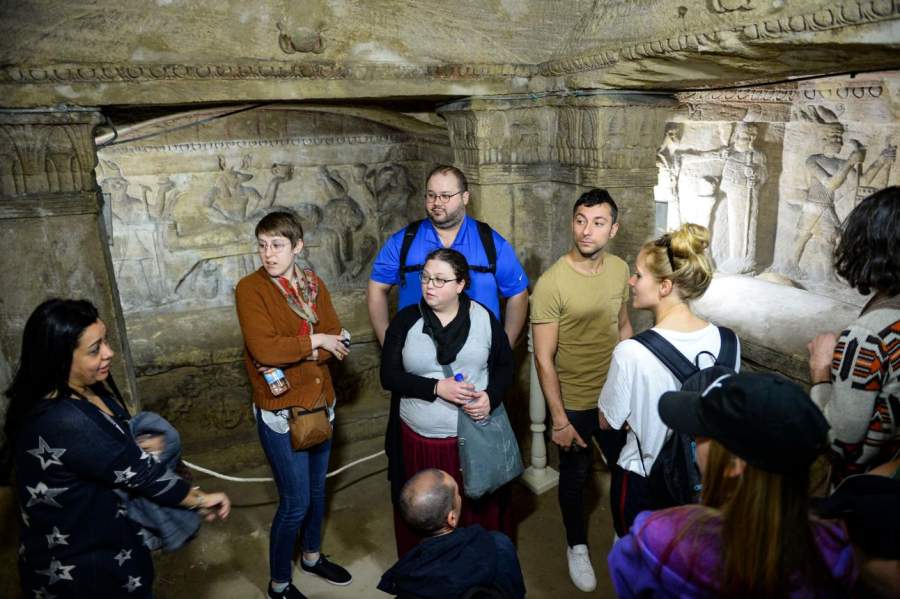
A knowledgeable guide can be particularly helpful because many of the site's most interesting features are connected to Egyptian mythology and Greco-Roman symbolism.
The Mystery of Kom El Shoqafa
Part of the fascination of the catacombs comes from their atmosphere.
You descend underground.
The light becomes darker.
The modern city disappears.
Then suddenly you encounter a chamber decorated with Egyptian gods, Roman-style architecture, classical motifs, and funerary imagery.
It feels almost like entering a hidden world beneath Alexandria.
And that feeling is appropriate because the catacombs preserve a part of the ancient city that would otherwise be difficult to understand from the surviving monuments above ground.
Final Thoughts
The Catacombs of Kom El Shoqafa are one of Alexandria's most extraordinary archaeological treasures.
They are not simply underground tombs.
They are a remarkable record of a city where Egyptian, Greek, and Roman cultures interacted.
The spiral staircase, rotunda, triclinium, burial galleries, rock-cut sarcophagi, religious reliefs, and unusual representations of Egyptian gods all contribute to the site's unique character.
Perhaps the most fascinating feature is the way the monument demonstrates cultural fusion.
An Egyptian god can appear dressed as a Roman soldier.
Classical architectural forms can frame Egyptian religious imagery.
A Roman-era underground necropolis can preserve traditions that had existed in Egypt for thousands of years.
That is what makes Kom El Shoqafa so important.
It is a monument to Alexandria's multicultural past, carved deep beneath the modern city.
Post a comment