Bibliotheca Alexandrina: The Modern Revival of the Ancient Library of Alexandria
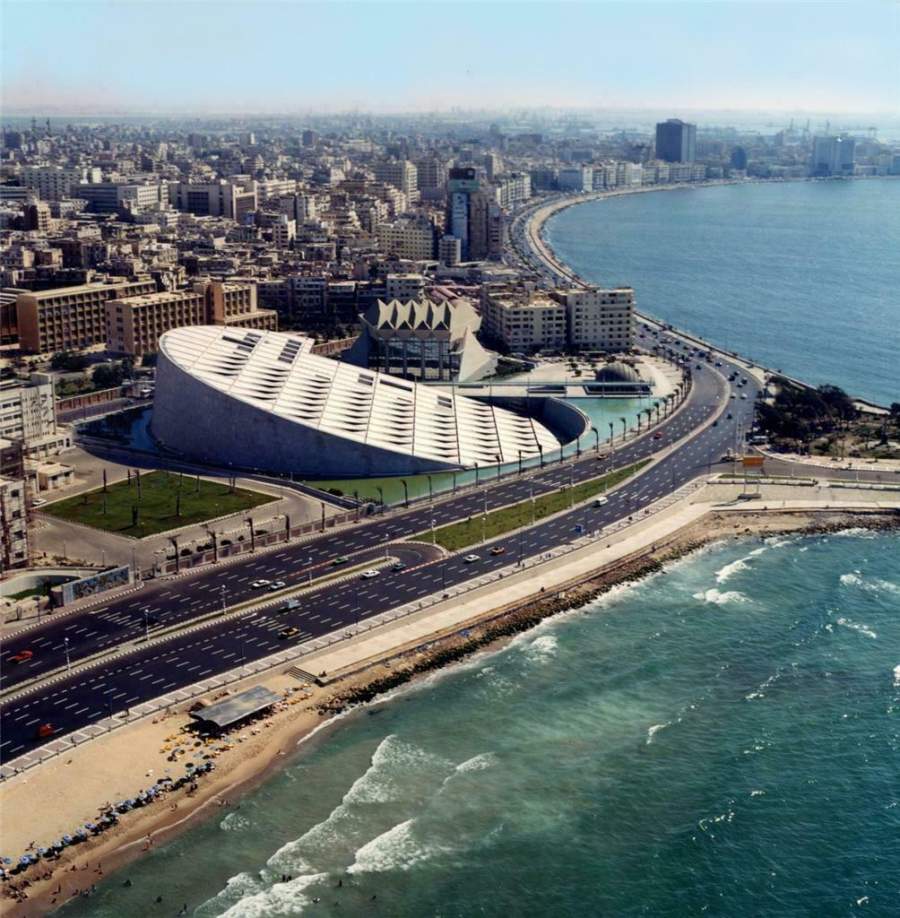
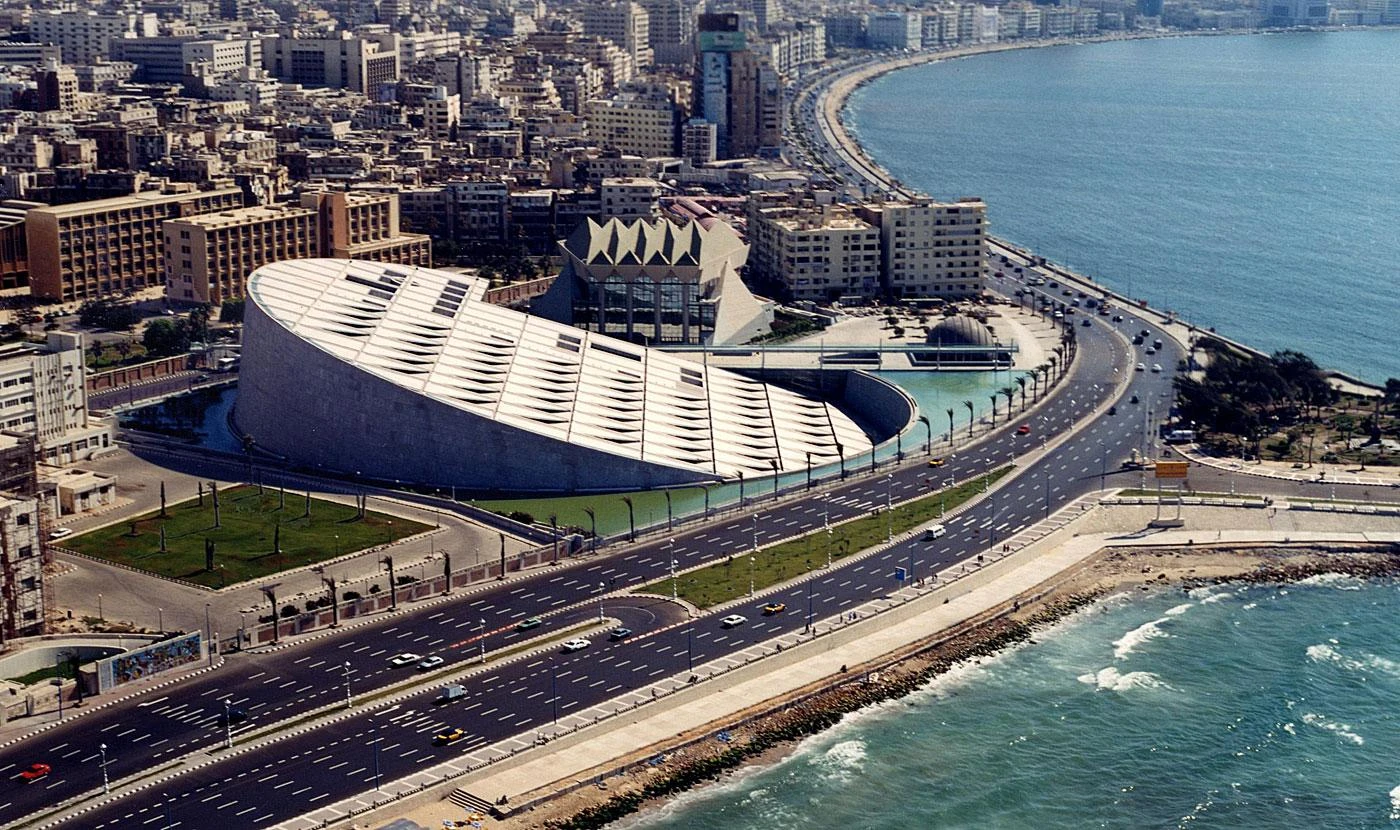
The Bibliotheca Alexandrina, or New Library of Alexandria, is one of Egypt's most distinctive modern cultural landmarks. Standing beside the Mediterranean in Alexandria, the building was created to revive the spirit and intellectual legacy of the ancient Library of Alexandria while functioning as a modern international center for knowledge, research, culture, science, and dialogue.
The modern library was officially inaugurated on 16 October 2002, after an international project supported by Egypt, UNESCO, UNDP, and other international partners. UNESCO describes the project not as a literal reconstruction of the lost ancient library, but as an attempt to revive its spirit in a modern form.
Today, the Bibliotheca Alexandrina is much more than a place containing books. It includes a vast main library, specialized libraries, museums, research centers, exhibitions, a planetarium, science facilities, cultural programs, and spaces dedicated to children and young people.
Where Is the Bibliotheca Alexandrina?
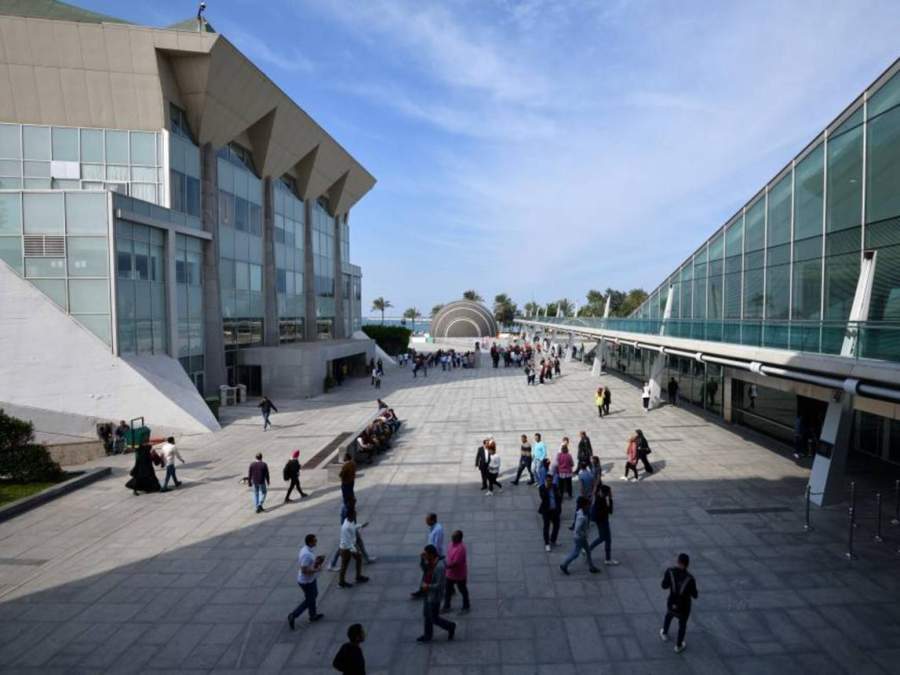
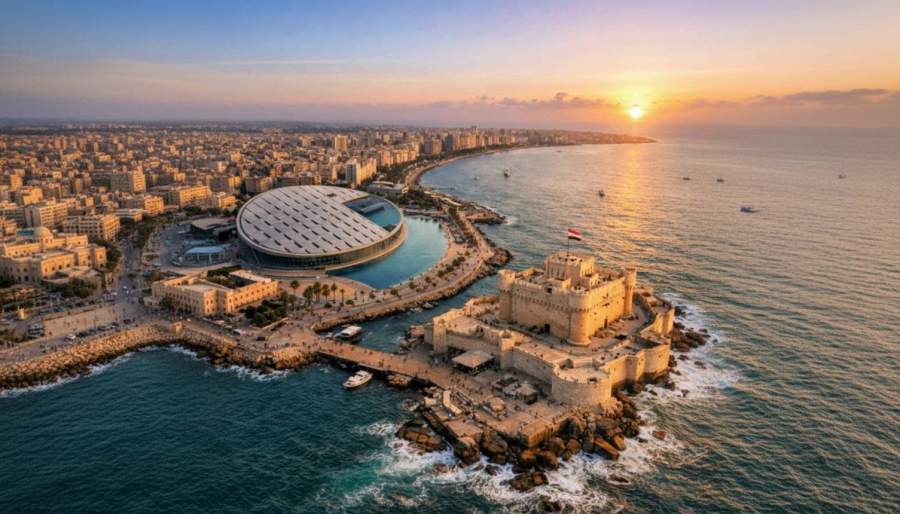
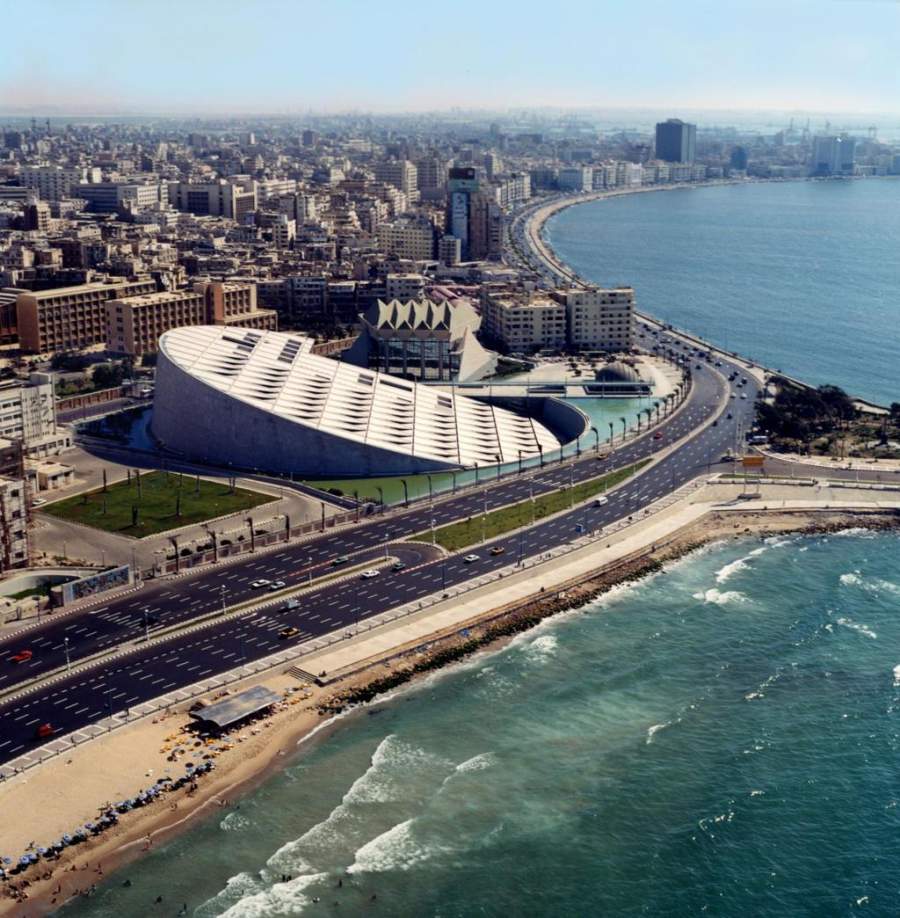
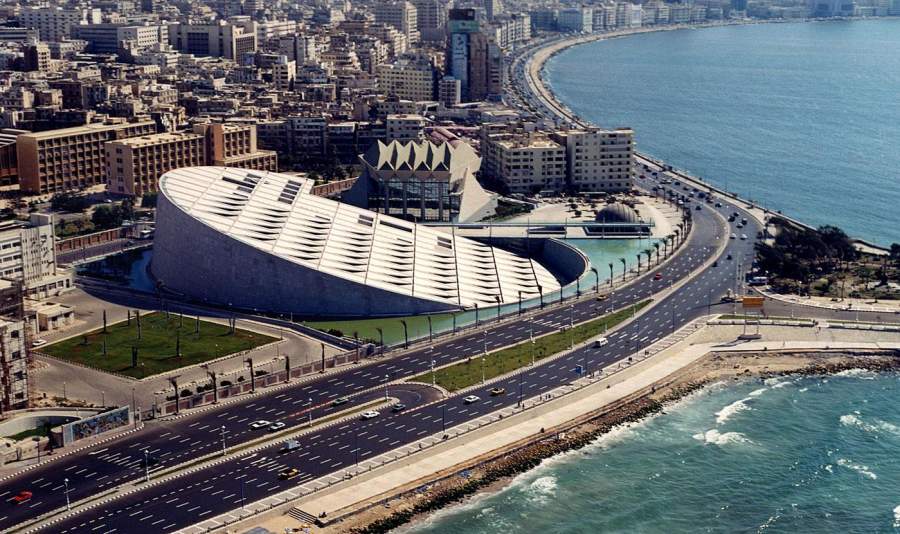
The Bibliotheca Alexandrina stands on the Mediterranean waterfront in Alexandria, close to the area traditionally associated with the ancient city's royal quarter.
Its location is deeply symbolic.
The ancient Library of Alexandria was part of a great intellectual complex associated with the Mouseion, where scholars, philosophers, mathematicians, astronomers, and other intellectuals gathered.
The modern Bibliotheca Alexandrina was intentionally established in Alexandria as a contemporary continuation of that intellectual tradition.
UNESCO describes the new library as occupying approximately 60,000 square meters and as being designed to serve as a bridge between Egypt's ancient cultural heritage and the knowledge and technology of the modern world.
The Ancient Library of Alexandria
To understand the modern Bibliotheca Alexandrina, it is important to understand the institution that inspired it.
Alexandria was founded by Alexander the Great in 331 BC and became the capital of Ptolemaic Egypt.
Under the Ptolemaic rulers, the city developed into one of the great intellectual and cultural centers of the ancient Mediterranean.
The ancient Library was associated with the Mouseion, an institution devoted to scholarship and learning.
UNESCO's historical account describes the ancient library as having contained an enormous collection of papyrus rolls covering sciences and other fields of knowledge. It was connected with scholars who came to Alexandria from different parts of the ancient world.
The exact history of the ancient library's destruction is complicated, and the popular story that it disappeared in one single catastrophic fire does not accurately capture the historical uncertainty.
UNESCO notes that the Great Library probably disappeared gradually during the later Roman period rather than being simply destroyed in one event.
Why Was the New Library Built?
The modern project was conceived as a way to revive the intellectual role and spirit of the ancient institution, rather than reconstructing the original building.
UNESCO's Federico Mayor described the objective as reviving the heritage of the ancient library under a modern form, rather than attempting to rebuild a monument that had disappeared.
The idea was therefore ambitious:
Ancient Alexandria → Modern Alexandria → Global Knowledge
The new library was intended to become a center for research, communication, education, cultural exchange, and scientific development.
That mission remains visible in the wide variety of institutions operating inside the complex today.
The Extraordinary Architecture
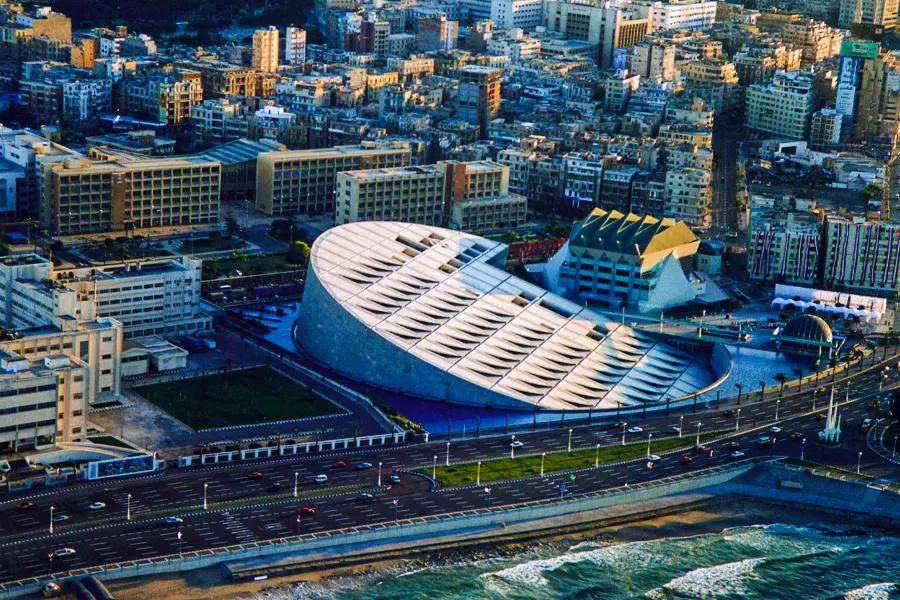
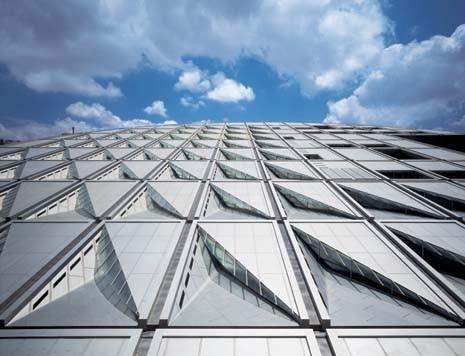
Perhaps the most immediately recognizable feature of the Bibliotheca Alexandrina is its architecture.
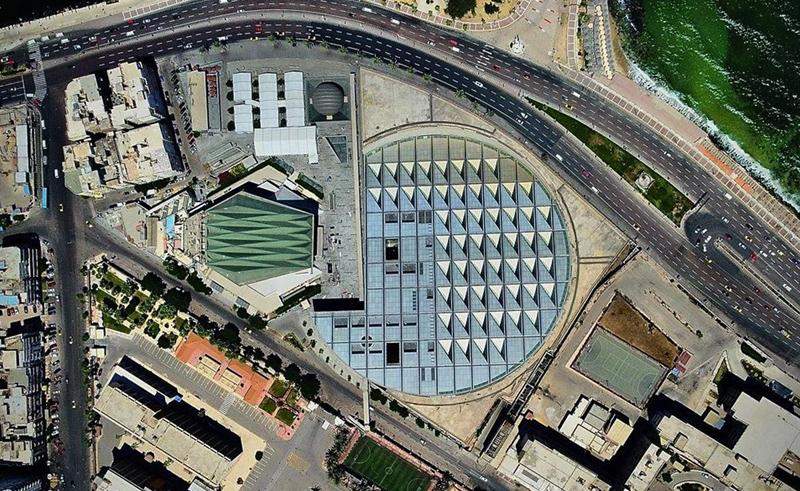
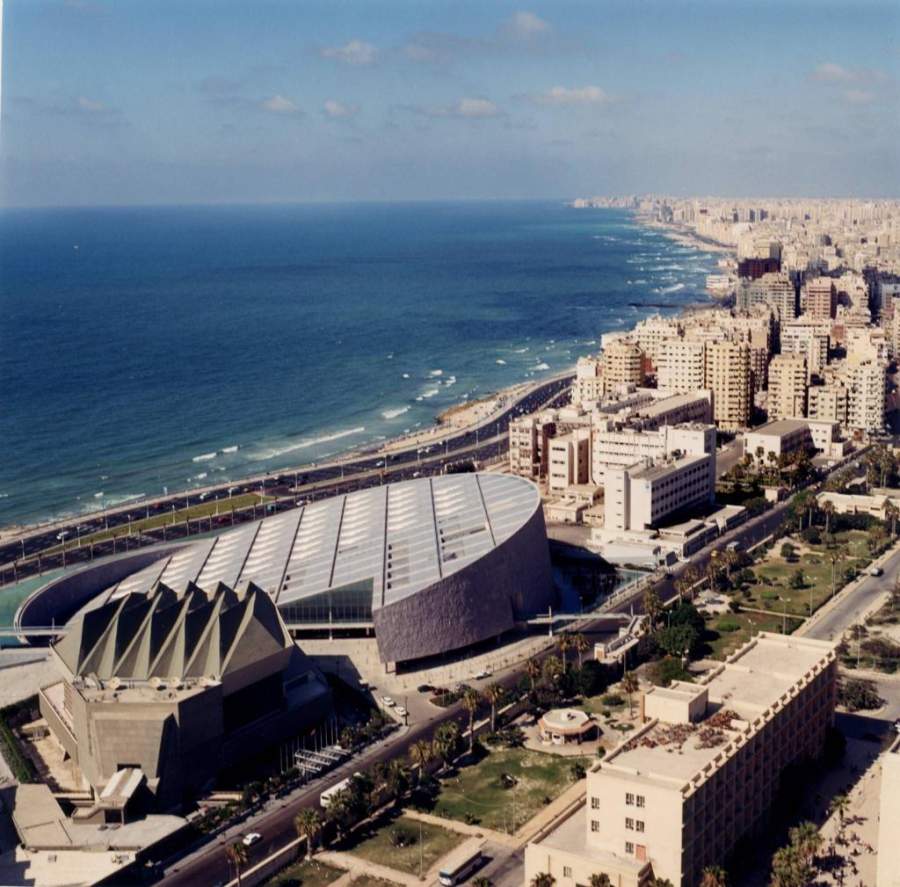
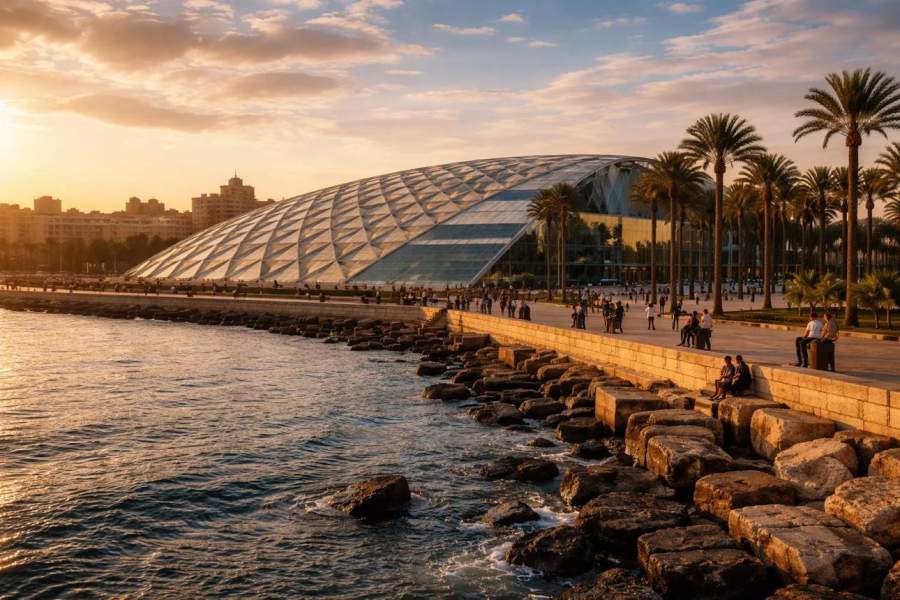
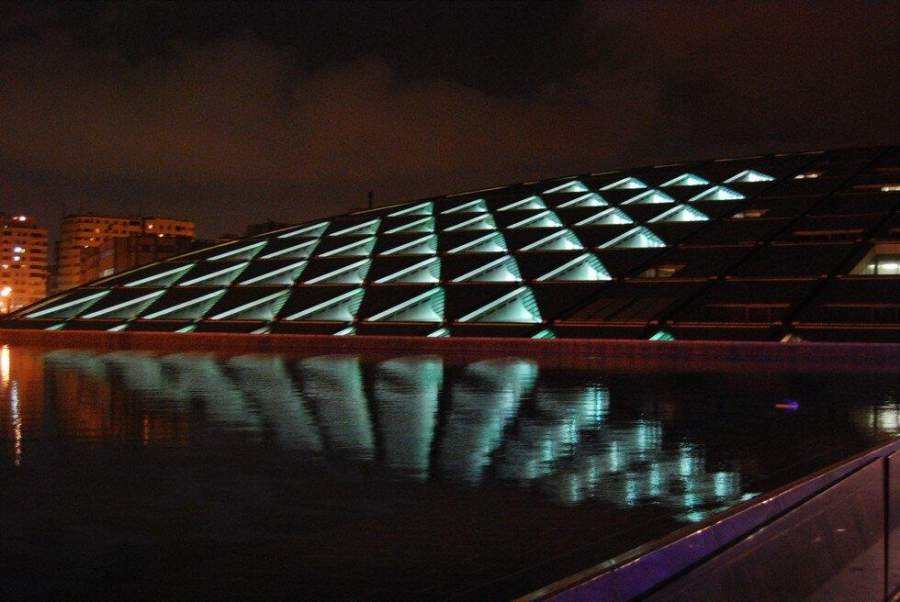
The main building has the form of a huge inclined circular disk, appearing to rise from the ground beside the Mediterranean.
The architectural design was created by the Norwegian architectural firm Snøhetta, whose winning concept was selected through an international competition.
The design is often interpreted as symbolizing the rising sun and the renewal of knowledge.
The building's circular form also creates a strong visual connection with the horizon and the Mediterranean.
The Granite Wall
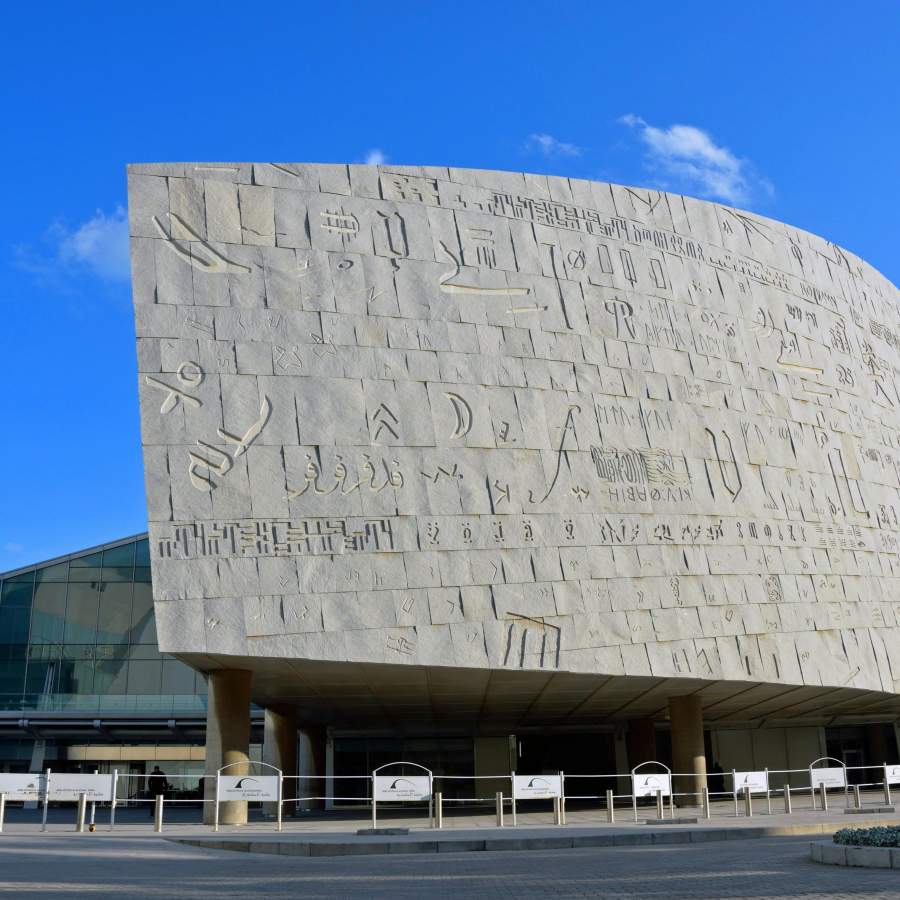
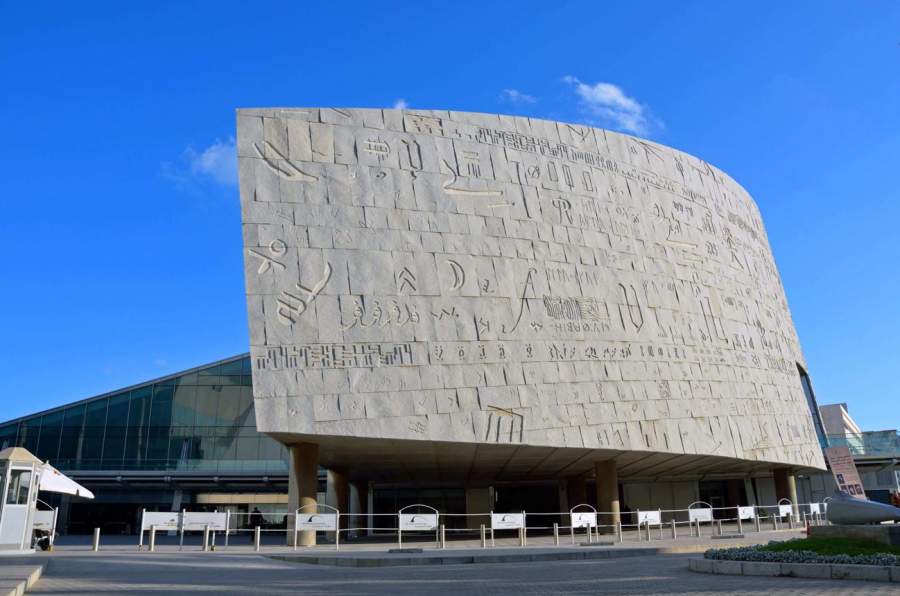
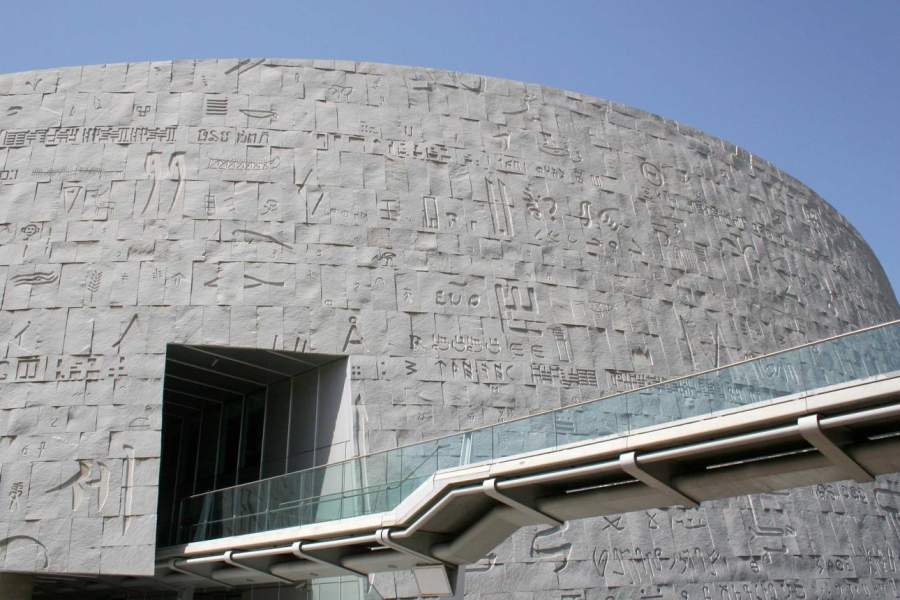
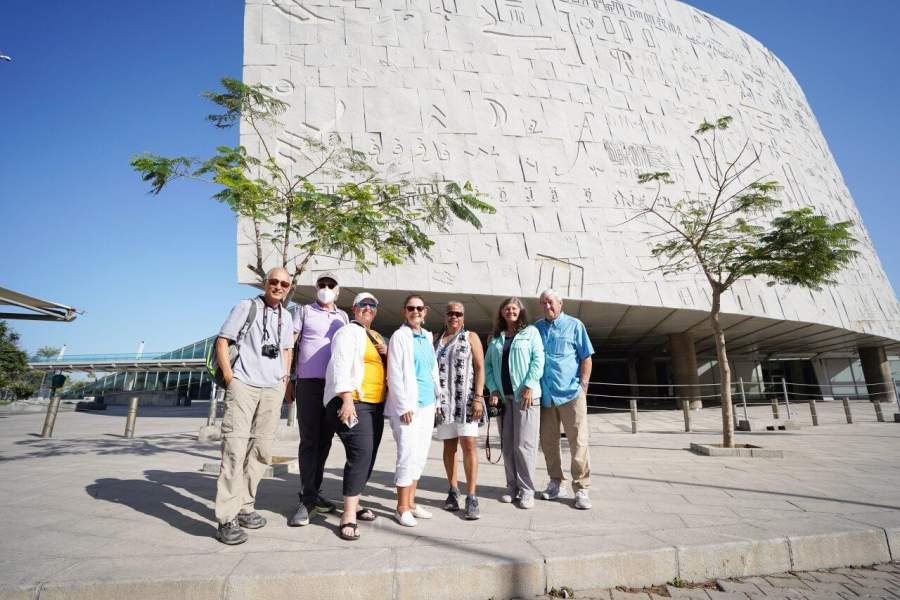
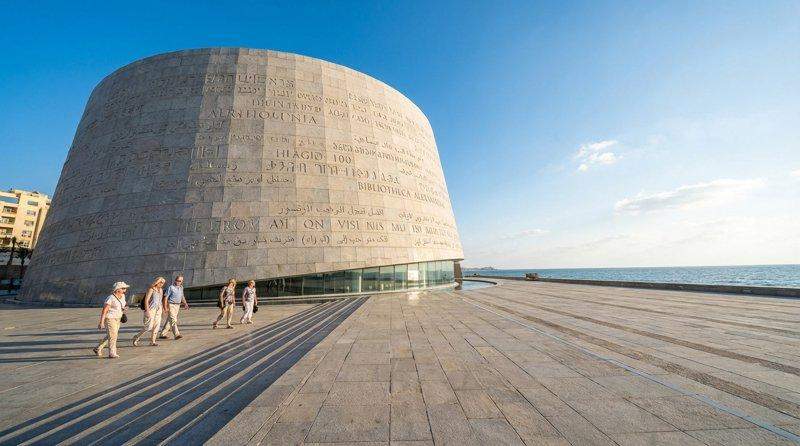
One of the most striking architectural features is the enormous granite wall surrounding the building.
The wall contains carved symbols and letters representing writing systems from different civilizations and cultures.
This is one of the most powerful symbolic elements of the complex.
The ancient library attempted to gather knowledge from across the known world.
The modern building expresses a similar idea through a wall that visually celebrates human writing and communication across cultures.
UNESCO describes the wall as being covered with sculpted signs inspired by alphabets from different human languages, reinforcing the library's universal cultural mission.
The Main Reading Room
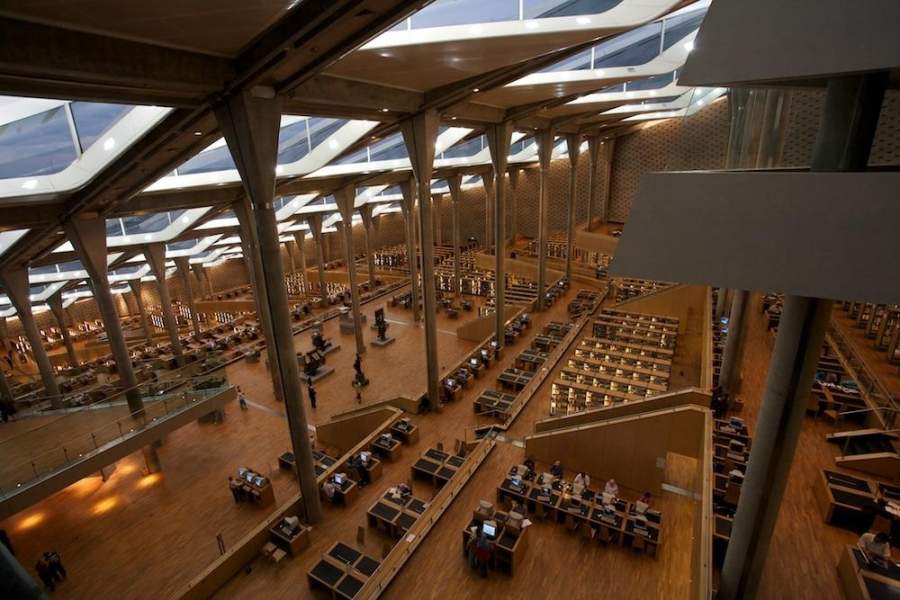
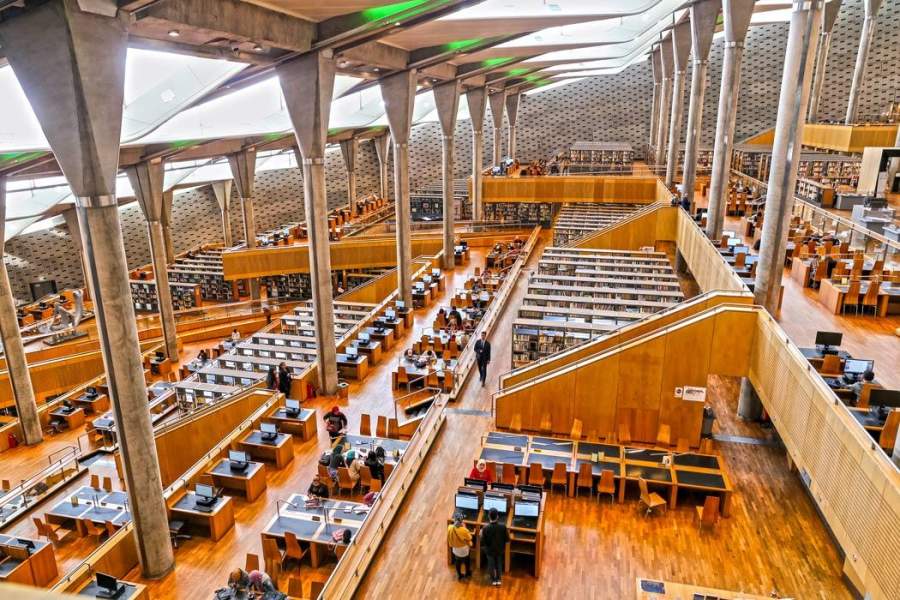
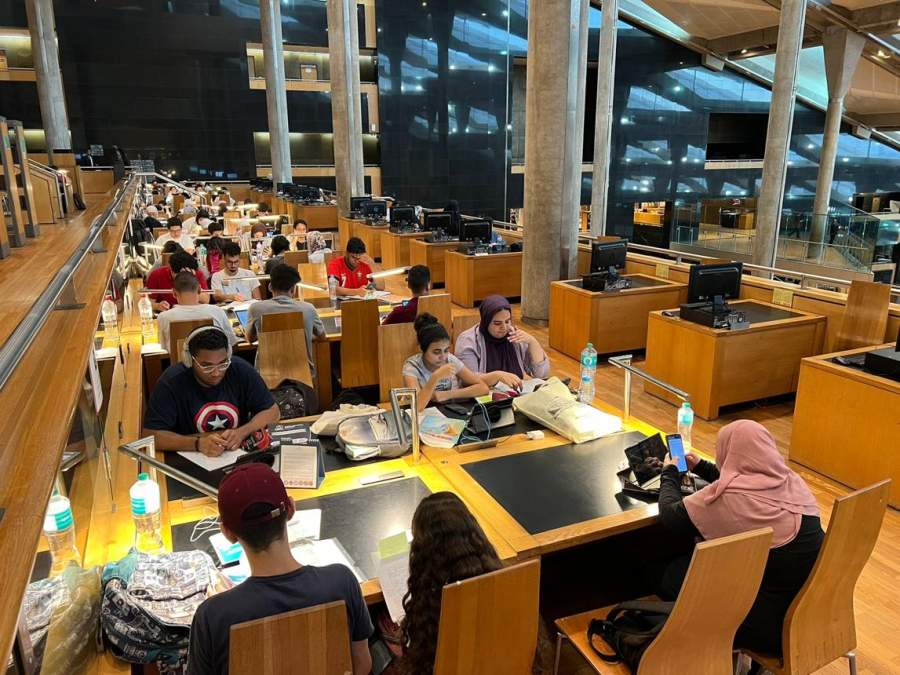
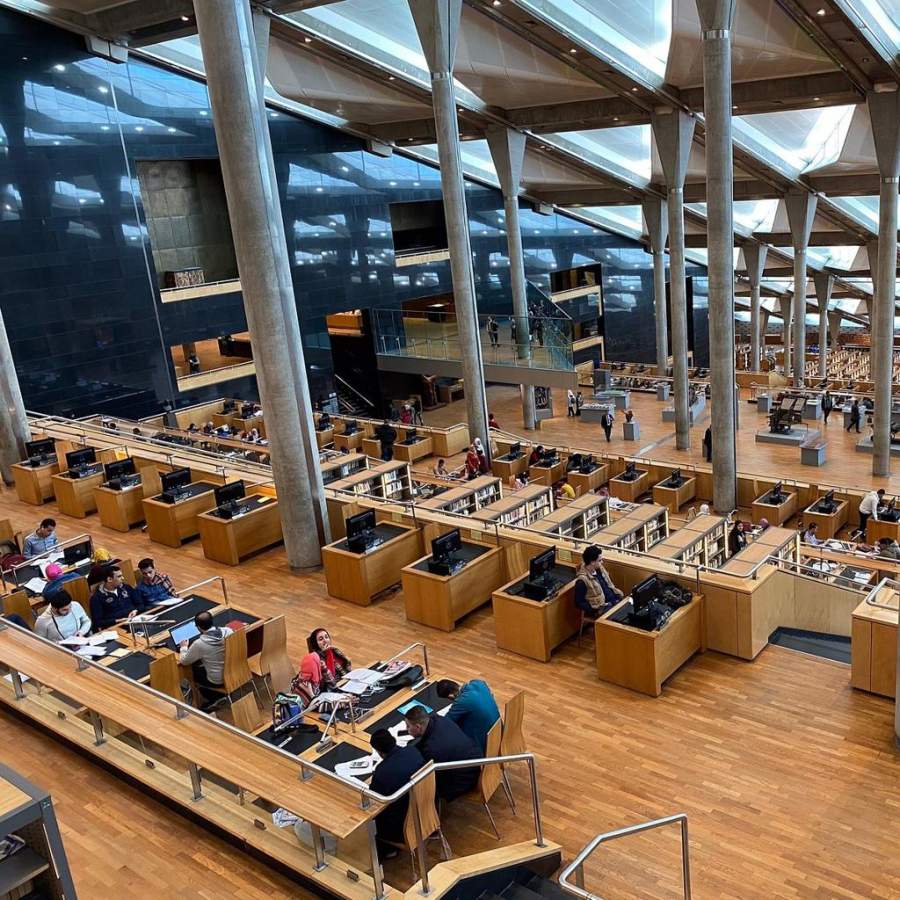
Inside the building is the spectacular Main Library Reading Room.
Its enormous multi-level interior is one of the defining spaces of the Bibliotheca Alexandrina.
The sloping roof and extensive windows allow natural light to enter the reading areas while providing views toward the Mediterranean.
The architecture creates a dramatic environment for study and research.
Rather than being designed like a traditional enclosed library, the reading room feels open, contemporary, and connected to the outside world.
A Library Designed for the Modern World
The Bibliotheca Alexandrina is not simply a building filled with printed books.
Its official overview describes a complex that includes the Main Library, affiliated libraries, specialized libraries, digital resources, museums, scientific facilities, and cultural institutions.
The main library can accommodate millions of books, while the institution also maintains specialized collections and electronic resources.
Among its specialized libraries are:
- Arts and Multimedia Library
- Taha Hussein Library for the visually impaired
- Children's Library
- Young People's Library
- Rare Books and Special Collections Library
- Exchange and Archive Section
This makes the Bibliotheca Alexandrina both a traditional research library and a modern multidisciplinary cultural institution.
The Antiquities Museum
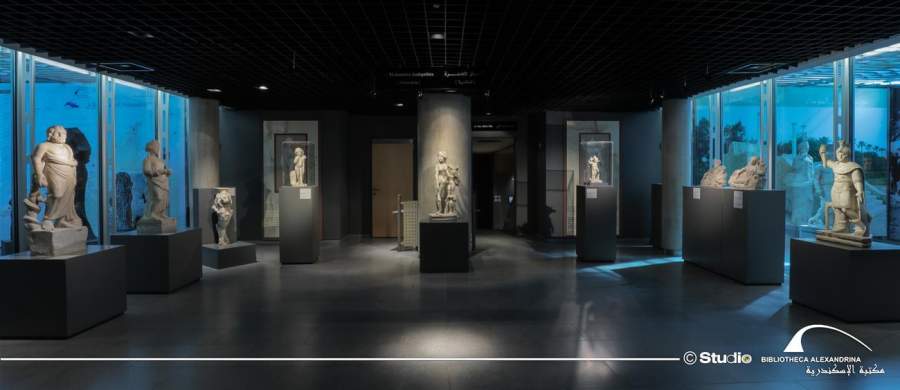
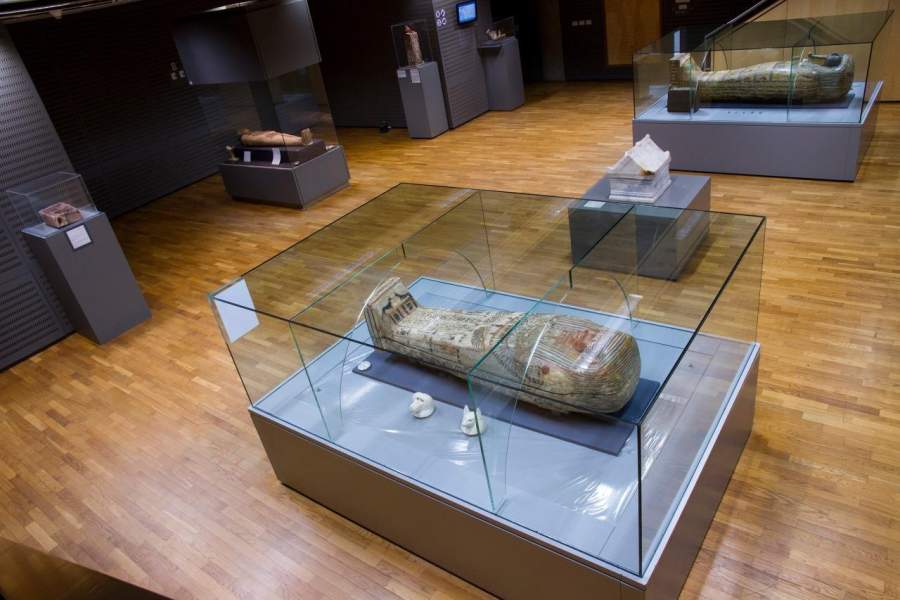
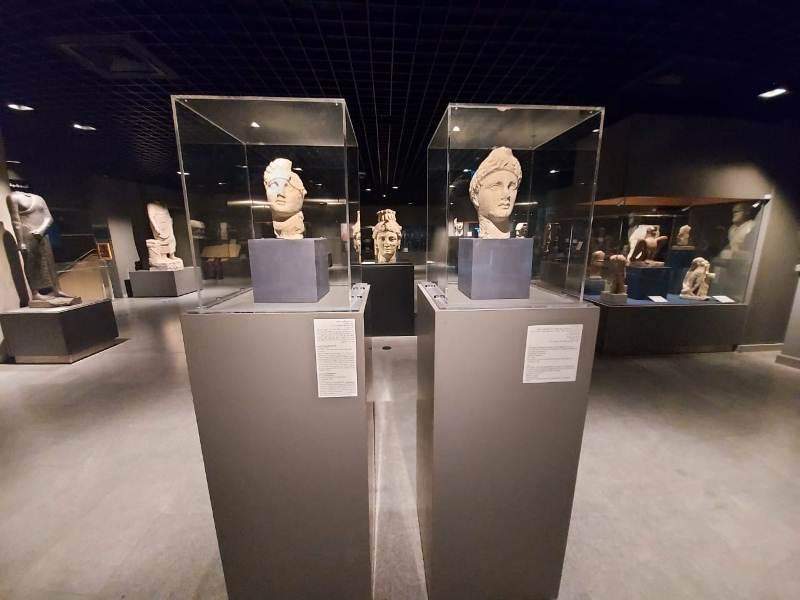
One of the most interesting attractions inside the Bibliotheca Alexandrina is the Antiquities Museum.
The museum contains archaeological objects discovered in Alexandria and other parts of Egypt, with collections covering different periods of Egyptian history.
The Bibliotheca Alexandrina describes it as one of the few museums in the world displaying archaeological objects discovered at the same location where the museum itself stands.
The museum helps connect the modern building with the ancient city beneath and around it.
Visitors can therefore move from a modern library environment into galleries containing objects from Egypt's ancient past.
The Manuscripts Museum
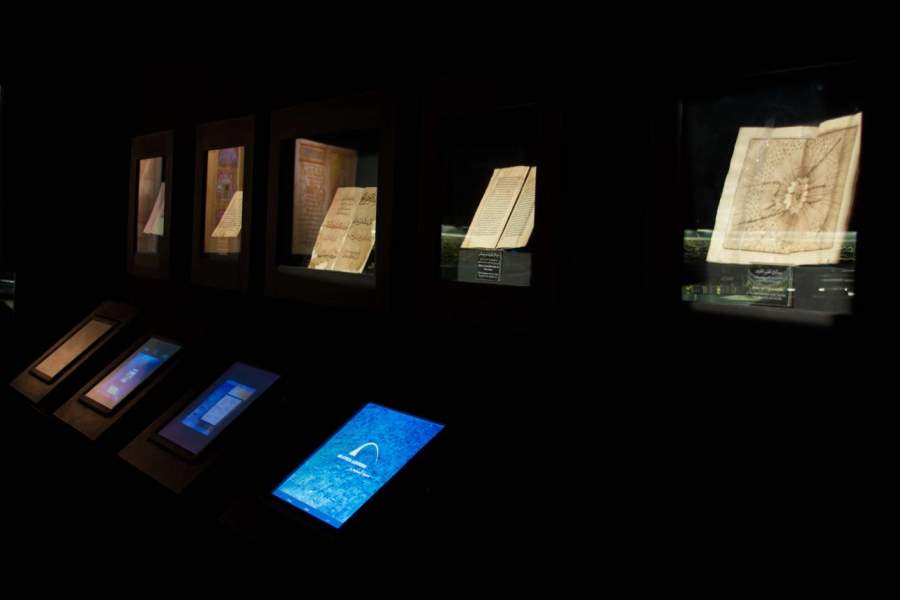
Another major component is the Manuscripts Museum.
Its collections and exhibitions focus on manuscripts and the history of written knowledge.
The museum reflects one of the central themes of the Bibliotheca Alexandrina itself:
How humans preserve, transmit, and share knowledge.
The institution also maintains exhibitions related to printing, calligraphy, books, manuscripts, and the development of written culture.
The Sadat Museum
The Bibliotheca Alexandrina also houses the Sadat Museum, dedicated to the memory and history of Egyptian President Anwar El-Sadat.
The museum is part of the institution's efforts to document modern Egyptian history and contains material associated with Sadat's life and political career.
This gives the Bibliotheca Alexandrina a chronological reach that extends from ancient Egypt to the modern Egyptian state.
The History of Science Museum
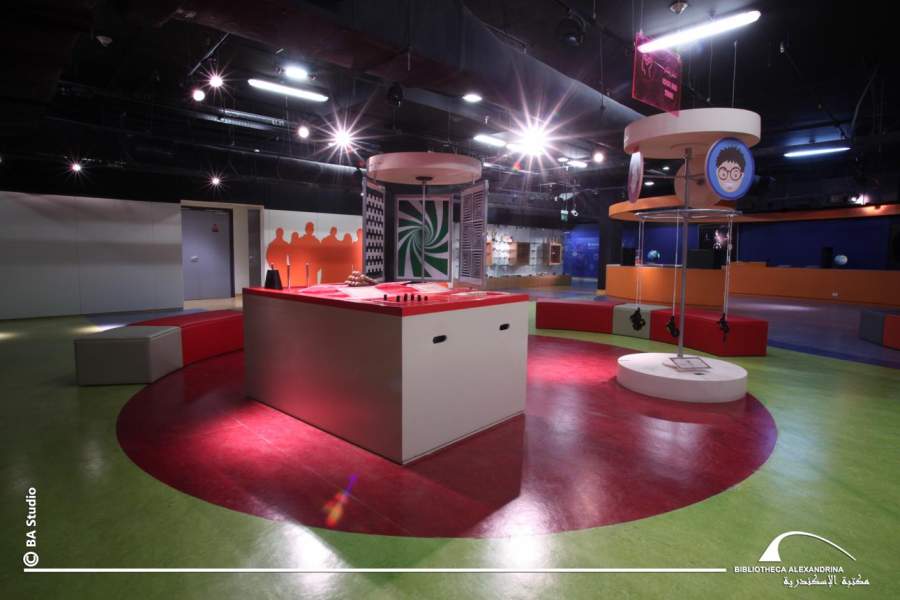
The History of Science Museum explores scientific developments and their relationship with human civilization.
The Bibliotheca Alexandrina describes the museum as offering educational activities in addition to its exhibitions, with particular attention to children and the wider public.
Its presence is particularly appropriate in Alexandria, a city historically associated with scholars such as Euclid, Eratosthenes, and other figures of the ancient intellectual world.
The Planetarium Science Center
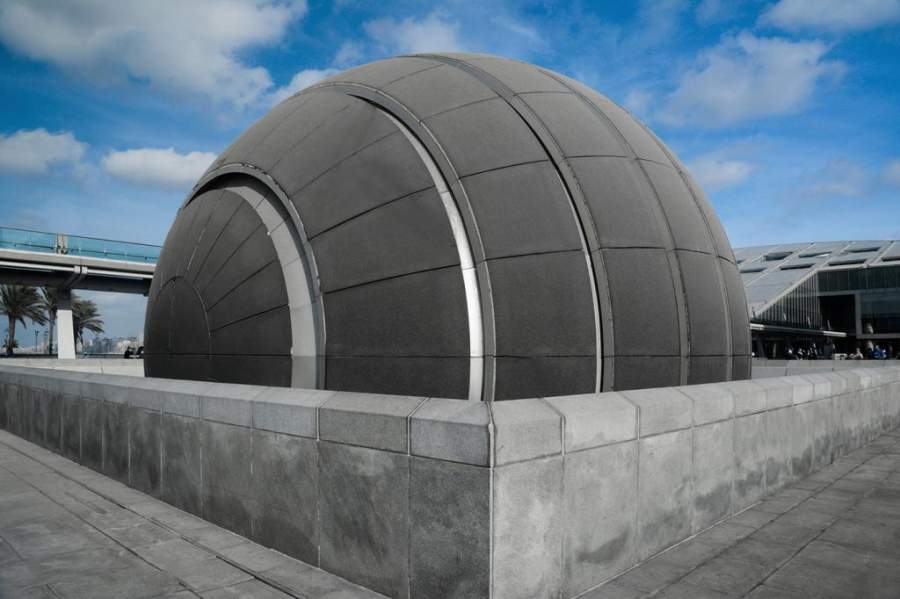
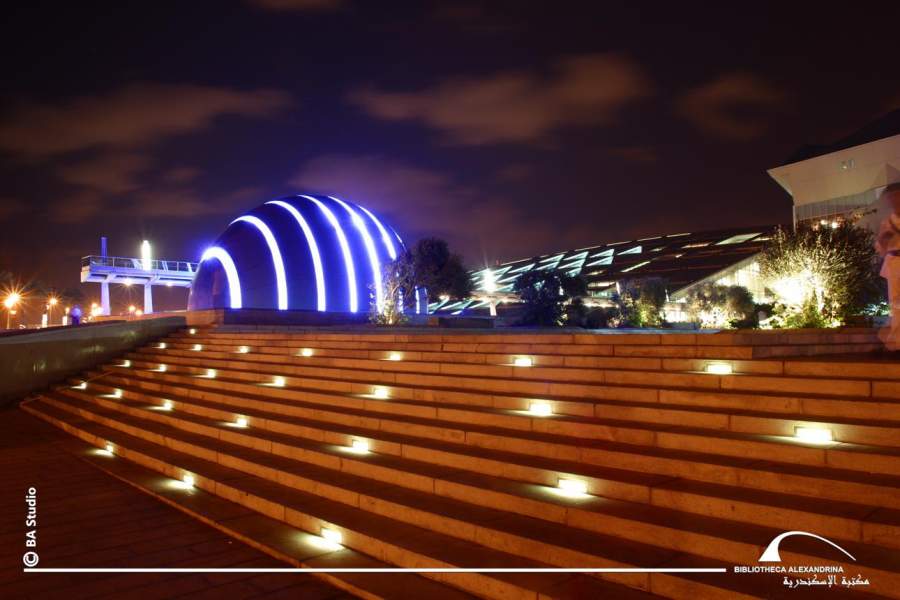
The Bibliotheca Alexandrina also contains the Planetarium Science Center, an important part of its scientific and educational mission.
The center offers science-related activities and programs designed to make scientific ideas accessible to visitors.
The complex also includes ALEXploratorium, an interactive science space aimed particularly at introducing children to scientific concepts.
For families visiting Alexandria, this makes the Bibliotheca Alexandrina much more than a historical attraction.
It can also function as a destination for science, education, and interactive learning.
Culturama
One of the more unusual experiences available at the Bibliotheca Alexandrina is Culturama, a panoramic multimedia presentation projected across nine screens.
The system uses digital technology to present aspects of Egyptian history and culture.
Current programs listed by the library include presentations connected with Egyptian heritage, including:
- Journey to the Land of Punt
- Book of the Dead
- Heliopolis
- Fatimid Cairo
- Sadat
- Congo
The library also offers family and children's programs.
Culturama demonstrates the institution's broader philosophy: ancient cultural heritage can be presented using modern technology.
Art Exhibitions at the Bibliotheca Alexandrina
The Bibliotheca Alexandrina is also a major arts venue.
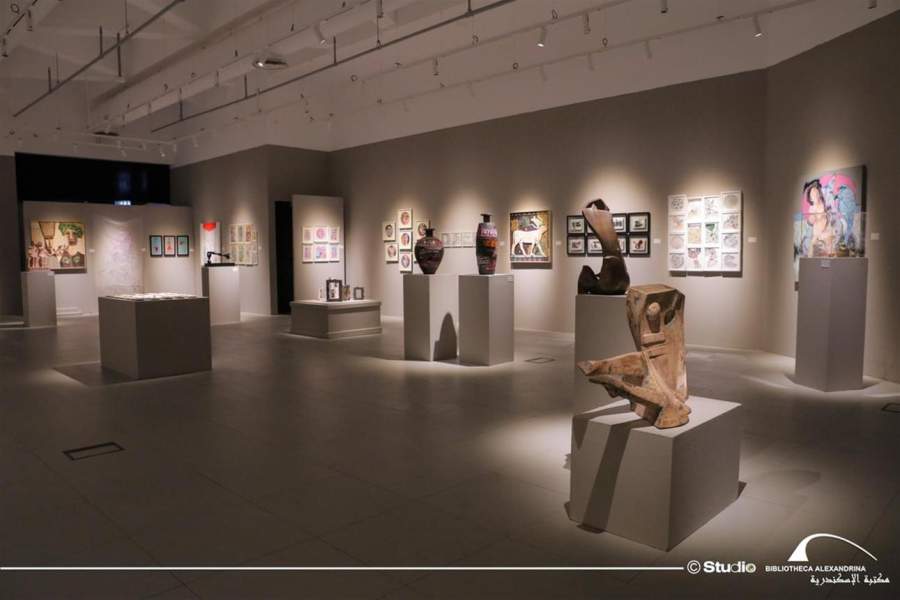
According to the institution, its Art Exhibitions and Collections Department oversees more than 7,000 artworks, many of which are displayed throughout the library's reading areas, corridors, and halls.
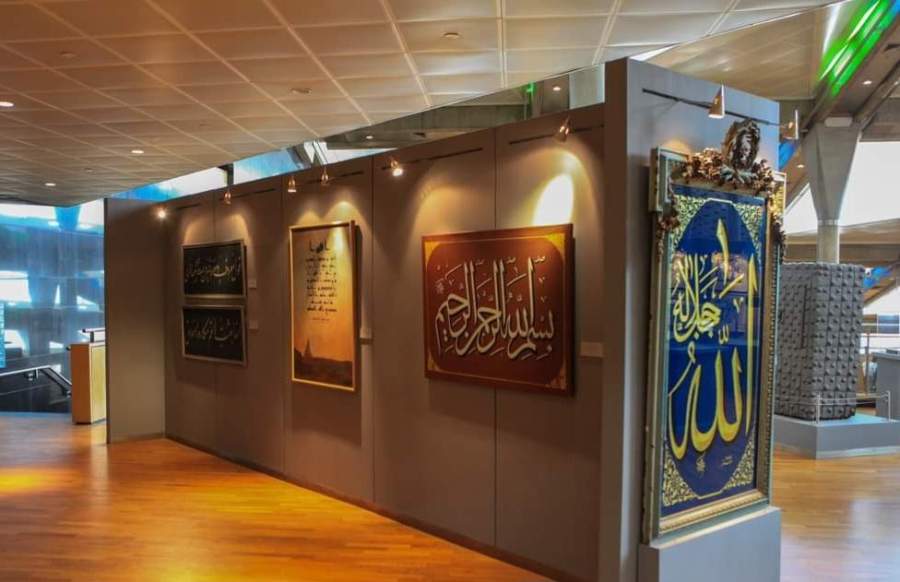
The institution has permanent exhibitions covering subjects such as:
- Painting
- Sculpture
- Ceramics
- Calligraphy
- Heritage
- Cinematography
- Costume
- Printing
- Artist's books
It also hosts temporary exhibitions throughout the year.
The official exhibition calendar shows programs covering Egyptian art, international cultural traditions, photography, archaeology, handicrafts, calligraphy, and contemporary visual arts.
A Center for Cultural Exchange
The Bibliotheca Alexandrina was designed to serve as an international center for exchange and communication of human knowledge.
That mission is reflected in its exhibitions, conferences, academic programs, cultural events, research centers, museums, and libraries.
UNESCO describes the institution as intended to attract scholars and intellectuals from around the world, echoing the international character traditionally associated with ancient Alexandria.
The modern institution therefore attempts to recreate something more important than the physical appearance of the ancient library:
its role as a meeting place for ideas.
Bibliotheca Alexandrina and Ancient Alexandria
The relationship between the old and new libraries is symbolic rather than architectural.
The ancient institution belonged to the Hellenistic world of Ptolemaic Alexandria.
The modern institution belongs to a globalized, digital world.
Yet both are connected by the same fundamental idea:
Knowledge becomes more powerful when it is collected, preserved, studied, and shared.
The modern library does not claim to be the original ancient Library of Alexandria.
Instead, it represents a contemporary attempt to restore Alexandria's identity as a city of learning.
UNESCO explicitly describes the modern project as a revival of the ancient library's spirit rather than a reconstruction of the lost monument.
What Can You See at the Bibliotheca Alexandrina?
A visit can include considerably more than the main reading room.
Depending on what is open and included in your ticket, visitors can explore:
Main Library
The spectacular multi-level reading space and the heart of the institution.
Antiquities Museum
Archaeological objects connected particularly with Alexandria and Egypt.
Manuscripts Museum
Exhibitions dedicated to written heritage and manuscripts.
Sadat Museum
Material documenting modern Egyptian history.
Planetarium Science Center
Science education and planetarium experiences.
ALEXploratorium
Interactive science activities designed especially for younger visitors.
Art Exhibitions
Permanent and temporary exhibitions spread throughout the complex.
Culturama
Multimedia presentations about Egyptian culture and history.
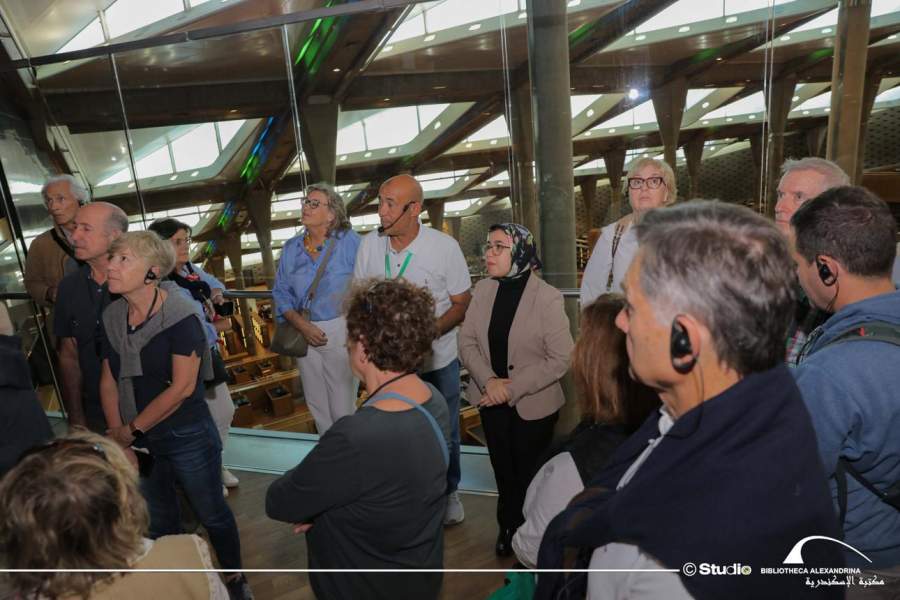
Guided Tours
For first-time visitors, a guided tour can make the experience more meaningful.
The official Bibliotheca Alexandrina visitor information currently lists guided tours in Arabic, English, and French.
The tours introduce visitors to the history of the ancient Library of Alexandria, the revival project, the modern library's scientific and electronic resources, exhibitions, and museums.
The current official schedule includes multiple tour times from Monday through Thursday and additional weekend tours.
Visitors should check the official schedule before arriving because tour times and availability can change.
Tickets and Visiting Information
The Bibliotheca Alexandrina has different admission fees depending on the facility being visited.
For example, the library's current official admission information lists separate prices for the Antiquities Museum, Manuscripts Museum, Planetarium Science Center, ALEXploratorium, and 12D Theater, with different rates for Egyptian and non-Egyptian visitors.
Because prices and schedules can change, visitors should consult the official Bibliotheca Alexandrina website before planning their trip.
Official Bibliotheca Alexandrina – Plan Your Visit
Best Time to Visit
Alexandria's Mediterranean location makes it particularly enjoyable during the cooler months, especially when combining the library with outdoor attractions around the city.
However, the Bibliotheca Alexandrina is primarily an indoor cultural destination, so it can be visited throughout the year.
If you want to photograph the exterior, morning or late afternoon can provide attractive natural light on the building and Mediterranean waterfront.
How Long Should You Spend at the Bibliotheca Alexandrina?
If you only want to see the main building and reading hall, a relatively short visit may be sufficient.
But if you want to explore the museums, exhibitions, science center, and guided tour, it is better to dedicate several hours.
A good visit might look like:
Main Library → Guided Tour → Antiquities Museum → Manuscripts Museum → Exhibitions → Planetarium/Science Center
The exact combination depends on which facilities and programs are operating on the day of your visit.
Places to Visit Near Bibliotheca Alexandrina
The library is located in an area where several important Alexandria attractions can be combined into a broader itinerary.
Qaitbay Citadel
A magnificent medieval fortress on the Mediterranean coast, built in the 15th century near the site traditionally associated with the ancient Pharos Lighthouse.
Alexandria National Museum
A museum presenting the history of Alexandria and Egypt.
Graeco-Roman Museum
A major museum dedicated to Egypt's Greek and Roman periods.
Kom El-Dikka
An important archaeological area containing Roman remains.
Catacombs of Kom El Shoqafa
An underground necropolis famous for its mixture of Egyptian, Greek, and Roman artistic traditions.
Pompey's Pillar
The massive Roman-era granite column associated with Emperor Diocletian.
This combination allows visitors to experience ancient, medieval, modern, and contemporary Alexandria in a single trip.
Why Is Bibliotheca Alexandrina Important?
The Bibliotheca Alexandrina is important on several levels.
Cultural Importance
It revives Alexandria's historical identity as a center of learning and cultural exchange.
Architectural Importance
Its dramatic circular design has become one of modern Alexandria's most recognizable landmarks.
Educational Importance
It contains libraries, museums, science facilities, research resources, and educational programs.
Historical Importance
Its existence connects the modern city with one of the most famous intellectual institutions of antiquity.
International Importance
The project was developed with international support and was conceived as a place for global cultural and intellectual exchange.
A Symbol of Alexandria
Perhaps the most powerful thing about the Bibliotheca Alexandrina is its symbolism.
The building stands beside the Mediterranean, facing the same sea that once connected Alexandria with the wider ancient world.
Its granite wall carries writing from different cultures.
Its reading rooms contain modern knowledge.
Its museums preserve ancient objects.
Its exhibitions present contemporary art.
Its science center looks toward the future.
The entire complex therefore creates a timeline:
Ancient Alexandria → Medieval Egypt → Modern Egypt → Future Knowledge
That is what makes the Bibliotheca Alexandrina much more than a library.
It is a monument to the idea that knowledge can connect different civilizations and different generations.
Final Thoughts
The Bibliotheca Alexandrina is one of the most important modern cultural landmarks in Egypt.
It does not attempt to recreate the ancient Library of Alexandria stone for stone. Instead, it revives the idea behind the ancient institution: Alexandria as a place where knowledge from different cultures could be collected, studied, preserved, and shared.
Its extraordinary architecture, enormous reading room, museums, exhibitions, science center, specialized libraries, and cultural programs make it one of the most distinctive places to visit in Alexandria.
For travelers interested in history, architecture, books, science, art, and Egyptian culture, the Bibliotheca Alexandrina offers an experience that connects the ancient world with the modern one.
And perhaps that is the most fitting tribute to Alexandria's ancient library:
The old library gathered the knowledge of its world.
The new Bibliotheca Alexandrina invites the world to keep learning.
Post a comment