

Bahariya Oasis: Egypt’s Desert Gem of Golden Mummies, Black Mountains, and White Desert Landscapes
Far from the crowded streets of Cairo and the famous monuments of the Nile Valley lies a completely different side of Egypt: Bahariya Oasis, a peaceful desert destination surrounded by palm groves, ancient archaeological sites, mineral-rich springs, volcanic landscapes, and some of the most extraordinary rock formations in the Western Desert.
Located approximately 370 kilometers southwest of Cairo, Bahariya is the closest of Egypt’s major Western Desert oases to the capital. The oasis is centered around Bawiti, with smaller settlements spread throughout the depression. Today, it serves as a gateway to some of Egypt’s most spectacular desert adventures, including the Black Desert and the famous White Desert.
But Bahariya is not simply a stop for a desert safari.
Its landscape contains layers of Egyptian history stretching from ancient agricultural communities and the Graeco-Roman period to early Christian monastic settlements. Archaeologists have also uncovered remarkable remains from later periods, while the discovery of the so-called Valley of the Golden Mummies brought international attention to the oasis.
For travelers willing to leave Egypt’s traditional tourist routes behind, Bahariya offers an experience where archaeology, oasis life, geology, adventure, and silence meet.
Where Is Bahariya Oasis?
Bahariya Oasis is situated in Egypt’s Western Desert, approximately 370 kilometers southwest of Cairo. Its relative proximity to the capital makes it one of the most accessible oases for travelers starting their journey in Cairo.
The oasis itself feels dramatically different from the city.
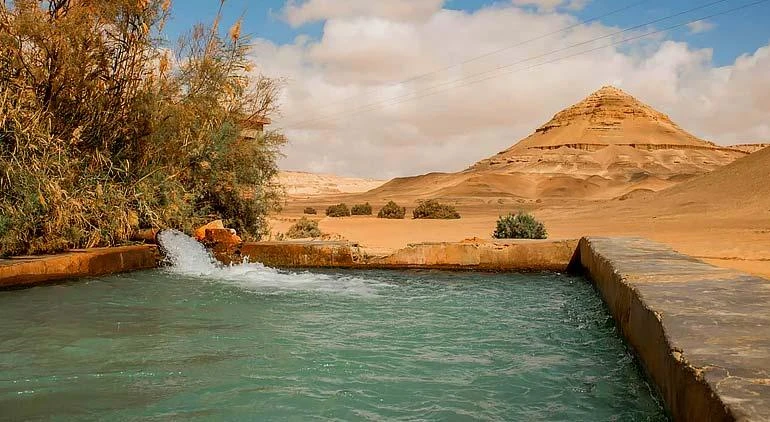
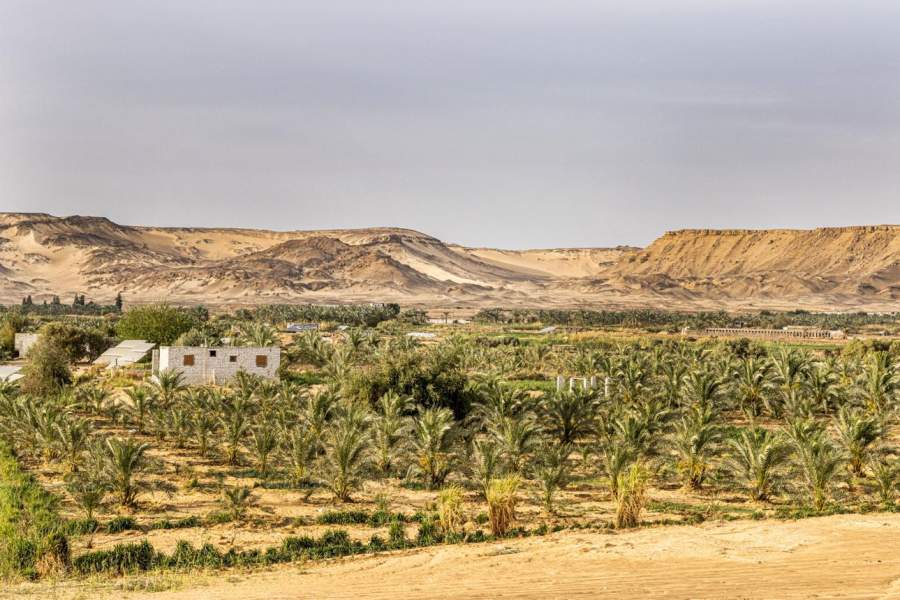
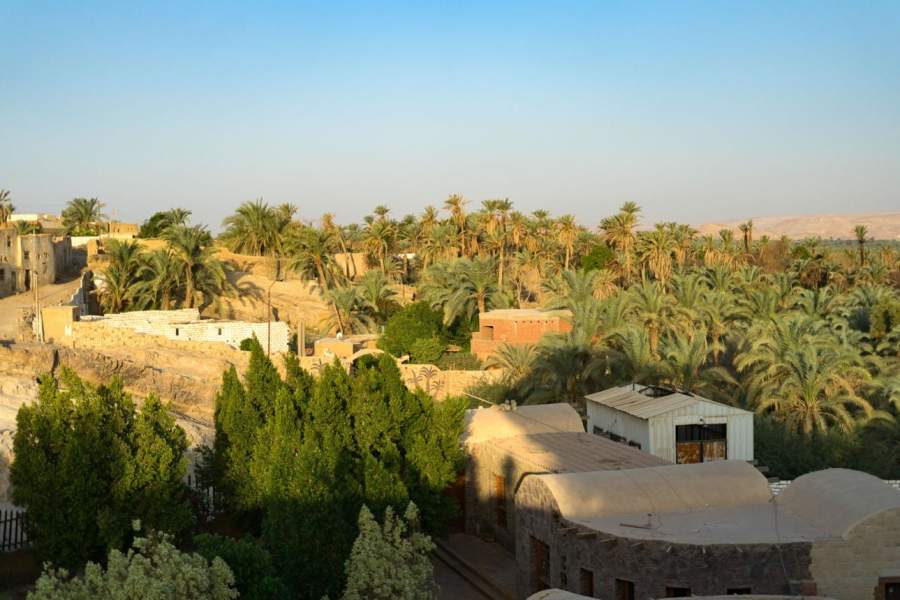
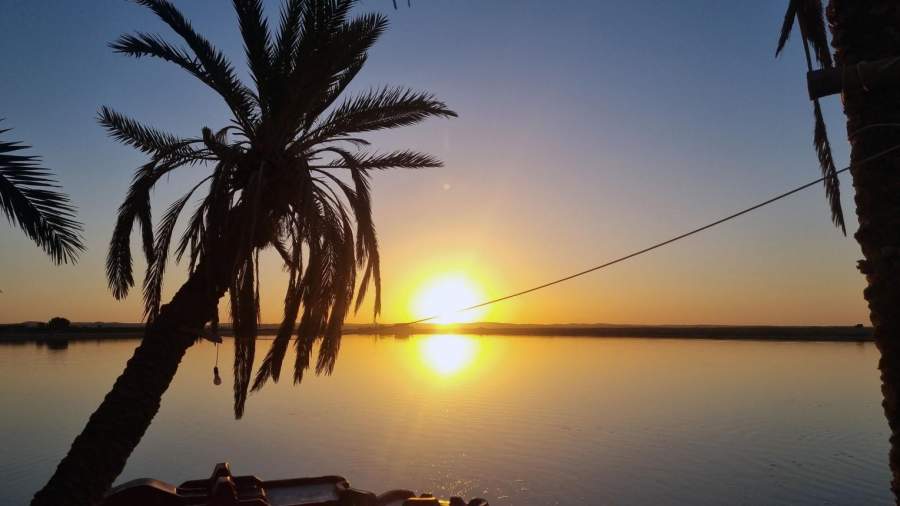
Instead of concrete buildings and busy traffic, visitors encounter date palms, olive trees, cultivated land, small settlements, desert hills, and enormous open spaces extending toward the Sahara.
The transition is part of the experience. As the road leaves Cairo behind, the landscape gradually becomes more arid until the green vegetation of the oasis appears almost unexpectedly against the surrounding desert.
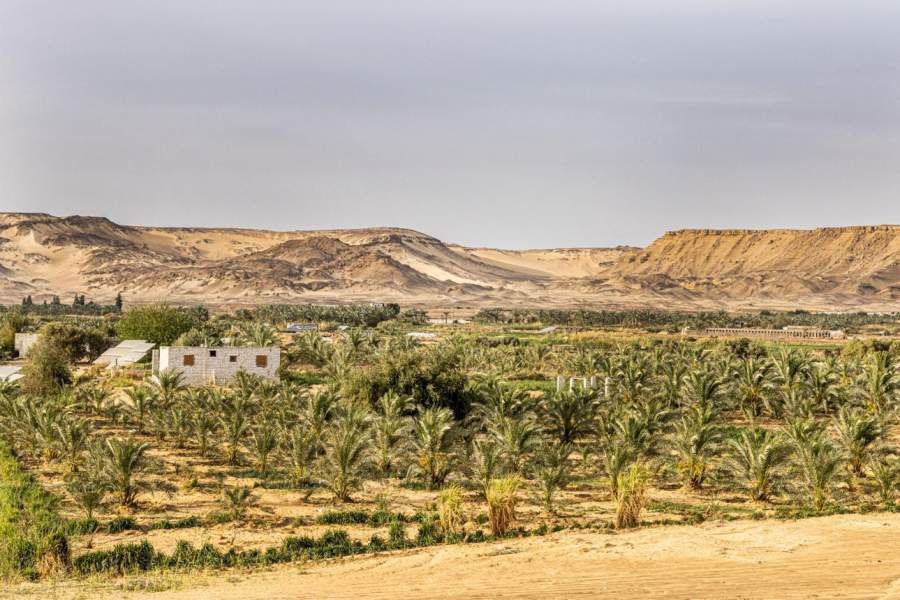
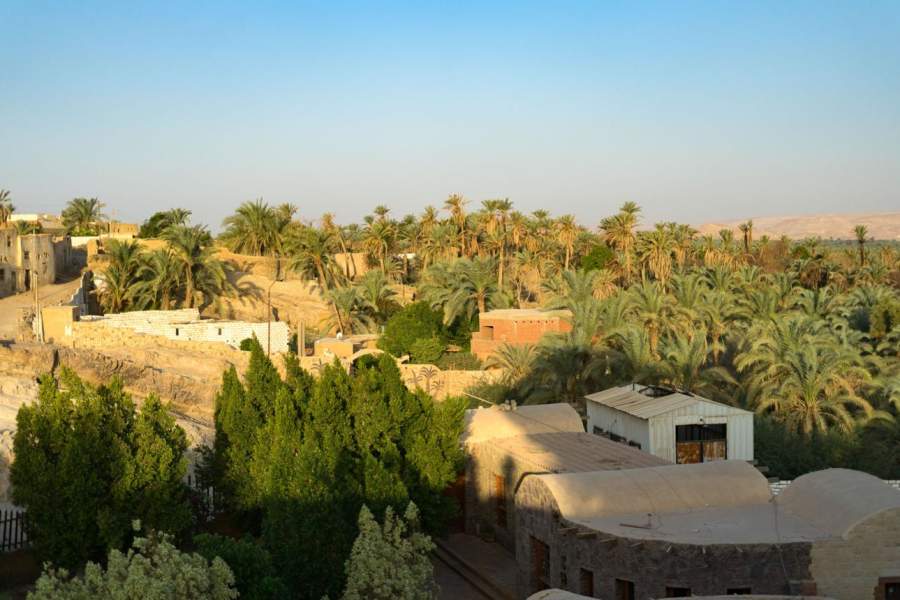
The oasis has historically depended on agriculture and underground water sources, creating pockets of greenery in an otherwise extremely dry environment.
That contrast between green oasis and golden desert is one of Bahariya’s most memorable visual characteristics.
The Ancient History of Bahariya
Bahariya has been inhabited for centuries, and its importance was closely connected to agriculture, trade, and its position within the Western Desert.
During the Graeco-Roman period, the oasis became an important agricultural region. Archaeological discoveries have revealed temples, tombs, settlements, and other evidence of communities that lived here thousands of years ago.
The area is particularly famous for discoveries associated with the Graeco-Roman period, including the Valley of the Golden Mummies. Experience Egypt identifies Bahariya as the location of some of Egypt’s significant Graeco-Roman archaeological discoveries.
But the archaeological story did not end with the ancient Egyptian and Graeco-Roman periods.
More recent archaeological work has revealed evidence of Christian communities and monastic life in the oasis. At Qasr Al-Agouz, a Norwegian-French archaeological mission uncovered rock-cut rooms, churches, mud-brick buildings, and Greek inscriptions. The Ministry of Tourism and Antiquities dates some of the mud-brick structures to approximately the 4th–7th centuries AD, with evidence suggesting monastic occupation from around the 5th century.
This makes Bahariya an unusually rich destination for travelers interested in how desert communities changed across different historical periods.
The Valley of the Golden Mummies
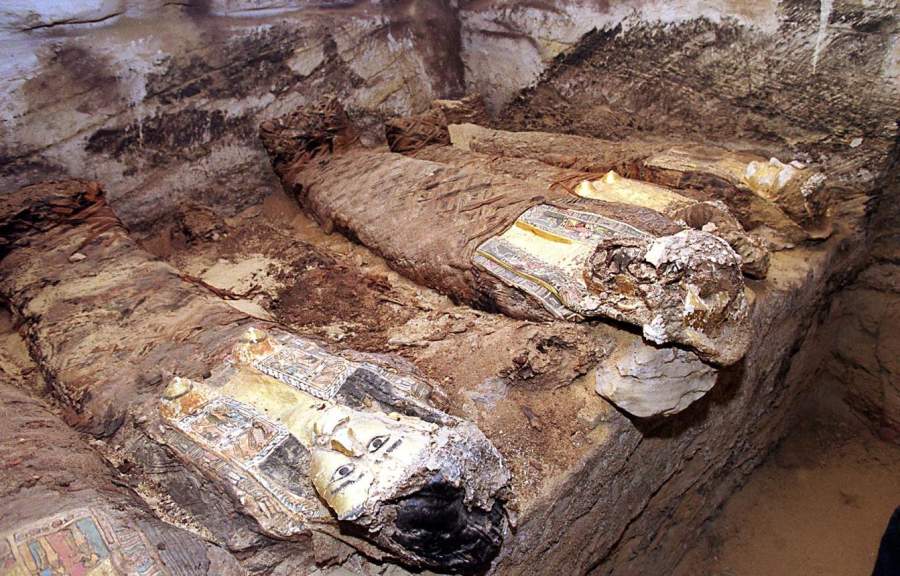
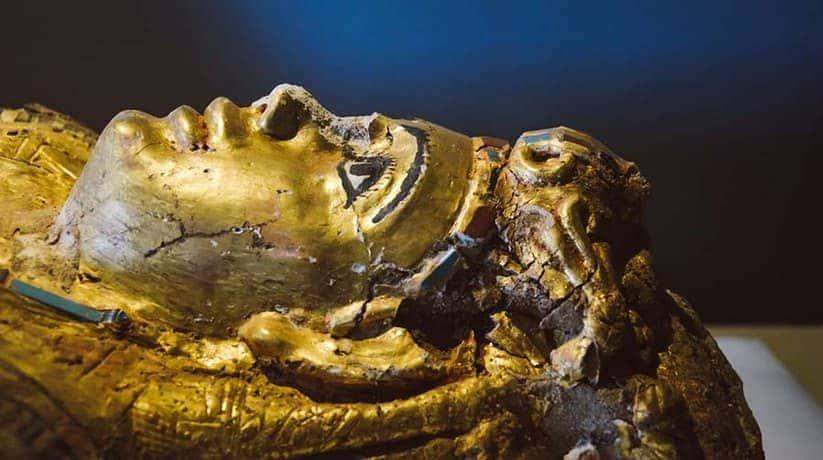
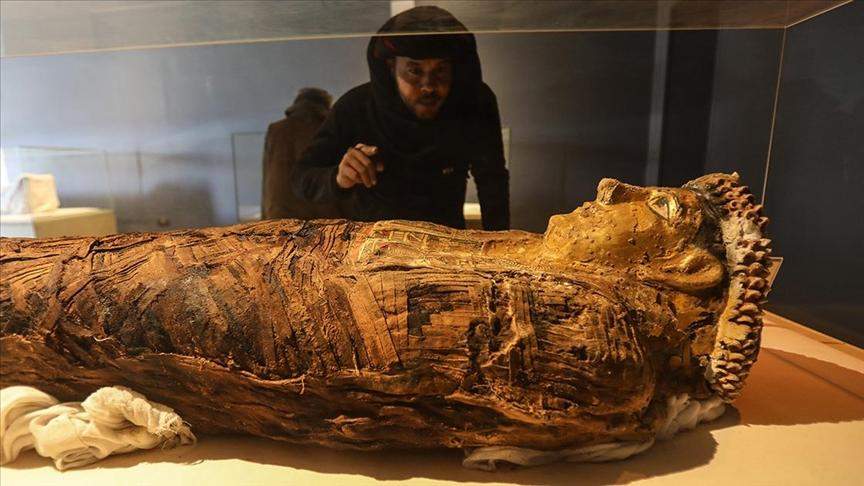
Few archaeological discoveries have given Bahariya as much international attention as the Valley of the Golden Mummies.
The name comes from the remarkable group of mummies discovered in the oasis, many associated with the Graeco-Roman period. Their decorated and gilded coverings created the striking image that inspired the modern name.
The discovery demonstrated the importance of Bahariya during a period when Egyptian traditions existed alongside strong Greek and Roman cultural influences.
The mummies also reveal something important about ancient Egyptian funerary traditions: the ancient desire to preserve the body and prepare it for the afterlife continued even as Egypt became increasingly connected to the wider Mediterranean world.
For visitors, the archaeological heritage of Bahariya adds another dimension to the desert experience. The landscape is not empty. Beneath and around the oasis are traces of communities that cultivated land, practiced religion, buried their dead, and interacted with cultures across the ancient world.
Bawiti: The Main Settlement of the Oasis
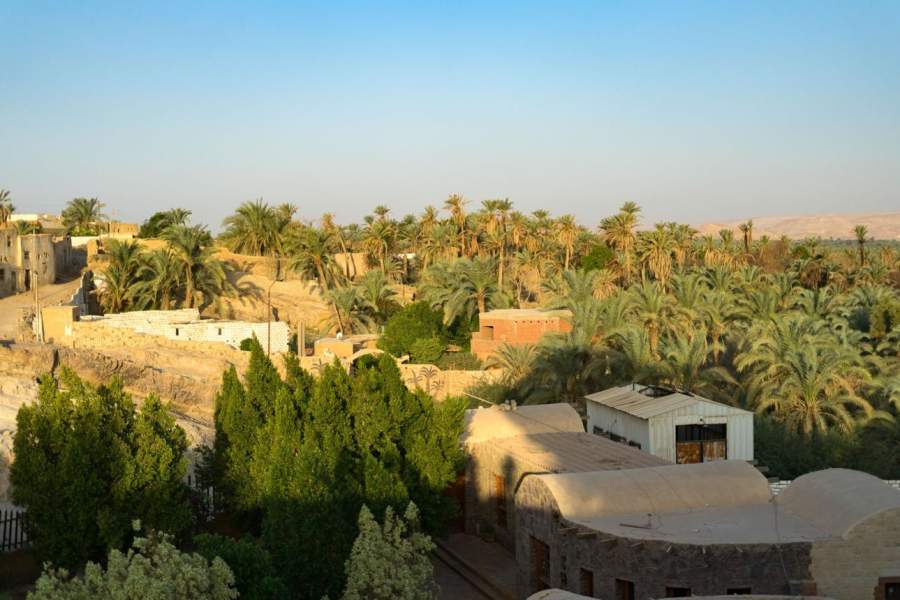
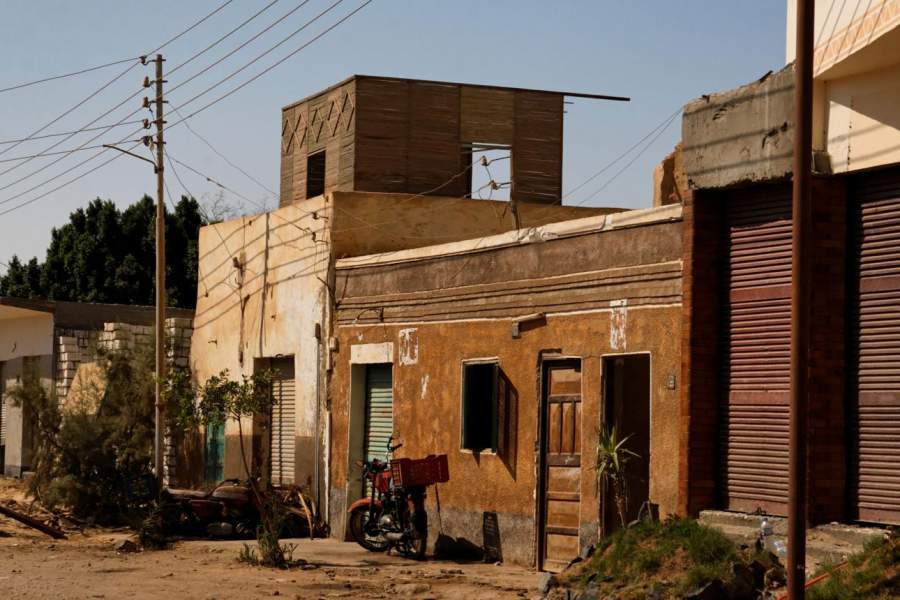
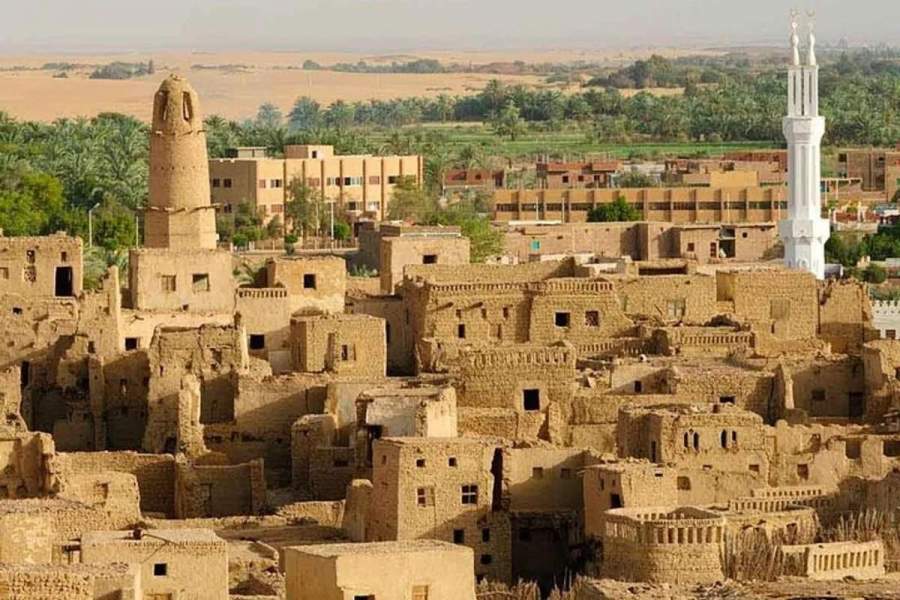
Bawiti is the main town of Bahariya Oasis and an important base for exploring the surrounding region.
Unlike the major resort destinations of Egypt, Bawiti has a much quieter atmosphere. Its streets, agricultural areas, palm groves, and local communities provide travelers with a chance to see a different side of Egyptian life.
The town is also a practical starting point for excursions into the surrounding desert.
From here, organized trips can head toward the Black Desert, Crystal Mountain, the White Desert, hot springs, archaeological sites, and desert camps.
For travelers interested in photography, Bawiti also provides an interesting contrast: green agricultural landscapes and palm trees can appear immediately beside barren desert hills.
That visual transition is one of the defining characteristics of an oasis.
The Black Desert
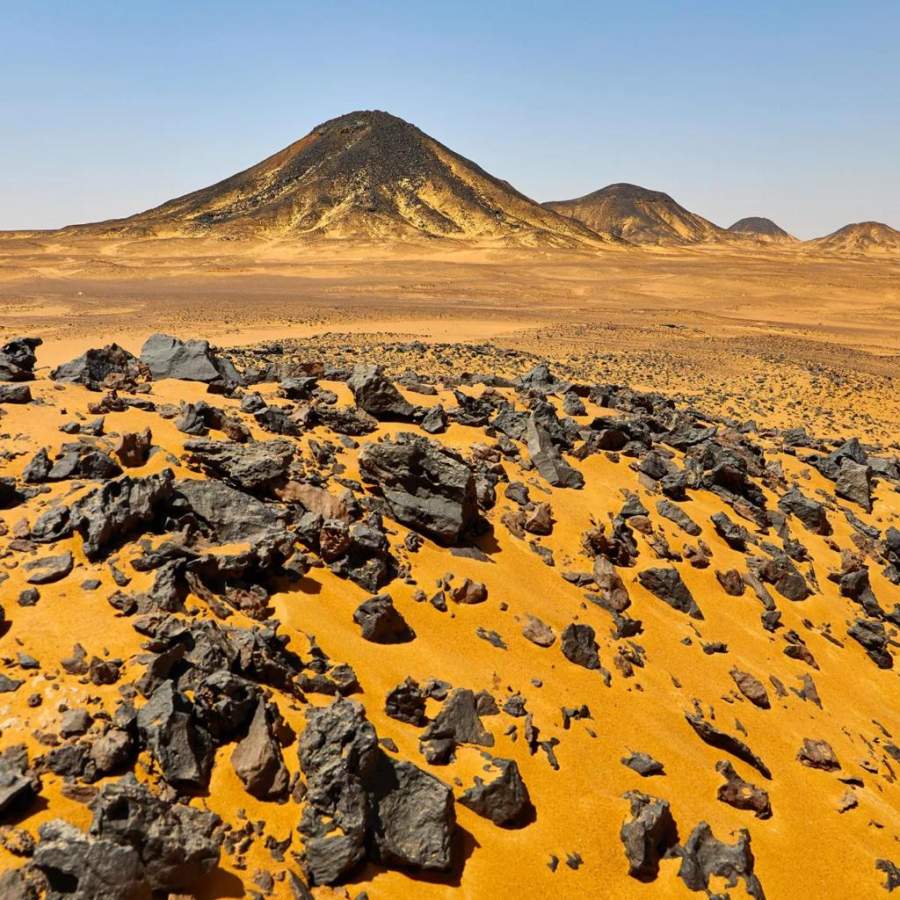
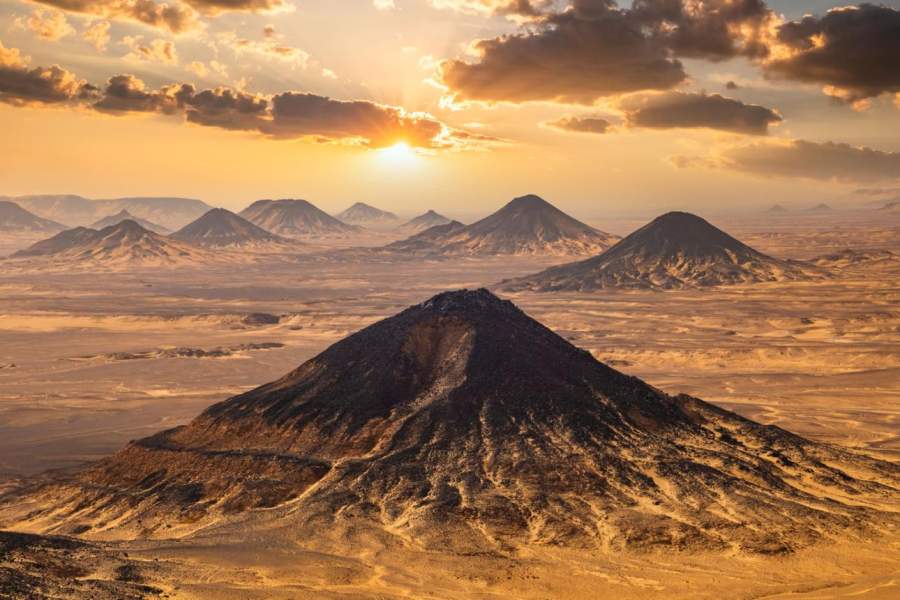
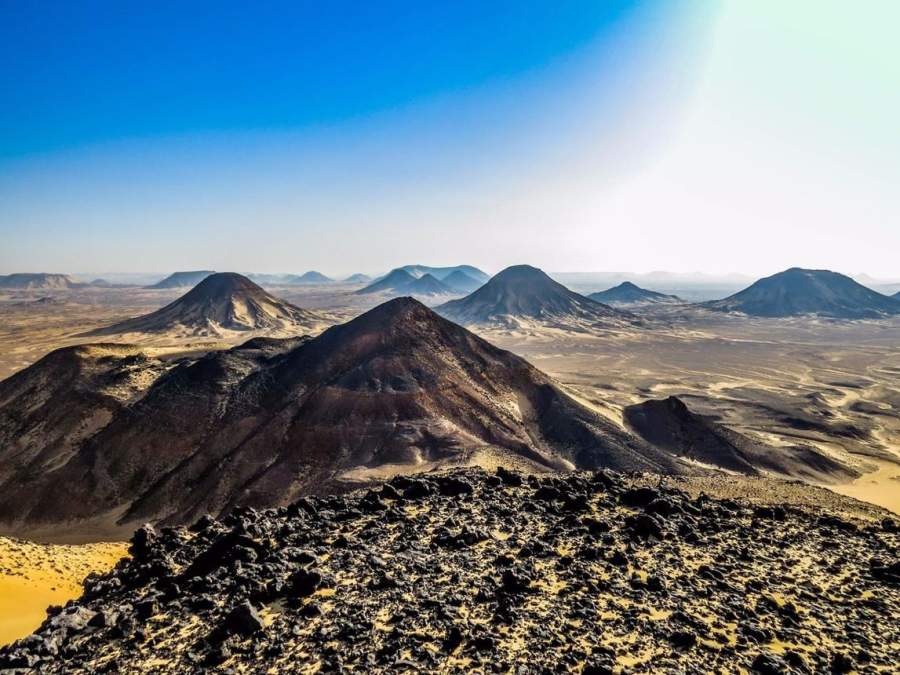
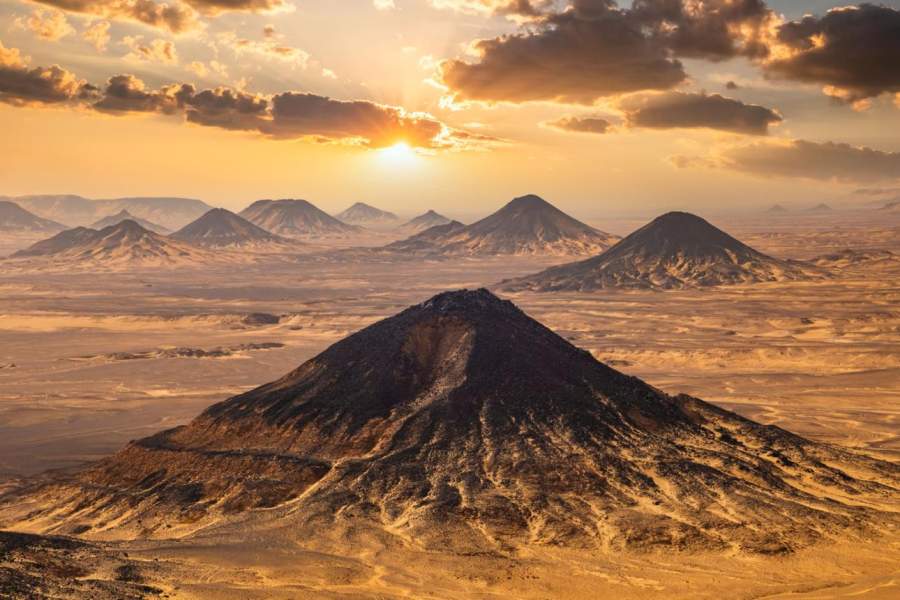
One of the most dramatic landscapes surrounding Bahariya is the Black Desert.
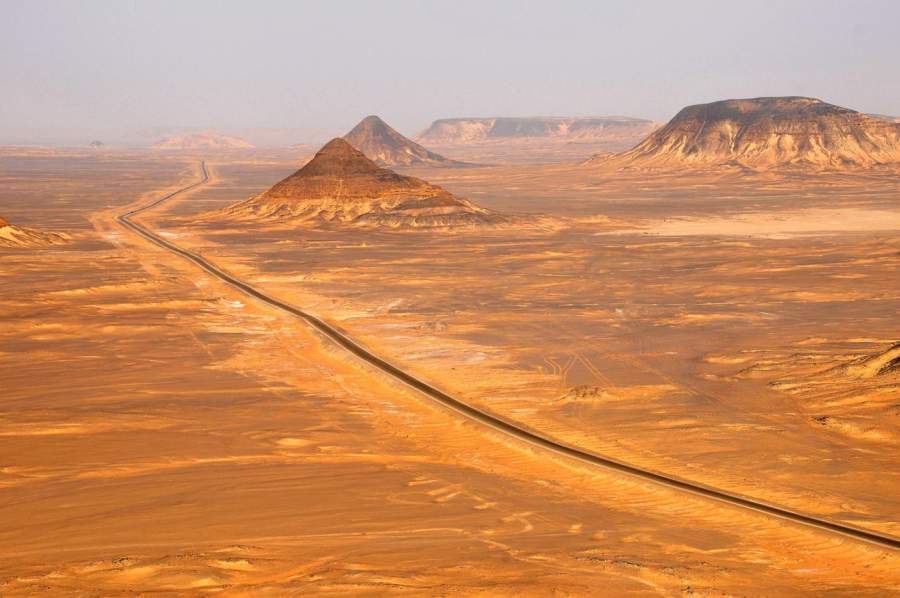
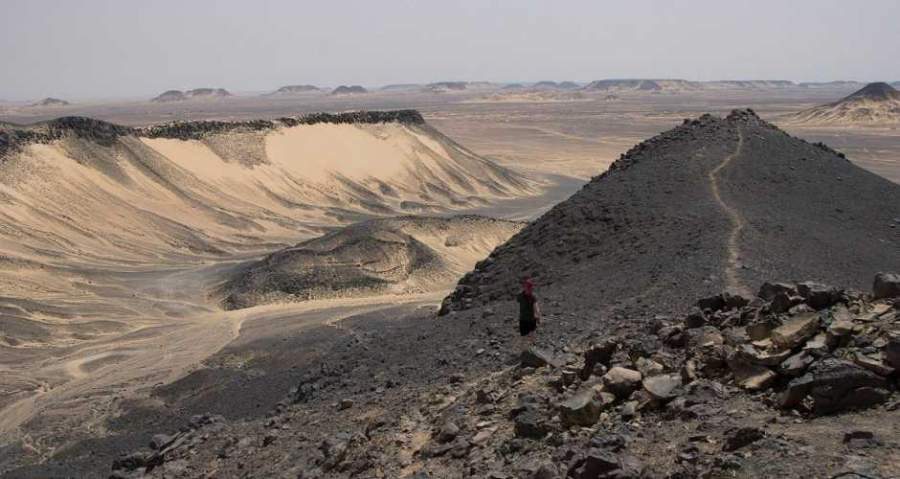
The name comes from the dark volcanic rocks and hills that cover portions of the landscape, creating an extraordinary contrast with the golden sand beneath them.
From a distance, the hills can appear almost like dark islands rising from an ocean of desert.
The Black Desert is particularly impressive from elevated viewpoints, where the full scale of the landscape becomes visible. Dark hills stretch across the horizon while golden-orange sand fills the spaces between them.
For photographers, the area is especially interesting during the early morning and late afternoon, when changing sunlight emphasizes the texture and color differences between the rocks and sand.
The landscape also demonstrates how diverse the Western Desert can be. The Sahara is often imagined as endless sand dunes, but Bahariya shows that deserts can contain mountains, volcanic formations, limestone plateaus, springs, and lush oases.
Gebel Al-Ingleez: The English Mountain
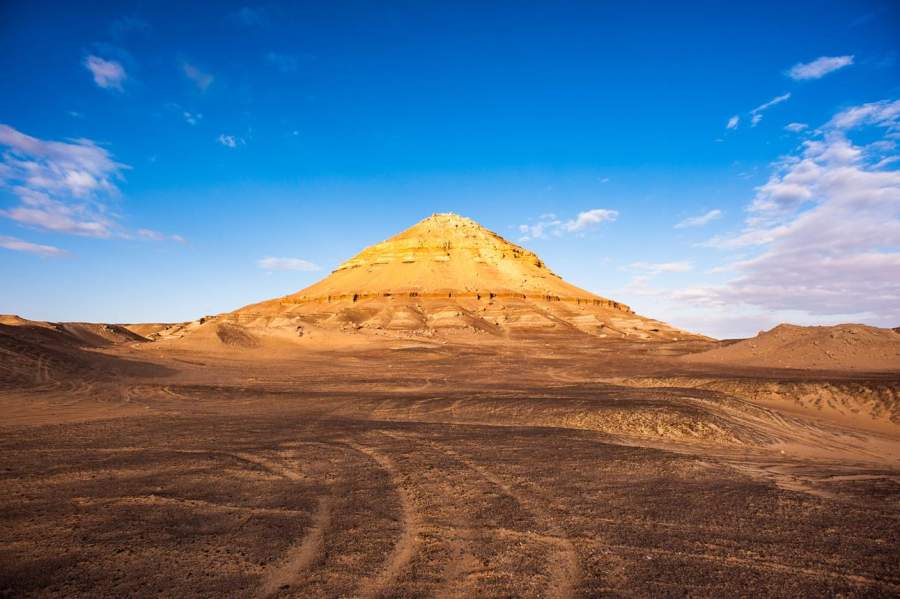
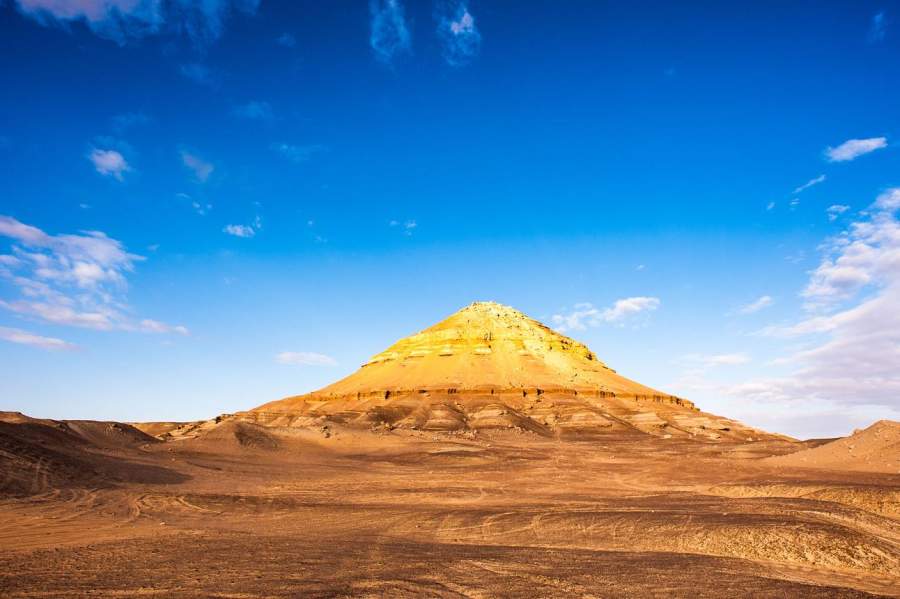
Rising above the Bahariya landscape is Gebel Al-Ingleez, commonly known in English as the English Mountain.
Experience Egypt recommends the mountain as one of the places to enjoy panoramic views over Bahariya and the surrounding desert.
The mountain also carries a more recent historical story. Its elevated position made it useful as a military observation point during the First World War, when British forces operated in the region.
Today, however, visitors are primarily interested in the views.
From the mountain, the oasis appears as a green patch surrounded by an enormous desert landscape. Palm groves and cultivated areas contrast sharply with the barren mountains and sand beyond them.
Sunset is particularly atmospheric here, as the desert changes color and the distant mountains become silhouettes against the evening sky.
Crystal Mountain
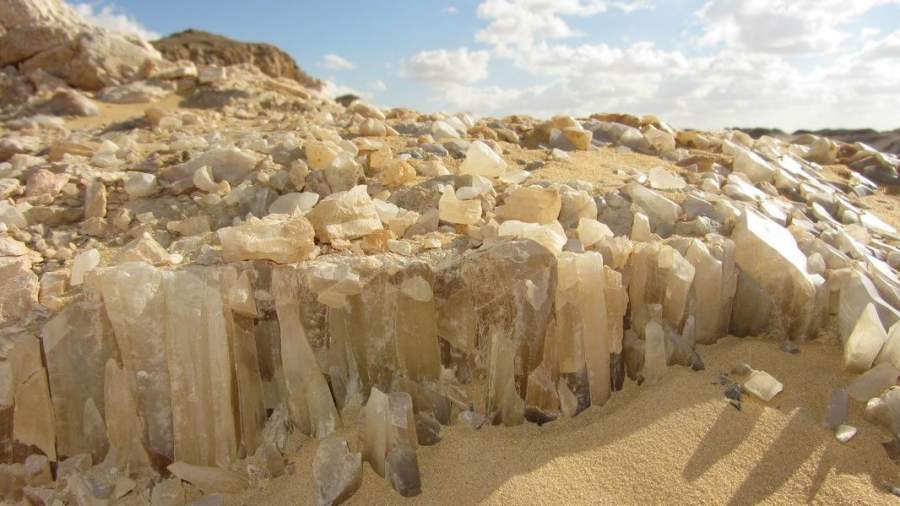
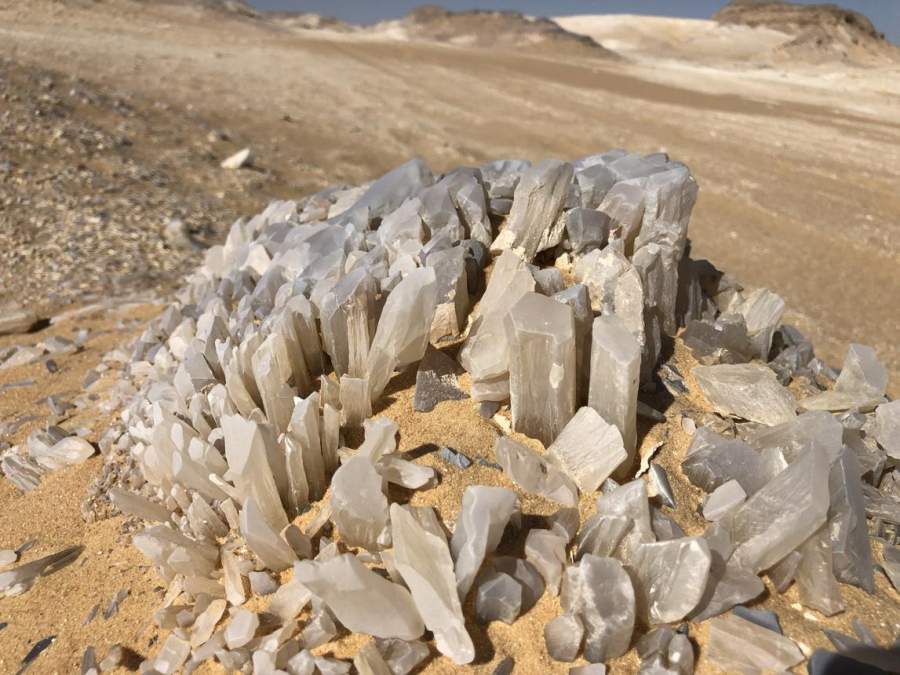
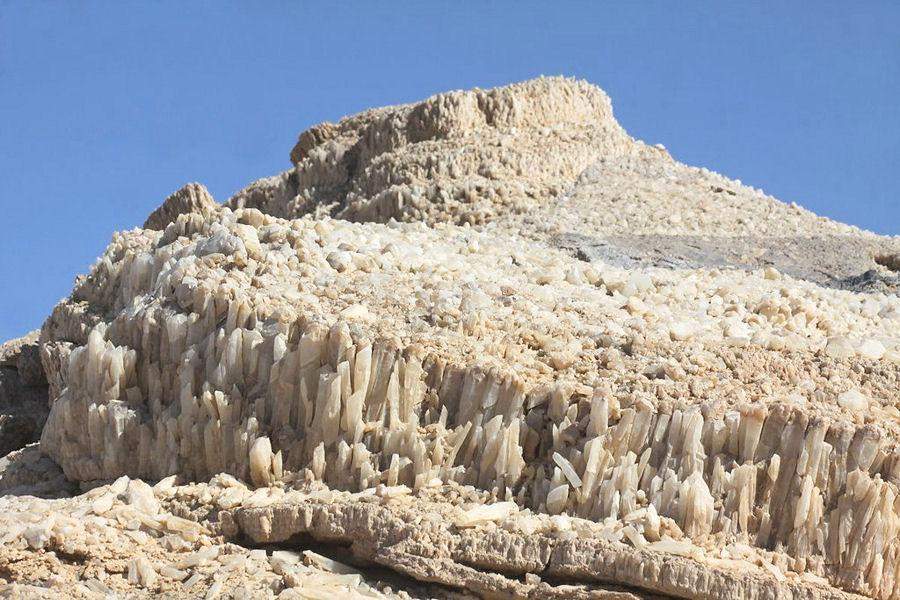
Between the desert landscapes of Bahariya and the White Desert is another famous geological attraction: Crystal Mountain.
The area is known for quartz-rich rock formations that sparkle when illuminated by sunlight.
Unlike the massive archaeological monuments found along the Nile, Crystal Mountain is a reminder that the Western Desert itself is a geological attraction.
The formations are relatively low compared with Egypt’s famous mountains, but their mineral composition and location within the vast desert give them a distinctive appearance.
A stop here is commonly combined with a larger desert safari, allowing travelers to experience several dramatically different environments during the same excursion.
The White Desert: A Surreal Landscape
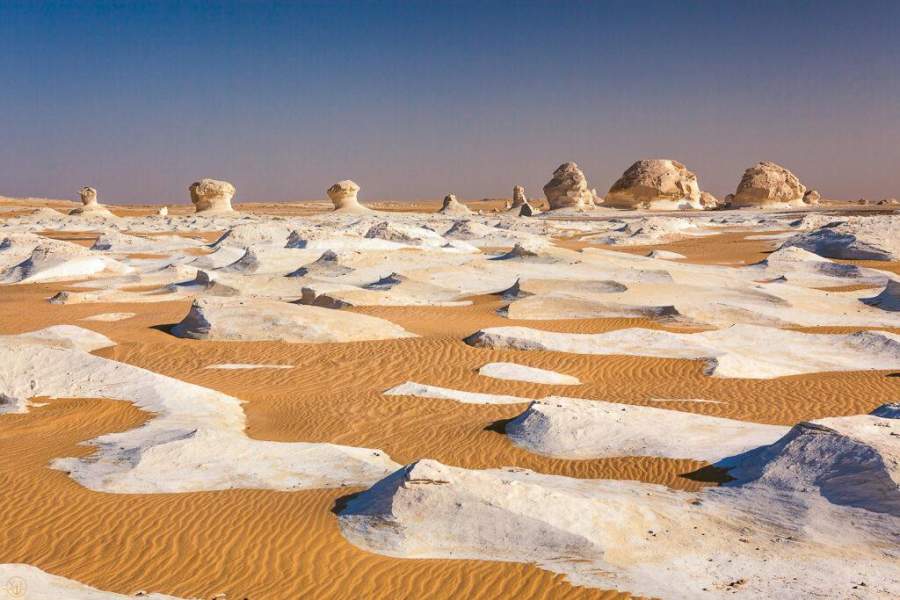
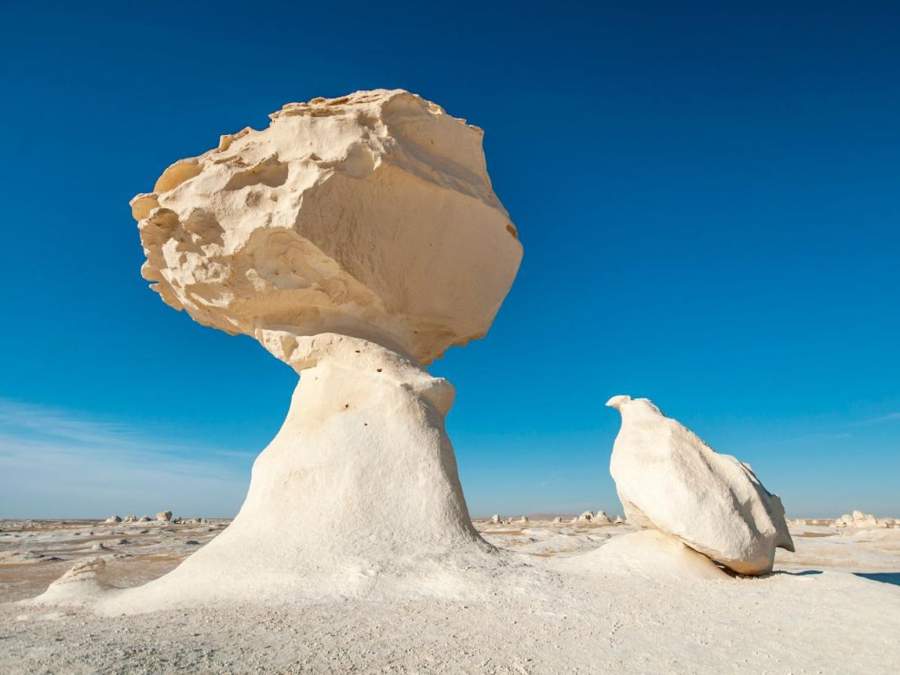
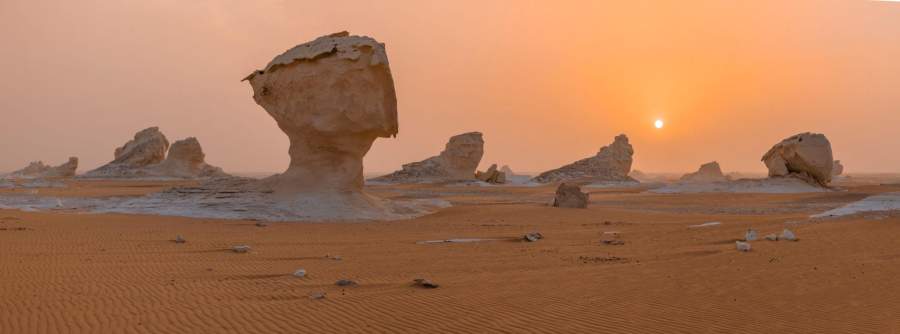
For many visitors, the ultimate highlight of a Bahariya journey is the White Desert.
Although it is technically associated with the Farafra region, excursions from Bahariya commonly use the oasis as the gateway to this spectacular desert environment.
The landscape is unlike the Black Desert.
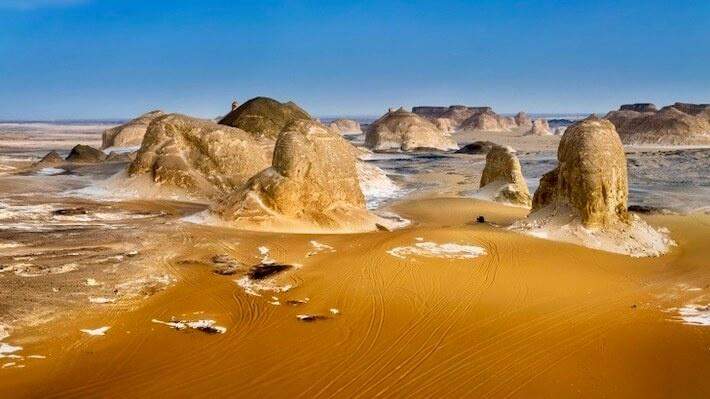
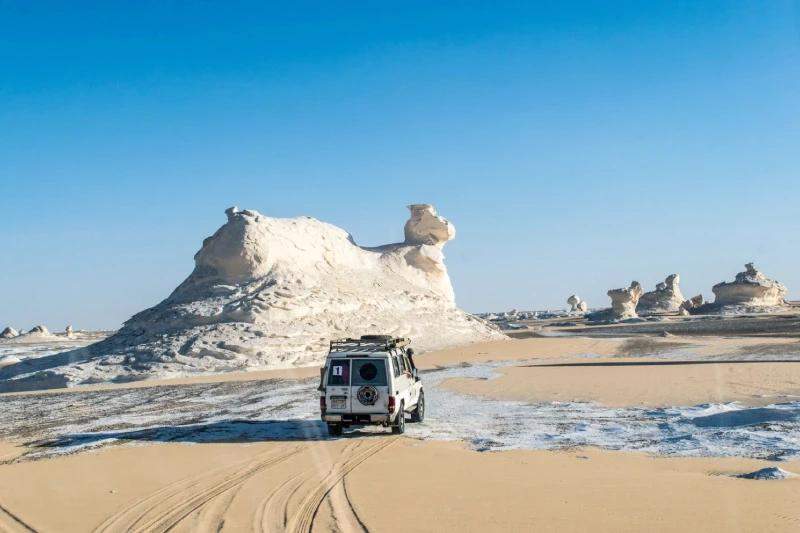
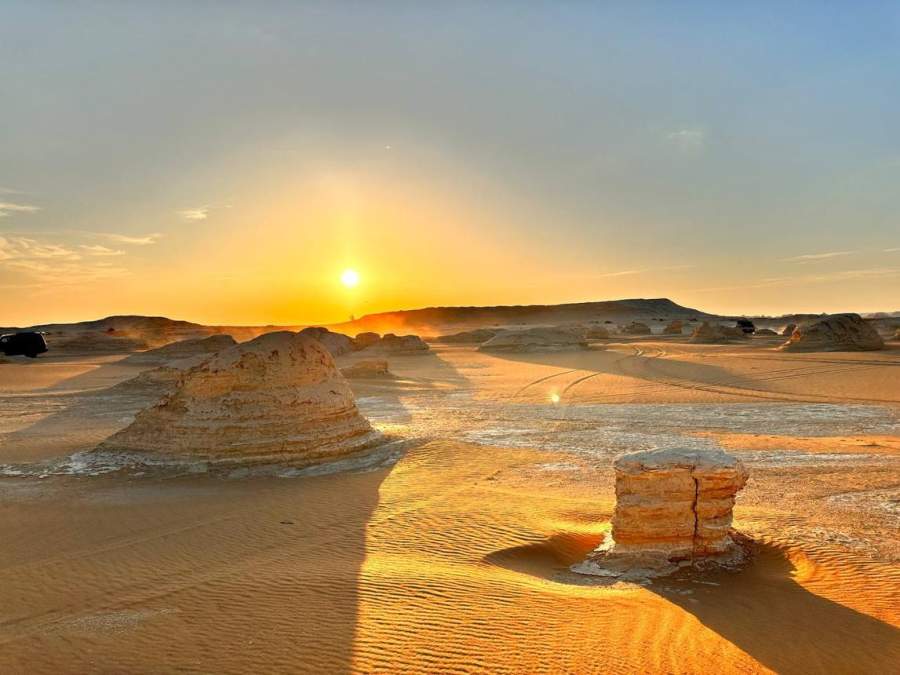
Here, enormous white and cream-colored limestone formations rise from the surrounding sand. Wind erosion has sculpted the rocks into shapes that resemble mushrooms, animals, towers, and giant sculptures.
The result is a landscape that can appear almost unreal.
Egypt’s Ministry of Tourism and Antiquities has highlighted the White Desert’s distinctive formations, including the famous mushroom-shaped rocks, as well as the sunset landscapes and safari activities available in the region.
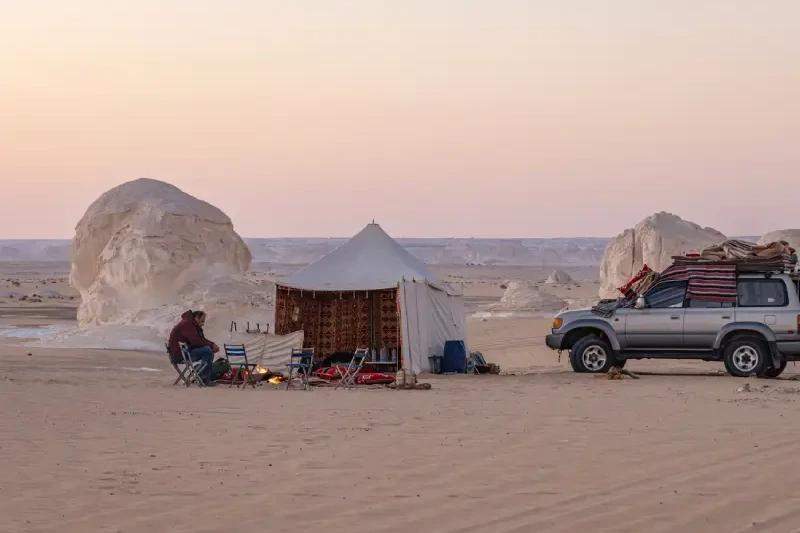
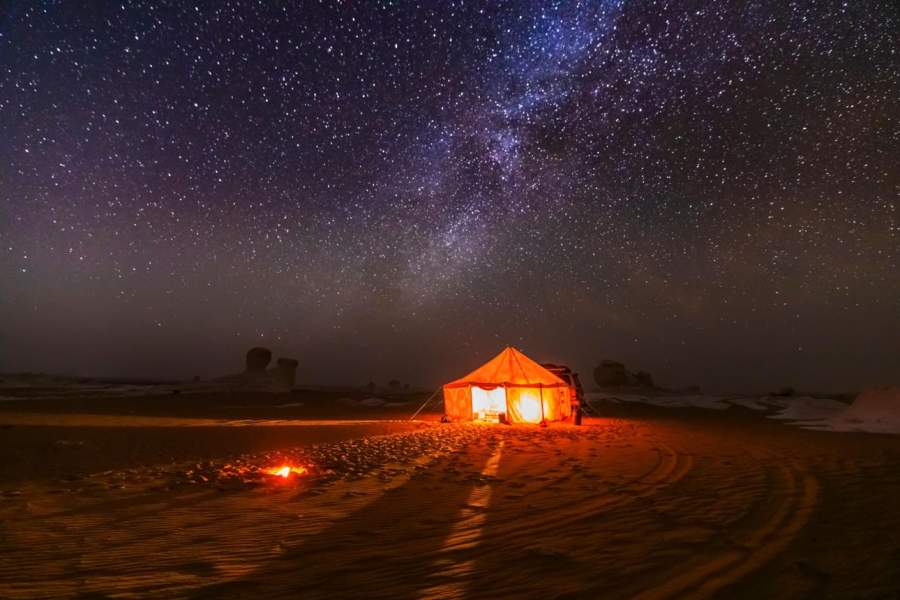
The experience changes completely after sunset.
During the day, the white rocks reflect the strong desert sunlight. As evening arrives, they take on warmer shades of gold and orange.
After dark, the absence of major urban lighting creates an ideal setting for experiencing the night sky.
For travelers staying overnight, camping beneath the stars becomes one of the defining moments of a Western Desert adventure.
Desert Camping Under the Stars
A Bahariya trip does not have to end when the sun goes down.
Many desert itineraries combine the oasis with overnight camping in the White Desert or surrounding desert areas.
The evening usually revolves around a simple desert camp, dinner, tea, conversation, and the changing colors of the landscape as daylight disappears.
Then comes the sky.
Far from Cairo and other major urban centers, the desert offers a completely different nighttime atmosphere. The horizon becomes almost invisible, and the stars become much more prominent.
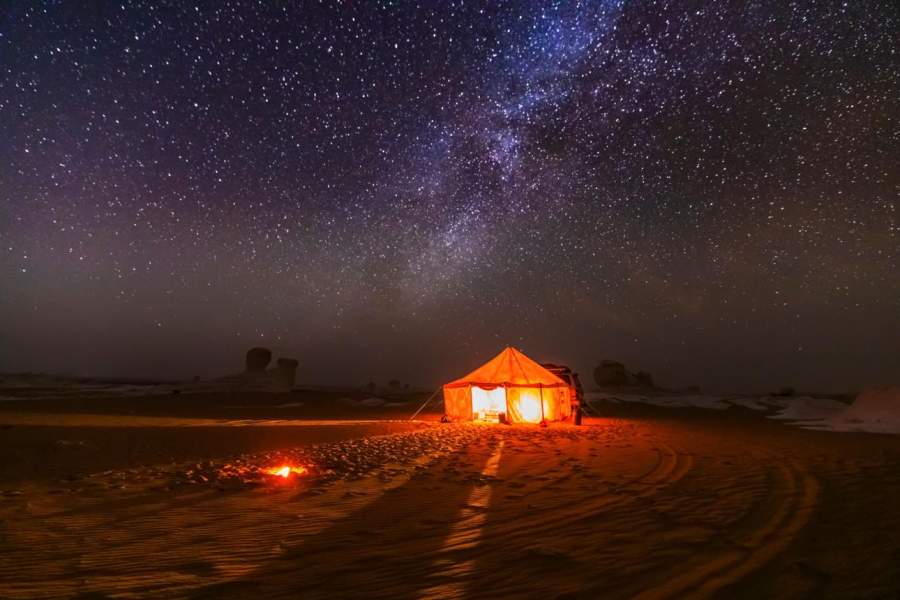
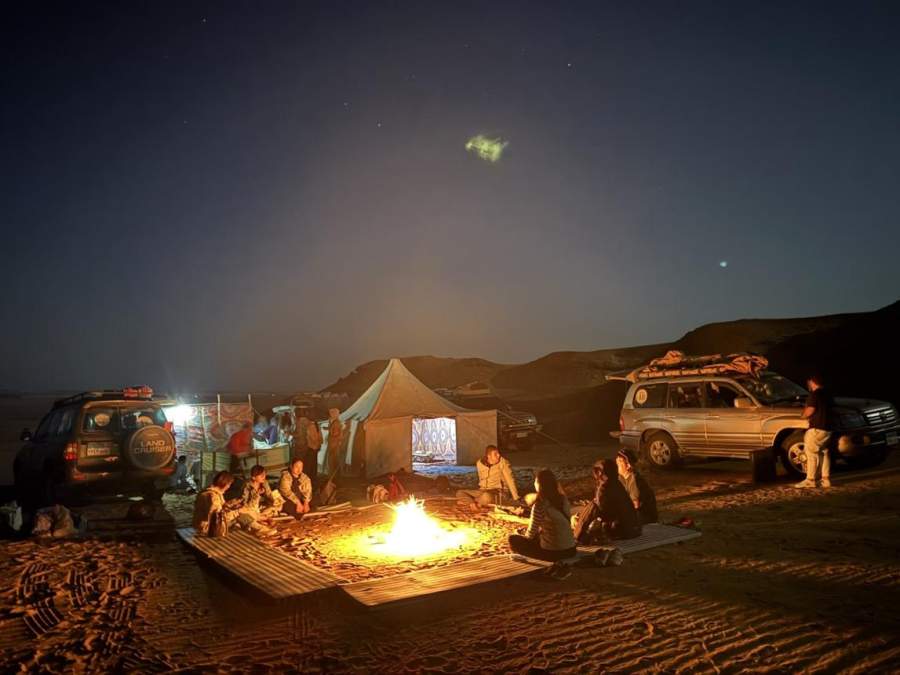
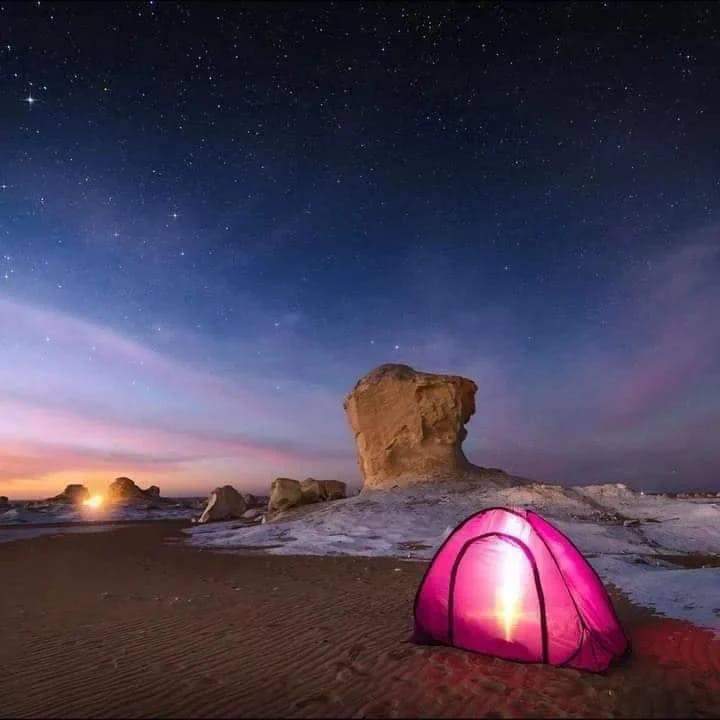
For photographers, the combination of white limestone formations and a star-filled sky creates extraordinary opportunities.
For everyone else, simply sitting quietly in the desert can be enough.
There is something memorable about experiencing Egypt without the sound of traffic, crowds, or city lights.
Hot Springs and Oasis Life
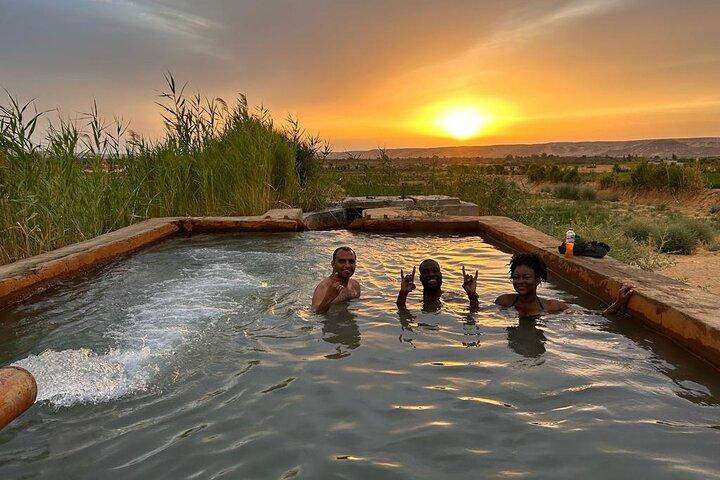
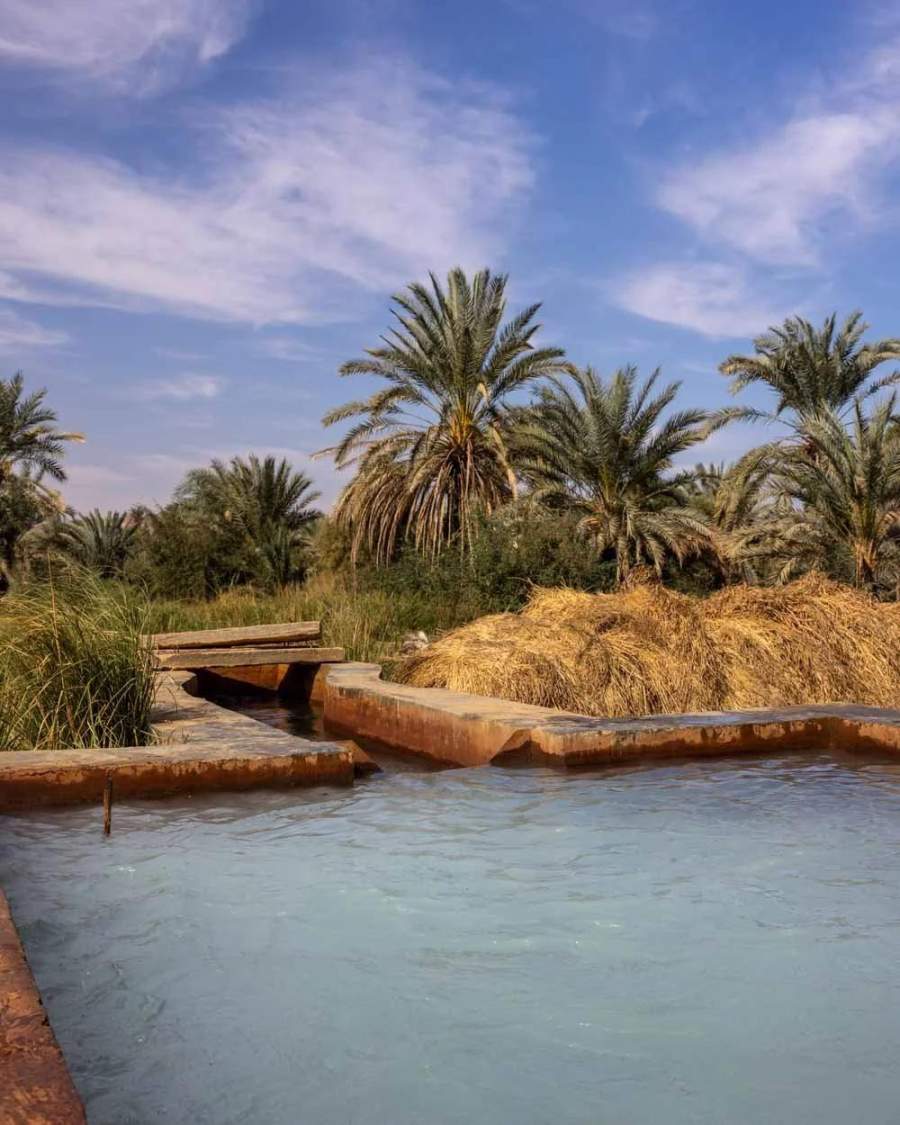
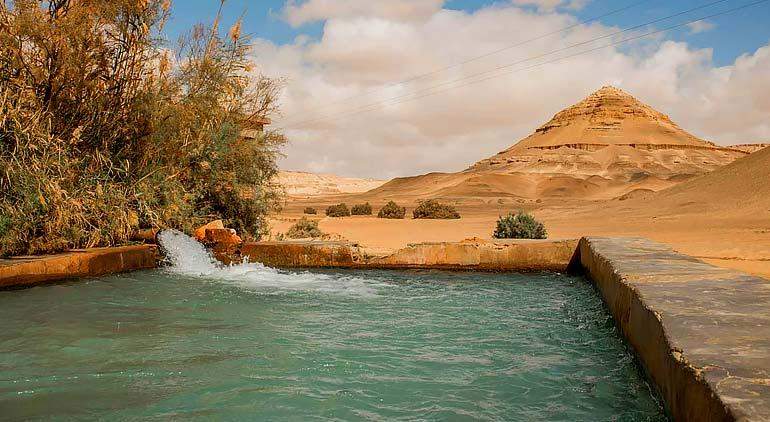
Water is what makes an oasis possible.
Bahariya contains a number of natural hot and cold springs, which are among the experiences highlighted by Egypt’s official tourism portal.
These springs have historically contributed to life in the oasis and today provide visitors with a relaxing experience after traveling through the desert.
The contrast is remarkable.
You can spend part of the day surrounded by dry mountains and sand, then find yourself beside water and vegetation only a short distance away.
Palm groves, agricultural fields, springs, and desert hills form a landscape that seems contradictory at first—but this is precisely what defines an oasis.
Gabal Maghrafa and the Dinosaur Connection
Bahariya also has an unexpected connection to prehistoric life.
Experience Egypt identifies Gabal Maghrafa as a mountain famous for dinosaur fossil discoveries.
The discovery of dinosaur remains adds another geological chapter to the story of the oasis.
Long before the modern desert landscape developed, environmental conditions in the region were very different. Fossils provide evidence of ancient ecosystems that existed millions of years ago.
This makes Bahariya fascinating not only for students of Egyptian history and archaeology but also for anyone interested in geology and paleontology.
The same region that contains ancient temples and Graeco-Roman tombs can also preserve evidence of life that existed unimaginably long before human civilization.
Qasr Al-Agouz and Early Christian Heritage
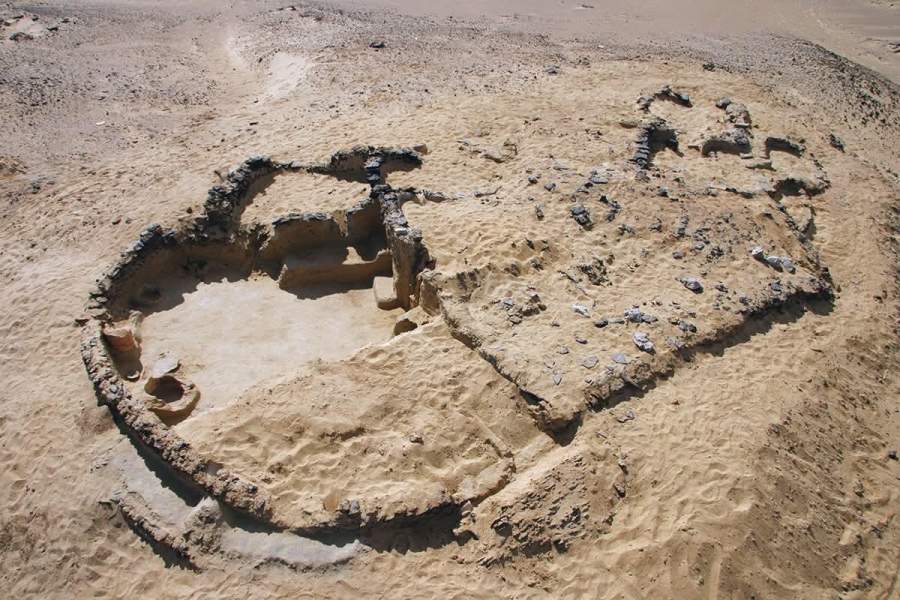
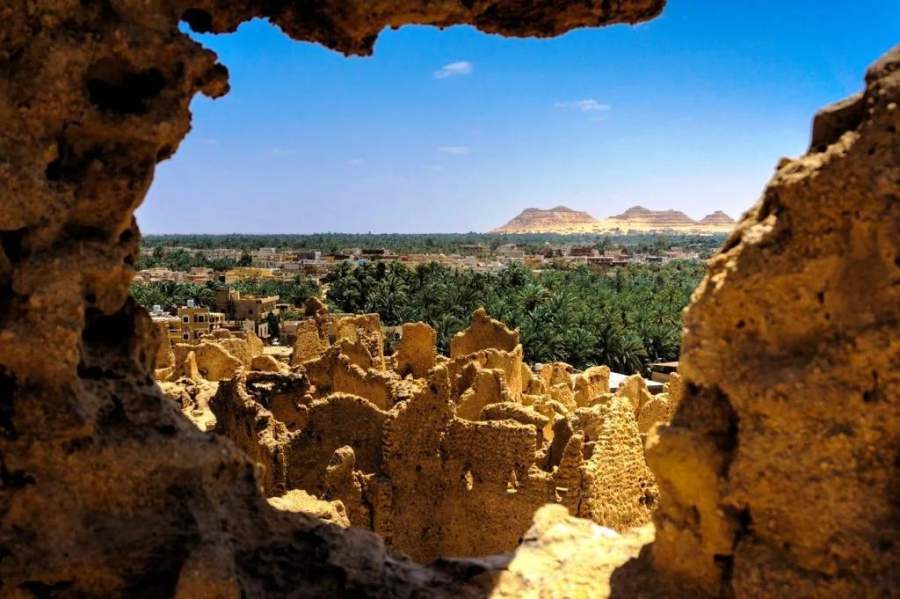
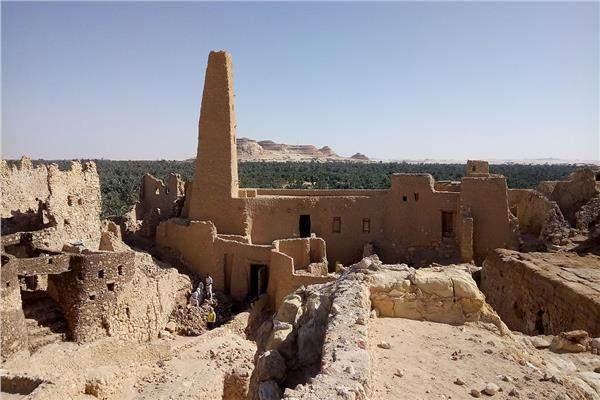
Another fascinating chapter of Bahariya's history can be found at Qasr Al-Agouz.
Archaeological excavations have revealed several areas containing rock-cut rooms, churches, mud-brick structures, and evidence of monastic life.
The Egyptian Ministry of Tourism and Antiquities reported discoveries including 19 rock-cut rooms and a church with associated spaces, along with Greek religious inscriptions and ostraka. Some of the structures date to approximately the 4th–7th centuries AD, while the evidence suggests monks were living in the area from around the 5th century.
These remains are important because they demonstrate that the desert was not simply a place crossed by travelers.
People established communities here.
They built churches, lived in monastic settlements, cultivated land, and developed religious traditions within an environment that might appear harsh to a modern visitor.
Safari Adventures in Bahariya
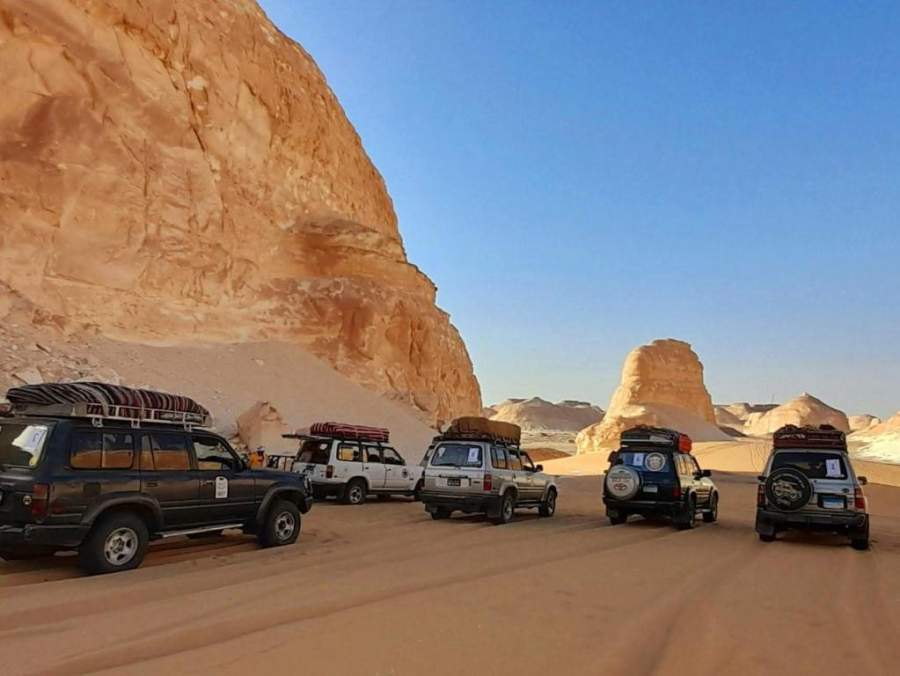
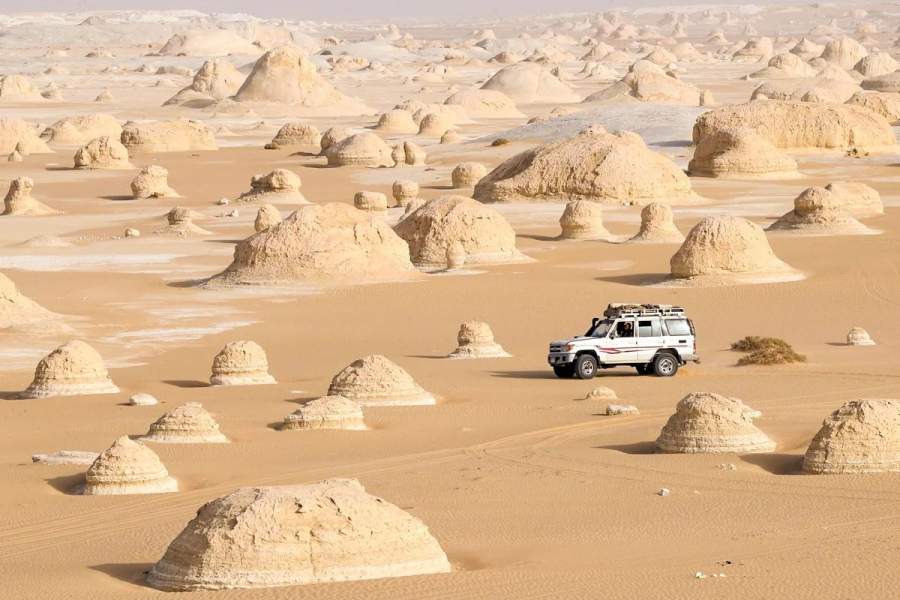
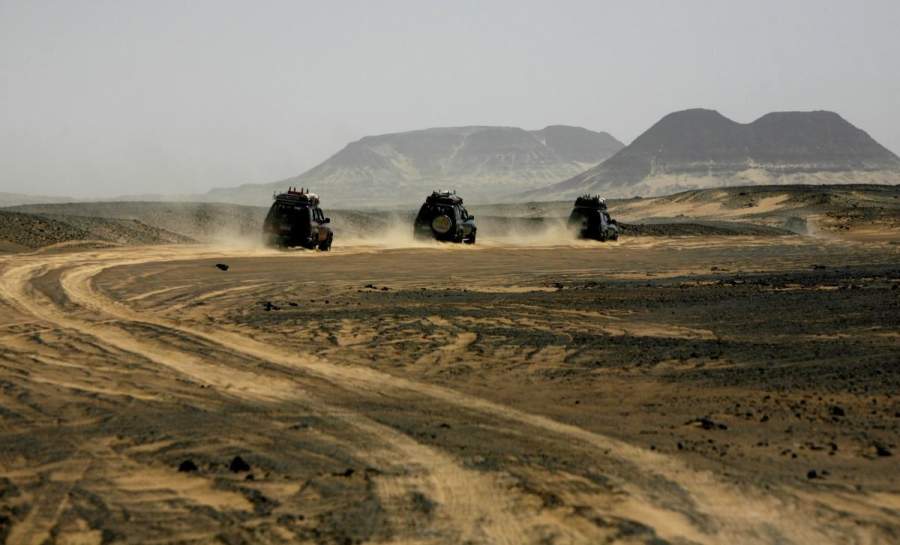
For many travelers, Bahariya is best experienced through a 4x4 desert safari.
A typical adventure can connect several landscapes in a single journey: the oasis itself, the Black Desert, Crystal Mountain, desert valleys, springs, and eventually the White Desert.
The advantage of traveling by 4x4 is that the desert experience becomes more expansive. Instead of seeing a single attraction and returning to town, visitors move through a sequence of changing landscapes.
Some excursions also include sandboarding, short hikes, traditional meals, desert camping, and stargazing.
The official tourism portal specifically lists desert camping, sandboarding in the White Desert, cycling around the oasis, hiking at Gabal Maghrafa, and exploring springs among the activities available to visitors.
The Best Time to Visit Bahariya Oasis
Bahariya is a desert destination, so seasonal temperatures should be considered when planning a visit.
The cooler months are generally more comfortable for long drives, hiking, desert exploration, and overnight camping.
Winter evenings in the desert can become considerably cooler than daytime temperatures, so visitors planning to camp should prepare with appropriate layers.
Summer can be extremely hot, particularly during the middle of the day. Travelers visiting during hotter months may prefer early-morning and late-afternoon activities and should follow their guide's advice regarding hydration and exposure.
The best itinerary also depends on the type of experience you want.
If your priority is desert camping, cooler conditions can make the experience more comfortable. If archaeology is your main interest, you can structure the trip around the oasis's historical sites. If photography is the goal, sunrise and sunset provide the most dramatic light.
Bahariya Oasis: Where Five Different Worlds Meet
What makes Bahariya special is not one monument.
It is the extraordinary number of experiences concentrated within one desert region.
You have the green oasis, where palm trees and agriculture create life in the desert.
You have the archaeological Bahariya, where Graeco-Roman discoveries and the Golden Mummies reveal an ancient community.
You have the Christian Bahariya, where archaeological remains document early monastic life.
You have the Black Desert, with its dark volcanic-looking hills and rocks.
And you have the route toward the White Desert, where wind and time transformed limestone into surreal natural sculptures.
Together, these landscapes create a destination that feels completely different from the traditional Nile Valley itinerary.
Final Thoughts
Bahariya Oasis is one of those Egyptian destinations where the journey is almost as important as the destination itself.
The road from Cairo gradually leaves the modern city behind and leads into an environment of palms, springs, archaeological remains, mountains, rocks, and endless desert.
Here, the past exists everywhere.
The Valley of the Golden Mummies reveals the importance of the oasis during the Graeco-Roman era. Archaeological discoveries at Qasr Al-Agouz demonstrate later Christian and monastic communities. Gabal Maghrafa connects the region to prehistoric life, while the Black Desert and White Desert reveal the extraordinary geological diversity of Egypt's Western Desert.
And then there is the silence.
After sunset, when the desert becomes dark and the stars fill the sky, Bahariya offers something that Egypt's busiest tourist sites cannot easily provide: space, solitude, and a direct connection with the landscape.
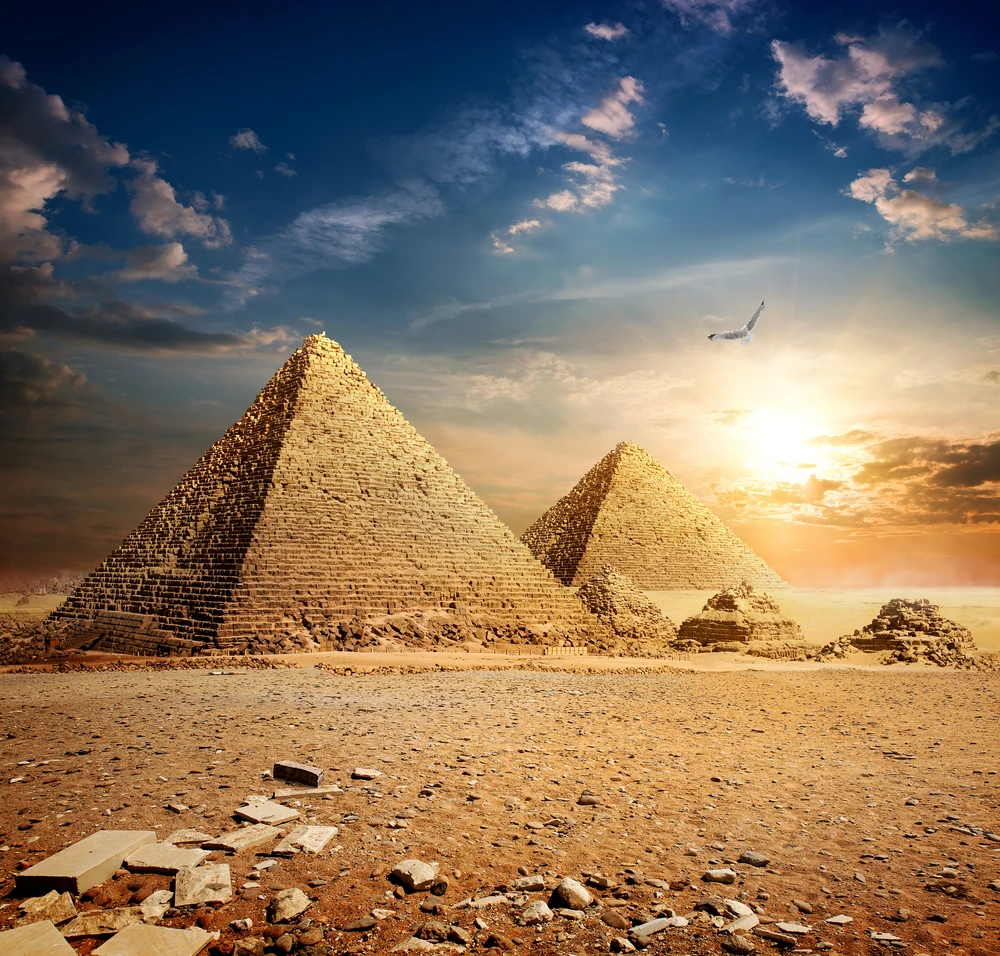
For travelers looking to discover an Egypt beyond pyramids and temples, Bahariya Oasis is an unforgettable journey into the heart of the Western Desert.
Post a comment