

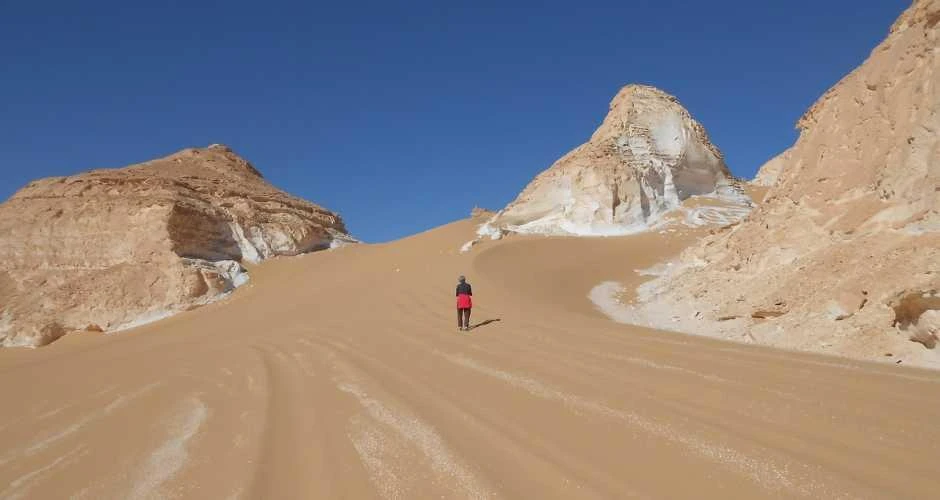
Agabat Valley: Egypt’s Golden Desert Valley of Sand and Stone
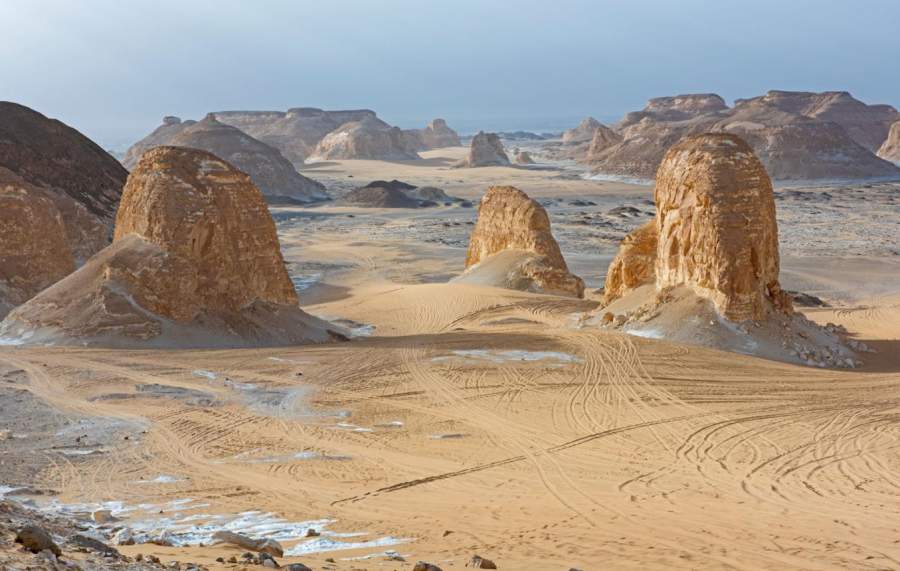
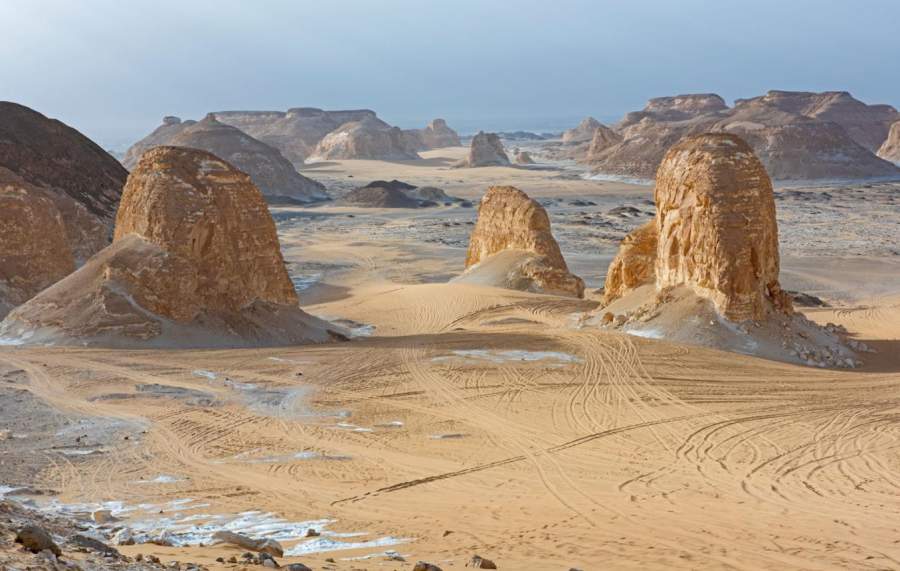
Imagine standing in the middle of Egypt’s Western Desert, surrounded by soft golden dunes, towering white cliffs, and an endless horizon.
There are no busy streets. No city skyline. No ancient temple rising above the landscape.
Instead, there is silence—and a landscape that looks almost unreal.
This is Agabat Valley, one of the hidden gems of Egypt’s Western Desert and a spectacular stop on desert excursions around Al-Farafra Oasis.
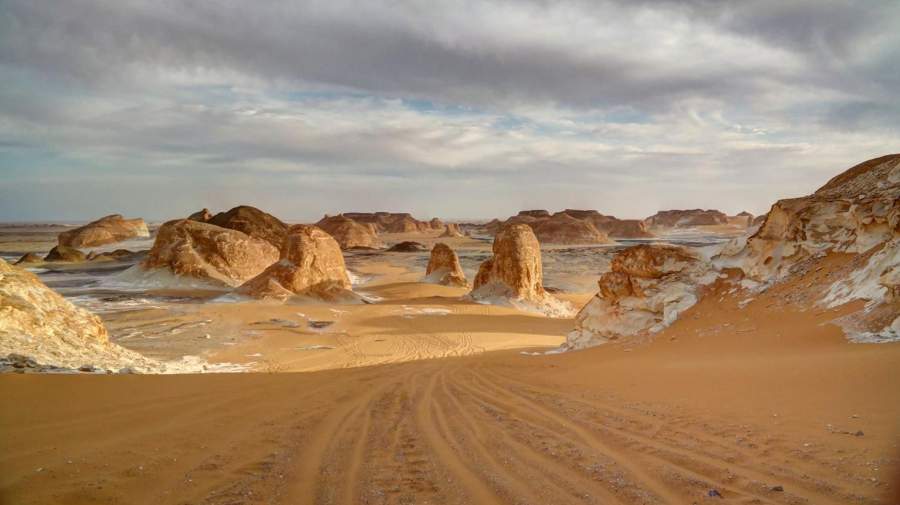
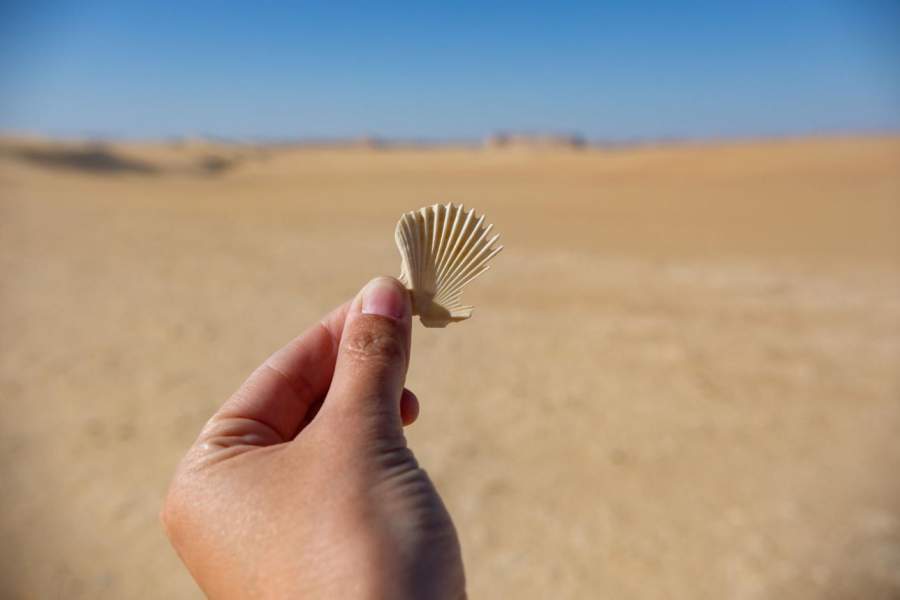
Experience Egypt describes Agabat Valley as famous for its soft golden sand, beautiful dunes, and distinctive white cliffs. The site also preserves evidence of an ancient landscape: occasional seashells can still be found because the valley lies on the dried-up bed of an ancient river.
Agabat is not a conventional tourist attraction.
There is no grand entrance or monumental gateway.
The desert itself is the attraction.
Where Is Agabat Valley?
Agabat Valley is located in Egypt’s Western Desert, close to Al-Farafra Oasis and within the wider landscape of the White Desert region.
Al-Farafra is one of Egypt’s most isolated oases and serves as an important starting point for exploring the surrounding desert.
Experience Egypt identifies the oasis as a base for excursions to some of the Western Desert’s most remarkable landscapes, including the White Desert, Black Desert, Crystal Mountain, Great Sand Sea, and Agabat Valley.
This makes Agabat particularly attractive to travelers who want to combine several natural landscapes into one desert adventure.
A journey can move from the greenery of the oasis into open desert, then through golden dunes and dramatic cliffs before reaching the surreal white formations of the White Desert.
A Valley Shaped by an Ancient Landscape
One of the most fascinating details about Agabat Valley is that its story reaches much further back than its modern appearance suggests.
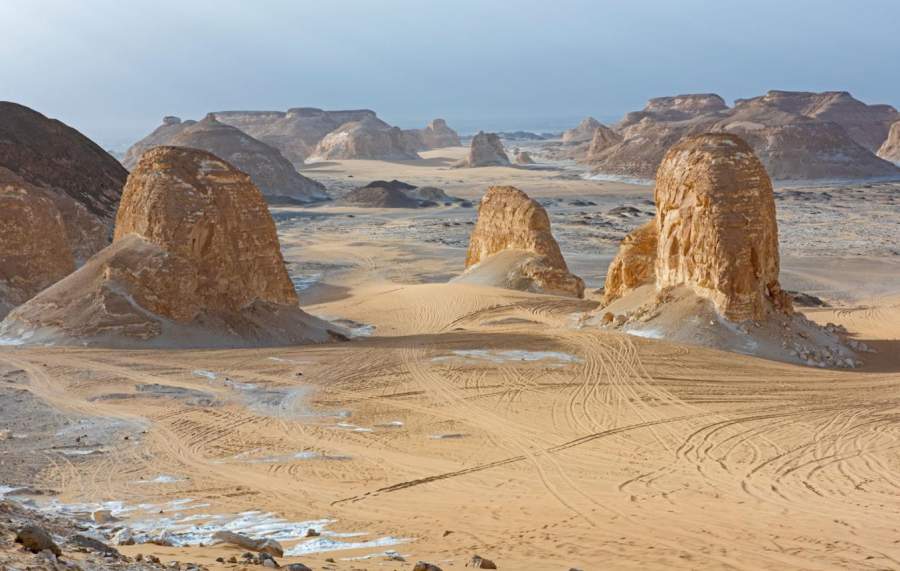
Today, visitors see sand and rock.
But Experience Egypt notes that Agabat is the dried-up site of an ancient riverbed, explaining why visitors may occasionally spot seashells scattered through the landscape.
That detail changes the way you see the valley.
The desert may appear completely dry and lifeless, but the rocks and fossils preserve evidence of an environment that was once dramatically different.
This is one of the great surprises of Egypt’s Western Desert.
The landscape is not simply empty space.
It is a geological record.
Golden Sand and White Cliffs
Agabat Valley gets much of its visual appeal from the contrast between two elements:
golden sand and white rock.
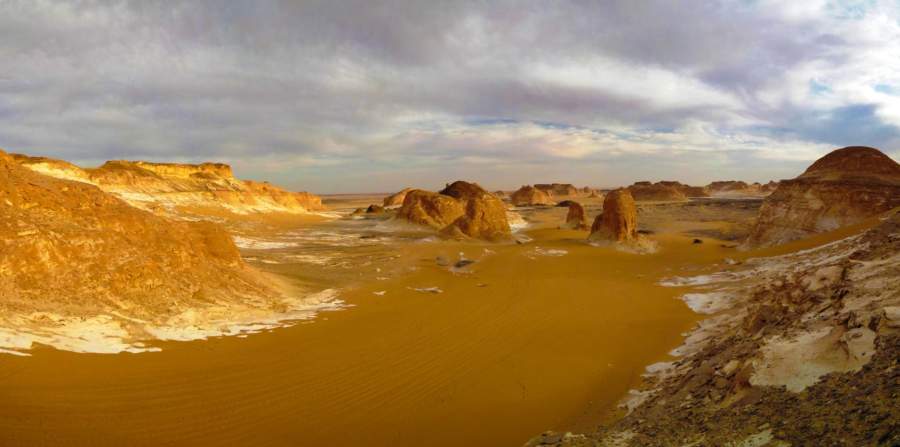
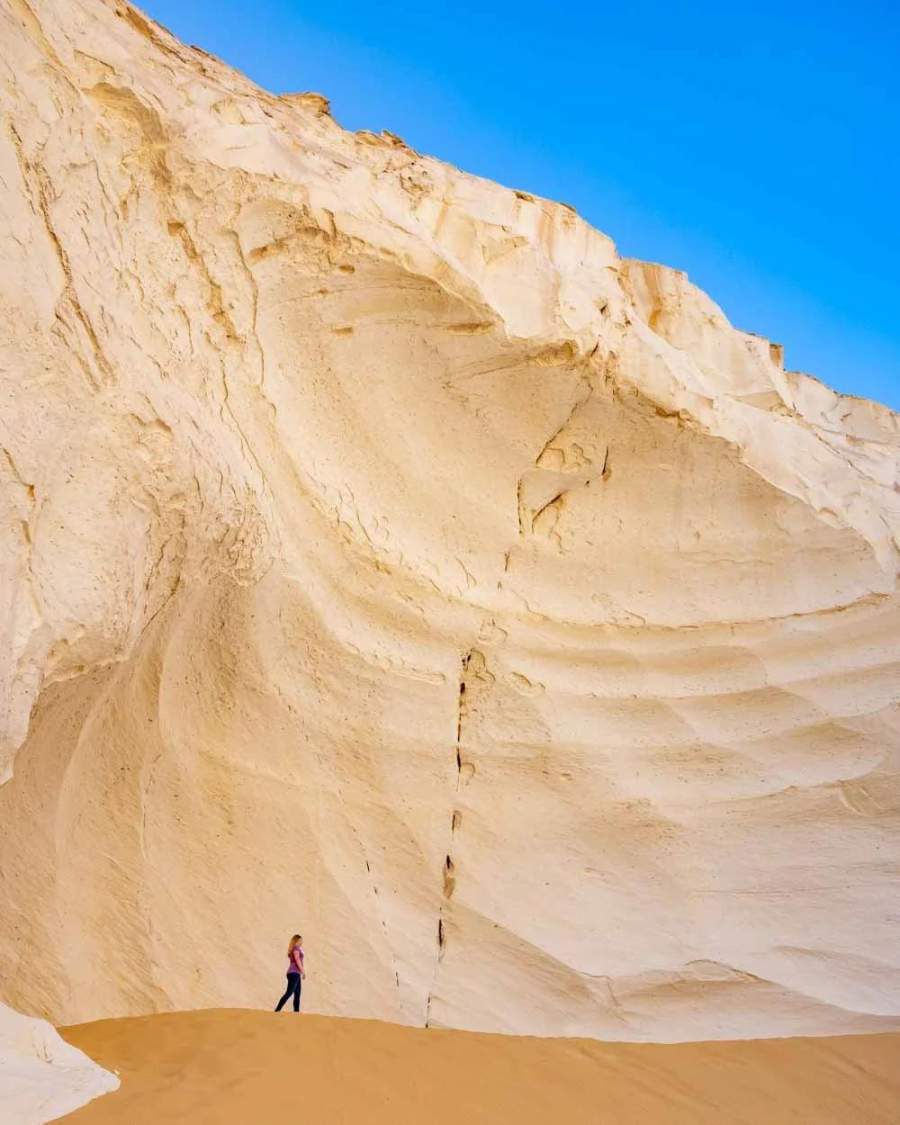
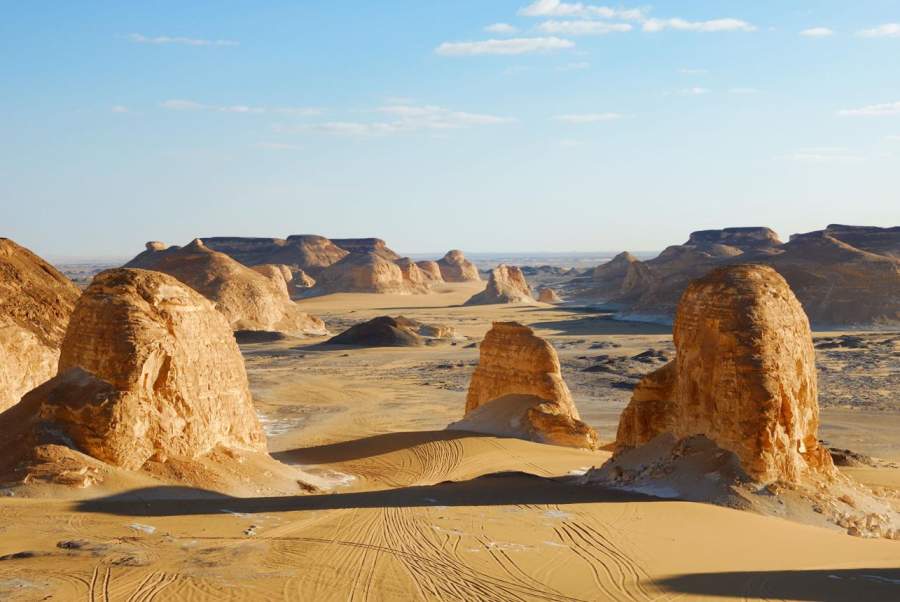
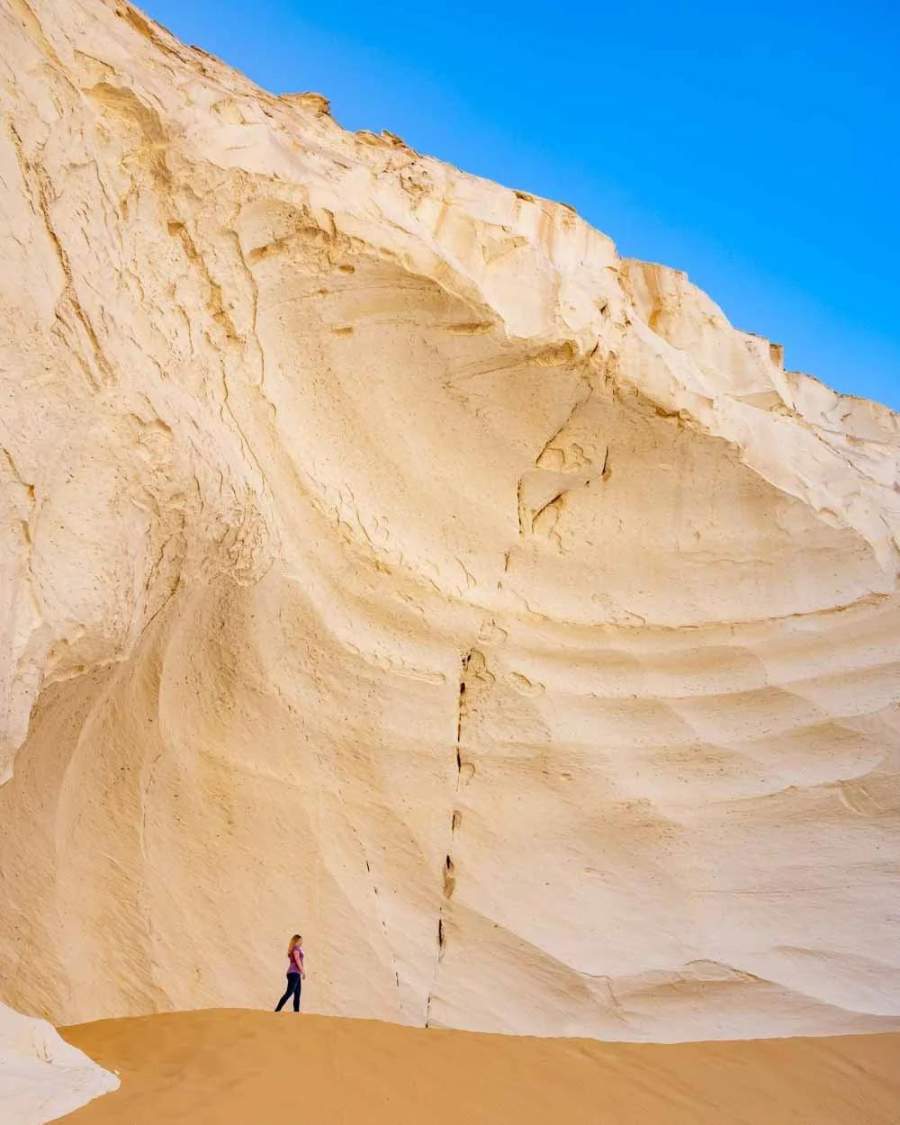
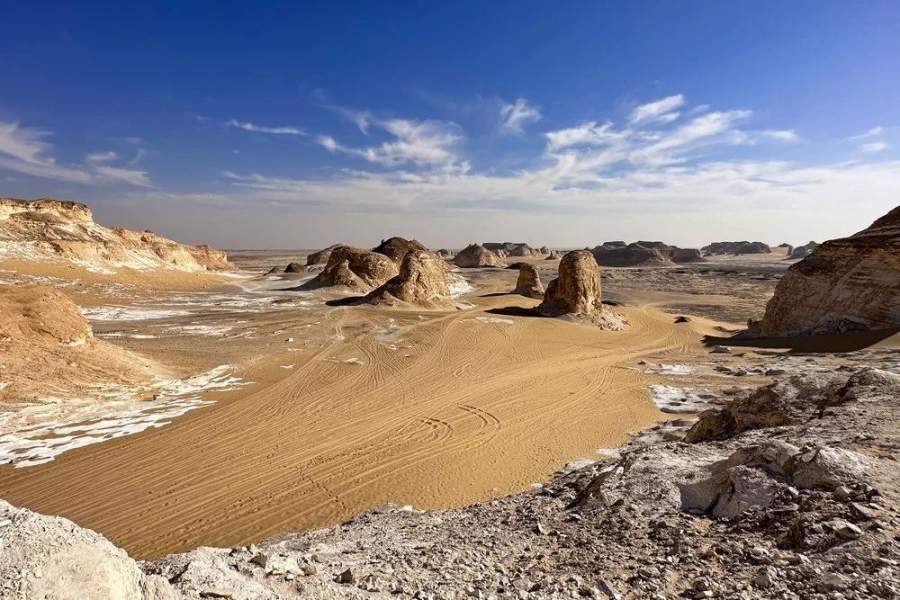
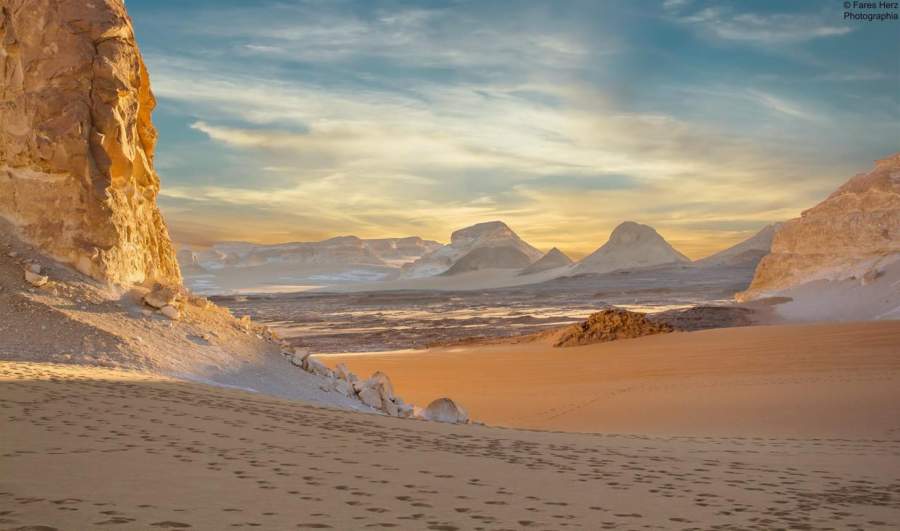
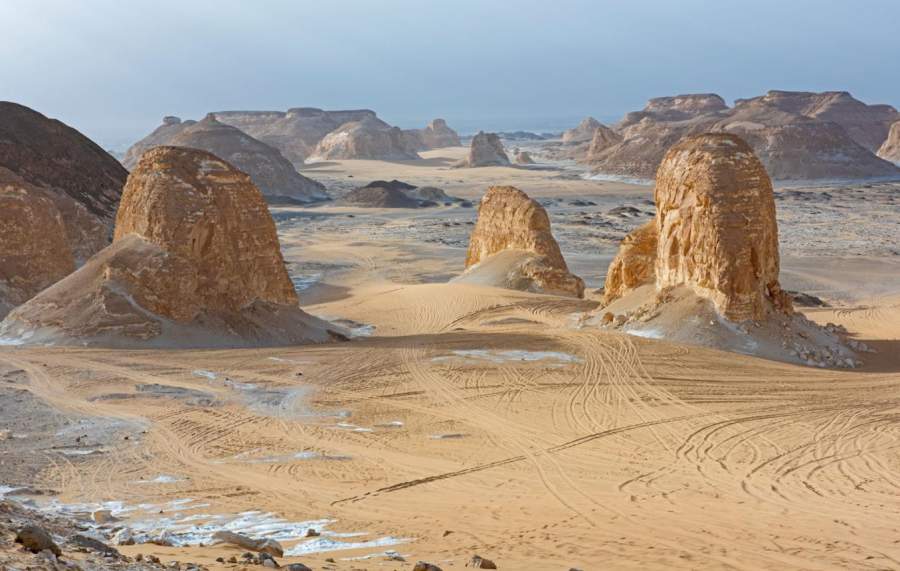
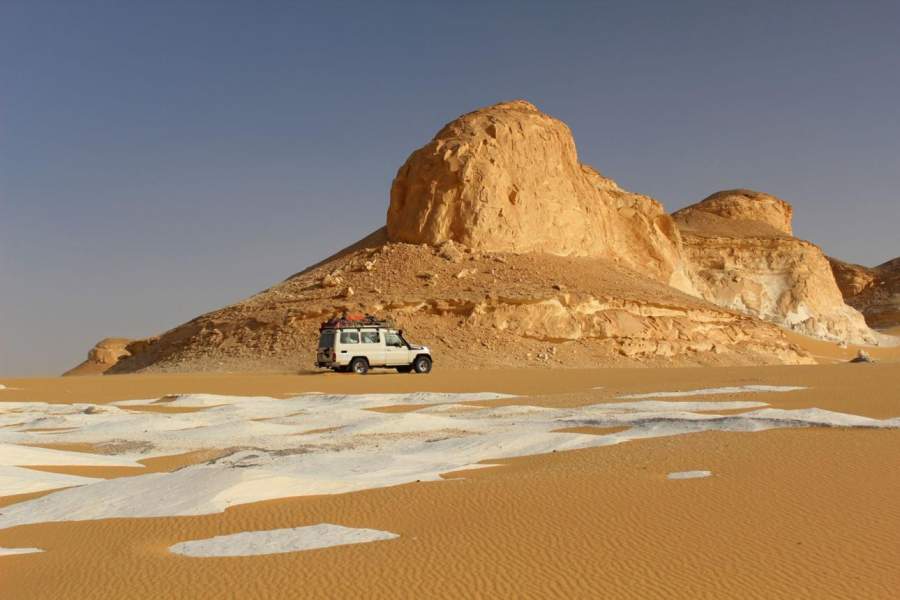
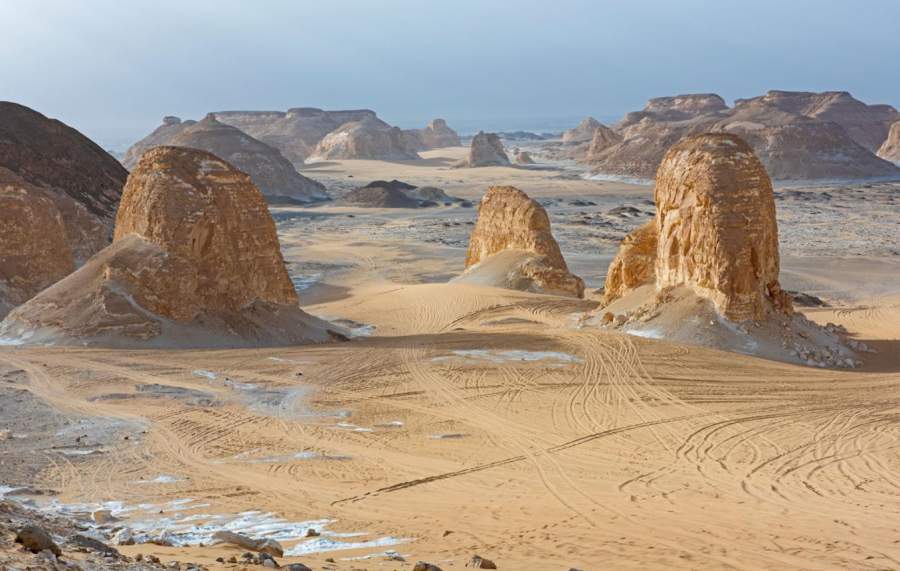
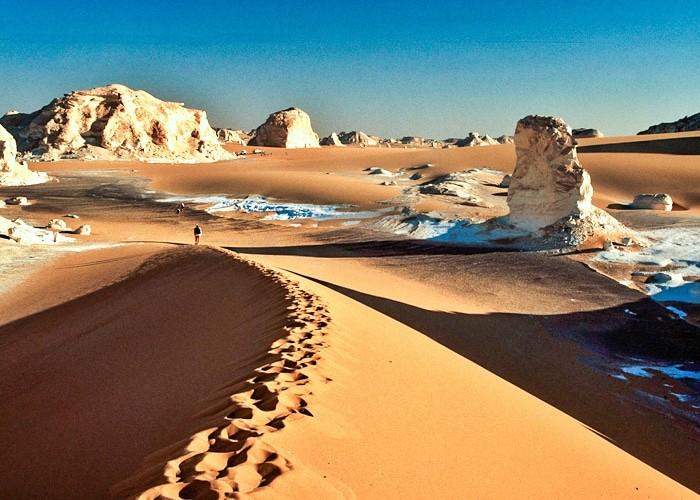
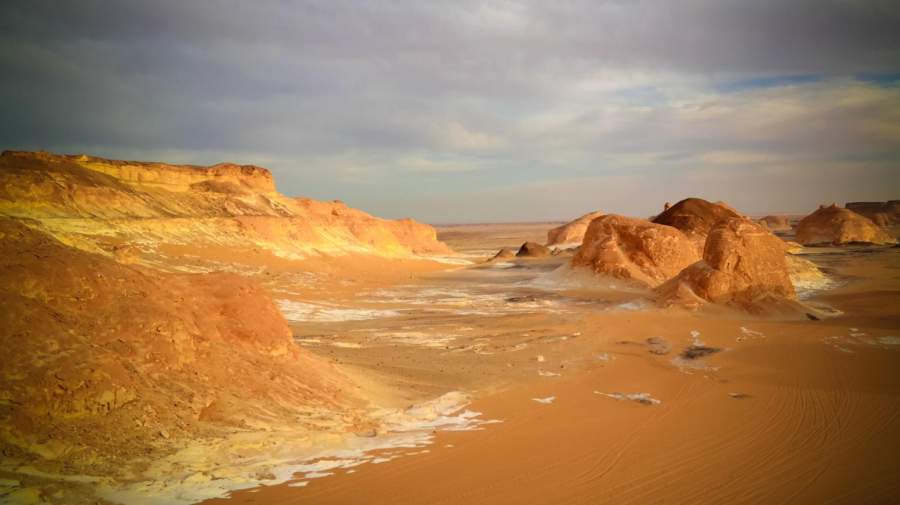
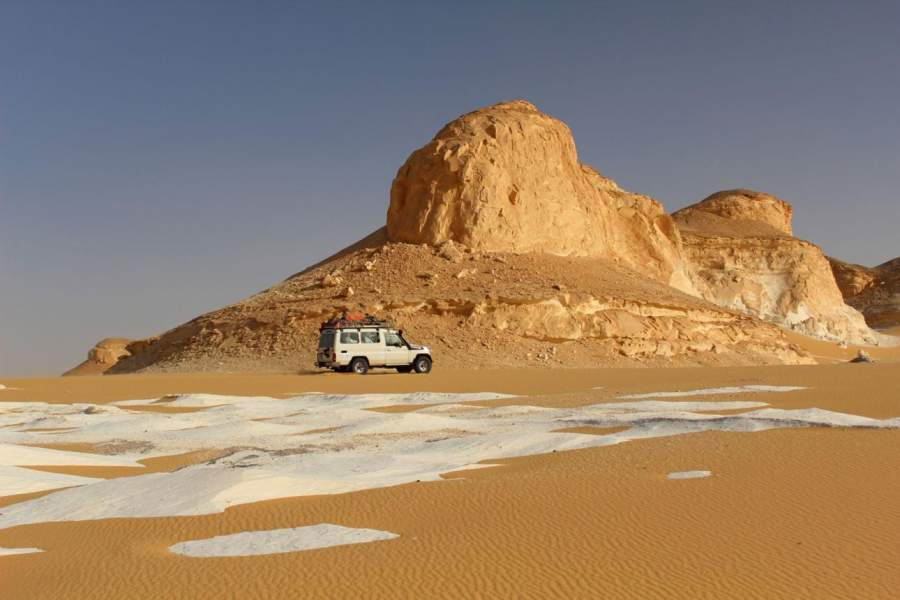
The soft golden dunes flow around rocky formations, while the pale cliffs rise dramatically from the surrounding terrain.
The result is a landscape filled with contrasts.
Gold against white.
Smooth sand against rugged rock.
Bright sunlight against deep shadows.
And enormous open spaces against isolated geological formations.
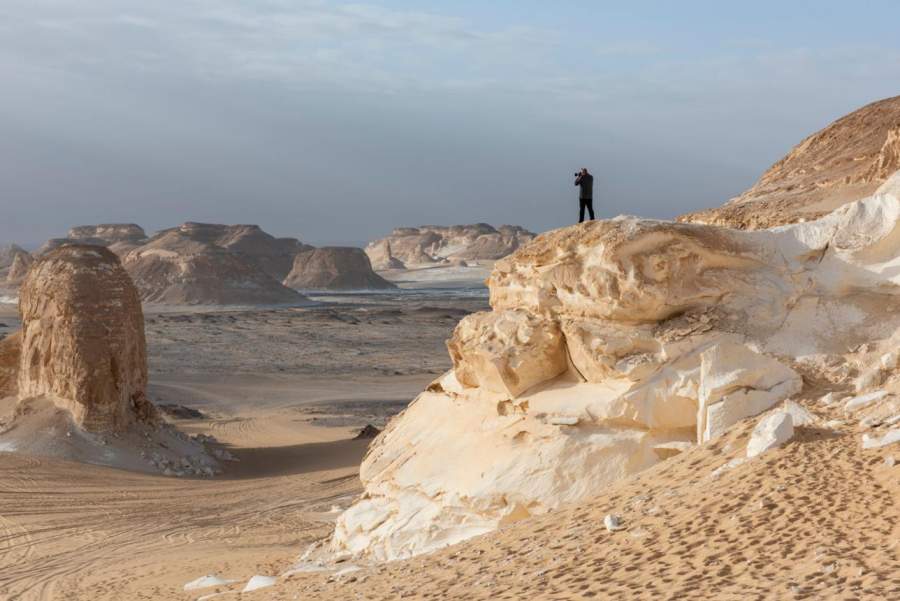
This combination makes Agabat particularly photogenic.
Even without elaborate photography equipment, the natural geometry of the dunes and cliffs can create striking compositions.
The Experience of Dune Jumping
Agabat Valley is not only a place to look at.
It is also a place to play in the desert.
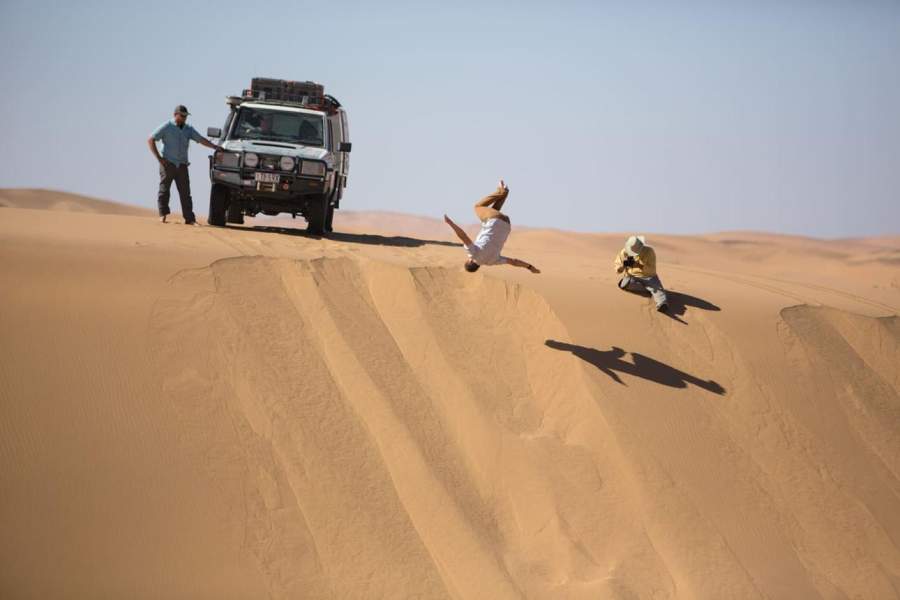
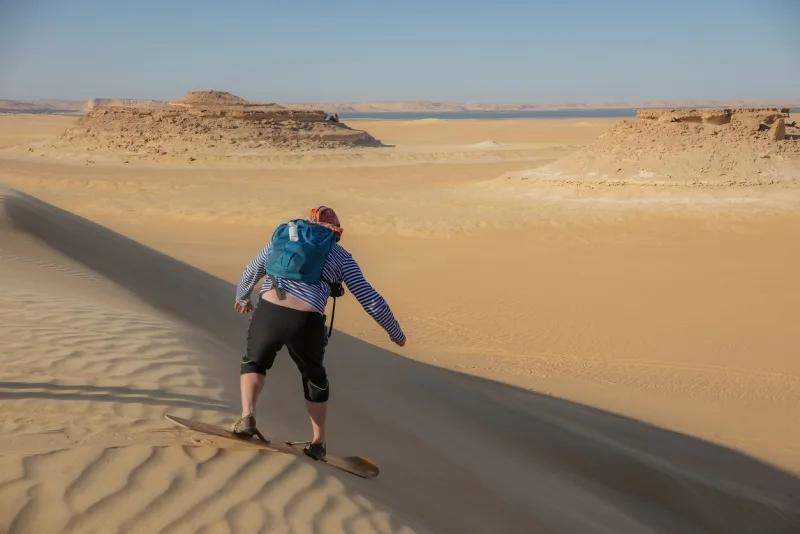
Experience Egypt specifically recommends dune jumping in Agabat Valley’s soft golden sand.
For adventure travelers, the dunes provide a completely different experience from sightseeing in Cairo or visiting archaeological monuments.
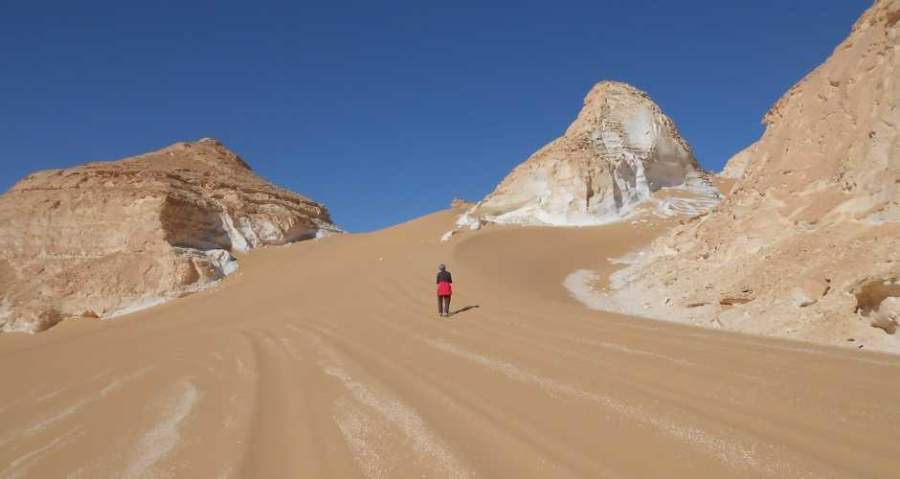
You can climb a dune, run down its slope, photograph the surrounding landscape, or simply sit at the top and watch the desert stretch toward the horizon.
The softness of the sand makes the experience feel almost like a giant natural playground.
And because the valley is surrounded by dramatic cliffs, the scenery remains impressive even when the activity itself is simple.
Agabat Valley and the White Desert
Agabat Valley is closely connected with the famous White Desert.
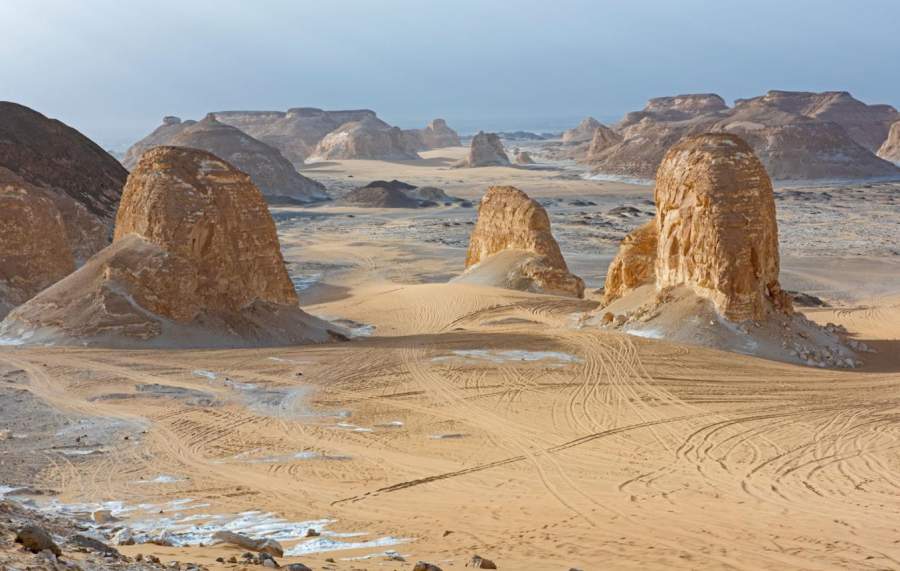
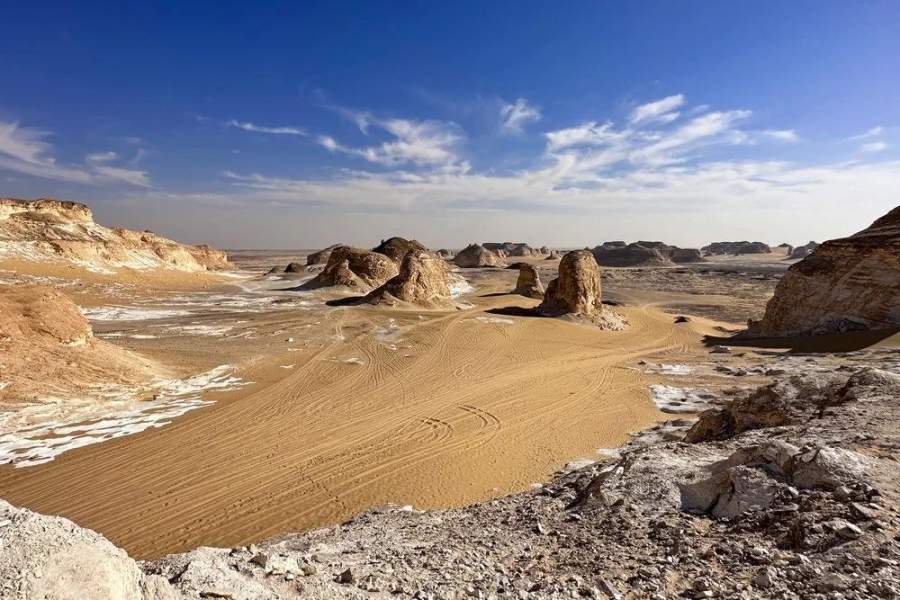
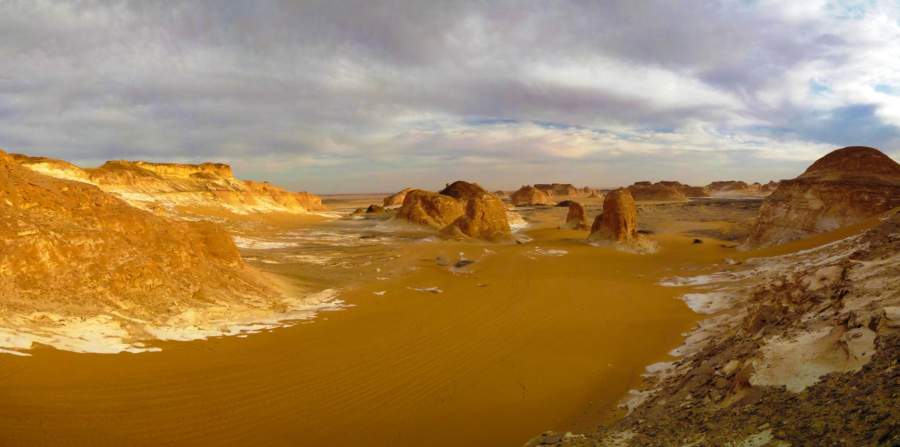
The White Desert is one of Egypt’s best-known natural landscapes, famous for its pale chalk formations sculpted by wind and erosion.
Experience Egypt describes the White Desert as one of the major attractions accessible from Al-Farafra and identifies Agabat Valley as another key stop on Western Desert excursions.
The White Desert is also officially recognized as a protected natural area. Experience Egypt notes that its landscape includes dunes, domes, and wind-carved chalk sculptures, while marine fossils can be found within its limestone layers—evidence that this region has undergone enormous environmental changes over geological time.
Agabat and the White Desert therefore complement each other beautifully.
Agabat gives you golden dunes and white cliffs.
The White Desert gives you chalk formations and surreal rock sculptures.
Together, they create one of Egypt’s most distinctive desert experiences.
The Black Desert: Another World Nearby
One of the best things about exploring the Western Desert is how quickly the scenery can change.
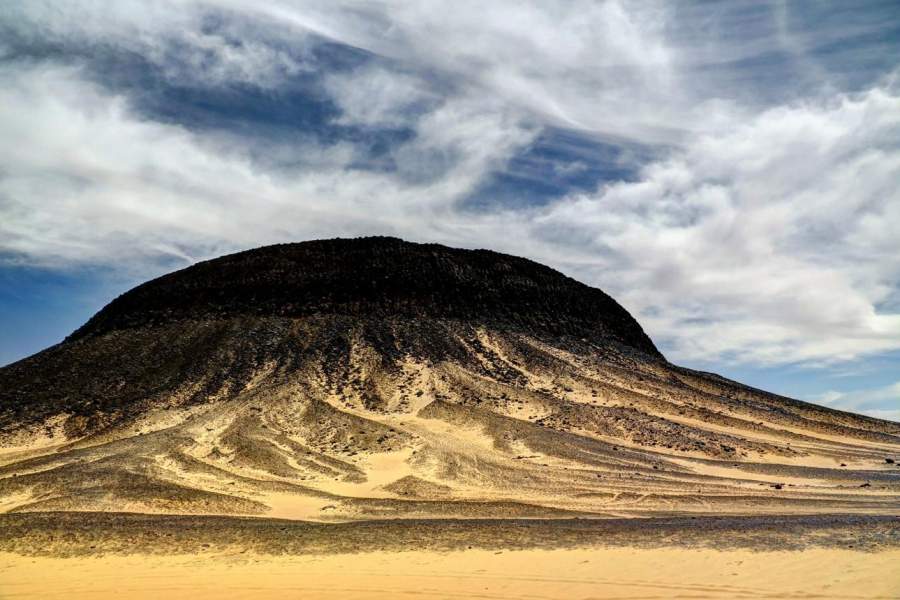
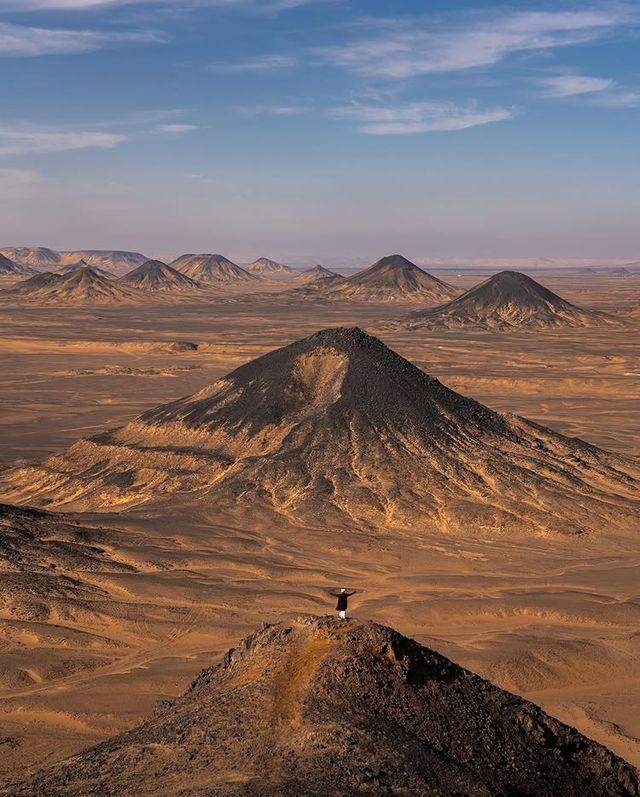
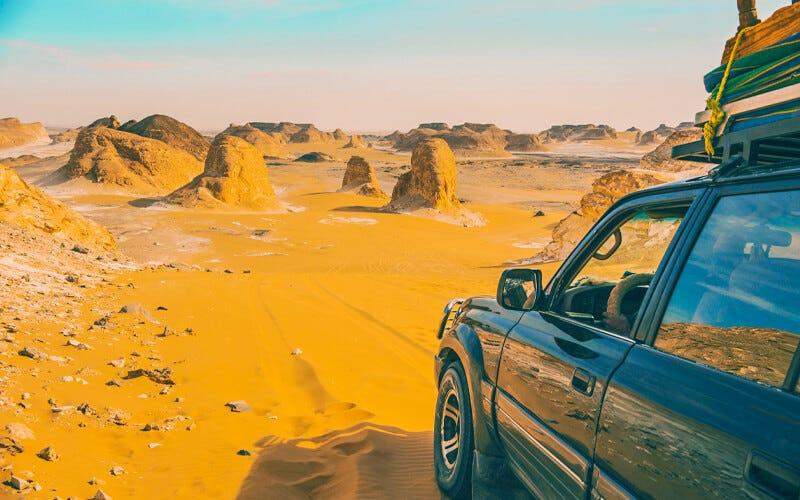
The Black Desert presents almost the opposite visual experience from Agabat.
Instead of soft golden dunes and pale cliffs, the landscape is dominated by dark stones and volcanic-looking hills.
Experience Egypt lists the Black Desert among the major desert excursions around the Bahariya–Farafra region and describes its distinctive dark landscape.
Seeing these landscapes on the same journey demonstrates just how diverse Egypt’s Western Desert can be.
It is easy to imagine the desert as one endless sea of sand.
In reality, it contains an extraordinary variety of rocks, dunes, valleys, cliffs, fossils, and geological formations.
Crystal Mountain
Another famous stop in the region is Crystal Mountain.
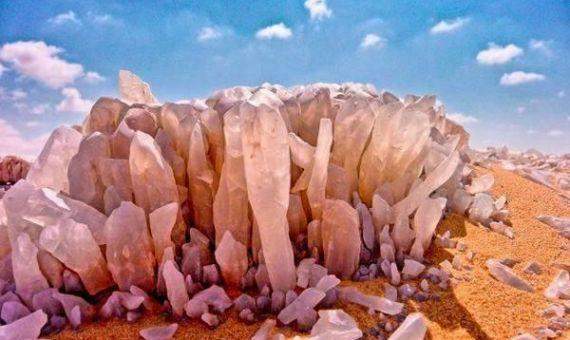
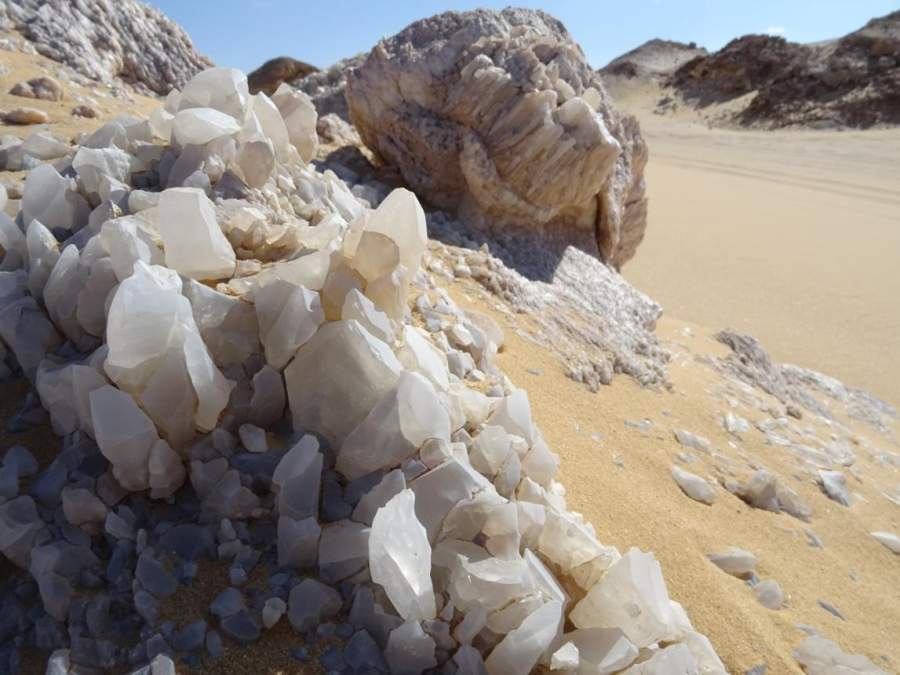
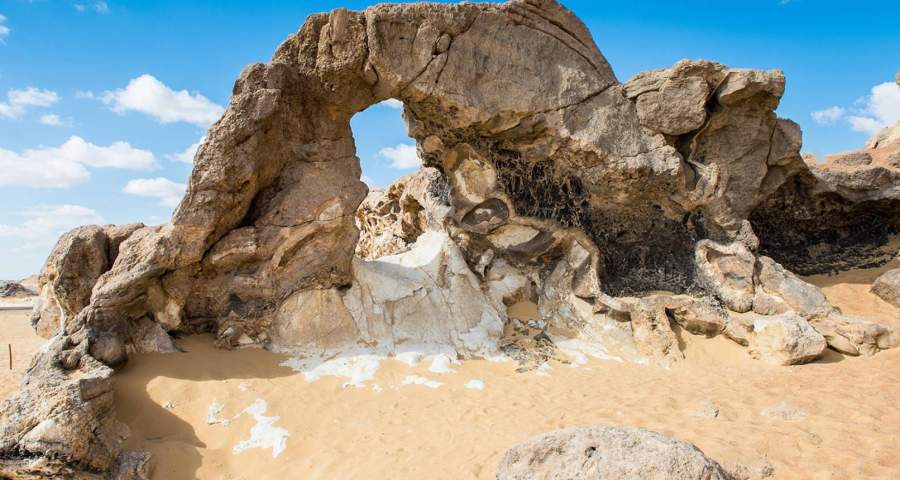
Experience Egypt describes Crystal Mountain as a geographical wonder that was once an underground cave pushed to the Earth's surface. The site is known for its distinctive arch and crystals that reflect sunlight.
Its sparkling appearance provides another dramatic contrast with Agabat Valley.
At Agabat, the eye is drawn to the sweeping dunes and pale cliffs.
At Crystal Mountain, it is drawn to mineral-rich rock and sunlight.
Both locations demonstrate the geological diversity of the same wider desert region.
The Great Sand Sea
Beyond the valleys and rock formations lies another enormous desert landscape: the Great Sand Sea.
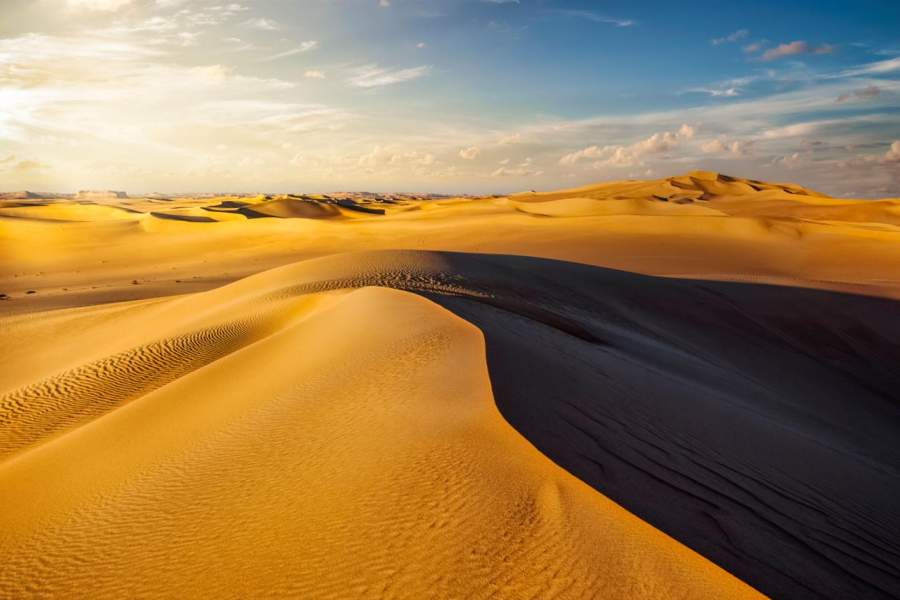
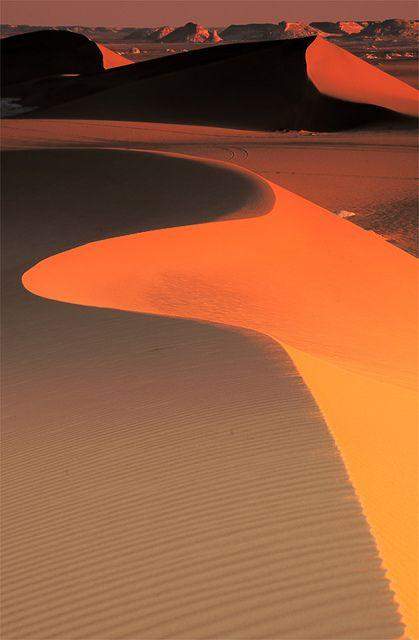
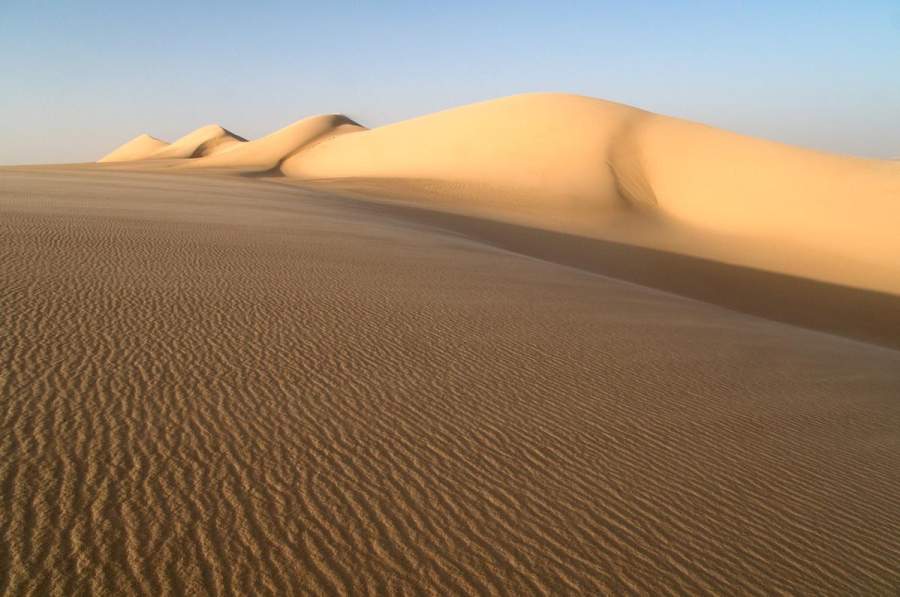
Experience Egypt describes the Great Sand Sea as an approximately 600-kilometer expanse of desert forming a natural barrier between Egypt and Libya and stretching across much of the desert between Farafra and Siwa. It is characterized by enormous sand dunes.
Compared with Agabat Valley, the Great Sand Sea feels even more immense.
At Agabat, cliffs and formations create a sense of enclosure.
In the Great Sand Sea, the dunes can dominate the entire horizon.
Together, they demonstrate two very different expressions of the Western Desert.
A Desert Safari, Not a Standard Excursion
Visiting Agabat requires a different mindset from visiting a museum or archaeological site.
There is no conventional sightseeing infrastructure at the heart of the valley.
Instead, visitors generally experience it as part of a guided desert excursion.
Experience Egypt advises travelers to check with a travel agency or authorized tour guide regarding permits and regulations before heading into the desert. It also recommends arranging Western Desert activities through a hotel or travel agency because there are no tour agencies located inside Al-Farafra itself.
That makes local knowledge particularly valuable.
A licensed guide can help with route planning, desert conditions, permits, transportation, and the logistics of combining Agabat with nearby attractions.
Life in Al-Farafra Oasis
Before entering the desert, it is worth spending some time experiencing the oasis itself.
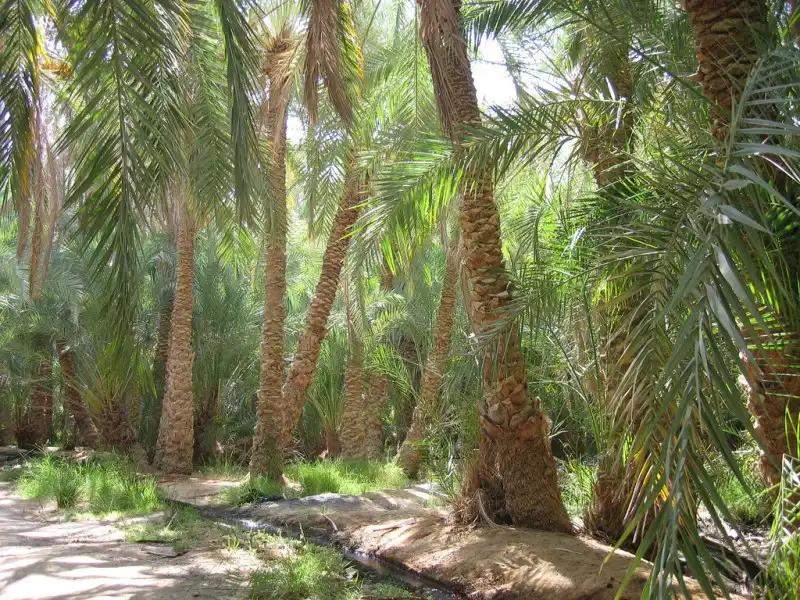
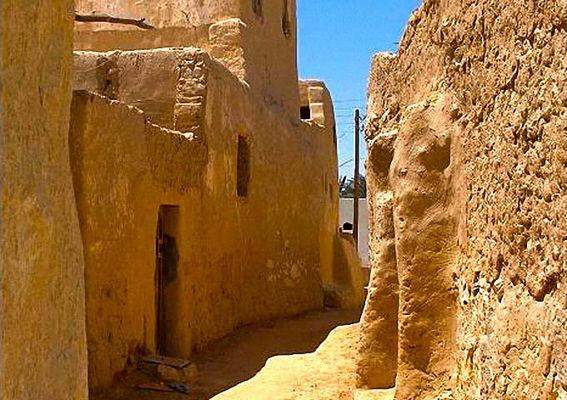
Al-Farafra is surrounded by the dramatic deserts of the Western Desert, but the oasis itself contains gardens, palms, and agricultural areas.
Experience Egypt describes Farafra as a peaceful oasis surrounded by the White and Black Deserts and the Great Sand Sea. It also highlights local gardens containing palm, citrus, apricot, carob, and olive trees.
This contrast between green oasis and barren desert is one of the defining experiences of the region.
Within a short distance, the environment can change from shaded palm groves to enormous golden dunes.
Desert Camping Around Agabat
For many travelers, the desert becomes even more memorable after sunset.
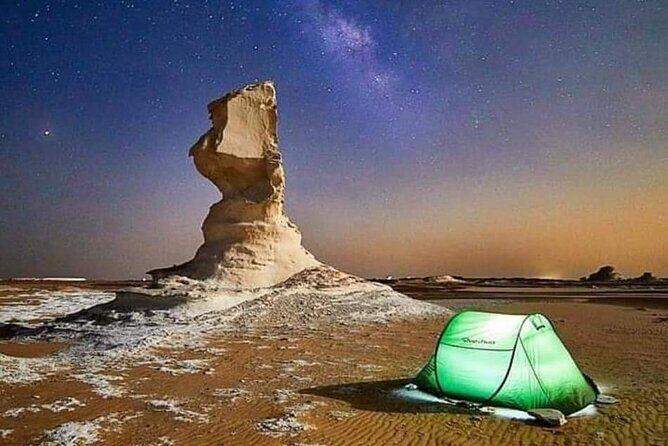
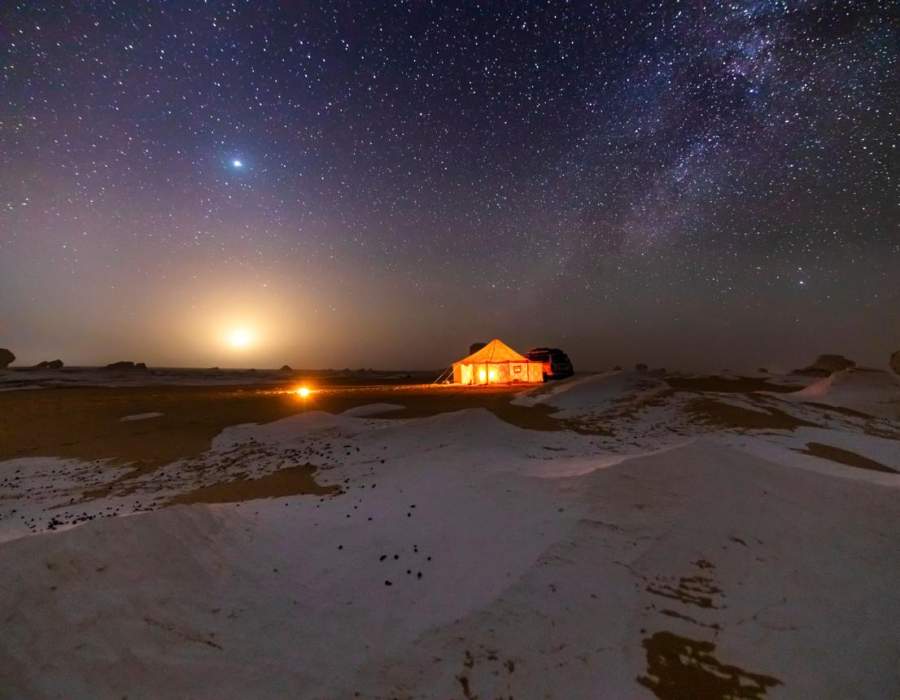
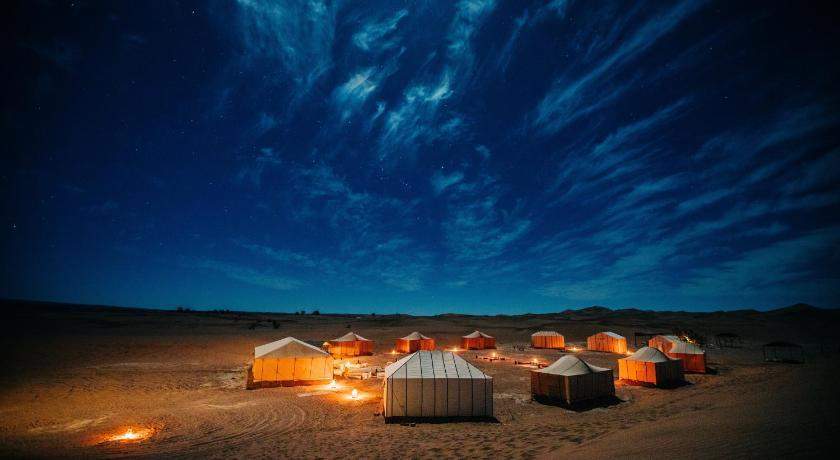
Experience Egypt highlights camping as one of the ways travelers can explore the desert around Al-Farafra and notes that White Desert excursions can range from day trips to multi-night adventures depending on activities such as camping, hiking, camel riding, and 4x4 exploration.
Once the sun disappears, the desert changes character.
The golden dunes become silhouettes.
The cliffs become dark shapes against the sky.
And the silence becomes part of the experience.
For travelers accustomed to the bright lights and constant movement of Cairo, spending a night in the desert can feel almost unreal.
The attraction is no longer just the landscape you can see.
It is the absence of everything else.
Agabat for Photographers
Agabat Valley is particularly rewarding for landscape photography.
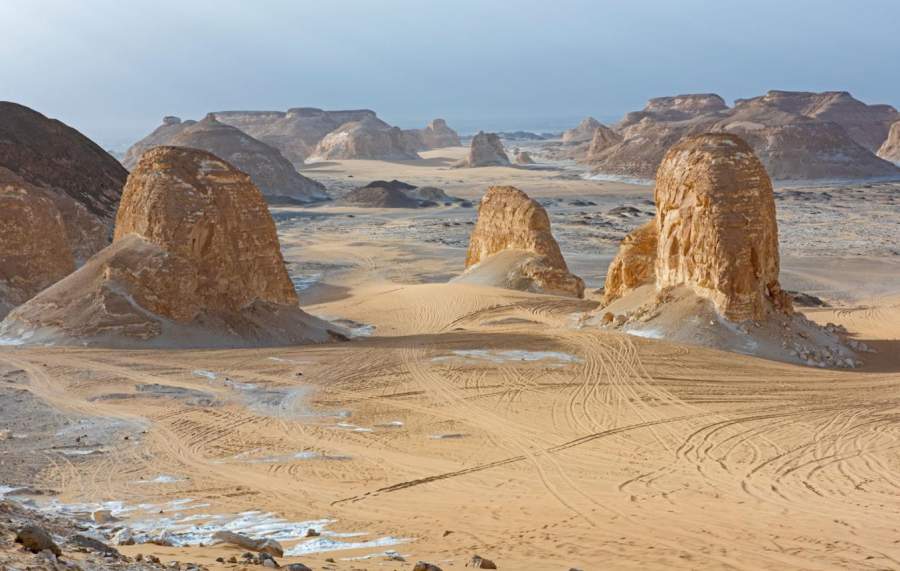
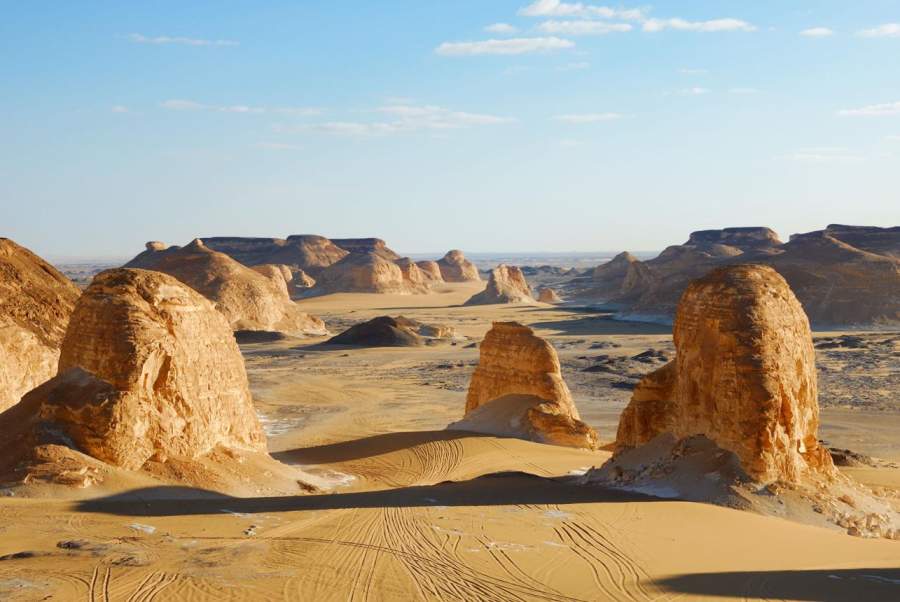
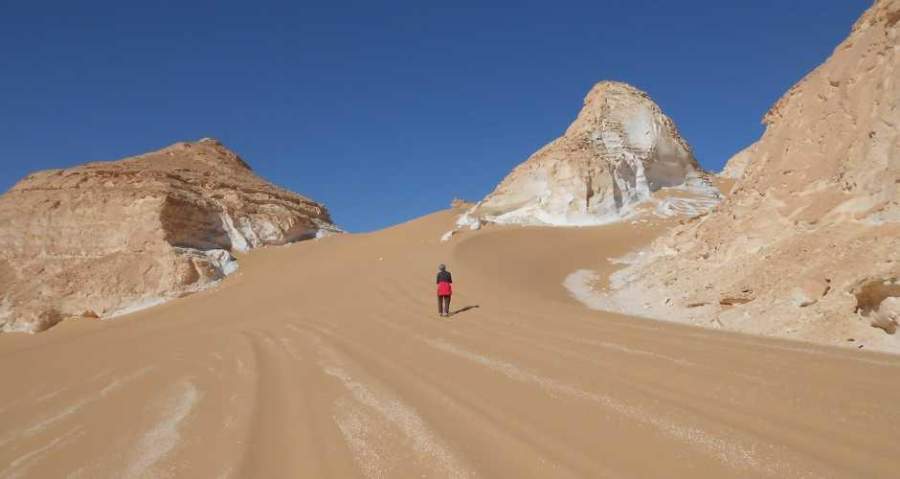
The valley offers several natural elements that work beautifully together:
- Golden dunes
- White cliffs
- Deep shadows
- Open horizons
- Rugged rock formations
- Dramatic sunlight
Early and late in the day, lower-angle sunlight can emphasize the texture of dunes and cliffs.
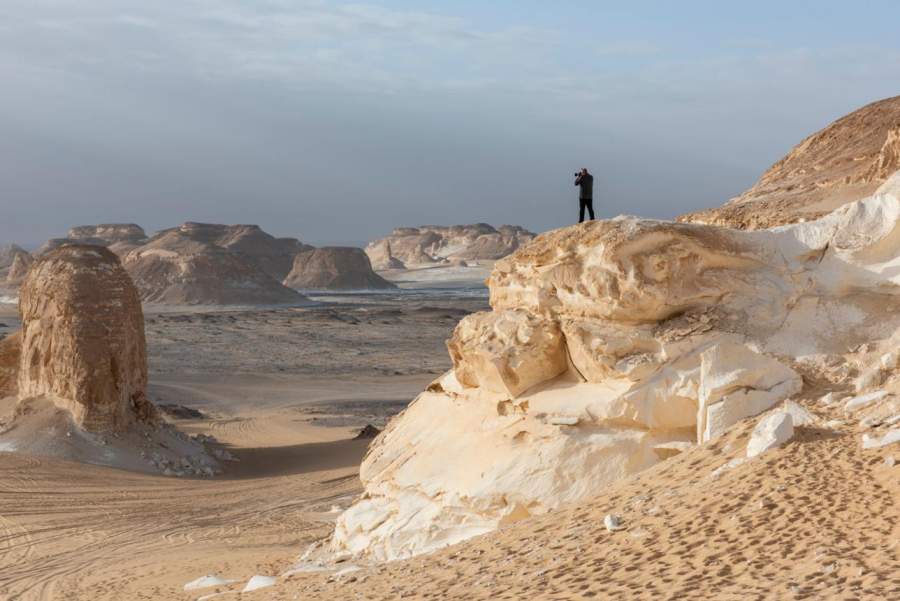
A person standing beside one of the formations can also provide a sense of scale, showing just how vast the surrounding landscape really is.
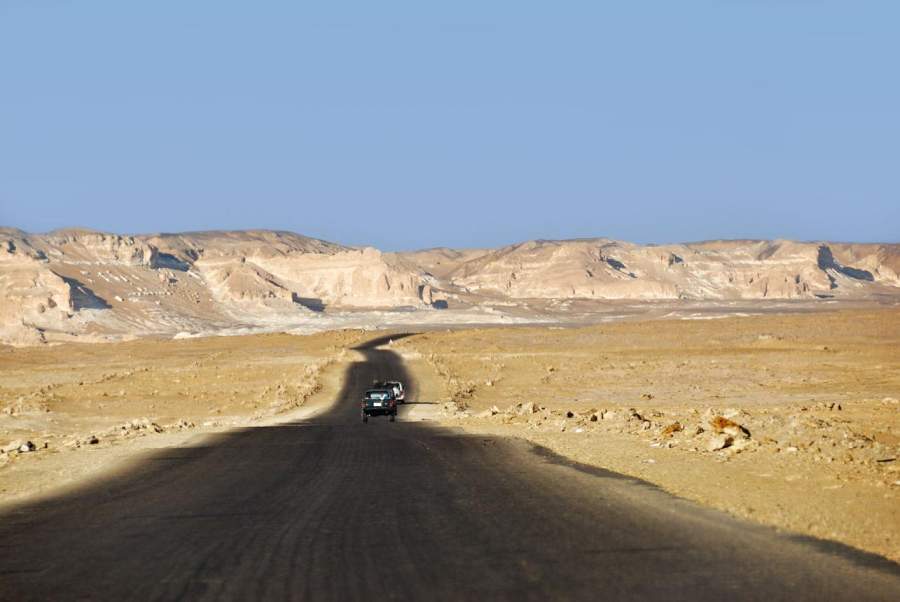
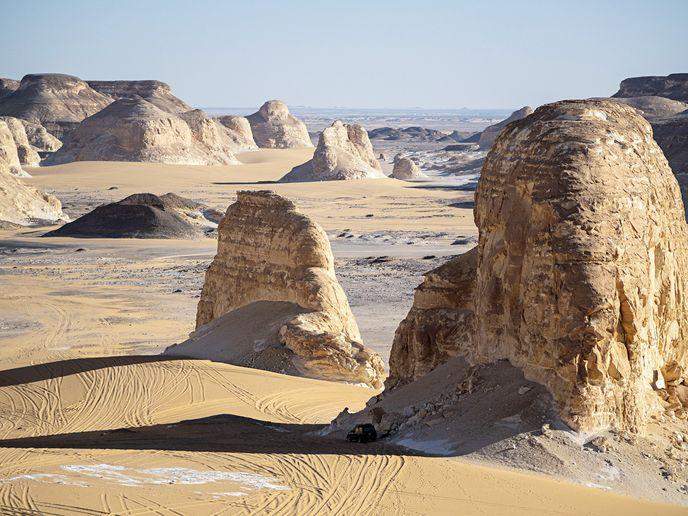
And sometimes the simplest photograph is the strongest one: a single vehicle crossing the sand with enormous cliffs rising in the distance.
An Ancient River Beneath the Desert
Perhaps the most fascinating way to think about Agabat is to imagine what existed here before today's desert.
The presence of seashells in the valley provides a small but powerful clue.
Experience Egypt identifies Agabat as the dried-up site of an ancient riverbed.
Today, there may be almost no visible water anywhere around you.
Yet the landscape preserves evidence of a very different past.
This is one of the recurring themes of Egypt's Western Desert.
The White Desert contains marine fossils.
Agabat preserves evidence of an ancient river environment.
And the entire region contains geological formations created through immense changes in climate, water, sediment, and erosion.
The desert may appear motionless.
Its rocks tell a different story.
What to Bring
A trip to Agabat is an outdoor adventure, so preparation matters.
Useful items include:
- Plenty of drinking water
- Sun protection
- Sunglasses
- Comfortable walking shoes
- Lightweight clothing for daytime
- Warm layers for the evening
- A camera or phone with enough battery
- A portable power bank
- Basic personal supplies
And most importantly, arrange the excursion with a licensed or authorized operator and follow local guidance concerning access, permits, and desert travel. Experience Egypt specifically recommends checking with authorized guides or travel agencies before setting out.
The desert is beautiful, but it is also remote.
Good preparation allows you to enjoy the landscape without turning the adventure into an unnecessary logistical challenge.
The Magic of the Western Desert
Agabat Valley is not famous because of a giant monument.
It is famous because of what nature created.
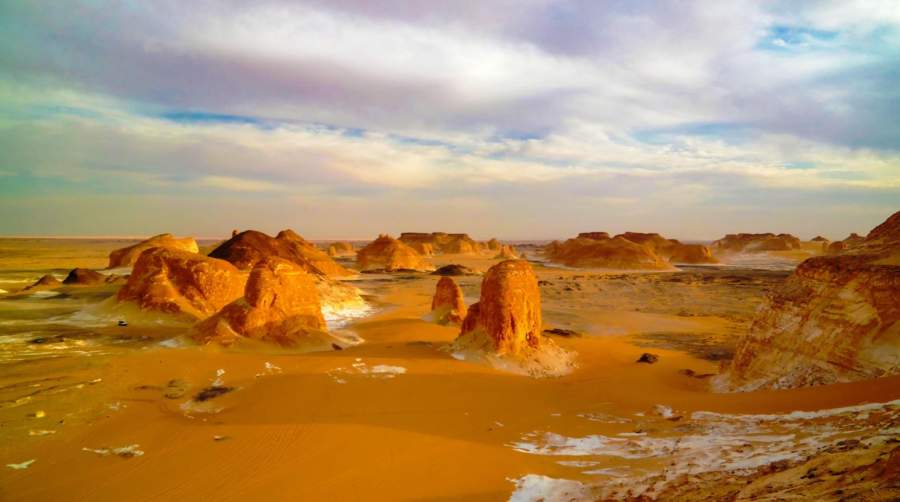
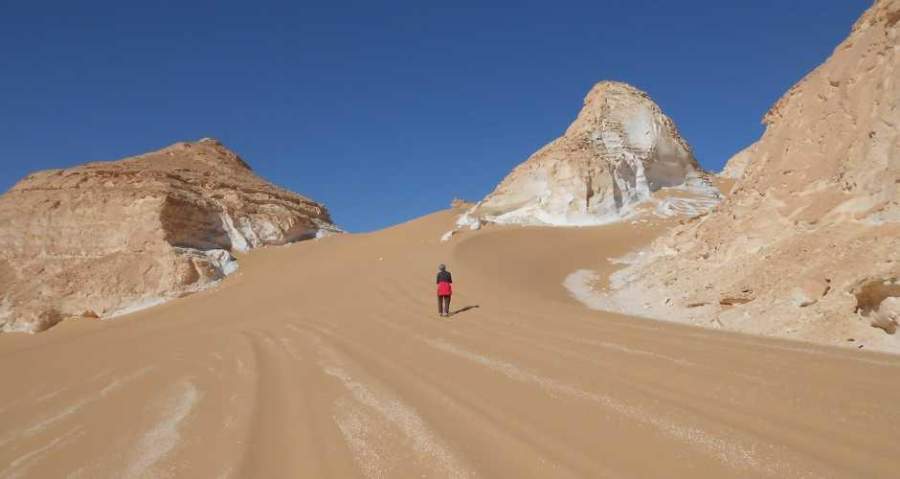
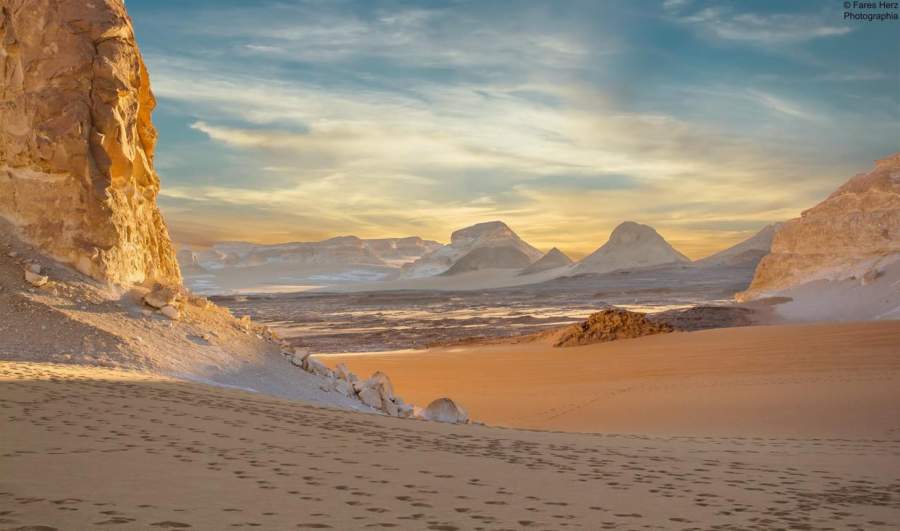
There is something powerful about standing between golden dunes and enormous white cliffs and realizing that the landscape has been shaped over geological time.
The silence makes the experience even stronger.
There are no crowds of tourists moving between exhibits.
No walls around the attraction.
No artificial decorations.
Just sand, rock, sky, and time.
And that is precisely what makes Agabat special.
Final Thoughts
Agabat Valley is one of Egypt's most beautiful reminders that the country's natural heritage can be just as surprising as its ancient monuments.
Its soft golden dunes, dramatic white cliffs, and traces of an ancient riverbed create a landscape that feels almost impossible to associate with the Egypt many travelers first imagine.
Yet this is Egypt too.
A desert where seashells can survive as clues to ancient environments.
A valley where dunes become natural playgrounds.
A landscape connected to the White Desert, Crystal Mountain, Black Desert, and Great Sand Sea.
And a place where the journey itself becomes part of the destination.
For travelers seeking a different side of Egypt, Agabat Valley offers something unforgettable:
a vast, silent landscape where golden sand meets white stone—and where the desert seems to preserve memories of a world that disappeared long ago.
Post a comment