
Al-Khazneh (The Treasury), Petra, Jordan – A Complete Travel Guide
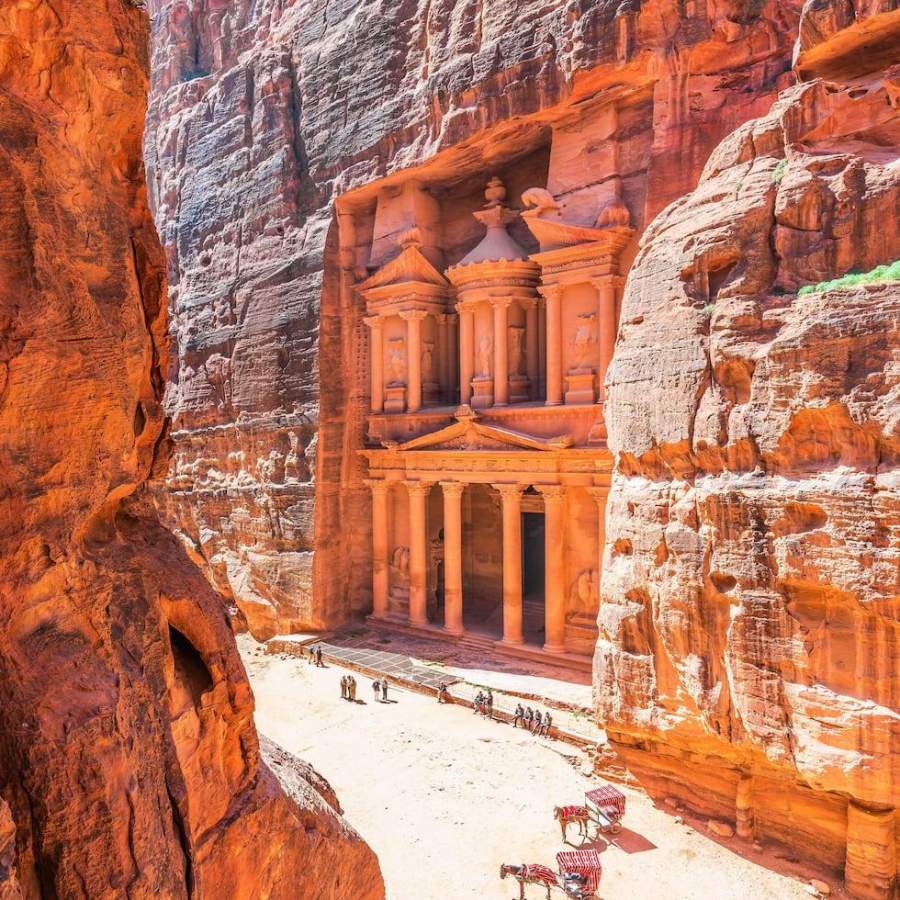
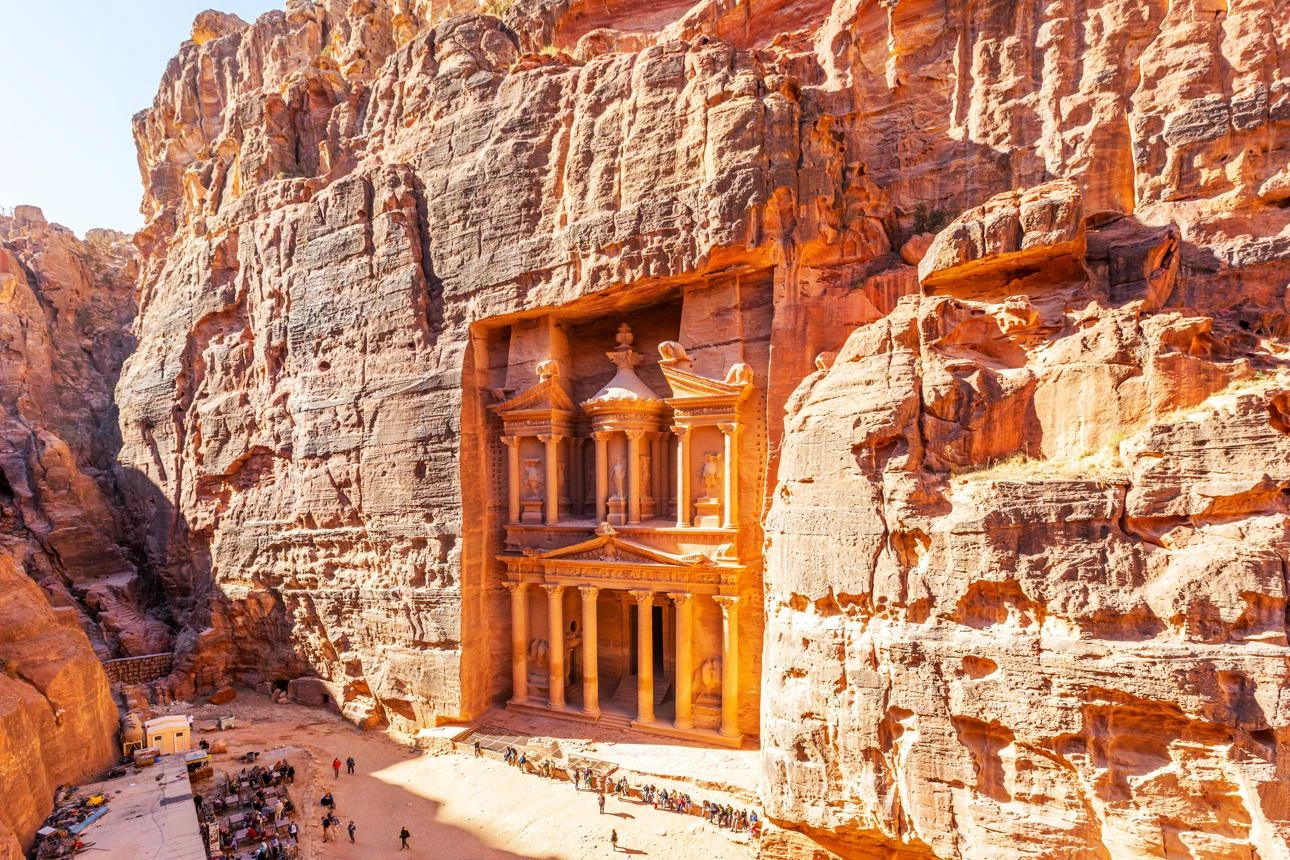
Al-Khazneh, widely known as The Treasury, is one of the most recognizable landmarks in Jordan. Located in the ancient city of Petra, this extraordinary monument showcases the artistic talent and architectural achievements of the Nabataeans, an ancient Arab civilization.
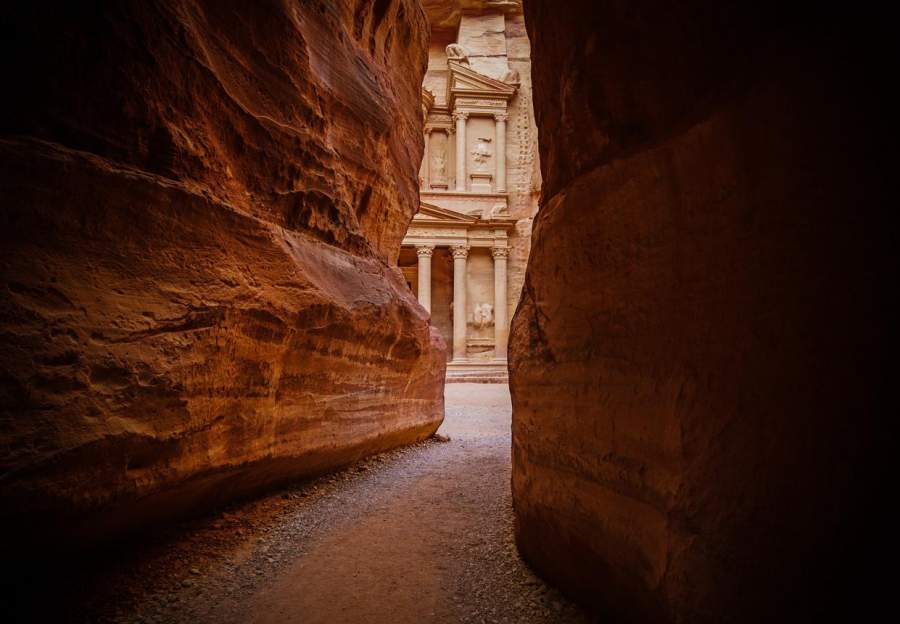
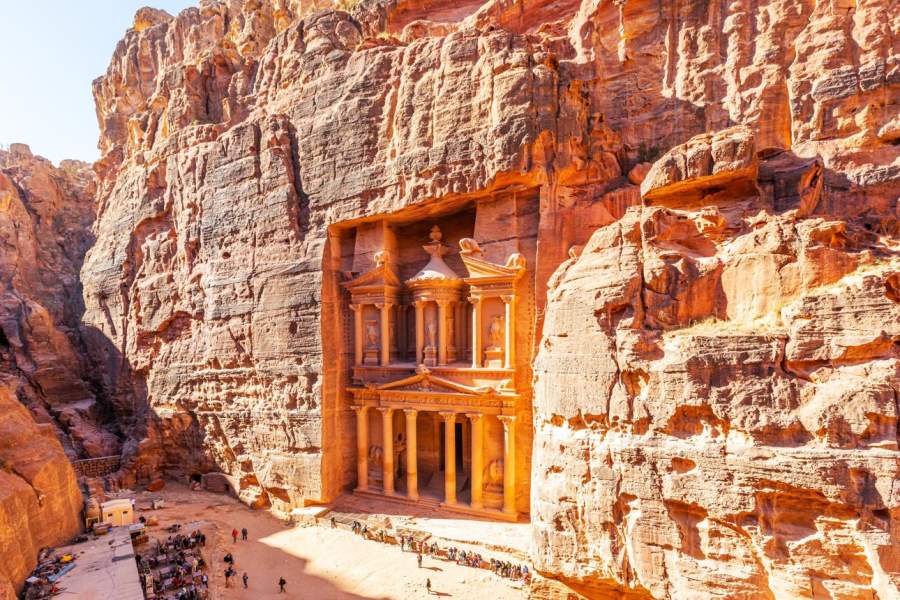
Carved directly into rose-red sandstone, the Treasury welcomes visitors at the end of the narrow Siq canyon. Its monumental façade, intricate decorations, and fascinating legends make it an unforgettable destination for history lovers, photographers, and travelers exploring Jordan.
1. Where Is Al-Khazneh?
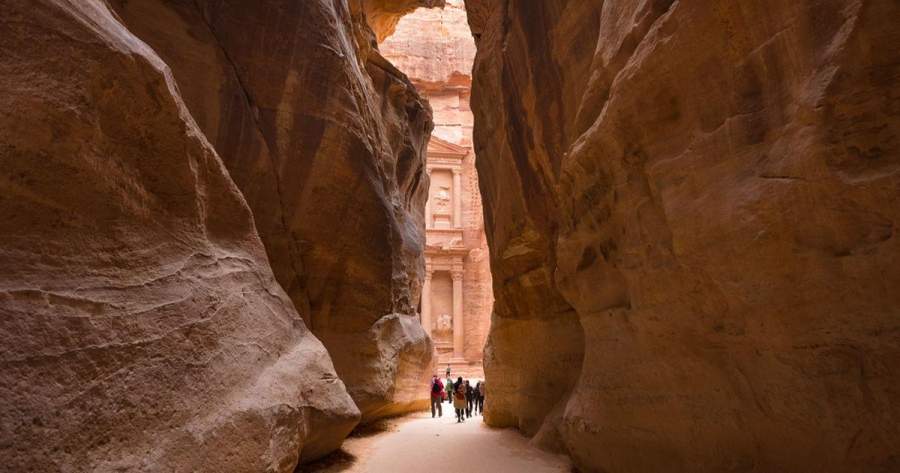
Al-Khazneh is situated inside Petra Archaeological Park, near Wadi Musa in southern Jordan. Visitors reach the monument by walking through the Siq, a dramatic natural gorge bordered by towering sandstone walls.
The journey through this narrow passage builds anticipation as the colorful rock formations gradually reveal one of Petra’s most celebrated archaeological treasures.
Petra lies approximately 240 kilometers south of Amman and is also accessible from Aqaba, making it a popular destination on Jordan travel itineraries.
2. The History of Al-Khazneh
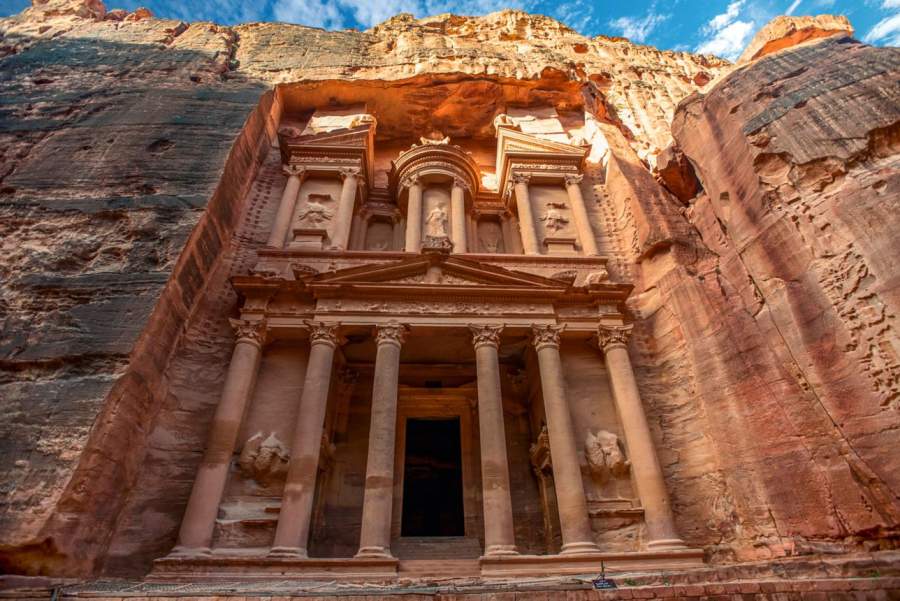
Al-Khazneh dates to the Nabataean period, with many archaeologists associating its construction with the reign of King Aretas IV, who ruled from 9 BC to AD 40.
The Nabataeans established Petra as a prosperous center of trade, connecting important commercial routes that carried spices, incense, and other valuable goods across the ancient world.
The Treasury reflects the wealth, engineering skills, and artistic influences of this civilization. Although its original function has been debated, archaeological evidence strongly supports the interpretation that it was a monumental tomb or mausoleum rather than a building designed to store treasure.
3. Why Is It Called the Treasury?
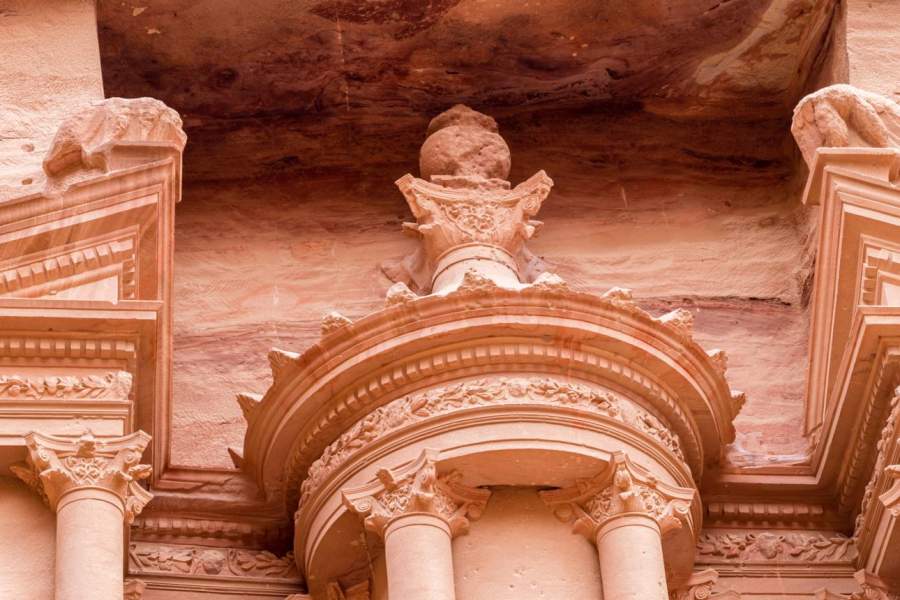
Image Description (Alt Text): The decorative stone urn above the façade of Al-Khazneh in Petra, Jordan, associated with the local legend of hidden treasure.
The name Al-Khazneh means “The Treasury” in Arabic. According to a local Bedouin legend, an ancient pharaoh concealed treasure inside the urn positioned at the top of the monument.
The story became so popular that people reportedly fired at the urn in attempts to release the supposed treasure. Marks from these attempts can still be seen on the façade.
Despite the legend, no evidence confirms that the urn contains hidden treasure. The monument is generally understood to have served a funerary purpose, making its real history just as fascinating as the stories surrounding its name.
4. The Remarkable Architecture of Al-Khazneh
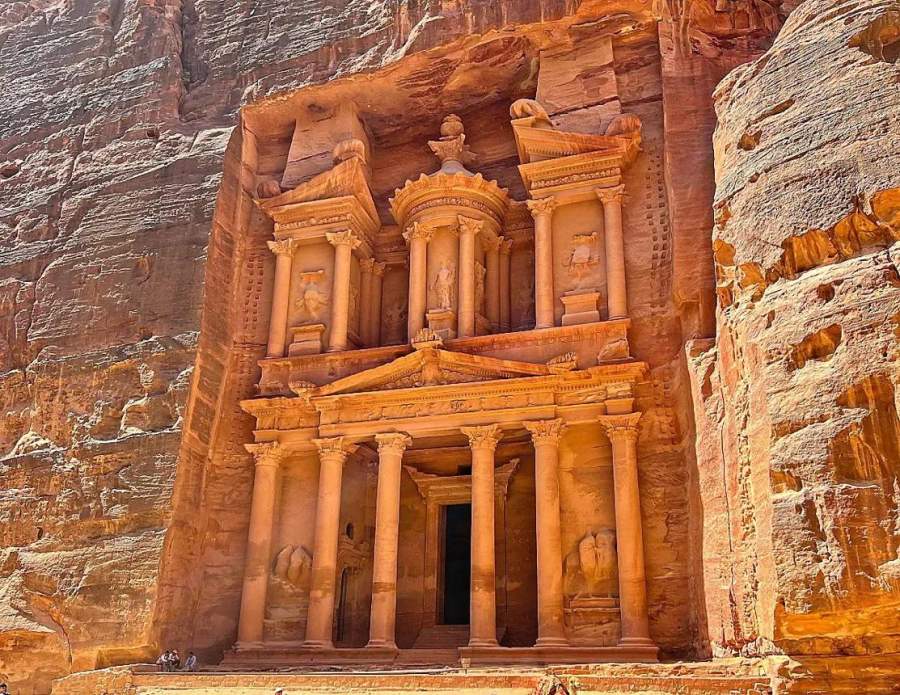
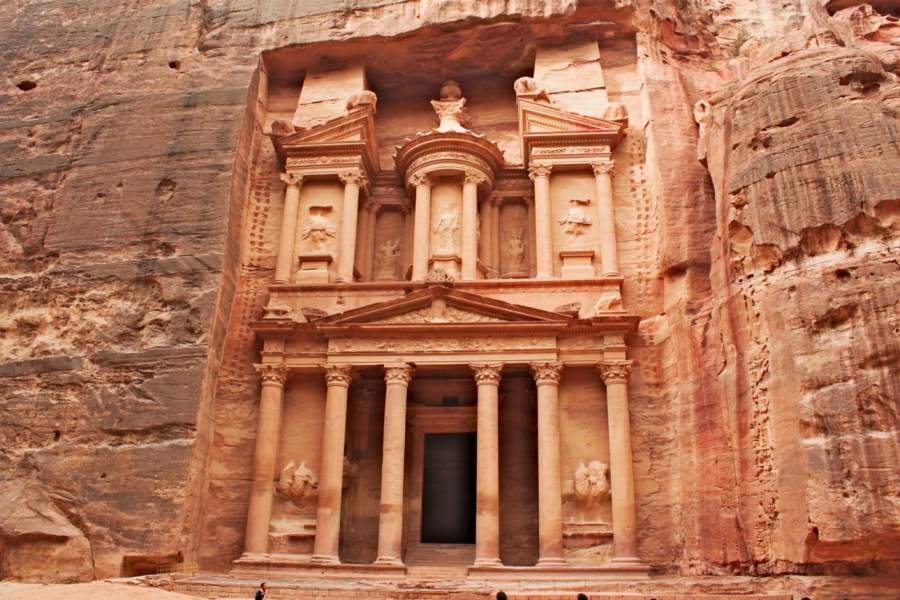
Standing approximately 39.5 meters high, Al-Khazneh was carved directly into a massive sandstone cliff. Its carefully proportioned façade demonstrates an impressive combination of Nabataean craftsmanship and Hellenistic artistic influences.
Visitors can admire its Corinthian capitals, decorative friezes, sculpted figures, and elaborate upper structure. The façade includes imagery associated with ancient mythology and religious traditions, reflecting the cultural connections that shaped Nabataean art.
The contrast between the finely detailed carvings and the surrounding natural rock makes the Treasury one of the most distinctive monuments in Petra.
5. What Is Inside Al-Khazneh?
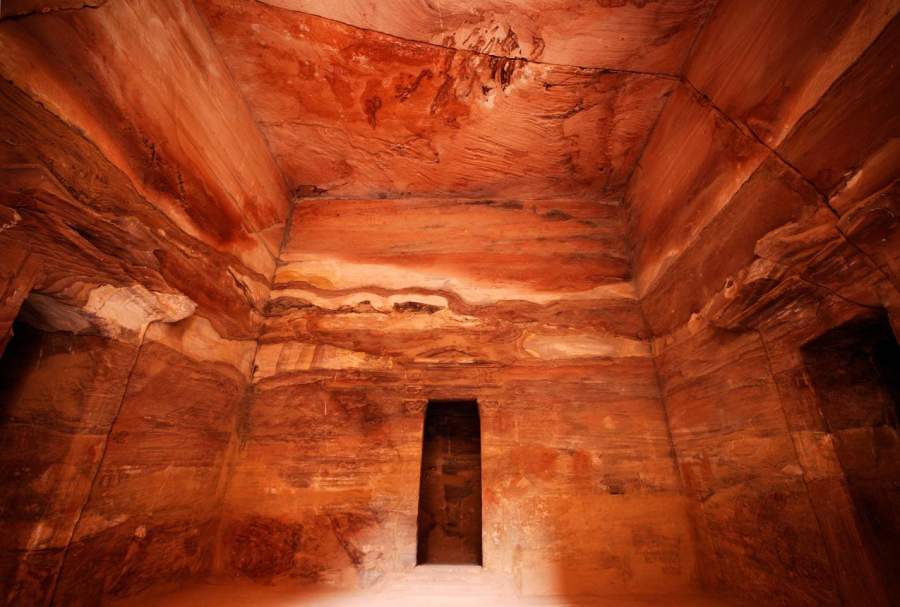
Image Description (Alt Text): The entrance to the ancient rock-cut chamber of Al-Khazneh in Petra, Jordan.
Although its exterior is richly decorated, the interior of Al-Khazneh is comparatively simple. The main chamber does not contain the elaborate sculptural decoration found across its façade.
Archaeological research has helped clarify the monument’s likely funerary role. Excavations beneath the Treasury have also uncovered ancient burial chambers, providing further evidence of Petra’s importance as a center of Nabataean burial traditions.
Visitors should check current site rules before planning their visit, as access to archaeological interiors may be restricted.
6. The Siq: The Journey to the Treasury
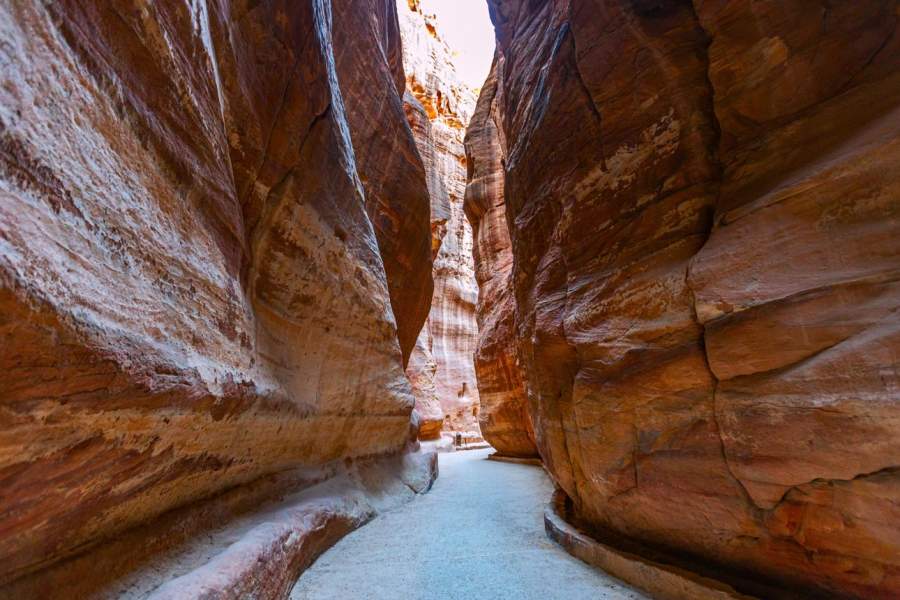
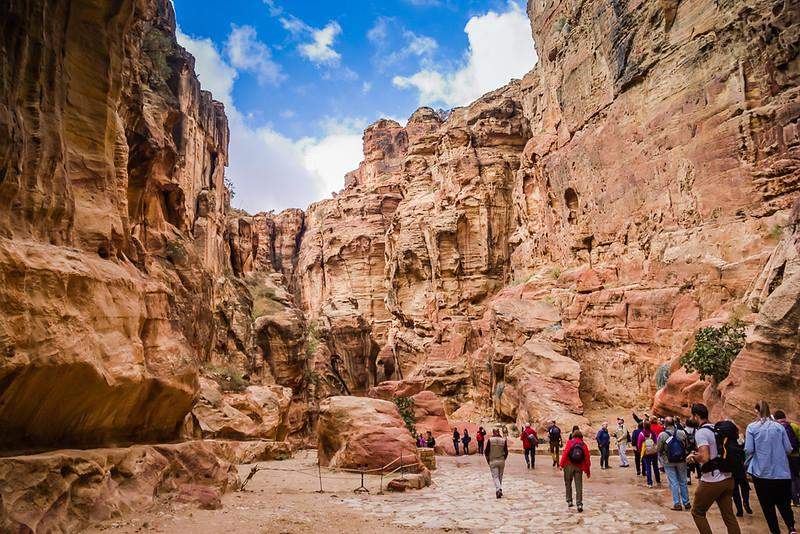
The Siq is more than a simple entrance to Petra; it is an unforgettable part of the experience. This winding natural gorge stretches for just over one kilometer, with towering rock walls displaying shades of red, orange, pink, and gold.
As visitors follow the ancient passage, the changing light reveals remarkable textures and patterns in the sandstone. The narrow opening at the end of the Siq provides the first dramatic glimpse of Al-Khazneh, creating one of the most memorable moments of a visit to Petra.
7. Best Time to Visit Al-Khazneh
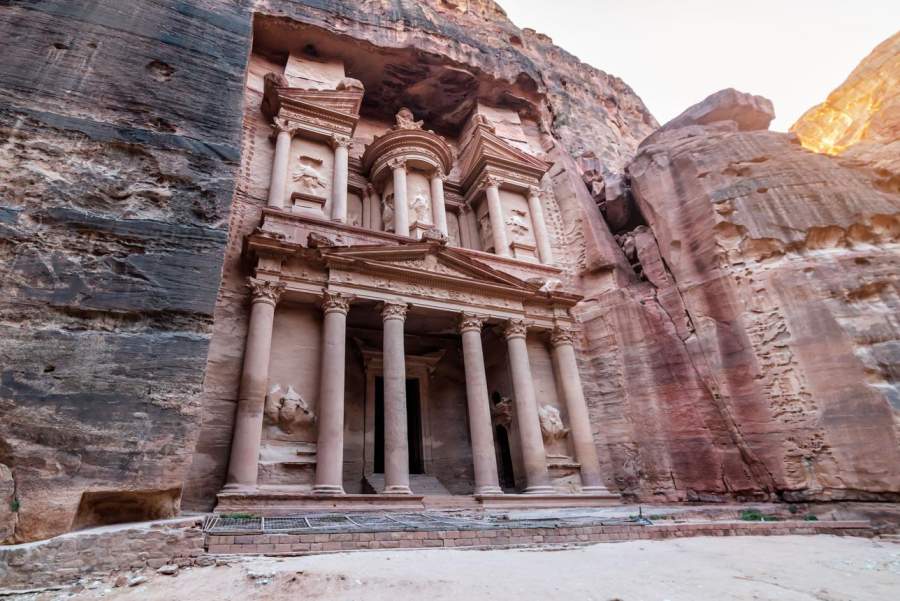
Image Description (Alt Text): The Treasury at Petra illuminated by soft morning sunlight, highlighting the warm colors of its sandstone façade.
Spring and autumn are generally comfortable seasons for exploring Petra, with temperatures often more suitable for walking through the archaeological site.
Early morning is a good time to experience the Treasury with softer light and potentially fewer visitors. Late afternoon can also create beautiful photographic conditions as sunlight brings out the warm tones of the surrounding sandstone.
During summer, temperatures can be high, so wear comfortable walking shoes, carry water, and protect yourself from the sun. Check the official visitor information before your trip for current opening hours and access arrangements.
8. What to See Near Al-Khazneh
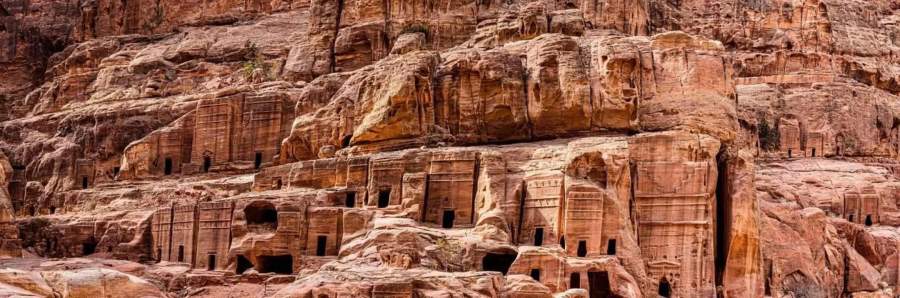
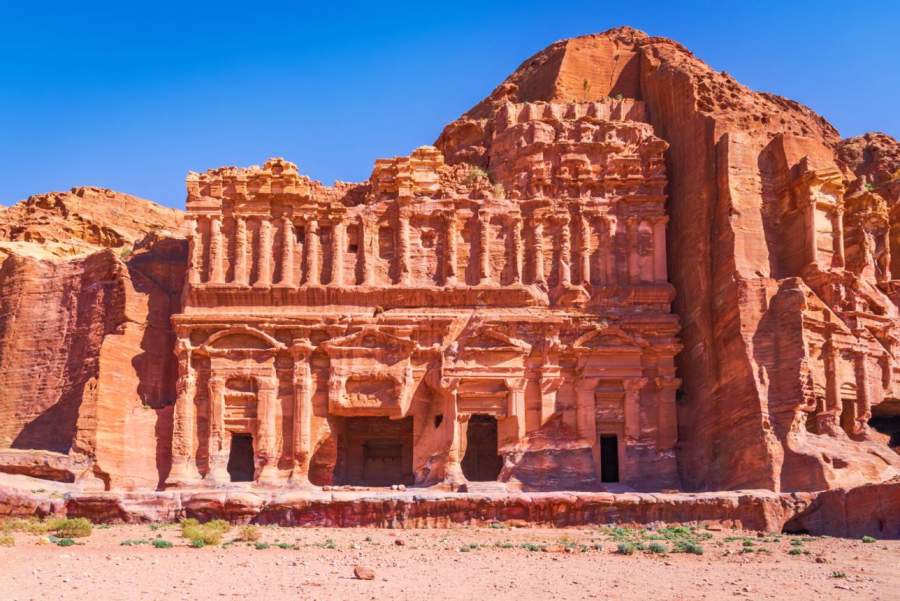
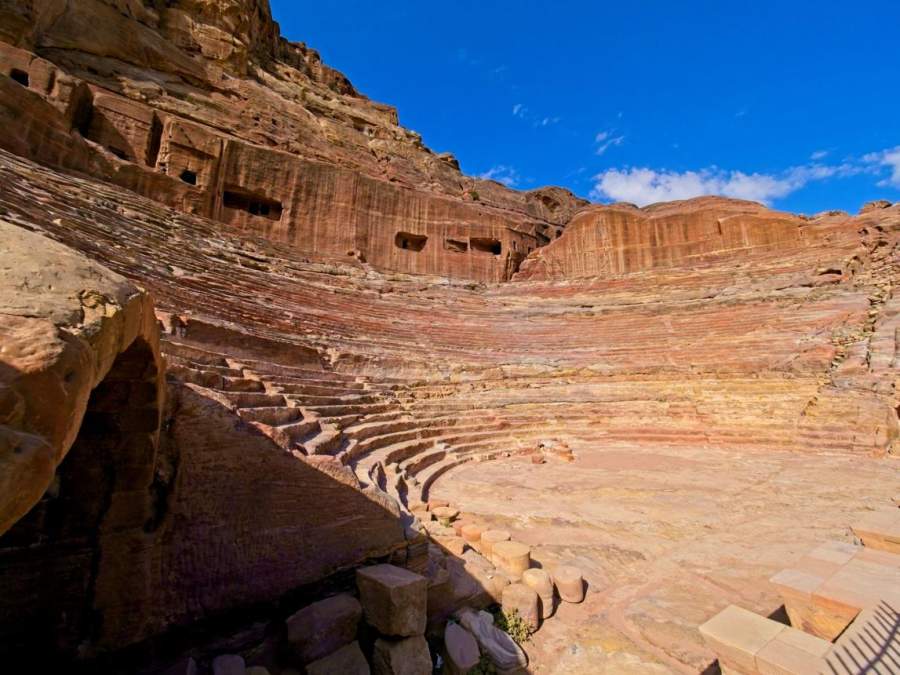
Al-Khazneh is only the beginning of Petra’s archaeological wonders. Visitors who have more time can explore several other remarkable attractions:
-
The Street of Facades: A series of rock-cut tombs and monumental façades along Petra’s main route.
-
The Royal Tombs: Impressive burial monuments carved into the eastern cliffs of Petra.
-
The Theater: An ancient theater carved into the mountainside, reflecting Petra’s architectural development.
-
The Monastery (Ad-Deir): A monumental rock-cut structure reached by a climb up a long series of steps.
Exploring these landmarks gives visitors a broader understanding of Nabataean architecture, burial traditions, and the scale of the ancient city.
9. Travel Tips for Visiting Al-Khazneh
To make the most of your visit to Al-Khazneh, keep these practical tips in mind:
-
Wear comfortable walking shoes, as reaching the Treasury involves walking through the Siq.
-
Bring drinking water and sun protection, especially during warmer months.
-
Allow extra time to explore the surrounding archaeological sites beyond the Treasury.
-
Respect the ancient monument and follow site rules.
-
Check official ticket information, opening hours, and accessibility arrangements before traveling.
-
Consider hiring an authorized local guide to learn more about Petra's history and Nabataean culture.
10. Conclusion
Al-Khazneh is one of Jordan’s most extraordinary historical landmarks, combining remarkable rock-cut architecture, ancient legends, and the enduring legacy of the Nabataeans.
From the dramatic walk through the Siq to the first view of the monumental façade, every stage of the visit offers an opportunity to appreciate Petra’s unique cultural heritage. Whether you are passionate about history, architecture, photography, or adventure, the Treasury is an essential stop on any journey through Jordan.
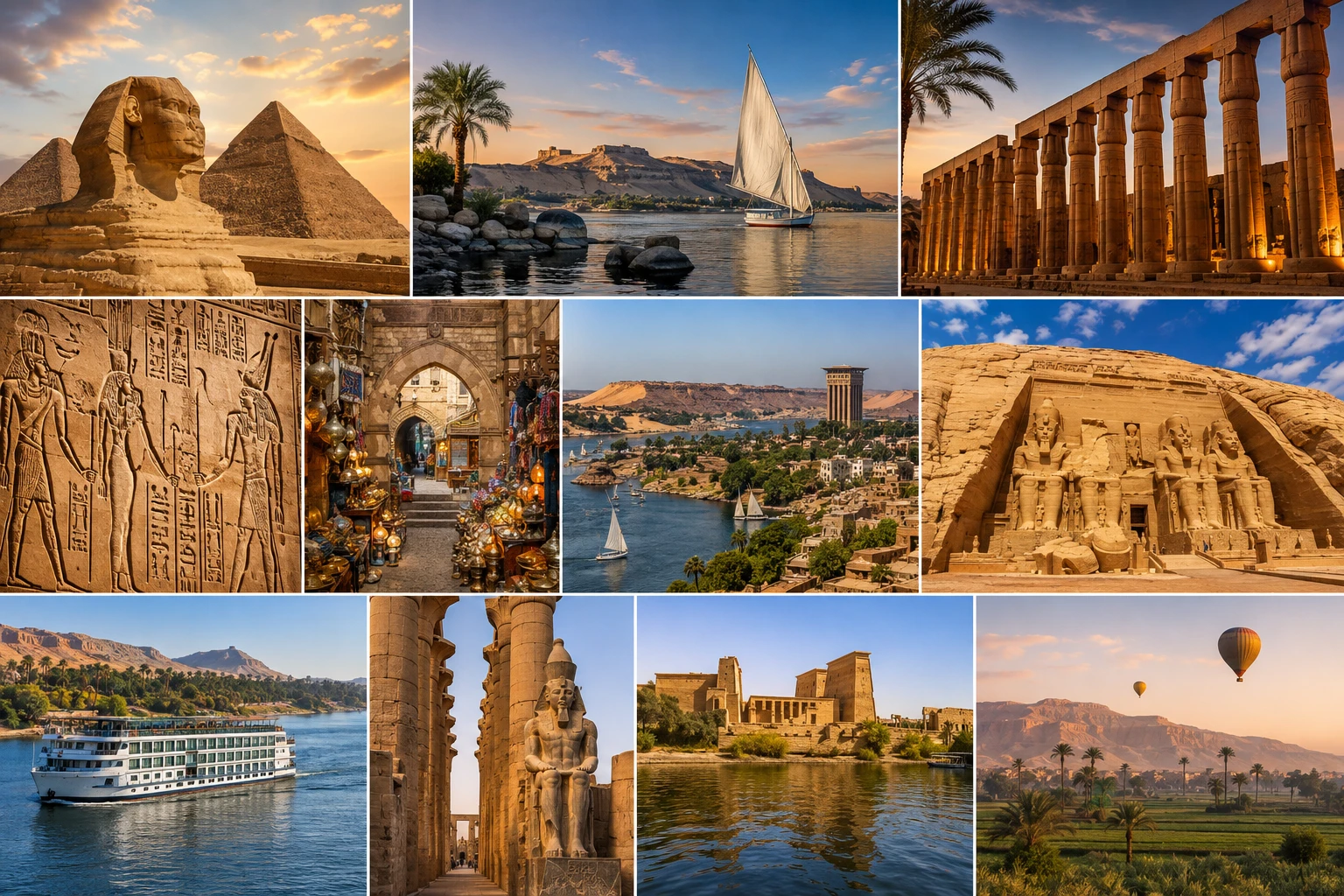
Discover the wonders of Petra with Magic Egypt Tours and experience the history, landscapes, and cultural treasures of this remarkable destination.