
Kom El-Dikka: Discover Alexandria’s Remarkable Roman Heritage
Introduction: A Hidden Archaeological Treasure in Alexandria
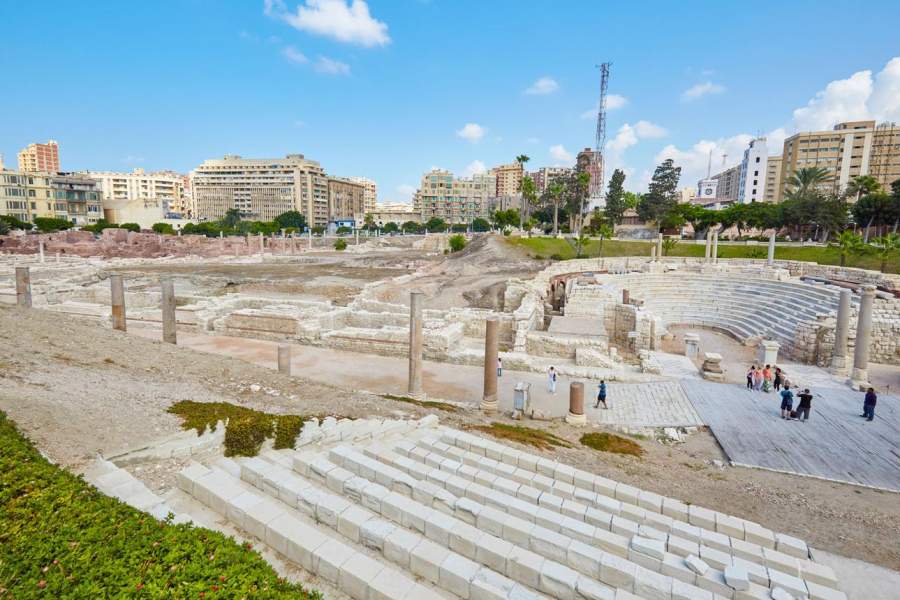
Located in the heart of Alexandria, Kom El-Dikka is one of Egypt’s most fascinating archaeological sites, offering visitors a glimpse into the city's rich Greco-Roman past. Unlike the monumental temples and royal tombs found elsewhere in Egypt, Kom El-Dikka reveals the everyday cultural and intellectual life of ancient Alexandria.
The site contains the remains of a Roman theatre, lecture halls, residential buildings, bathhouses, and intricate mosaic floors. These discoveries demonstrate how Alexandria developed into a major center of education, entertainment, and urban life during the Roman and Byzantine periods.
For travelers interested in ancient history, archaeology, and the multicultural heritage of Alexandria, Kom El-Dikka is a rewarding destination that brings the city's classical history to life.
The Roman Amphitheatre: The Heart of Kom El-Dikka
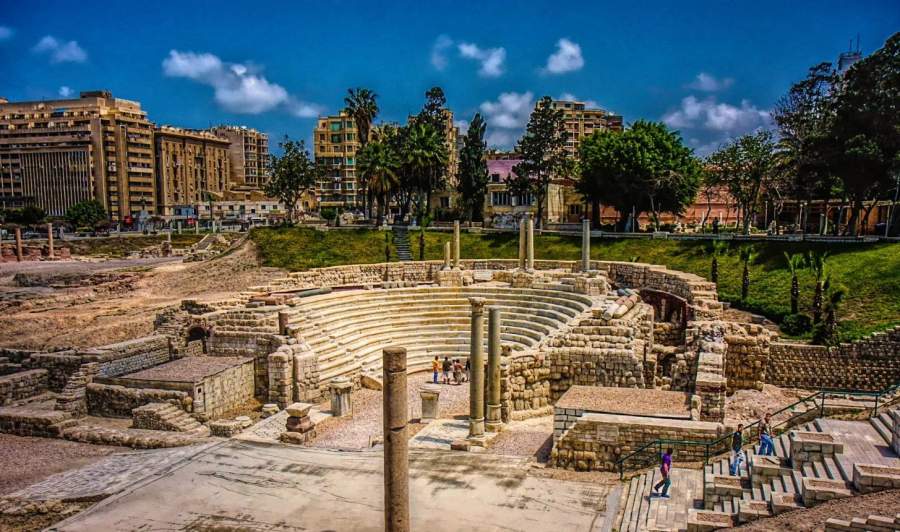
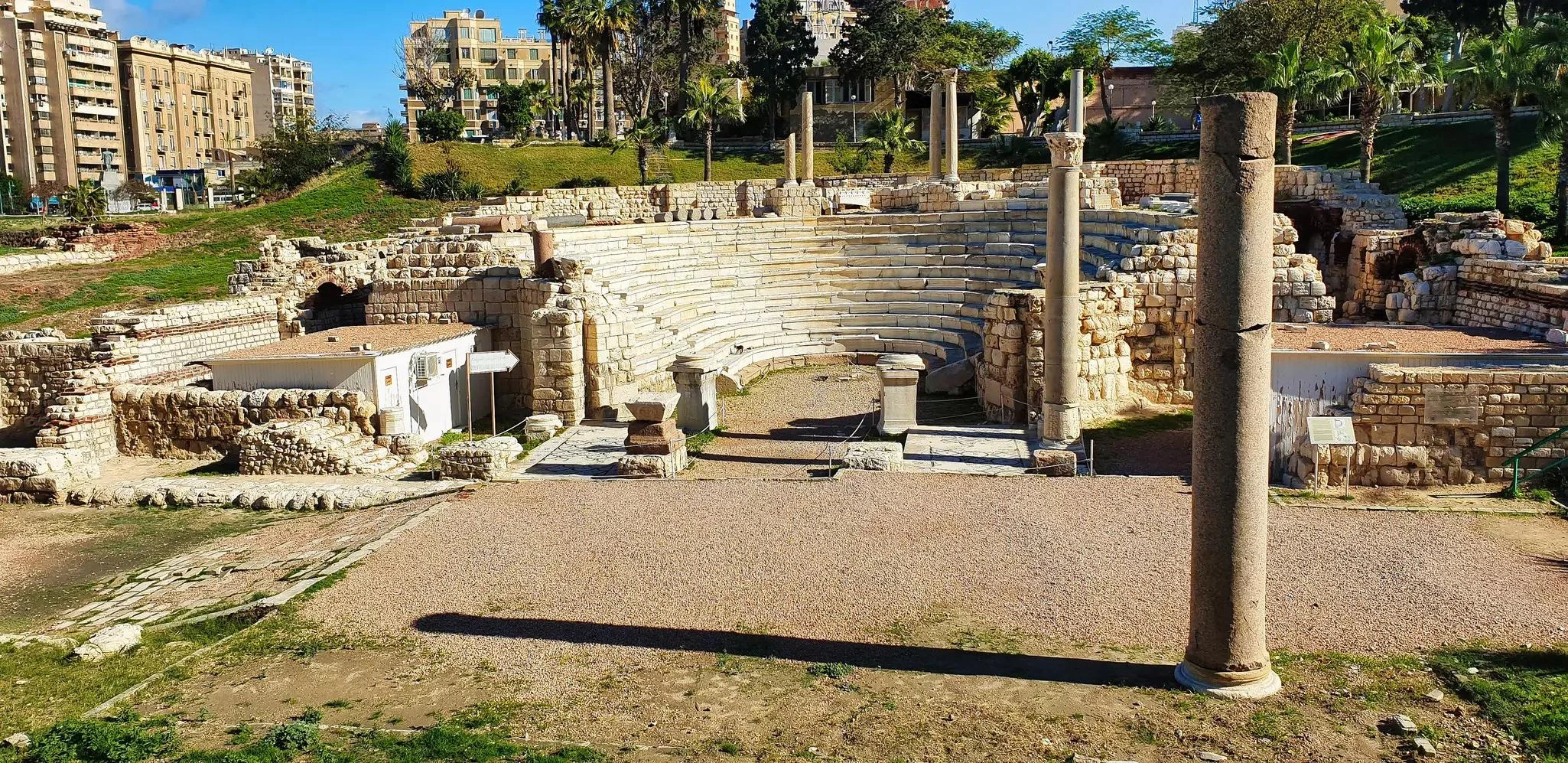
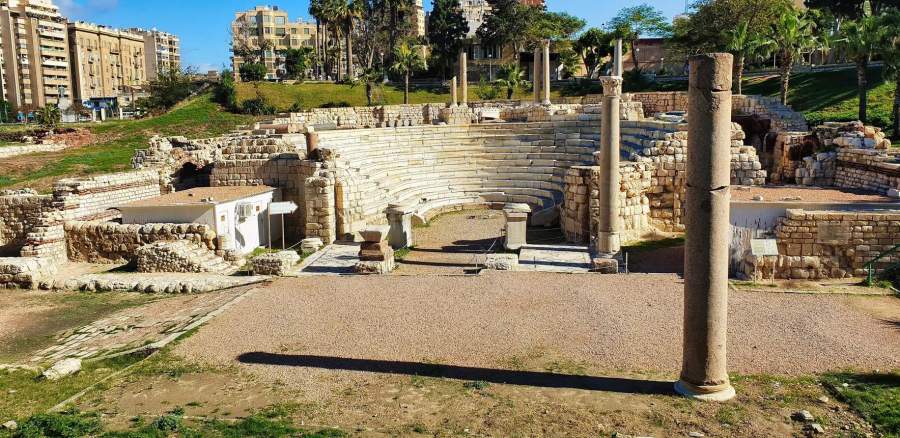
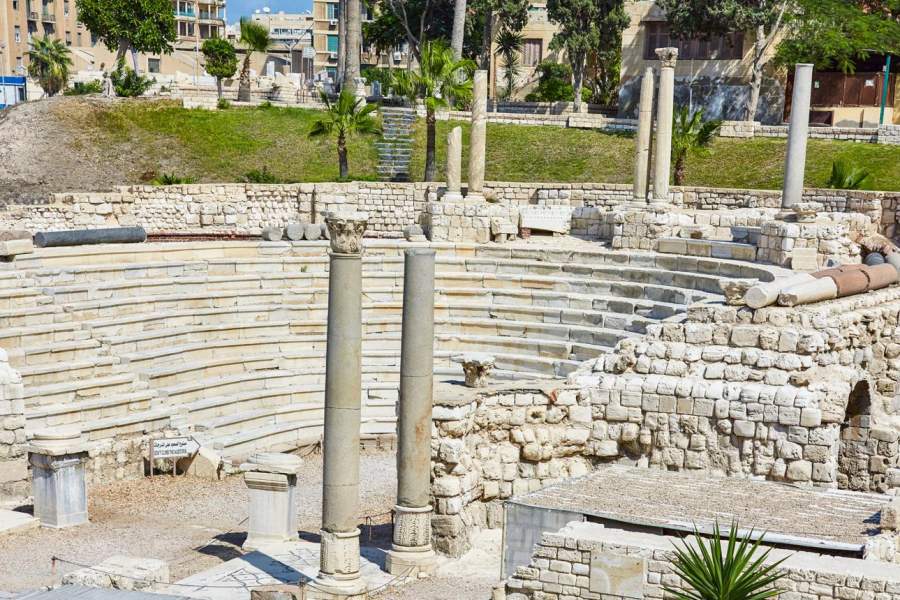
The most recognizable feature of Kom El-Dikka is its Roman amphitheatre, a remarkable structure discovered during archaeological excavations in the 1960s. Although commonly called an amphitheatre, the building is generally understood to have functioned as a small Roman theatre or performance space.
Its semicircular arrangement of marble seating allowed spectators to gather for performances, musical events, and other public activities. The surviving tiers reveal the careful architectural planning and craftsmanship that characterized Roman public buildings.
The theatre's relatively intimate scale distinguishes it from larger entertainment structures found in other parts of the Roman Empire. Its design offers valuable insight into how cultural events were organized within Alexandria's urban environment.
Today, visitors can walk around the archaeological remains, observe the seating arrangement, and appreciate the engineering techniques used to construct this historic venue.
The Ancient Lecture Halls: Alexandria as a Center of Learning
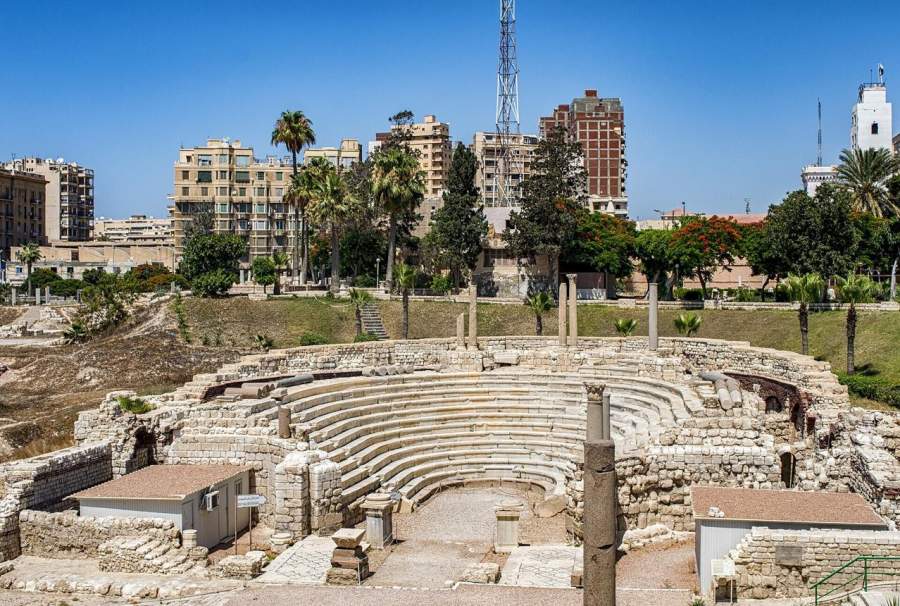
One of the most significant discoveries at Kom El-Dikka is a group of ancient lecture halls, often associated with educational activities during the late Roman period.
These spaces contain rows of stone seating arranged to allow students to face a speaker or teacher. Their layout suggests that the complex served as a place for teaching, discussion, and intellectual exchange.
Alexandria had long been associated with scholarship and philosophy, attracting scholars and students from different parts of the Mediterranean world. Although these lecture halls should not automatically be identified with the famous ancient Library of Alexandria, they provide important evidence of the city's continuing educational traditions centuries later.
For visitors, these remains offer a different perspective on Alexandria's history—one focused not only on rulers and monuments but also on the people who studied, taught, and exchanged ideas.
The Roman Baths: Everyday Life in Ancient Alexandria
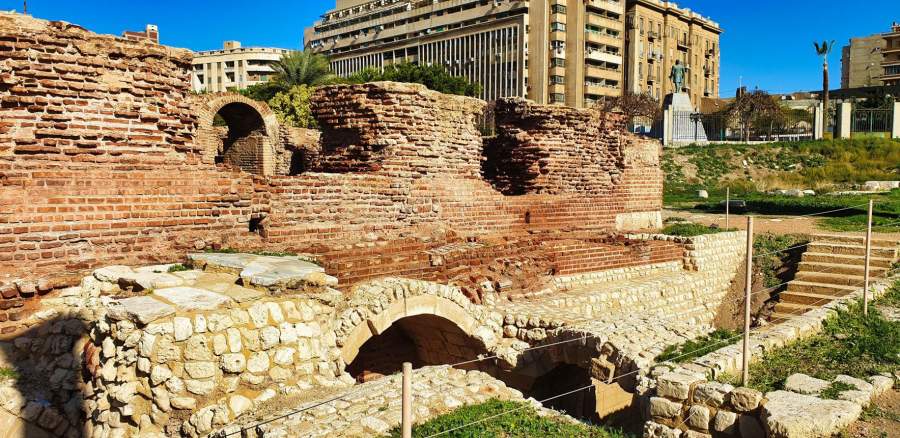
The archaeological remains at Kom El-Dikka also reveal aspects of Roman urban life, including bathing facilities and structures associated with domestic and public activities.
Roman baths were important social spaces throughout the Roman world. In addition to bathing, they provided opportunities for conversation, relaxation, and social interaction. Their construction often involved sophisticated heating systems, water management, and carefully organized rooms.
The remains at Kom El-Dikka help archaeologists understand how Roman architectural traditions were adapted to the needs of Alexandria's population.
As you explore the site, look beyond the most recognizable structures. Foundations, walls, and architectural fragments can reveal how different buildings were arranged and how the ancient neighborhood functioned as part of the wider city.
Ancient Mosaics and Residential Remains
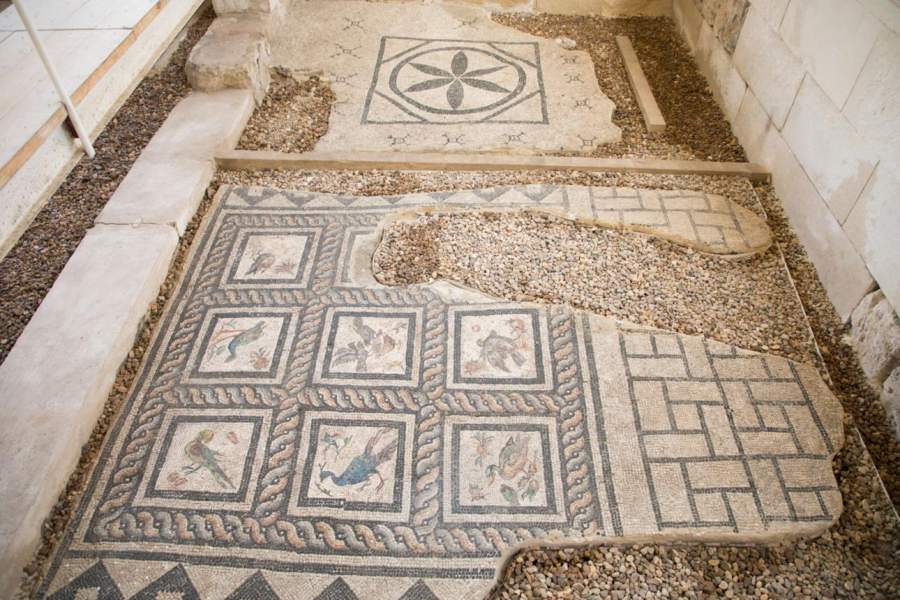
Among the most visually appealing discoveries associated with the Kom El-Dikka archaeological area are ancient mosaic floors, including those connected with the famous Villa of the Birds.
These mosaics demonstrate the artistic skill used to decorate residential interiors during the Roman period. Small colored pieces were carefully arranged to create patterns and images, including birds and decorative geometric designs.
Such floors reveal the tastes and lifestyles of people who lived in Alexandria and provide evidence of the city's artistic connections with the wider Mediterranean world.
The remains of houses and decorative features also help researchers reconstruct the layout of ancient neighborhoods. Rather than representing an isolated monumental complex, Kom El-Dikka offers a broader picture of urban life, combining public buildings with evidence of private residences.
Kom El-Dikka Through the Greco-Roman and Byzantine Periods
Alexandria was founded by Alexander the Great in 331 BCE and developed into one of the most important cities of the ancient Mediterranean. Under the Ptolemaic dynasty, it became renowned for scholarship, trade, and cultural exchange. Following the Roman conquest of Egypt in 30 BCE, the city continued to play a significant political and commercial role.
Kom El-Dikka reflects later stages of this long history, particularly the Roman and Byzantine periods. Buildings were constructed, modified, and reused as the city's needs changed over time.
This gradual transformation makes the site especially valuable to archaeologists. Different architectural remains reveal how urban spaces evolved across centuries rather than remaining unchanged.
Exploring Kom El-Dikka allows visitors to understand Alexandria as a living city whose architecture and culture developed through successive historical periods.
Visiting Kom El-Dikka: What to Expect
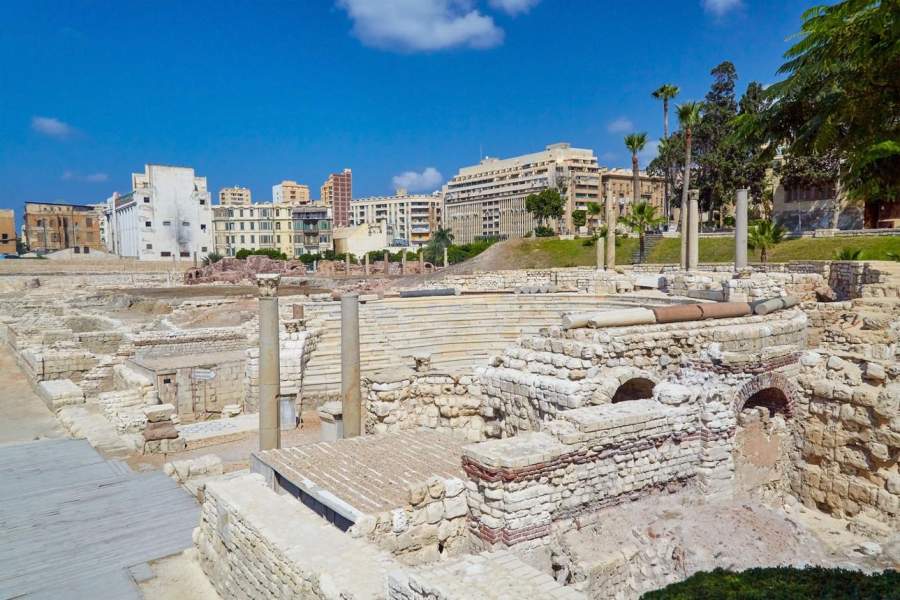
Kom El-Dikka is an excellent stop for travelers exploring Alexandria's historic center. Its archaeological remains are relatively close to other important landmarks, making it possible to include the site in a wider city tour.
During your visit, take time to observe the theatre's seating, examine the remains of the lecture halls, and look for the decorative details that reveal the craftsmanship of the ancient city. A knowledgeable guide can help explain the different building types and distinguish between structures from various periods.
For a more complete historical experience, consider combining Kom El-Dikka with other Alexandria attractions, such as the Catacombs of Kom El Shoqafa, Pompey's Pillar, and the Bibliotheca Alexandrina. Each site represents a different chapter in Alexandria's long and diverse history.
Comfortable walking shoes, drinking water, and sun protection are useful, especially during warmer months. Opening hours, admission prices, and access arrangements can change, so check the latest details before your visit.
Why Kom El-Dikka Deserves a Place on Your Alexandria Itinerary
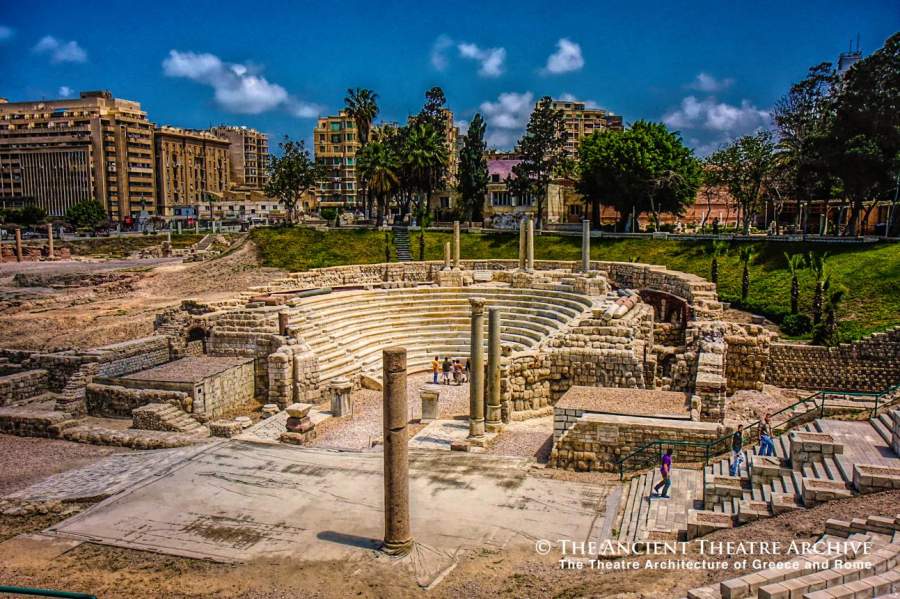
Kom El-Dikka offers a distinctive experience because it focuses on the cultural and social life of ancient Alexandria. Its theatre, lecture halls, mosaics, and architectural remains provide a more detailed understanding of how people lived, learned, and gathered in the city.
Whether you are passionate about archaeology, fascinated by Roman history, or simply looking to explore beyond Alexandria's better-known landmarks, this site offers a meaningful connection to Egypt's Greco-Roman heritage.
A visit to Kom El-Dikka adds depth to any Alexandria itinerary, revealing a historic city shaped by Egyptian, Greek, Roman, and Byzantine influences.
Explore Alexandria with Magic Egypt Tours
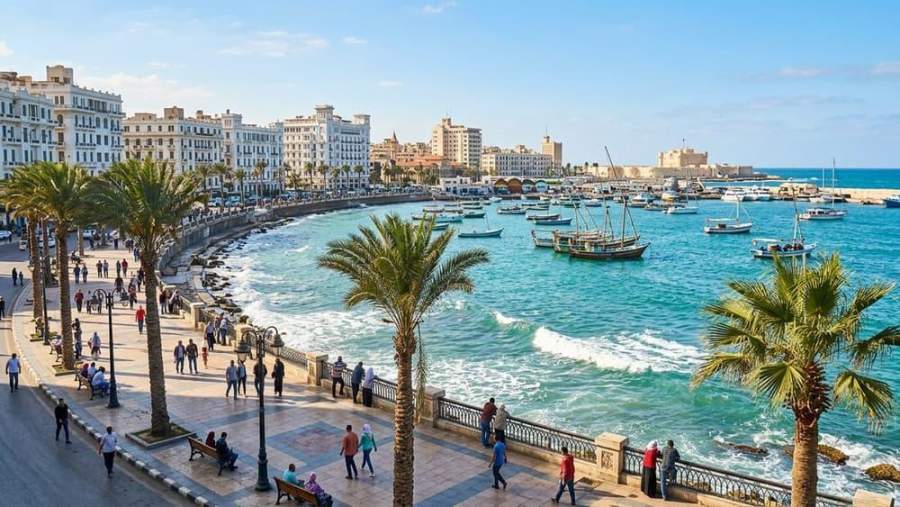
Make your journey through Alexandria more memorable with Magic Egypt Tours. Discover ancient archaeological sites, explore the city's cultural landmarks, and learn about the civilizations that helped shape one of the Mediterranean's most celebrated historic cities.
Whether you are planning a day trip or a longer Egyptian adventure, Alexandria offers a fascinating combination of ancient history, coastal scenery, and cultural discovery.
Explore Egypt with Magic Egypt Tours and uncover the stories behind its remarkable historical treasures.